Mafunuo Mawili: Yaliyosemwa na Yasiyosemwa
Two Types Of Revelation: The Spoken And The Unspoken
Mtume Mtukufu ﷺ alipokea aina mbili za ufunuo wa Mwenyezi Mungu. Ya kwanza ni ile iliyosomwa [matluww], na ya pili ni ile isiyosomwa [ghair-matluww]. Ufunuo uliosomwa ni ule unaosomwa [yaani, Qur'ani]; ufunuo usiosomwa ni ule usiosomwa [yaani, Hadithi za Mtume Mtukufu ﷺ]. Dalili ya mizizi ya ufunuo usiosomwa inapatikana katika aya za Qur'ani. Mwenyezi Mungu (SWT) anasema katika Qur'ani Tukufu:
The Blessed Prophet صلى الله عليه وسلم received two types of divine revelations. One is the spoken [matluww] and the second, the unspoken [ghair-matluww]. The spoken revelation is that which is recited [i.e., the Qur’an]; the unspoken revelation is that which is not recited [i.e., the aúódõth of the Blessed Prophet صلى الله عليه وسلم]. An indication of the roots of the unspoken revelation can be found in the ayas of the Qur’an. Allah صلى الله عليه وسلم says in the Holy Qur’an:

Na Sisi hatukukifanya kibla ambacho ulikuwa ukikielekea isipokuwa ili Tumtambulishe yule anayemfuata Mtume ﷺ na yule anayegeuka nyuma kwa visigino vyake.3
And We appointed the qibla to which you were used only to test those who followed the Messenger from those who would turn on their heels.3
Ili kupata ufahamu mpana wa aya hii, ni muhimu kuchunguza historia yake ya nyuma.
To gain a broader understanding of this aya, it is important that we look into its historical background.
Muda mfupi baada ya Hijra kwenda Madina, Mtume Muhammad ﷺ na Maswahaba (radhi za Allah ziwe juu yao) waliamrishwa kuswali kuelekea Masjid al-Aqsa huko Jerusalem. Masjid al-Aqsa ikawa qibla ya Waislamu kwa miezi kumi na saba. Baada ya miezi kumi na saba, amri ya kuswali kuelekea Masjid al-Aqsa ilifutwa na Waislamu waliamrishwa kuswali kuelekea Makka. Amri hii ilithibitishwa kupitia aya ifuatayo:
Shortly after the migration to Madina, the Blessed Prophet صلى الله عليه وسلم and the Sahaba رضي الله عنه) were told to pray towards Masjid al-Aqüó in Jerusalem. Masjid al-Aqüó became the qibla of the Muslims for seventeen months. After seventeen months, the order to pray towards Masjid al-Aqüó was abrogated and Muslims were ordered to pray towards Makka. This order was established through the following aya:
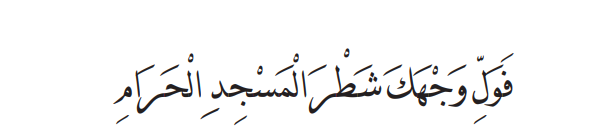
Na hatukukifanya kibla ulichokuwa nacho isipokuwa ili tuwajue wale wanaomfuata Mtume na wale wanaogeuka visigino vyao.5
And We appointed the qibla to which you were used only to test those who followed the messenger from those who would turn on their heels.5
Katika aya hii, Allah سبحانه وتعالى. anataja agizo la kwanza, ambalo lilikuwa la kuelekea Yerusalemu, kuwa ni agizo Lake mwenyewe. Hii inamfanya msomaji atambue kwamba Allah سبحانه وتعالى. mwenyewe ndiye aliyekuwa nyuma ya agizo la kuelekea Masjid al-Aqṣā. Lakini tunaposoma Qur'ani hatupati aya yoyote kama hiyo ambamo Allah سبحانه وتعالى. aliwaamuru Waislamu kuswali wakielekea Yerusalemu.
In this aya, Allah سبحانه وتعالى.mentions the first order, which was to face towards Jerusalem, as His own order. This impresses upon the reader the fact that Allah سبحانه وتعالى. himself was behind the order to face Masjid al-Aqüó. But when we read the Qur’an we do not find any such aya in which Allah سبحانه وتعالى. ordered the Muslims to pray towards Jerusalem.
Ukweli ni kwamba amri hii ilitoka kwa Mtume aliyebarikiwa ﷺ na si kutoka aya yoyote ya Qur'ani. Aya haisemi, "Mtume aliyebarikiwa ﷺ ameweka amri…", bali inasema, "Tumeiweka qibla…." Hili linatufikisha kwenye ufahamu kwamba amri ya Mtume aliyebarikiwa ﷺ haitofautiani na amri ya Allah (SWT).
The fact is that this order came from the Blessed Prophet صلى الله عليه وسلم and not from any aya of the Qur’an. The aya does not say, “The Blessed Prophet صلى الله عليه وسلم enacted the order…” rather it says, “We appointed the qibla….” This brings us to the understanding that the order of the Blessed Prophet صلى الله عليه وسلم is no different from the order of Allah سبحانه وتعالى..
Ushahidi huu uko wazi sana hauhitaji ufafanuzi zaidi. Kauli hii wazi kutoka kwenye Qur'ani kuhusu amri aliyoitoa Mtume Mwenye Baraka ﷺ inaonyesha imani ya msingi kuhusu Hadith za Mtume Mwenye Baraka ﷺ: kwamba ni aina ya Wahyi. Na hii ndiyo inayojulikana kama Wahyi usiotamkwa au usiosomwa.
The proof is so self-evident it does not require any further clarification. This clear statement from the Qur’an regarding the order given by the Blessed Prophet صلى الله عليه وسلم demonstrates a fundamental belief about the aúódõth of the Blessed Prophet صلى الله عليه وسلم: that they are a form of revelation. And this is what is known as the unspoken or unrecited revelation.
Aya iliyotajwa hapo juu pia inafichua mambo mengine muhimu:
The aya mentioned above also reveals some other important points:
1. Aina maalum ya wahyi ilishushwa kwa Mtume Mbarikiwa ﷺ ambayo haikuwa sehemu ya Qur'ani.
1. A special type of revelation was sent to the Blessed Prophet صلى الله عليه وسلم which was not a part of the Qur’an.
2. Mafunuo haya yalitoka kwa Allah سبحانه وتعالى.
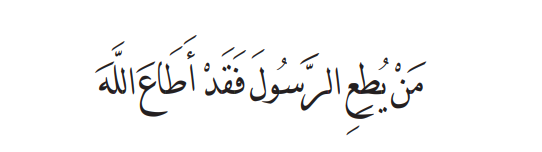
Yeyote anayemfuata Nabii Mtukufu ﷺ amemfuata Allah (SWT).6
Whosoever follows the Blessed Prophet صلى الله عليه وسلم has followed Allah ‹.6
Katika aya hii Qur'ani inatuamuru kufuata njia ya Mtume aliyebarikiwa ﷺ, kwa kuwa kufuata Mtume aliyebarikiwa ﷺ ni kufuata Allah سبحانه وتعالى.. Siku moja, mwanamke mmoja alimwendea Sahaba maarufu, ‘Abd Allōh ibn Mas‘ūd رضي الله عنه). Alisema, “Nimekusikia ukiwazuia watu kufanya mambo fulani, ilhali nimeisoma Qur'ani yote kuanzia mwanzo hadi mwisho, na sijawahi kusoma Qur'ani ikituamuru kujiepusha na mambo haya.” ‘Abd Allōh ibn Mas‘ūd رضي الله عنه) alijibu, “Kama ungeisoma Qur'ani ungeliona. Je, hujasoma aya hii ya Qur'ani:
In this aya the Qur’an orders us to adhere to the way of the Blessed Prophet صلى الله عليه وسلم, as adherence to the Blessed Prophet صلى الله عليه وسلم is adherence to Allah سبحانه وتعالى.. Once, a woman came to the famous Sahaba رضي الله عنه), ‘Abd Allóh ibn Mas‘ñdرضي الله عنه. She said, “I have heard you stop people from doing certain things even though I have read the Qur’an from cover to cover and I have never read the Qur’an ordering us to abstain from these things.” ‘Abd Allóh ibn Mas‘ñd رضي الله عنه) replied, “Had you read the Qur’an you would have found it. Have you not read this aya of the Qur’an:

Lolote Mtume ﷺ atakupa, lipokee; na lolote analokukataza, jiepushe nalo.7
Whatever the Prophet صلى الله عليه وسلم gives you, accept it; and whatever he disapproves of, abstain from it.7
Kutokana na tukio hili tunajifunza kwamba aya hii inajumuisha Hadith ya Mtume Muhammad ﷺ na inathibitisha mamlaka ya Hadith katika Uislamu.
From this incident we learn that this aya incorporates the aúódõth of the Blessed Prophet صلى الله عليه وسلم and establishes the authority of the aúódõth in Islam.