Kiyaye Hadīth
Preservation Of Hadīth
Allah سبحانه وتعالى ya ce a cikin Alƙur'ani:
Allah سبحانه وتعالى. states in the Qur’an:
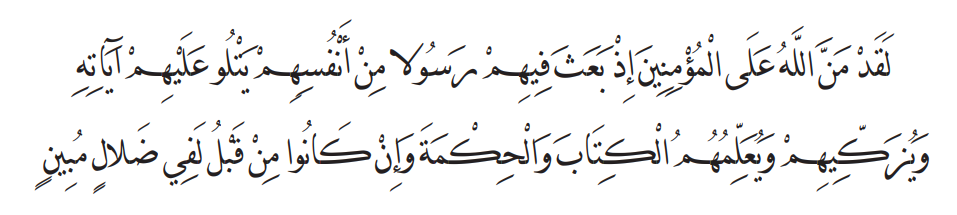
Lalle Allah سبحانه وتعالى ya riga ya yi wa muminai alheri, a lokacin da ya tayar da wani Manzo daga cikinsu, don ya karanta musu ayoyinsa, ya tsarkake su, ya koya musu Littafi da hikima.1
Indeed Allah سبحانه وتعالى. has already done a favor to the believers, when He raised amongst them a messenger from themselves to recite to them His verses, purify them and teach them the book and the wisdom.1
Wannan aya tana bayyana ɗaya daga cikin muhimman nauyin da ke kan Annabi mai albarka ﷺ: koyar da Littafi. Wannan nauyi ba wai koyar da furuci da karatun Littafi kawai yake ba [domin hakan yana cikin nauyin farko, watau ‘karanta musu ayoyinsa’], sai dai kuma, mafi muhimmanci, koyar da ma’anar Alqur’ani. Zai zama abin banza ga Musulmi ya yi ƙoƙarin fahimtar ma’anar Alqur’ani da saƙonsa ba tare da Annabi ﷺ a matsayin malami mai bayyana mana shi ba.
This aya explains one of the most important responsibilities of the beloved Blessed Prophet صلى الله عليه وسلم: to teach the Book. This responsibility consists of not just teaching the pronunciation and reading of the Book [as that is already covered in the first responsibility, i.e. ‘to recite to them His verses’], but more importantly, the meaning of the Qur’an. It would be meaningless for a Muslim to try to understand the meaning and message of the Qur’an without the Blessed Prophet صلى الله عليه وسلم as a teacher to explain it to us.
Ƙwarewa a harshen Larabci kaɗai ba ta isa ta taimaka mana mu fahimci ma'anar Alƙur'ani ba. Ku tuna cewa Sahabbai (رضي الله عنه) waɗanda suke jin Larabci sosai, koyaushe suna komawa wajen Annabi Muhammadu ﷺ don fahimtar zurfin ma'anonin Alƙur'ani. Annabi Muhammadu ﷺ ne ya bayyana kalmomin Alƙur'ani da ma'anoninsa, duka ta baki da kuma ta aiki. Waɗannan maganganu da bayanan Annabi Muhammadu ﷺ ana kiransu Hadisai, kuma suna ba mu tafsiri mafi inganci na Alƙur'ani. Saboda haka, alkawarin Allah (سبحانه وتعالى) na kiyaye Alƙur'ani yana nufin kiyaye Hadisai ma.
Proficiency in the Arabic language alone cannot help us grasp the meaning of the Qur’an. Remember, the Sahaba رضي الله عنه) who spoke fluent Arabic, always turned to the Blessed Prophet صلى الله عليه وسلم to understand the deeper meanings of the Qur’an. The Qur’an’s words and its meanings were explained both verbally and practically by the Blessed Prophet صلى الله عليه وسلم. These sayings and explanations of the Blessed Prophet صلى الله عليه وسلم are called úódõth and provide us with the the most authentic commentary of the Qur’an. Therefore, Allah’s سبحانه وتعالى. promise to preserve the Qur’an meant preservation of the aúódõth as well.
Amma kiyaye kalmomi kadai ba shi da amfani sosai. Misali, idan Alkur'ani ya umurci Musulmai da kafa ṣalātu, amma ba mu iya fahimtar abin da wannan umarni ya ƙunsa ba [kamar yadda ake yin sa], to menene amfanin kiyaye kalmomin "ku kafa ṣalātu"? Wannan ya tabbatar da cewa kiyaye Alkur'ani, bisa larura, ya haɗa da kiyaye ḥadīth. Ba tare da ḥadīth ba, īmānin Musulmi bai cika ba. Bayan haka, ta yaya za mu sani cewa Alkur'ani littafin Allah ne (SWT)?
However the preservation of words alone serves little purpose. For example, if the Qur’an commands Muslims to establish üalót, but we are unable to understand what this command entails [such as how to perform it], then what benefit is there in preserving the words “establish the üalót?” This proves that the preservation of the Qur’an, by necessity, includes preservation of the úódõth. Without úódõth, the õmón of a Muslim is incomplete. After all, how do we know that the Qur’an is the book of Allah سبحانه وتعالى.?
In sanin Alƙur'ani da matsayinsa ba kome ba ne face saboda Annabi Muhammadu ﷺ ya ce: "Wannan shi ne Alƙur'ani; kalmar Allah ce ta (SWT)..." Idan muka ƙi wannan hadisin na Annabi Muhammadu ﷺ, to tushen Musulunci gaba ɗaya zai rushe. Ba za mu san cewa Alƙur'ani shi ne abin da yake iƙirarin zama ba.3
If we know the Qur’an and its place, it is only because the Blessed Prophet صلى الله عليه وسلم said, “This is the Qur’an; it is the word of Allah سبحانه وتعالى..” If we were to reject this úadīth of the Blessed Prophet صلى الله عليه وسلم then the whole foundation of Islam collapses. We would not know that the Qur’an is what it claims to be.3
Allah (SWT) ya ce wa Annabi Muhammad ﷺ a cikin Alkur'ani:
Allah سبحانه وتعالى. says to the Blessed Prophet صلى الله عليه وسلم in the Qur’an:

Kuma Mun saukar da Alkur'ani zuwa gare ka (ya Muhammadu ﷺ), domin ka bayyana wa mutane abin da aka saukar musu, kuma domin su yi tunani.
And We have sent unto you the message, that you may explain clearly to men what is sent for them, and that they may give thought. 2
Wannan āyah tana tabbatar da cewa babban aikin ḥadīth shi ne bayyana ma'anar Alƙur'ani, wanda ke nufin cewa ba za a iya fahimtar Alƙur'ani ba sai da ḥadīth.
This aya proves that the fundamental role of úódõth is to reveal the meaning of the Qur’an, which means that the Qur’an cannot be understood without the aúódõth.
1 3:164.
1 3:164.
2 16:44
2 16:44