Nau'o'in Wahayi Guda Biyu: Wanda Ake Faɗa da Wanda Ba a Faɗa Ba
Two Types Of Revelation: The Spoken And The Unspoken
Annabi mai albarka ﷺ ya karɓi nau'o'in wahayi guda biyu daga Allah. Na farko shi ne wanda ake karantawa [matluww], na biyu kuwa shi ne wanda ba a karantawa ba [ghair-matluww]. Wahayin da ake karantawa shi ne wanda ake tilawa [watau, Alƙur'ani]; wahayin da ba a karantawa ba shi ne wanda ba a tilawa ba [watau, hadisan Annabi mai albarka ﷺ]. Alamar asalin wahayin da ba a karantawa tana cikin ayoyin Alƙur'ani. Allah (SWT) ya ce a cikin Alƙur'ani mai girma:
The Blessed Prophet صلى الله عليه وسلم received two types of divine revelations. One is the spoken [matluww] and the second, the unspoken [ghair-matluww]. The spoken revelation is that which is recited [i.e., the Qur’an]; the unspoken revelation is that which is not recited [i.e., the aúódõth of the Blessed Prophet صلى الله عليه وسلم]. An indication of the roots of the unspoken revelation can be found in the ayas of the Qur’an. Allah صلى الله عليه وسلم says in the Holy Qur’an:

Kuma ba mu sanya alkiblar da kake kanta ba face domin mu gwada wanda ke bin Manzo daga wanda zai juya a kan dugadugansa.3
And We appointed the qibla to which you were used only to test those who followed the Messenger from those who would turn on their heels.3
Domin samun fahimta mai zurfi game da wannan aya, yana da muhimmanci mu duba tarihin da ta samo asali daga gare shi.
To gain a broader understanding of this aya, it is important that we look into its historical background.
Ba da daɗewa ba bayan hijira zuwa Madina, aka umarci Annabi Muhammadu ﷺ da Sahabbai (Allah ya yarda da su) su yi sallah suna fuskantar Masallacin Al-Aqsa da ke Urushalima. Masallacin Al-Aqsa ya zama alƙiblar Musulmi tsawon wata sha bakwai. Bayan wata sha bakwai, an soke umarnin yin sallah zuwa Masallacin Al-Aqsa, aka umarci Musulmi su yi sallah suna fuskantar Makka. An kafa wannan umarni ta wannan aya:
Shortly after the migration to Madina, the Blessed Prophet صلى الله عليه وسلم and the Sahaba رضي الله عنه) were told to pray towards Masjid al-Aqüó in Jerusalem. Masjid al-Aqüó became the qibla of the Muslims for seventeen months. After seventeen months, the order to pray towards Masjid al-Aqüó was abrogated and Muslims were ordered to pray towards Makka. This order was established through the following aya:
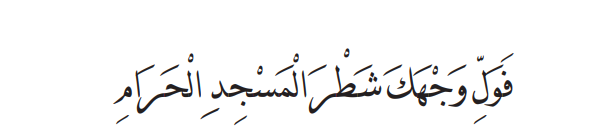
Kuma Mun sanya alƙiblar da kuka kasance kuna kanta ne kawai domin Mu gwada wanda ke bin Manzo daga wanda zai juya a kan dugadugansa.5
And We appointed the qibla to which you were used only to test those who followed the messenger from those who would turn on their heels.5
A cikin wannan aya, Allah سبحانه وتعالى ya ambaci umarni na farko, wato a juya fuska zuwa Baitul Maƙdis, a matsayin umarninsa. Wannan yana sanya mai karatu ya fahimci cewa Allah سبحانه وتعالى da kansa ne yake bayan umarnin juyar da fuska zuwa Masjid al-Aqsa. Amma idan muka karanta Alƙur'ani, ba mu samun wata aya da Allah سبحانه وتعالى ya umarci Musulmi su yi salla zuwa Baitul Maƙdis.
In this aya, Allah سبحانه وتعالى.mentions the first order, which was to face towards Jerusalem, as His own order. This impresses upon the reader the fact that Allah سبحانه وتعالى. himself was behind the order to face Masjid al-Aqüó. But when we read the Qur’an we do not find any such aya in which Allah سبحانه وتعالى. ordered the Muslims to pray towards Jerusalem.
Gaskiyar magana ita ce wannan umarni ya fito daga Annabi Muhammadu ﷺ, ba daga kowace aya ta Alkur'ani ba. Aya ba ta cewa, "Annabi Muhammadu ﷺ ya shimfida umarnin..." sai dai tana cewa, "Mun sanya alkiblar..." Wannan ya kai mu ga fahimtar cewa umarnin Annabi Muhammadu ﷺ ba ya bambanta da umarnin Allah (SWT).
The fact is that this order came from the Blessed Prophet صلى الله عليه وسلم and not from any aya of the Qur’an. The aya does not say, “The Blessed Prophet صلى الله عليه وسلم enacted the order…” rather it says, “We appointed the qibla….” This brings us to the understanding that the order of the Blessed Prophet صلى الله عليه وسلم is no different from the order of Allah سبحانه وتعالى..
Hujjar ba ta buƙatar ƙarin bayani ba, domin tana da bayyana sosai. Wannan bayani bayyananne daga Alƙur'ani game da umarnin da Annabi Muhammad ﷺ ya bayar, yana nuna wata ƙa'ida ta asali game da hadísai na Annabi Muhammad ﷺ: cewa su wata irin wahayi ne. Kuma wannan shi ne abin da ake kira wahayin da ba a karanta ba, wato wahayin da ba a faɗa ba cikin Alƙur'ani.
The proof is so self-evident it does not require any further clarification. This clear statement from the Qur’an regarding the order given by the Blessed Prophet صلى الله عليه وسلم demonstrates a fundamental belief about the aúódõth of the Blessed Prophet صلى الله عليه وسلم: that they are a form of revelation. And this is what is known as the unspoken or unrecited revelation.
Ayar da aka ambata a sama kuma tana bayyana wasu muhimman abubuwa.
The aya mentioned above also reveals some other important points:
1. Wani nau'i na musamman na wahayi an saukar da shi ga Annabi mai albarka ﷺ, wanda ba ya cikin Alƙur'ani.
1. A special type of revelation was sent to the Blessed Prophet صلى الله عليه وسلم which was not a part of the Qur’an.
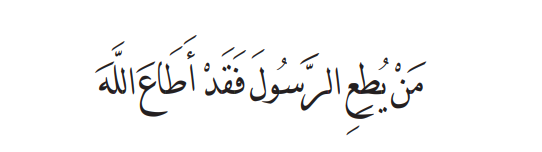
Duk wanda ya bi Annabi ﷺ mai albarka, to ya bi Allah (SWT).6
Whosoever follows the Blessed Prophet صلى الله عليه وسلم has followed Allah ‹.6
A cikin wannan aya, Alƙur'ani yana umurtar mu da bin hanyar Annabi Muhammadu ﷺ, domin bin Annabi Muhammadu ﷺ shi ne bin Allah (SWT). Wata mace ta zo wurin shahararren Sahabi, ‘Abdullahi ibn Mas‘ud (RA). Ta ce: "Na ji kana hana mutane yin wasu abubuwa, duk da cewa na karanta Alƙur'ani daga farko zuwa ƙarshe, kuma ban taɓa karanta cewa Alƙur'ani ya umurce mu da nisantar waɗannan abubuwa ba." ‘Abdullahi ibn Mas‘ud (RA) ya amsa: "Da ka karanta Alƙur'ani, da ka same shi. Ba ka karanta wannan aya ta Alƙur'ani ba:
In this aya the Qur’an orders us to adhere to the way of the Blessed Prophet صلى الله عليه وسلم, as adherence to the Blessed Prophet صلى الله عليه وسلم is adherence to Allah سبحانه وتعالى.. Once, a woman came to the famous Sahaba رضي الله عنه), ‘Abd Allóh ibn Mas‘ñdرضي الله عنه. She said, “I have heard you stop people from doing certain things even though I have read the Qur’an from cover to cover and I have never read the Qur’an ordering us to abstain from these things.” ‘Abd Allóh ibn Mas‘ñd رضي الله عنه) replied, “Had you read the Qur’an you would have found it. Have you not read this aya of the Qur’an:

Duk abin da Manzon Allah ﷺ ya ba ku, ku karɓa; kuma duk abin da ya hana, ku nisance shi.7
Whatever the Prophet صلى الله عليه وسلم gives you, accept it; and whatever he disapproves of, abstain from it.7
Daga wannan lamari muke koyon cewa wannan ayar ta ƙunshi hadisin Annabi Muhammadu ﷺ, kuma tana tabbatar da hujjar hadisi a cikin Musulunci.
From this incident we learn that this aya incorporates the aúódõth of the Blessed Prophet صلى الله عليه وسلم and establishes the authority of the aúódõth in Islam.