Dua Jenis Wahyu: Yang Diucapkan dan Yang Tidak Diucapkan
Two Types Of Revelation: The Spoken And The Unspoken
Nabi yang Diberkati ﷺ menerima dua jenis wahyu ilahi. Yang pertama ialah wahyu yang dibacakan [matluww], dan yang kedua ialah wahyu yang tidak dibacakan [ghair-matluww]. Wahyu yang dibacakan ialah yang dibaca [iaitu, al-Qur'an]; wahyu yang tidak dibacakan ialah yang tidak dibaca [iaitu, hadith Nabi yang Diberkati ﷺ]. Petunjuk tentang akar wahyu yang tidak dibacakan dapat ditemui dalam ayat-ayat al-Qur'an. Allah ﷻ berfirman dalam al-Qur'an yang mulia:
The Blessed Prophet صلى الله عليه وسلم received two types of divine revelations. One is the spoken [matluww] and the second, the unspoken [ghair-matluww]. The spoken revelation is that which is recited [i.e., the Qur’an]; the unspoken revelation is that which is not recited [i.e., the aúódõth of the Blessed Prophet صلى الله عليه وسلم]. An indication of the roots of the unspoken revelation can be found in the ayas of the Qur’an. Allah صلى الله عليه وسلم says in the Holy Qur’an:

Dan Kami tidak menjadikan kiblat yang dahulu engkau (Muhammad ﷺ) menghadapinya kecuali agar Kami mengetahui siapa yang mengikuti Rasul dan siapa yang berbalik ke belakang.3
And We appointed the qibla to which you were used only to test those who followed the Messenger from those who would turn on their heels.3
Untuk memperoleh pemahaman yang lebih luas tentang ayat ini, penting bagi kita untuk meneliti latar belakang sejarahnya.
To gain a broader understanding of this aya, it is important that we look into its historical background.
Sejurus selepas hijrah ke Madinah, Nabi Muhammad ﷺ dan para Sahabat (رضي الله عنه) diperintahkan untuk solat menghadap ke Masjid al-Aqsa di Baitul Maqdis. Masjid al-Aqsa menjadi kiblat kaum Muslimin selama tujuh belas bulan. Selepas tujuh belas bulan, perintah untuk solat menghadap Masjid al-Aqsa dimansukhkan, dan kaum Muslimin diperintahkan untuk solat menghadap Makkah. Perintah ini ditetapkan melalui firman Allah berikut:
Shortly after the migration to Madina, the Blessed Prophet صلى الله عليه وسلم and the Sahaba رضي الله عنه) were told to pray towards Masjid al-Aqüó in Jerusalem. Masjid al-Aqüó became the qibla of the Muslims for seventeen months. After seventeen months, the order to pray towards Masjid al-Aqüó was abrogated and Muslims were ordered to pray towards Makka. This order was established through the following aya:
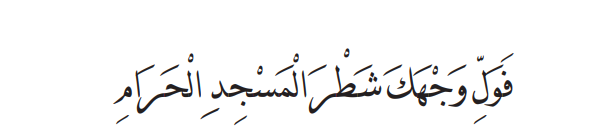
Dan Kami tidak menjadikan kiblat yang dahulu engkau (Muhammad) berkiblat kepadanya, melainkan agar Kami mengetahui siapa yang mengikuti Rasul dan siapa yang berbalik ke belakang.5
And We appointed the qibla to which you were used only to test those who followed the messenger from those who would turn on their heels.5
Dalam ayat ini, Allah سبحانه وتعالى menyebut perintah pertama, iaitu menghadap ke arah Baitul Maqdis, sebagai perintah-Nya sendiri. Ini menegaskan kepada pembaca bahawa Allah سبحانه وتعالى sendiri berada di sebalik perintah menghadap Masjid al-Aqsa. Namun, apabila kita membaca al-Qur'an, kita tidak mendapati mana-mana ayat yang di dalamnya Allah سبحانه وتعالى memerintahkan kaum Muslimin supaya solat menghadap Baitul Maqdis.
In this aya, Allah سبحانه وتعالى.mentions the first order, which was to face towards Jerusalem, as His own order. This impresses upon the reader the fact that Allah سبحانه وتعالى. himself was behind the order to face Masjid al-Aqüó. But when we read the Qur’an we do not find any such aya in which Allah سبحانه وتعالى. ordered the Muslims to pray towards Jerusalem.
Hakikatnya, perintah ini datang daripada Nabi yang diberkati ﷺ dan bukan daripada mana-mana ayat al-Quran. Ayat itu tidak mengatakan, "Nabi yang diberkati ﷺ telah menetapkan perintah..." sebaliknya ia mengatakan, "Kami telah menetapkan kiblat...." Ini membawa kita kepada kefahaman bahawa perintah Nabi yang diberkati ﷺ tidak berbeza daripada perintah Allah سبحانه وتعالى.
The fact is that this order came from the Blessed Prophet صلى الله عليه وسلم and not from any aya of the Qur’an. The aya does not say, “The Blessed Prophet صلى الله عليه وسلم enacted the order…” rather it says, “We appointed the qibla….” This brings us to the understanding that the order of the Blessed Prophet صلى الله عليه وسلم is no different from the order of Allah سبحانه وتعالى..
Dalil ini sangat jelas sehingga tidak memerlukan penjelasan lanjut. Firman yang tegas dari Al-Qur’an mengenai perintah yang diberikan oleh Nabi yang Mulia ﷺ menunjukkan satu kepercayaan asas tentang aḥādīth Nabi yang Mulia ﷺ, iaitu bahawa ia merupakan satu bentuk wahyu. Inilah yang dikenali sebagai wahyu yang tidak dibacakan atau tidak dilafazkan.
The proof is so self-evident it does not require any further clarification. This clear statement from the Qur’an regarding the order given by the Blessed Prophet صلى الله عليه وسلم demonstrates a fundamental belief about the aúódõth of the Blessed Prophet صلى الله عليه وسلم: that they are a form of revelation. And this is what is known as the unspoken or unrecited revelation.
Ayat yang disebutkan di atas juga mengungkapkan beberapa perkara penting yang lain:
The aya mentioned above also reveals some other important points:
1. Satu jenis wahyu yang khusus telah diturunkan kepada Nabi yang diberkati ﷺ, yang bukan merupakan sebahagian daripada al-Qur'an.
1. A special type of revelation was sent to the Blessed Prophet صلى الله عليه وسلم which was not a part of the Qur’an.
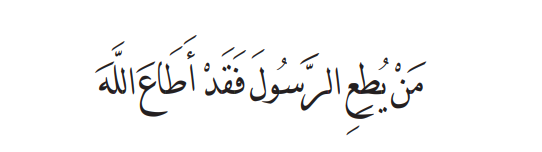
Sesiapa yang mengikuti Nabi yang diberkati ﷺ, maka sesungguhnya dia telah mengikuti Allah (SWT).6
Whosoever follows the Blessed Prophet صلى الله عليه وسلم has followed Allah ‹.6
Dalam ayat ini, Al-Qur'an memerintahkan kita untuk mengikuti jalan Nabi yang Diberkati ﷺ, kerana mengikuti Nabi yang Diberkati ﷺ adalah mengikuti Allah سبحانه وتعالى.. Suatu ketika, seorang wanita datang kepada sahabat yang terkenal, ‘Abd Allah ibn Mas‘ud رضي الله عنه). Dia berkata, "Saya telah mendengar awak melarang orang daripada melakukan perkara-perkara tertentu, sedangkan saya telah membaca Al-Qur'an dari awal hingga akhir dan saya tidak pernah membaca bahawa Al-Qur'an memerintahkan kita untuk menjauhi perkara-perkara ini." ‘Abd Allah ibn Mas‘ud رضي الله عنه) menjawab, "Jika awak membaca Al-Qur'an, awak pasti akan mendapatinya. Tidakkah awak telah membaca ayat Al-Qur'an ini:
In this aya the Qur’an orders us to adhere to the way of the Blessed Prophet صلى الله عليه وسلم, as adherence to the Blessed Prophet صلى الله عليه وسلم is adherence to Allah سبحانه وتعالى.. Once, a woman came to the famous Sahaba رضي الله عنه), ‘Abd Allóh ibn Mas‘ñdرضي الله عنه. She said, “I have heard you stop people from doing certain things even though I have read the Qur’an from cover to cover and I have never read the Qur’an ordering us to abstain from these things.” ‘Abd Allóh ibn Mas‘ñd رضي الله عنه) replied, “Had you read the Qur’an you would have found it. Have you not read this aya of the Qur’an:

Apa sahaja yang diberikan oleh Rasulullah ﷺ kepadamu, terimalah; dan apa sahaja yang dilarangnya, tinggalkanlah.7
Whatever the Prophet صلى الله عليه وسلم gives you, accept it; and whatever he disapproves of, abstain from it.7
Daripada kejadian ini kita belajar bahawa ayat ini merangkumi hadith Nabi yang diberkati ﷺ dan menetapkan kedudukan hadith dalam Islam.
From this incident we learn that this aya incorporates the aúódõth of the Blessed Prophet صلى الله عليه وسلم and establishes the authority of the aúódõth in Islam.