Hadisning saqlanishi
Preservation Of Hadīth
Alloh subhanahu va taolo Qur’onda shunday deydi:
Allah سبحانه وتعالى. states in the Qur’an:
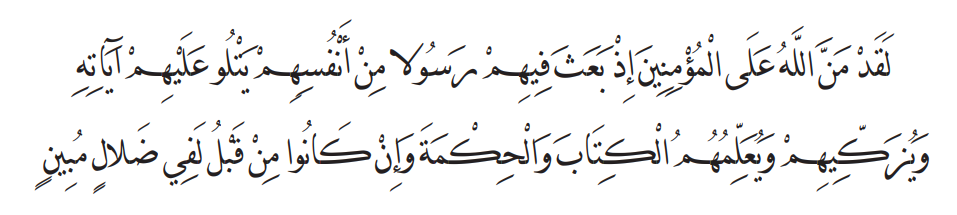
Albatta, Alloh mo‘minlarga lutf ko‘rsatdi: ular orasidan o‘zlariga bir Rasulni yubordi. U ularga Uning oyatlarini tilovat qiladi, ularni poklaydi va ularga Kitobni hamda hikmatni o‘rgatadi.1
Indeed Allah سبحانه وتعالى. has already done a favor to the believers, when He raised amongst them a messenger from themselves to recite to them His verses, purify them and teach them the book and the wisdom.1
Bu oyat sevimli Payg‘ambarning ﷺ eng muhim vazifalaridan birini bayon qiladi: Kitobni o‘rgatish. Bu vazifa faqat Kitobning talaffuzi va o‘qilishini o‘rgatishni emas [chunki bu birinchi vazifada, ya’ni “ularga Uning oyatlarini tilovat qilish”da allaqachon qamrab olingan], balki yanada muhimi, Qur’onning ma’nosini o‘rgatishni ham o‘z ichiga oladi. Muslim kishi uchun Qur’onning ma’nosi va xabarini tushunishga urinish, Payg‘ambarni ﷺ bizga uni tushuntiruvchi ustoz sifatida qabul qilmasdan turib, ma’nosiz bo‘lardi.
This aya explains one of the most important responsibilities of the beloved Blessed Prophet صلى الله عليه وسلم: to teach the Book. This responsibility consists of not just teaching the pronunciation and reading of the Book [as that is already covered in the first responsibility, i.e. ‘to recite to them His verses’], but more importantly, the meaning of the Qur’an. It would be meaningless for a Muslim to try to understand the meaning and message of the Qur’an without the Blessed Prophet صلى الله عليه وسلم as a teacher to explain it to us.
Faqat arab tilini bilish Qur’onning ma’nosini anglashga yordam bera olmaydi. Esingizda bo‘lsin, ravon arab tilida gaplashadigan sahobalar (ra) Qur’onning chuqur ma’nolarini tushunish uchun doim Payg‘ambarga ﷺ murojaat qilardilar. Qur’onning so‘zlari va ma’nolari Payg‘ambar ﷺ tomonidan ham og‘zaki, ham amaliy ravishda tushuntirilgan. Payg‘ambarning ﷺ ushbu so‘zlari va tushuntirishlari hadis deb ataladi va ular bizga Qur’onning eng ishonchli sharhini beradi. Shuning uchun Allohning Qur’onni saqlash bo‘yicha va’dasi hadislarni saqlashni ham anglatgan.
Proficiency in the Arabic language alone cannot help us grasp the meaning of the Qur’an. Remember, the Sahaba رضي الله عنه) who spoke fluent Arabic, always turned to the Blessed Prophet صلى الله عليه وسلم to understand the deeper meanings of the Qur’an. The Qur’an’s words and its meanings were explained both verbally and practically by the Blessed Prophet صلى الله عليه وسلم. These sayings and explanations of the Blessed Prophet صلى الله عليه وسلم are called úódõth and provide us with the the most authentic commentary of the Qur’an. Therefore, Allah’s سبحانه وتعالى. promise to preserve the Qur’an meant preservation of the aúódõth as well.
Biroq faqat so‘zlarni saqlab qolishning o‘zi kam foyda beradi. Masalan, agar Qur’on musulmonlarga namozni o‘rnatishni buyursa, lekin biz bu buyruq nimani anglatishini [masalan, uni qanday ado etish kerakligini] tushunmasak, unda “namozni o‘rnating” degan so‘zlarni saqlab qolishning qanday foydasi bor? Bu shuni isbotlaydiki, Qur’onni saqlash zaruratan hadislarni saqlashni ham o‘z ichiga oladi. Hadislarsiz musulmonning imoni to‘liq emas. Axir, Qur’onning Allohning kitobi ekanligini qayerdan bilamiz?
However the preservation of words alone serves little purpose. For example, if the Qur’an commands Muslims to establish üalót, but we are unable to understand what this command entails [such as how to perform it], then what benefit is there in preserving the words “establish the üalót?” This proves that the preservation of the Qur’an, by necessity, includes preservation of the úódõth. Without úódõth, the õmón of a Muslim is incomplete. After all, how do we know that the Qur’an is the book of Allah سبحانه وتعالى.?
Agar biz Qur’onni va uning o‘rnini bilsak, bu faqat Payg‘ambar ﷺ “Bu Qur’ondir; u Allohning kalomidir”, deganlari uchun bilamiz. Agar biz Payg‘ambarning ﷺ ushbu hadisini rad etsak, u holda Islomning butun poydevori qulaydi. Biz Qur’onning o‘zi da’vo qilgan narsa ekanligini bilmay qolardik.3
If we know the Qur’an and its place, it is only because the Blessed Prophet صلى الله عليه وسلم said, “This is the Qur’an; it is the word of Allah سبحانه وتعالى..” If we were to reject this úadīth of the Blessed Prophet صلى الله عليه وسلم then the whole foundation of Islam collapses. We would not know that the Qur’an is what it claims to be.3
Alloh subhanahu va taolo Qur’onda Payg‘ambarga ﷺ shunday deydi:
Allah سبحانه وتعالى. says to the Blessed Prophet صلى الله عليه وسلم in the Qur’an:

Biz sizga zikrni nozil qildik, toki odamlarga o‘zlariga nima nozil qilinganini aniq bayon qilasiz va ular fikr yuritsinlar. 2
And We have sent unto you the message, that you may explain clearly to men what is sent for them, and that they may give thought. 2
Bu oyat shuni isbotlaydiki, hadisning asosiy vazifasi Qur’on ma’nosini ochib berishdir, ya’ni hadislarsiz Qur’onni tushunib bo‘lmaydi.
This aya proves that the fundamental role of úódõth is to reveal the meaning of the Qur’an, which means that the Qur’an cannot be understood without the aúódõth.
1 3:164.
1 3:164.
2 16:44
2 16:44