Vahiyning ikki turi: tilovat qilinadigan va tilovat qilinmaydigan
Two Types Of Revelation: The Spoken And The Unspoken
Payg‘ambar ﷺ ikki turdagi ilohiy vahiyga ega bo‘lgan. Biri tilovat qilinadigan [matluw], ikkinchisi tilovat qilinmaydigan [g‘ayri matluw]. Tilovat qilinadigan vahiy — o‘qiladigan, ya’ni Qur’on; tilovat qilinmaydigan vahiy — o‘qilmaydigan, ya’ni Payg‘ambarning ﷺ hadislari. Tilovat qilinmaydigan vahiyning ildizlari Qur’on oyatlarida ko‘rsatilgan. Alloh Muqaddas Qur’onda shunday deydi:
The Blessed Prophet صلى الله عليه وسلم received two types of divine revelations. One is the spoken [matluww] and the second, the unspoken [ghair-matluww]. The spoken revelation is that which is recited [i.e., the Qur’an]; the unspoken revelation is that which is not recited [i.e., the aúódõth of the Blessed Prophet صلى الله عليه وسلم]. An indication of the roots of the unspoken revelation can be found in the ayas of the Qur’an. Allah صلى الله عليه وسلم says in the Holy Qur’an:

Sizning yuzlanib kelgan qiblangizni faqat Rasulga ergashuvchilarni ortga qaytuvchilardan ajratish uchun belgiladik.3
And We appointed the qibla to which you were used only to test those who followed the Messenger from those who would turn on their heels.3
Bu oyatning kengroq mazmunini anglash uchun uning tarixiy kontekstini o‘rganish muhim.
To gain a broader understanding of this aya, it is important that we look into its historical background.
Madinaga hijratdan ko‘p o‘tmay, Payg‘ambar ﷺ va sahobalar (ra) Quddusdagi Masjid al-Aqsoga qarab namoz o‘qishga buyurildilar. Masjid al-Aqso o‘n yetti oy davomida musulmonlarning qibla bo‘ldi. O‘n yetti oydan so‘ng, Masjid al-Aqsoga qarab namoz o‘qish buyrug‘i bekor qilindi va musulmonlarga Makkaga qarab namoz o‘qish buyurildi. Bu buyruq quyidagi oyat orqali belgilandi:
Shortly after the migration to Madina, the Blessed Prophet صلى الله عليه وسلم and the Sahaba رضي الله عنه) were told to pray towards Masjid al-Aqüó in Jerusalem. Masjid al-Aqüó became the qibla of the Muslims for seventeen months. After seventeen months, the order to pray towards Masjid al-Aqüó was abrogated and Muslims were ordered to pray towards Makka. This order was established through the following aya:
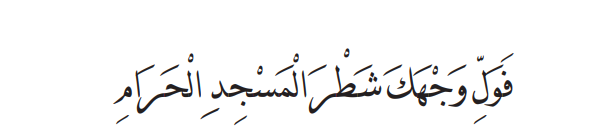
Biz sizning yuzlanib kelgan qiblangizni faqat Rasulga ergashuvchilarni ortga qaytuvchilardan ajratish uchun belgiladik.5
And We appointed the qibla to which you were used only to test those who followed the messenger from those who would turn on their heels.5
Bu oyatda Alloh subhanahu va taolo birinchi buyruqni, ya’ni Quddus tomon yuzlanishni o‘zining buyrug‘i sifatida zikr qiladi. Bu o‘quvchiga Alloh subhanahu va taolo o‘zi Masjid al-Aqsoga yuzlanish buyrug‘i ortida turganini uqtiradi. Lekin Qur’onni o‘qiganimizda, Alloh subhanahu va taolo musulmonlarga Quddus tomon namoz o‘qishni buyurgani haqida hech qanday oyat topmaymiz.
In this aya, Allah سبحانه وتعالى.mentions the first order, which was to face towards Jerusalem, as His own order. This impresses upon the reader the fact that Allah سبحانه وتعالى. himself was behind the order to face Masjid al-Aqüó. But when we read the Qur’an we do not find any such aya in which Allah سبحانه وتعالى. ordered the Muslims to pray towards Jerusalem.
Haqiqatda bu buyruq Qur’onning biror oyatidan emas, balki Payg‘ambardan ﷺ kelgan. Oyat “Payg‘ambar ﷺ buyruq chiqardi…” demaydi, balki “Biz qiblani belgiladik…” deydi. Bu bizga shuni anglatadiki, Payg‘ambarning ﷺ buyrug‘i Alloh subhanahu va taoloning buyrug‘idan farq qilmaydi.
The fact is that this order came from the Blessed Prophet صلى الله عليه وسلم and not from any aya of the Qur’an. The aya does not say, “The Blessed Prophet صلى الله عليه وسلم enacted the order…” rather it says, “We appointed the qibla….” This brings us to the understanding that the order of the Blessed Prophet صلى الله عليه وسلم is no different from the order of Allah سبحانه وتعالى..
Dalil shu qadar ravshanki, u qo‘shimcha izohni talab qilmaydi. Qur’onning Payg‘ambar ﷺ bergan buyruqqa oid bu aniq bayoni Payg‘ambarning ﷺ hadislari haqidagi asosiy e’tiqodni ko‘rsatadi: ular vahiyning bir shaklidir. Bu esa tilovat qilinmaydigan yoki o‘qilmaydigan vahiy deb ataladi.
The proof is so self-evident it does not require any further clarification. This clear statement from the Qur’an regarding the order given by the Blessed Prophet صلى الله عليه وسلم demonstrates a fundamental belief about the aúódõth of the Blessed Prophet صلى الله عليه وسلم: that they are a form of revelation. And this is what is known as the unspoken or unrecited revelation.
Yuqorida keltirilgan oyat yana boshqa muhim masalalarni ham ochib beradi:
The aya mentioned above also reveals some other important points:
1. Payg‘ambarga ﷺ Qur’onning bir qismi bo‘lmagan maxsus turdagi vahiy nozil qilingan.
1. A special type of revelation was sent to the Blessed Prophet صلى الله عليه وسلم which was not a part of the Qur’an.
2. Bu vahiylar Alloh subhanahu va taolodan edi.
2. These revelations were from Allah سبحانه وتعالى.

Kim Payg‘ambarga ergashsa, u Allohga ergashgan bo‘ladi.6
Whosoever follows the Blessed Prophet صلى الله عليه وسلم has followed Allah ‹.6
Bu oyatda Qur’on bizni Payg‘ambarning ﷺ yo‘liga amal qilishga buyuradi, chunki Payg‘ambarga ﷺ ergashish Alloh subhanahu va taologa ergashishdir. Bir kuni mashhur sahobiy ‘Abdulloh ibn Mas‘ud (ra) huzuriga bir ayol keldi. U dedi: “Men sizni ba’zi ishlarni qilishdan qaytarganingizni eshitdim, holbuki men Qur’onni boshidan oxirigacha o‘qiganman va unda bu narsalardan qaytarish buyurilganini hech o‘qimaganman.” ‘Abdulloh ibn Mas‘ud (ra) javob berdi: “Agar Qur’onni o‘qiganingizda, buni topgan bo‘lardingiz. Qur’onning quyidagi oyatini o‘qimadingizmi:
In this aya the Qur’an orders us to adhere to the way of the Blessed Prophet صلى الله عليه وسلم, as adherence to the Blessed Prophet صلى الله عليه وسلم is adherence to Allah سبحانه وتعالى.. Once, a woman came to the famous Sahaba رضي الله عنه), ‘Abd Allóh ibn Mas‘ñdرضي الله عنه. She said, “I have heard you stop people from doing certain things even though I have read the Qur’an from cover to cover and I have never read the Qur’an ordering us to abstain from these things.” ‘Abd Allóh ibn Mas‘ñd رضي الله عنه) replied, “Had you read the Qur’an you would have found it. Have you not read this aya of the Qur’an:

Payg‘ambar sizga nima bersa, uni qabul qiling; u nimadan qaytarsa, undan voz keching.7
Whatever the Prophet صلى الله عليه وسلم gives you, accept it; and whatever he disapproves of, abstain from it.7
Ushbu voqeadan shuni bilamizki, bu oyat Payg‘ambarning ﷺ hadislarini o‘z ichiga oladi va Islomda hadislarning hujjat sifatidagi kuchini belgilaydi.
From this incident we learn that this aya incorporates the aúódõth of the Blessed Prophet صلى الله عليه وسلم and establishes the authority of the aúódõth in Islam.