两种启示:有声的与无声的
Two Types Of Revelation: The Spoken And The Unspoken
圣洁的先知ﷺ接受了两种神圣启示:一种是有诵读的(matluww),另一种是无诵读的(ghair-matluww)。有诵读的启示是可以诵读的内容,即《古兰经》;无诵读的启示是不被诵读的内容,即先知ﷺ的圣训(aḥādīth)。无诵读启示的根源,可以在《古兰经》的经文中找到迹象。安拉在《古兰经》中说:
The Blessed Prophet صلى الله عليه وسلم received two types of divine revelations. One is the spoken [matluww] and the second, the unspoken [ghair-matluww]. The spoken revelation is that which is recited [i.e., the Qur’an]; the unspoken revelation is that which is not recited [i.e., the aúódõth of the Blessed Prophet صلى الله عليه وسلم]. An indication of the roots of the unspoken revelation can be found in the ayas of the Qur’an. Allah صلى الله عليه وسلم says in the Holy Qur’an:

这正是Qur'an的一节经文,应当按经文的格式翻译,并且不在其中加入ﷺ。 我们之所以设立你原先所朝向的qibla,只是为了分辨谁是顺从使者的人,谁是转身背离的人。3
And We appointed the qibla to which you were used only to test those who followed the Messenger from those who would turn on their heels.3
为了更广泛地理解这节经文,我们有必要考察它的历史背景。
To gain a broader understanding of this aya, it is important that we look into its historical background.
不久之后迁往麦地那,先知穆罕默德ﷺ与圣门弟子们(愿真主喜悦他们)奉命朝向耶路撒冷的阿克萨清真寺礼拜。阿克萨清真寺成为穆斯林的朝向达十七个月。十七个月后,朝向阿克萨清真寺礼拜的命令被废止,穆斯林奉命朝向麦加礼拜。这一命令是通过以下经文确立的:
Shortly after the migration to Madina, the Blessed Prophet صلى الله عليه وسلم and the Sahaba رضي الله عنه) were told to pray towards Masjid al-Aqüó in Jerusalem. Masjid al-Aqüó became the qibla of the Muslims for seventeen months. After seventeen months, the order to pray towards Masjid al-Aqüó was abrogated and Muslims were ordered to pray towards Makka. This order was established through the following aya:
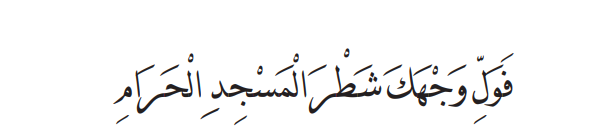
并且我把你原来所面向的朝向定为庋克拉(天房的方向),只是为了考验谁是顺从使者的人,谁是背弃而转身离去的人。 Note: the Qur'an verse text itself is kept without ﷺ, and no honorific was needed since "the messenger" here refers within the verse.5
And We appointed the qibla to which you were used only to test those who followed the messenger from those who would turn on their heels.5
在这节经文中,安拉(SWT)提到了最初的命令,即面向耶路撒冷,并将其归于自己的命令。这使读者明白,面向阿克萨清真寺的命令正是出自安拉(SWT)本身。然而,当我们阅读《古兰经》时,却找不到任何一节经文明确说安拉命令穆斯林向耶路撒冷礼拜。
In this aya, Allah سبحانه وتعالى.mentions the first order, which was to face towards Jerusalem, as His own order. This impresses upon the reader the fact that Allah سبحانه وتعالى. himself was behind the order to face Masjid al-Aqüó. But when we read the Qur’an we do not find any such aya in which Allah سبحانه وتعالى. ordered the Muslims to pray towards Jerusalem.
事实是,这一命令来自尊贵的先知ﷺ,而非《古兰经》的任何一节经文。经文并没有说“尊贵的先知ﷺ制定了这一命令……”,而是说“我确定了朝向(qibla)……”。由此可见,尊贵的先知ﷺ的命令与安拉(SWT)的命令并无不同。
The fact is that this order came from the Blessed Prophet صلى الله عليه وسلم and not from any aya of the Qur’an. The aya does not say, “The Blessed Prophet صلى الله عليه وسلم enacted the order…” rather it says, “We appointed the qibla….” This brings us to the understanding that the order of the Blessed Prophet صلى الله عليه وسلم is no different from the order of Allah سبحانه وتعالى..
这一论据不言自明,无需再作进一步的阐释。《古兰经》中这段明确的经文,涉及蒙福的先知ﷺ所下达的命令,它说明了关于蒙福的先知ﷺ的圣训(ḥadīth)的一项根本信条:圣训是启示的一种形式。这就是所谓的“未诵启示”,即非诵读的启示。
The proof is so self-evident it does not require any further clarification. This clear statement from the Qur’an regarding the order given by the Blessed Prophet صلى الله عليه وسلم demonstrates a fundamental belief about the aúódõth of the Blessed Prophet صلى الله عليه وسلم: that they are a form of revelation. And this is what is known as the unspoken or unrecited revelation.
上面提到的这节经文还揭示了其他一些重要的要点:
The aya mentioned above also reveals some other important points:
1. 一种特殊的启示曾降给受祝福的先知穆罕默德ﷺ,它不属于《古兰经》的一部分。
1. A special type of revelation was sent to the Blessed Prophet صلى الله عليه وسلم which was not a part of the Qur’an.
2. 这些启示来自安拉 سبحانه وتعالى。
2. These revelations were from Allah سبحانه وتعالى.
3. 同样,从未明言的启示中推导出的裁决,也同样是安拉(SWT)的裁决。
3. Similarly, the rulings that derived from the unspoken revelations were also the rulings of Allah سبحانه وتعالى.
所有的圣门弟子رضي الله عنه都有义务执行非诵读启示中的命令,与执行诵读启示(《古兰经》)中的命令一样。有些命令的降示是为了考验穆斯林的信仰(原文为 õmón,应为 īmān,即"信仰"),特别是那些通过非诵读启示降示的命令,以考察他们是否遵从这些命令。还可以列举许多其他例子,但为简明起见,此处不再提及。
All the Sahaba رضي الله عنه were obligated to fulfill the orders of the unspoken revelations in the same manner as they were the spoken revelation [Qur’an]. Some orders were revealed to test the õmón of the Muslims, particularly those orders that were revealed through the unspoken revelation, to see whether they obeyed the orders. Many other examples could be cited, but they have not been mentioned for the sake of brevity.
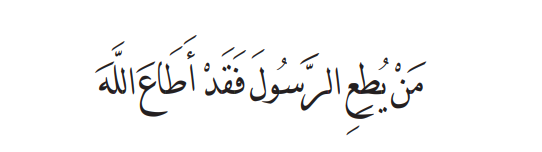
谁追随这位蒙福的先知ﷺ,便是追随了真主。6
Whosoever follows the Blessed Prophet صلى الله عليه وسلم has followed Allah ‹.6
在这节经文中,《古兰经》命令我们遵循先知穆罕默德ﷺ的道路,因为遵循先知穆罕默德ﷺ就是遵循安拉(SWT)。有一次,一位妇女来到著名的圣门弟子阿卜杜拉·伊本·麦斯欧德(愿主喜悦他)那里。她说:“我听说您禁止人们做某些事情,但我把《古兰经》从头到尾读完了,从未在经中读到命令我们戒除这些事情。”阿卜杜拉·伊本·麦斯欧德(愿主喜悦他)回答道:“如果你读过《古兰经》,你就会找到它。你难道没有读过《古兰经》中的这节经文吗?”
In this aya the Qur’an orders us to adhere to the way of the Blessed Prophet صلى الله عليه وسلم, as adherence to the Blessed Prophet صلى الله عليه وسلم is adherence to Allah سبحانه وتعالى.. Once, a woman came to the famous Sahaba رضي الله عنه), ‘Abd Allóh ibn Mas‘ñdرضي الله عنه. She said, “I have heard you stop people from doing certain things even though I have read the Qur’an from cover to cover and I have never read the Qur’an ordering us to abstain from these things.” ‘Abd Allóh ibn Mas‘ñd رضي الله عنه) replied, “Had you read the Qur’an you would have found it. Have you not read this aya of the Qur’an:

凡先知ﷺ赐予你的,你就接受;凡他禁止的,你就戒除。7
Whatever the Prophet صلى الله عليه وسلم gives you, accept it; and whatever he disapproves of, abstain from it.7
从这件事中我们可以学到,这段经文包含了圣先知的圣训,并确立了圣训在伊斯兰教中的权威性。
From this incident we learn that this aya incorporates the aúódõth of the Blessed Prophet صلى الله عليه وسلم and establishes the authority of the aúódõth in Islam.