الوحيان: المتلوّ وغير المتلوّ
Two Types Of Revelation: The Spoken And The Unspoken
تلقّى النبي المبارك ﷺ نوعين من الوحي الإلهي: أحدهما المتلوّ، والثاني غير المتلوّ. فالوحي المتلوّ هو ما يُتلى (أي القرآن الكريم)، والوحي غير المتلوّ هو ما لا يُتلى (أي أحاديث النبي المبارك ﷺ). ويمكن الوقوف على أصول الوحي غير المتلوّ في آيات القرآن الكريم. قال الله تعالى في القرآن الكريم:
The Blessed Prophet صلى الله عليه وسلم received two types of divine revelations. One is the spoken [matluww] and the second, the unspoken [ghair-matluww]. The spoken revelation is that which is recited [i.e., the Qur’an]; the unspoken revelation is that which is not recited [i.e., the aúódõth of the Blessed Prophet صلى الله عليه وسلم]. An indication of the roots of the unspoken revelation can be found in the ayas of the Qur’an. Allah صلى الله عليه وسلم says in the Holy Qur’an:

وَمَا جَعَلْنَا الْقِبْلَةَ الَّتِي كُنْتَ عَلَيْهَا إِلَّا لِنَعْلَمَ مَنْ يَتَّبِعُ الرَّسُولَ مِمَّنْ يَنْقَلِبُ عَلَىٰ عَقِبَيْهِ ﷺ3
And We appointed the qibla to which you were used only to test those who followed the Messenger from those who would turn on their heels.3
لِيَحْصُلَ فَهْمٌ أَوْسَعُ لِهٰذِهِ الْآيَةِ، فَمِنَ الْمُهِمِّ أَنْ نَنْظُرَ فِي خَلْفِيَّتِهَا التَّارِيخِيَّةِ.
To gain a broader understanding of this aya, it is important that we look into its historical background.
بعد فترة قصيرة من الهجرة إلى المدينة أُمر النبي المبارك ﷺ والصحابة رضي الله عنهم أن يصلّوا نحو المسجد الأقصى في القدس. وقد صار المسجد الأقصى قبلةَ المسلمين مدة سبعةَ عشرَ شهرًا. وبعد سبعة عشر شهرًا نُسخ الأمرُ بالصلاة نحو المسجد الأقصى، وأُمر المسلمون بالصلاة نحو مكة. وقد ثبت هذا الحكم بالآية الآتية:
Shortly after the migration to Madina, the Blessed Prophet صلى الله عليه وسلم and the Sahaba رضي الله عنه) were told to pray towards Masjid al-Aqüó in Jerusalem. Masjid al-Aqüó became the qibla of the Muslims for seventeen months. After seventeen months, the order to pray towards Masjid al-Aqüó was abrogated and Muslims were ordered to pray towards Makka. This order was established through the following aya:
وَمَا جَعَلْنَا الْقِبْلَةَ الَّتِي كُنْتَ عَلَيْهَا إِلَّا لِنَعْلَمَ مَنْ يَتَّبِعُ الرَّسُولَ مِمَّنْ يَنْقَلِبُ عَلَىٰ عَقِبَيْهِ5
And We appointed the qibla to which you were used only to test those who followed the messenger from those who would turn on their heels.5
في هذه الآية يذكر الله سبحانه وتعالى الأمرَ الأول، وهو استقبال بيت المقدس، على أنه أمرُه هو، وفي ذلك تأكيدٌ للقارئ بأن الله سبحانه وتعالى نفسَه هو الذي كان وراء الأمر باستقبال المسجد الأقصى. لكننا عند قراءتنا القرآن لا نجد أيَّ آيةٍ يأمر فيها الله سبحانه وتعالى المسلمين بالصلاة نحو بيت المقدس.
In this aya, Allah سبحانه وتعالى.mentions the first order, which was to face towards Jerusalem, as His own order. This impresses upon the reader the fact that Allah سبحانه وتعالى. himself was behind the order to face Masjid al-Aqüó. But when we read the Qur’an we do not find any such aya in which Allah سبحانه وتعالى. ordered the Muslims to pray towards Jerusalem.
الحقيقة أن هذا الأمر صدر عن النبي ﷺ، وليس من أي آية من القرآن الكريم. فالآية لا تقول: «أمر النبي ﷺ بكذا»، وإنما تقول: {وَمَا جَعَلْنَا الْقِبْلَةَ الَّتِي كُنتَ عَلَيْهَا} ... ﷺ. وهذا يقودنا إلى فهم أن أمر النبي ﷺ لا يختلف عن أمر الله سبحانه وتعالى.
The fact is that this order came from the Blessed Prophet صلى الله عليه وسلم and not from any aya of the Qur’an. The aya does not say, “The Blessed Prophet صلى الله عليه وسلم enacted the order…” rather it says, “We appointed the qibla….” This brings us to the understanding that the order of the Blessed Prophet صلى الله عليه وسلم is no different from the order of Allah سبحانه وتعالى..
الدليل واضح جدًا فلا يحتاج إلى مزيد بيان. فهذا النص الصريح من القرآن الكريم في الأمر الذي أصدره النبي ﷺ يدل على عقيدة أساسية في أحاديث النبي ﷺ: أنها ضرب من الوحي. وهذا هو ما يُعرف بالوحي غير المتلوّ.
The proof is so self-evident it does not require any further clarification. This clear statement from the Qur’an regarding the order given by the Blessed Prophet صلى الله عليه وسلم demonstrates a fundamental belief about the aúódõth of the Blessed Prophet صلى الله عليه وسلم: that they are a form of revelation. And this is what is known as the unspoken or unrecited revelation.
الآيةُ المذكورةُ أعلاه تكشفُ أيضًا عن نقاطٍ مهمةٍ أخرى.
The aya mentioned above also reveals some other important points:
١. أُنزل على النبي المصطفى ﷺ نوعٌ خاصٌّ من الوحي لم يكن جزءاً من القرآن.
1. A special type of revelation was sent to the Blessed Prophet صلى الله عليه وسلم which was not a part of the Qur’an.
هذه الوحي كان من الله سبحانه وتعالى.
2. These revelations were from Allah سبحانه وتعالى.
وكذلك الأحكام التي استُنبطت من الوحي غير المتلو كانت أيضًا أحكامَ الله سبحانه وتعالى.
3. Similarly, the rulings that derived from the unspoken revelations were also the rulings of Allah سبحانه وتعالى.
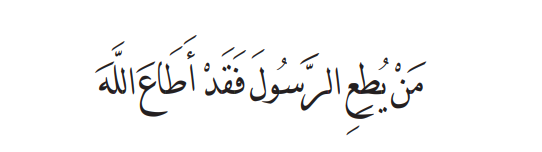
من اتّبع النبيَّ ﷺ فقد اتّبع الله ﷻ.6
Whosoever follows the Blessed Prophet صلى الله عليه وسلم has followed Allah ‹.6
في هذه الآية يأمر القرآن الكريم بالتمسك بطريقة النبي المبارك ﷺ، لأن التمسك بالنبي المبارك ﷺ هو التمسك بالله سبحانه وتعالى. ذات مرة، جاءت امرأة إلى الصحابي الشهير عبد الله بن مسعود رضي الله عنه، فقالت: "لقد سمعتُك تنهى الناس عن أشياء، مع أني قرأتُ القرآن من الدفة إلى الدفة، ولم أجد فيه أمرًا بالامتناع عن هذه الأشياء." فأجابها عبد الله بن مسعود رضي الله عنه: "لو قرأتِ القرآن لوجدتِه، أما قرأتِ هذه الآية من القرآن:
In this aya the Qur’an orders us to adhere to the way of the Blessed Prophet صلى الله عليه وسلم, as adherence to the Blessed Prophet صلى الله عليه وسلم is adherence to Allah سبحانه وتعالى.. Once, a woman came to the famous Sahaba رضي الله عنه), ‘Abd Allóh ibn Mas‘ñdرضي الله عنه. She said, “I have heard you stop people from doing certain things even though I have read the Qur’an from cover to cover and I have never read the Qur’an ordering us to abstain from these things.” ‘Abd Allóh ibn Mas‘ñd رضي الله عنه) replied, “Had you read the Qur’an you would have found it. Have you not read this aya of the Qur’an:

وَمَا آتَاكُمُ الرَّسُولُ فَخُذُوهُ وَمَا نَهَاكُمْ عَنْهُ فَانْتَهُوا ﷺ7
Whatever the Prophet صلى الله عليه وسلم gives you, accept it; and whatever he disapproves of, abstain from it.7
من هذه الواقعة نستفيد أن هذه الآية تتضمن أحاديث النبي ﷺ، وتقرر حجية الأحاديث في الإسلام.
From this incident we learn that this aya incorporates the aúódõth of the Blessed Prophet صلى الله عليه وسلم and establishes the authority of the aúódõth in Islam.