Überlieferung des Hadīth
Preservation Of Hadīth
Allah سبحانه وتعالى sagt im Qur'an:
Allah سبحانه وتعالى. states in the Qur’an:
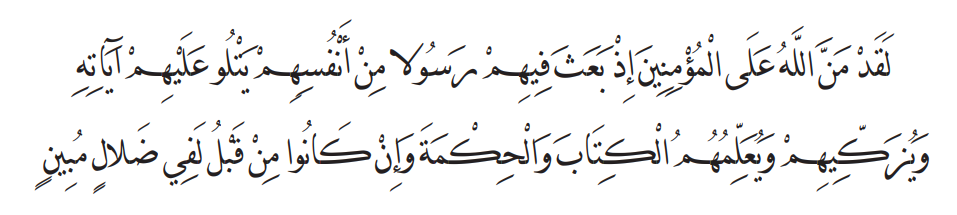
Gewiss, Allah سبحانه وتعالى hat den Gläubigen bereits eine Wohltat erwiesen, als Er unter ihnen einen Gesandten aus ihrer eigenen Mitte erweckte, der ihnen Seine Verse rezitiert, sie läutert und ihnen das Buch und die Weisheit lehrt.1
Indeed Allah سبحانه وتعالى. has already done a favor to the believers, when He raised amongst them a messenger from themselves to recite to them His verses, purify them and teach them the book and the wisdom.1
Dieser Vers erklärt eine der wichtigsten Aufgaben des geliebten gesegneten Propheten ﷺ: die Schrift zu lehren. Diese Aufgabe besteht nicht nur darin, die Aussprache und das Lesen des Buches zu lehren [denn das ist bereits in der ersten Aufgabe enthalten, nämlich ‚ihnen Seine Verse zu rezitieren‘], sondern vor allem darin, die Bedeutung des Qur'an zu lehren. Es wäre für einen Muslim sinnlos, die Bedeutung und Botschaft des Qur'an verstehen zu wollen, ohne den Propheten ﷺ als Lehrer, der sie uns erklärt.
This aya explains one of the most important responsibilities of the beloved Blessed Prophet صلى الله عليه وسلم: to teach the Book. This responsibility consists of not just teaching the pronunciation and reading of the Book [as that is already covered in the first responsibility, i.e. ‘to recite to them His verses’], but more importantly, the meaning of the Qur’an. It would be meaningless for a Muslim to try to understand the meaning and message of the Qur’an without the Blessed Prophet صلى الله عليه وسلم as a teacher to explain it to us.
Die Beherrschung der arabischen Sprache allein kann uns nicht helfen, den Sinn des Qur'an zu erfassen. Man bedenke: Die Sahaba (رضي الله عنه) – die fließend Arabisch sprachen – wandten sich stets an den gesegneten Propheten ﷺ, um die tieferen Bedeutungen des Qur'an zu verstehen. Die Worte des Qur'an und seine Bedeutungen wurden vom gesegneten Propheten ﷺ sowohl mündlich als auch durch sein Verhalten erklärt. Diese Aussprüche und Erklärungen des gesegneten Propheten ﷺ werden Ahadith genannt und liefern uns den authentischsten Kommentar zum Qur'an. Daher bedeutete Allahs (SWT) Versprechen, den Qur'an zu bewahren, auch die Bewahrung der Ahadith.
Proficiency in the Arabic language alone cannot help us grasp the meaning of the Qur’an. Remember, the Sahaba رضي الله عنه) who spoke fluent Arabic, always turned to the Blessed Prophet صلى الله عليه وسلم to understand the deeper meanings of the Qur’an. The Qur’an’s words and its meanings were explained both verbally and practically by the Blessed Prophet صلى الله عليه وسلم. These sayings and explanations of the Blessed Prophet صلى الله عليه وسلم are called úódõth and provide us with the the most authentic commentary of the Qur’an. Therefore, Allah’s سبحانه وتعالى. promise to preserve the Qur’an meant preservation of the aúódõth as well.
Die Bewahrung bloßer Worte allein hat jedoch wenig Nutzen. Wenn der Qur’an beispielsweise den Muslimen gebietet, das Ṣalāt zu verrichten, wir aber nicht verstehen können, was dieses Gebot beinhaltet [etwa wie es zu verrichten ist], welchen Nutzen hätte dann die Bewahrung der Worte „verrichtet das Ṣalāt“? Dies beweist, dass die Bewahrung des Qur’an notwendigerweise die Bewahrung der Sunnah einschließt. Ohne die Sunnah ist der Glaube (Īmān) eines Muslims unvollständig. Denn woher wissen wir, dass der Qur’an das Buch Allahs (SWT) ist?
However the preservation of words alone serves little purpose. For example, if the Qur’an commands Muslims to establish üalót, but we are unable to understand what this command entails [such as how to perform it], then what benefit is there in preserving the words “establish the üalót?” This proves that the preservation of the Qur’an, by necessity, includes preservation of the úódõth. Without úódõth, the õmón of a Muslim is incomplete. After all, how do we know that the Qur’an is the book of Allah سبحانه وتعالى.?
Wenn wir den Koran und seinen Stellenwert kennen, dann nur deshalb, weil der gesegnete Prophet ﷺ gesagt hat: „Dies ist der Koran; er ist das Wort Allahs, des Erhabenen.“ Würden wir diesen Ḥadīth des gesegneten Propheten ﷺ ablehnen, dann bräche das ganze Fundament des Islam zusammen. Wir wüssten nicht, dass der Koran das ist, als was er sich ausgibt.3
If we know the Qur’an and its place, it is only because the Blessed Prophet صلى الله عليه وسلم said, “This is the Qur’an; it is the word of Allah سبحانه وتعالى..” If we were to reject this úadīth of the Blessed Prophet صلى الله عليه وسلم then the whole foundation of Islam collapses. We would not know that the Qur’an is what it claims to be.3
Allah سبحانه وتعالى sagt dem gesegneten Propheten صلى الله عليه وسلم im Qur'an: Note: The user's text contains Arabic honorifics written in full. Per the rules, honorifics written in words stay as they are, and ﷺ/(SWT) are only added in the translation where the instructions require them. Since the original gives "Allah سبحانه وتعالى" and "Blessed Prophet صلى الله عليه وسلم" in Arabic script, I have kept them as written.
Allah سبحانه وتعالى. says to the Blessed Prophet صلى الله عليه وسلم in the Qur’an:

Und Wir haben dir die Ermahnung herabgesandt, damit du den Menschen klarlegst, was ihnen herabgesandt wurde, und damit sie nachdenken. 2
And We have sent unto you the message, that you may explain clearly to men what is sent for them, and that they may give thought. 2
Dieser Vers beweist, dass die grundlegende Aufgabe der Sunna darin besteht, die Bedeutung des Qur'an zu verdeutlichen, was bedeutet, dass der Qur'an ohne die Sunna nicht verstanden werden kann.
This aya proves that the fundamental role of úódõth is to reveal the meaning of the Qur’an, which means that the Qur’an cannot be understood without the aúódõth.
1 3:164.
1 3:164.
2 16:44
2 16:44