Zwei Arten der Offenbarung: Die gesprochene und die ungesprochene
Two Types Of Revelation: The Spoken And The Unspoken
Der gesegnete Prophet ﷺ empfing zwei Arten göttlicher Offenbarung. Die eine ist die verlesene [matluww], die zweite die nicht verlesene [ghair-matluww]. Die verlesene Offenbarung ist jene, die rezitiert wird [d. h. der Koran]; die nicht verlesene Offenbarung ist jene, die nicht rezitiert wird [d. h. die Ḥadīthe des gesegneten Propheten ﷺ]. Ein Hinweis auf die Wurzeln der nicht verlesenen Offenbarung findet sich in den Versen des Korans. Allah (SWT) sagt im Heiligen Koran:
The Blessed Prophet صلى الله عليه وسلم received two types of divine revelations. One is the spoken [matluww] and the second, the unspoken [ghair-matluww]. The spoken revelation is that which is recited [i.e., the Qur’an]; the unspoken revelation is that which is not recited [i.e., the aúódõth of the Blessed Prophet صلى الله عليه وسلم]. An indication of the roots of the unspoken revelation can be found in the ayas of the Qur’an. Allah صلى الله عليه وسلم says in the Holy Qur’an:

Und Wir haben die Qibla, nach der du dich zuvor gerichtet hast, nur deshalb eingesetzt, um zu prüfen, wer dem Gesandten folgt und wer sich auf seinen Fersen umwendet.3
And We appointed the qibla to which you were used only to test those who followed the Messenger from those who would turn on their heels.3
Um ein umfassenderes Verständnis dieses Verses zu erlangen, ist es wichtig, sich mit seinem historischen Hintergrund zu befassen.
To gain a broader understanding of this aya, it is important that we look into its historical background.
Kurz nach der Auswanderung nach Madina wurden der gesegnete Prophet ﷺ und die Gefährten (رضي الله عنه) angewiesen, in Richtung der Al-Aqsa-Moschee in Jerusalem zu beten. Die Al-Aqsa-Moschee war siebzehn Monate lang die Qibla der Muslime. Nach siebzehn Monaten wurde die Anordnung, in Richtung der Al-Aqsa-Moschee zu beten, aufgehoben, und die Muslime wurden angewiesen, in Richtung Makka zu beten. Diese Anordnung wurde durch folgenden Vers festgelegt:
Shortly after the migration to Madina, the Blessed Prophet صلى الله عليه وسلم and the Sahaba رضي الله عنه) were told to pray towards Masjid al-Aqüó in Jerusalem. Masjid al-Aqüó became the qibla of the Muslims for seventeen months. After seventeen months, the order to pray towards Masjid al-Aqüó was abrogated and Muslims were ordered to pray towards Makka. This order was established through the following aya:
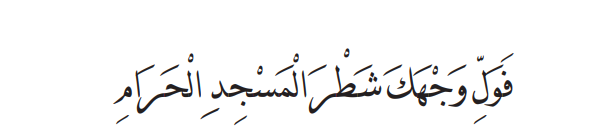
Und Wir haben die Qibla, der du bisher zugewandt warst, nur eingesetzt, um zu prüfen, wer dem Gesandten folgt und wer sich auf seinen Fersen umkehrt.5
And We appointed the qibla to which you were used only to test those who followed the messenger from those who would turn on their heels.5
In diesem Vers erwähnt Allah سبحانه وتعالى die erste Anordnung, sich nach Jerusalem zu wenden, als seine eigene Anordnung. Dadurch wird dem Leser eindringlich bewusst gemacht, dass Allah سبحانه وتعالى selbst hinter der Anordnung stand, sich zur Masjid al-Aqsa hin zu wenden. Wenn wir jedoch den Qur'an lesen, finden wir keinen solchen Vers, in dem Allah سبحانه وتعالى den Muslimen befohlen hätte, nach Jerusalem hin zu beten.
In this aya, Allah سبحانه وتعالى.mentions the first order, which was to face towards Jerusalem, as His own order. This impresses upon the reader the fact that Allah سبحانه وتعالى. himself was behind the order to face Masjid al-Aqüó. But when we read the Qur’an we do not find any such aya in which Allah سبحانه وتعالى. ordered the Muslims to pray towards Jerusalem.
Tatsache ist, dass diese Anordnung vom gesegneten Propheten ﷺ stammt und nicht von irgendeinem Vers des Qur'an. Der Vers sagt nicht: „Der gesegnete Prophet ﷺ hat die Anordnung erlassen …“, sondern er sagt: „Wir haben die Qibla bestimmt …“ Daraus ergibt sich die Erkenntnis, dass die Anordnung des gesegneten Propheten ﷺ nicht anders ist als die Anordnung Allahs (SWT).
The fact is that this order came from the Blessed Prophet صلى الله عليه وسلم and not from any aya of the Qur’an. The aya does not say, “The Blessed Prophet صلى الله عليه وسلم enacted the order…” rather it says, “We appointed the qibla….” This brings us to the understanding that the order of the Blessed Prophet صلى الله عليه وسلم is no different from the order of Allah سبحانه وتعالى..
Der Beweis ist so offensichtlich, dass er keiner weiteren Erläuterung bedarf. Diese klare Aussage aus dem Qur'an hinsichtlich der Anordnung des gesegneten Propheten ﷺ zeigt einen grundlegenden Glaubenssatz über die Ahadith des gesegneten Propheten ﷺ: dass sie eine Form der Offenbarung sind. Und dies ist das, was als die unausgesprochene oder nicht rezitierte Offenbarung bekannt ist.
The proof is so self-evident it does not require any further clarification. This clear statement from the Qur’an regarding the order given by the Blessed Prophet صلى الله عليه وسلم demonstrates a fundamental belief about the aúódõth of the Blessed Prophet صلى الله عليه وسلم: that they are a form of revelation. And this is what is known as the unspoken or unrecited revelation.
Die oben erwähnte Āyah enthält auch einige andere wichtige Punkte:
The aya mentioned above also reveals some other important points:
1. Eine besondere Art der Offenbarung wurde dem gesegneten Propheten ﷺ herabgesandt, die nicht Teil des Qur'an war.
1. A special type of revelation was sent to the Blessed Prophet صلى الله عليه وسلم which was not a part of the Qur’an.
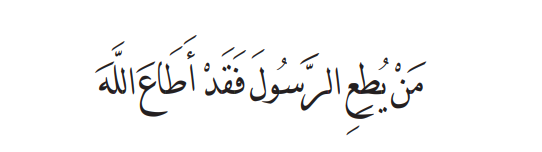
Wer dem gesegneten Propheten ﷺ folgt, der folgt Allah.6
Whosoever follows the Blessed Prophet صلى الله عليه وسلم has followed Allah ‹.6
In diesem Vers befiehlt der Koran uns, dem Weg des gesegneten Propheten ﷺ zu folgen, denn das Befolgen des gesegneten Propheten ﷺ ist das Befolgen Allahs سبحانه وتعالى.. Einmal kam eine Frau zu dem berühmten Gefährten (Sahaba) رضي الله عنه), ‘Abd Allāh ibn Mas‘ūd رضي الله عنه. Sie sagte: „Ich habe gehört, dass du Menschen davon abhältst, bestimmte Dinge zu tun, obwohl ich den Koran von der ersten bis zur letzten Seite gelesen habe und niemals gelesen habe, dass er uns befiehlt, mich von diesen Dingen fernzuhalten.“ ‘Abd Allāh ibn Mas‘ūd رضي الله عنه) antwortete: „Hättest du den Koran gelesen, hättest du es gefunden. Hast du nicht diesen Vers des Korans gelesen:
In this aya the Qur’an orders us to adhere to the way of the Blessed Prophet صلى الله عليه وسلم, as adherence to the Blessed Prophet صلى الله عليه وسلم is adherence to Allah سبحانه وتعالى.. Once, a woman came to the famous Sahaba رضي الله عنه), ‘Abd Allóh ibn Mas‘ñdرضي الله عنه. She said, “I have heard you stop people from doing certain things even though I have read the Qur’an from cover to cover and I have never read the Qur’an ordering us to abstain from these things.” ‘Abd Allóh ibn Mas‘ñd رضي الله عنه) replied, “Had you read the Qur’an you would have found it. Have you not read this aya of the Qur’an:

„Was auch immer der Prophet ﷺ euch gibt, das nehmt an; und wovon er euch abhält, davon enthaltet euch.“7
Whatever the Prophet صلى الله عليه وسلم gives you, accept it; and whatever he disapproves of, abstain from it.7
Aus diesem Vorfall lernen wir, dass dieser Vers die Ḥadīthe des gesegneten Propheten ﷺ umfasst und die Autorität der Ḥadīthe im Islam begründet.
From this incident we learn that this aya incorporates the aúódõth of the Blessed Prophet صلى الله عليه وسلم and establishes the authority of the aúódõth in Islam.