Preservación del Hadīth
Preservation Of Hadīth
Allah سبحانه وتعالى dice en el Corán:
Allah سبحانه وتعالى. states in the Qur’an:
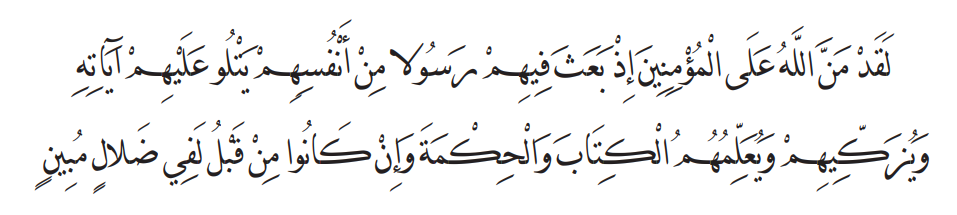
Ciertamente, Allah سبحانه وتعالى ya ha concedido un favor a los creyentes cuando les envió un mensajero de entre ellos mismos para recitarles Sus aleyas, purificarlos y enseñarles el Libro y la sabiduría.1
Indeed Allah سبحانه وتعالى. has already done a favor to the believers, when He raised amongst them a messenger from themselves to recite to them His verses, purify them and teach them the book and the wisdom.1
Este aleya explica una de las responsabilidades más importantes del amado Profeta bendito ﷺ: enseñar el Libro. Esta responsabilidad consiste no solo en enseñar la pronunciación y la recitación del Libro [pues eso ya queda cubierto en la primera responsabilidad, es decir, "recitarles Sus aleyas"], sino, de manera más importante, en enseñar el significado del Corán. Sería algo carente de sentido que un musulmán intentara comprender el significado y el mensaje del Corán sin el Profeta ﷺ como maestro que nos lo explique.
This aya explains one of the most important responsibilities of the beloved Blessed Prophet صلى الله عليه وسلم: to teach the Book. This responsibility consists of not just teaching the pronunciation and reading of the Book [as that is already covered in the first responsibility, i.e. ‘to recite to them His verses’], but more importantly, the meaning of the Qur’an. It would be meaningless for a Muslim to try to understand the meaning and message of the Qur’an without the Blessed Prophet صلى الله عليه وسلم as a teacher to explain it to us.
El dominio de la lengua árabe por sí solo no nos permite comprender el significado del Corán. Recordemos que los Sahaba (que Allah esté complacido con ellos), que hablaban el árabe con fluidez, siempre recurrían al Profeta bendito ﷺ para comprender los significados más profundos del Corán. Las palabras del Corán y sus significados fueron explicados por el Profeta bendito ﷺ tanto de forma verbal como práctica. Estos dichos y explicaciones del Profeta bendito ﷺ se llaman ḥadīth y nos proporcionan el comentario más auténtico del Corán. Por lo tanto, la promesa de Allah (SWT) de preservar el Corán significó también la preservación de los aḥādīth.
Proficiency in the Arabic language alone cannot help us grasp the meaning of the Qur’an. Remember, the Sahaba رضي الله عنه) who spoke fluent Arabic, always turned to the Blessed Prophet صلى الله عليه وسلم to understand the deeper meanings of the Qur’an. The Qur’an’s words and its meanings were explained both verbally and practically by the Blessed Prophet صلى الله عليه وسلم. These sayings and explanations of the Blessed Prophet صلى الله عليه وسلم are called úódõth and provide us with the the most authentic commentary of the Qur’an. Therefore, Allah’s سبحانه وتعالى. promise to preserve the Qur’an meant preservation of the aúódõth as well.
Sin embargo, la preservación de las palabras por sí sola sirve de poco. Por ejemplo, si el Corán ordena a los musulmanes establecer la üalót, pero no somos capaces de comprender lo que este mandato implica [como cómo realizarla], ¿qué beneficio hay en preservar las palabras "establezcan la üalót"? Esto demuestra que la preservación del Corán, necesariamente, incluye la preservación de la úódõth. Sin la úódõth, el õmón de un musulmán está incompleto. Después de todo, ¿cómo sabemos que el Corán es el libro de Allah سبحانه وتعالى?
However the preservation of words alone serves little purpose. For example, if the Qur’an commands Muslims to establish üalót, but we are unable to understand what this command entails [such as how to perform it], then what benefit is there in preserving the words “establish the üalót?” This proves that the preservation of the Qur’an, by necessity, includes preservation of the úódõth. Without úódõth, the õmón of a Muslim is incomplete. After all, how do we know that the Qur’an is the book of Allah سبحانه وتعالى.?
Si conocemos el Corán y su lugar, es solo porque el Profeta bendito ﷺ dijo: “Este es el Corán; es la palabra de Allah سبحانه وتعالى”. Si rechazáramos este ḥadīth del Profeta bendito ﷺ, todo el fundamento del Islam se derrumbaría. No sabríamos que el Corán es lo que afirma ser.3
If we know the Qur’an and its place, it is only because the Blessed Prophet صلى الله عليه وسلم said, “This is the Qur’an; it is the word of Allah سبحانه وتعالى..” If we were to reject this úadīth of the Blessed Prophet صلى الله عليه وسلم then the whole foundation of Islam collapses. We would not know that the Qur’an is what it claims to be.3
Allah سبحانه وتعالى dice al Profeta bendito صلى الله عليه وسلم en el Corán:
Allah سبحانه وتعالى. says to the Blessed Prophet صلى الله عليه وسلم in the Qur’an:

Y te hemos revelado el Mensaje, para que expliques claramente a los hombres lo que les ha sido enviado, y para que reflexionen. 2
And We have sent unto you the message, that you may explain clearly to men what is sent for them, and that they may give thought. 2
Esta āyah demuestra que la función fundamental de la sunnah es revelar el significado del Corán, lo que significa que el Corán no puede comprenderse sin la sunnah.
This aya proves that the fundamental role of úódõth is to reveal the meaning of the Qur’an, which means that the Qur’an cannot be understood without the aúódõth.
1 3:164.
1 3:164.
2 16:44
2 16:44