दो प्रकार की वह्य: वाचित और अवाचित
Two Types Of Revelation: The Spoken And The Unspoken
धन्य पैगंबर ﷺ को ईश्वरीय प्रकाशना (वह्य) के दो प्रकार प्राप्त हुए। एक है मत्लू (पढ़ी जाने वाली) और दूसरी है ग़ैर-मत्लू (न पढ़ी जाने वाली)। पढ़ी जाने वाली प्रकाशना वह है जो सुनाई जाती है [अर्थात् क़ुरआन]; न पढ़ी जाने वाली प्रकाशना वह है जो सुनाई नहीं जाती [अर्थात् पैगंबर ﷺ की हदीस]। ग़ैर-मत्लू प्रकाशना की जड़ों का संकेत क़ुरआन की आयतों में मिलता है। अल्लाह (SWT) पवित्र क़ुरआन में फ़रमाता है:
The Blessed Prophet صلى الله عليه وسلم received two types of divine revelations. One is the spoken [matluww] and the second, the unspoken [ghair-matluww]. The spoken revelation is that which is recited [i.e., the Qur’an]; the unspoken revelation is that which is not recited [i.e., the aúódõth of the Blessed Prophet صلى الله عليه وسلم]. An indication of the roots of the unspoken revelation can be found in the ayas of the Qur’an. Allah صلى الله عليه وسلم says in the Holy Qur’an:

और हमने वह क़िबला, जिसकी ओर तुम पहले मुँह करते थे, केवल इसलिए ठहराया था ताकि जो रसूल ﷺ का अनुसरण करता है उसे उससे अलग पहचाना जाए जो उल्टे पाँव फिर जाता है।3
And We appointed the qibla to which you were used only to test those who followed the Messenger from those who would turn on their heels.3
इस आयत को व्यापक रूप से समझने के लिए यह ज़रूरी है कि हम इसकी ऐतिहासिक पृष्ठभूमि की ओर ध्यान दें।
To gain a broader understanding of this aya, it is important that we look into its historical background.
मदीना की हिजरत के कुछ ही समय बाद, नबी ﷺ और सहाबा (रज़ियल्लाहु अन्हुम) को यरूशलम में मस्जिद-ए-अक़्सा की ओर मुँह करके नमाज़ पढ़ने का हुक्म दिया गया। सत्रह महीने तक मस्जिद-ए-अक़्सा मुसलमानों का क़िबला रहा। सत्रह महीने के बाद मस्जिद-ए-अक़्सा की ओर नमाज़ पढ़ने का हुक्म मंसूख़ कर दिया गया और मुसलमानों को मक्का की ओर मुँह करके नमाज़ पढ़ने का आदेश दिया गया। यह हुक्म निम्नलिखित आयत के द्वारा स्थापित हुआ:
Shortly after the migration to Madina, the Blessed Prophet صلى الله عليه وسلم and the Sahaba رضي الله عنه) were told to pray towards Masjid al-Aqüó in Jerusalem. Masjid al-Aqüó became the qibla of the Muslims for seventeen months. After seventeen months, the order to pray towards Masjid al-Aqüó was abrogated and Muslims were ordered to pray towards Makka. This order was established through the following aya:
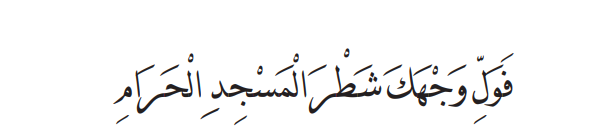
और हमने जिस क़िबला पर आप (ﷺ) थे, उसे केवल इसलिए ठहराया था ताकि हम जान लें कि कौन रसूल का अनुसरण करता है और कौन अपनी एड़ियों के बल पीछे फिर जाता है।5
And We appointed the qibla to which you were used only to test those who followed the messenger from those who would turn on their heels.5
इस आयत में अल्लाह سبحانه وتعالى ने पहले आदेश को, यानी यरूशलेम की ओर मुँह करने को, अपना ही आदेश बताया है। इससे पाठक के मन में यह बात बैठती है कि मस्जिद अल-अक़्सा की ओर मुँह करने के आदेश के पीछे स्वयं अल्लाह ही था। लेकिन जब हम क़ुरआन पढ़ते हैं, तो हमें ऐसी कोई आयत नहीं मिलती जिसमें अल्लाह سبحانه وتعالى ने मुसलमानों को यरूशलेम की ओर नमाज़ पढ़ने का आदेश दिया हो।
In this aya, Allah سبحانه وتعالى.mentions the first order, which was to face towards Jerusalem, as His own order. This impresses upon the reader the fact that Allah سبحانه وتعالى. himself was behind the order to face Masjid al-Aqüó. But when we read the Qur’an we do not find any such aya in which Allah سبحانه وتعالى. ordered the Muslims to pray towards Jerusalem.
सत्य यह है कि यह आदेश धन्य पैग़म्बर ﷺ की ओर से आया था, न कि क़ुरआन की किसी आयत से। आयत यह नहीं कहती, "धन्य पैग़म्बर ﷺ ने आदेश दिया...", बल्कि यह कहती है, "हमने क़िबला नियत किया...."। इससे हम इस समझ तक पहुँचते हैं कि पैग़म्बर ﷺ का आदेश अल्लाह सुबहानहु व तआला के आदेश से भिन्न नहीं है।
The fact is that this order came from the Blessed Prophet صلى الله عليه وسلم and not from any aya of the Qur’an. The aya does not say, “The Blessed Prophet صلى الله عليه وسلم enacted the order…” rather it says, “We appointed the qibla….” This brings us to the understanding that the order of the Blessed Prophet صلى الله عليه وسلم is no different from the order of Allah سبحانه وتعالى..
यह प्रमाण इतना स्पष्ट है कि इसे और किसी स्पष्टीकरण की आवश्यकता नहीं है। क़ुरआन का यह स्पष्ट कथन, जो अल्लाह के रसूल ﷺ के आदेश के बारे में है, नबी ﷺ की अहादीस के बारे में एक मूलभूत विश्वास को प्रदर्शित करता है: कि वे वह़्यी (ईश्वरीय प्रकाशना) का एक रूप हैं। और इसी को अवाचित या अपठित वह़्यी के नाम से जाना जाता है।
The proof is so self-evident it does not require any further clarification. This clear statement from the Qur’an regarding the order given by the Blessed Prophet صلى الله عليه وسلم demonstrates a fundamental belief about the aúódõth of the Blessed Prophet صلى الله عليه وسلم: that they are a form of revelation. And this is what is known as the unspoken or unrecited revelation.
उपर्युक्त आयत कुछ अन्य महत्वपूर्ण बातें भी प्रकट करती है:
The aya mentioned above also reveals some other important points:
1. धन्य नबी ﷺ पर एक विशेष प्रकार की वह्यी (प्रकाशना) भेजी गई थी जो क़ुरआन का भाग नहीं थी।
1. A special type of revelation was sent to the Blessed Prophet صلى الله عليه وسلم which was not a part of the Qur’an.
2. ये वह्यी (प्रकाशना) अल्लाह سبحانه وتعالى की ओर से थी।
2. These revelations were from Allah سبحانه وتعالى.

जो कोई धन्य नबी ﷺ का अनुसरण करता है, उसने अल्लाह (SWT) का अनुसरण किया।6
Whosoever follows the Blessed Prophet صلى الله عليه وسلم has followed Allah ‹.6
इस आयत में क़ुरआन हमें नबी-ए-करीम ﷺ के तरीक़े की पैरवी करने का हुक्म देता है, क्योंकि नबी ﷺ की पैरवी करना अल्लाह सुबहानहू व तआला की पैरवी करना है। एक बार एक औरत मशहूर सहाबी अब्दुल्लाह इब्न मसऊद (रज़ियल्लाहु अन्हु) के पास आई। उसने कहा, “मैंने सुना है कि आप लोगों को कुछ चीज़ों से रोकते हैं, हालाँकि मैंने क़ुरआन शुरू से आख़िर तक पढ़ा है और उसमें मुझे कभी यह हुक्म नहीं मिला कि इन चीज़ों से परहेज़ किया जाए।” अब्दुल्लाह इब्न मसऊद (रज़ियल्लाहु अन्हु) ने जवाब दिया, “अगर तुमने क़ुरआन पढ़ा होता तो तुम्हें यह मिल जाता। क्या तुमने क़ुरआन की यह आयत नहीं पढ़ी:
In this aya the Qur’an orders us to adhere to the way of the Blessed Prophet صلى الله عليه وسلم, as adherence to the Blessed Prophet صلى الله عليه وسلم is adherence to Allah سبحانه وتعالى.. Once, a woman came to the famous Sahaba رضي الله عنه), ‘Abd Allóh ibn Mas‘ñdرضي الله عنه. She said, “I have heard you stop people from doing certain things even though I have read the Qur’an from cover to cover and I have never read the Qur’an ordering us to abstain from these things.” ‘Abd Allóh ibn Mas‘ñd رضي الله عنه) replied, “Had you read the Qur’an you would have found it. Have you not read this aya of the Qur’an:

जो कुछ नबी ﷺ तुम्हें दें, उसे स्वीकार करो; और जिस चीज़ से वे मना करें, उससे रुक जाओ।7
Whatever the Prophet صلى الله عليه وسلم gives you, accept it; and whatever he disapproves of, abstain from it.7
इस घटना से हमें यह सीख मिलती है कि यह आयत नबी ﷺ की हदीस को समाहित करती है और इस्लाम में हदीस की प्रामाणिकता स्थापित करती है।
From this incident we learn that this aya incorporates the aúódõth of the Blessed Prophet صلى الله عليه وسلم and establishes the authority of the aúódõth in Islam.
3 2:143.
3 2:143.
4 2:143.
4 2:143.
5 इबिद।
5 Ibid.
6 4:80.
6 4:80.
7 59:7.
7 59:7.