ハディースの保存
Preservation Of Hadīth
アッラーはクルアーンの中でこう仰っています:
Allah سبحانه وتعالى. states in the Qur’an:
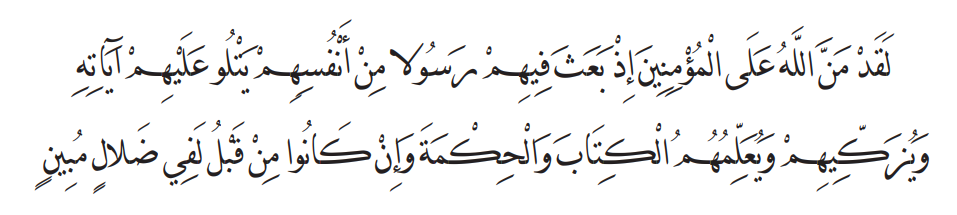
まことに、アッラーであるスブハーナフ・ワ・タアーラーは、信者たちの間から、彼らの中の一人である使徒を遣わし、彼らに御言葉を読誦させ、彼らを清め、彼らに啓典と英知を教えることによって、信者たちに恩恵を施されました。1
Indeed Allah سبحانه وتعالى. has already done a favor to the believers, when He raised amongst them a messenger from themselves to recite to them His verses, purify them and teach them the book and the wisdom.1
このアーヤは、尊き預言者ﷺが担った最も重要な責務の一つ、すなわち啓典を教えることを説明しています。この責務は、単に啓典の発音と読誦を教えることにとどまりません(それは最初の責務、すなわち「彼らにその御言葉を読誦する」ことで既に扱われています)。より重要なのは、クルアーンの意味を教えることです。預言者ﷺという師が私たちにそれを解き明かしてくれなければ、ムスリムがクルアーンの意味と教えを理解しようとすること自体が無意味になってしまうのです。
This aya explains one of the most important responsibilities of the beloved Blessed Prophet صلى الله عليه وسلم: to teach the Book. This responsibility consists of not just teaching the pronunciation and reading of the Book [as that is already covered in the first responsibility, i.e. ‘to recite to them His verses’], but more importantly, the meaning of the Qur’an. It would be meaningless for a Muslim to try to understand the meaning and message of the Qur’an without the Blessed Prophet صلى الله عليه وسلم as a teacher to explain it to us.
アラビア語の能力だけでは、クルアーンの意味を理解することはできません。覚えておいてください。アラビア語を流暢に話したサハーバ(رضي الله عنه)でさえ、クルアーンの深い意味を理解するために、常に祝福された預言者ﷺのもとに立ち返りました。クルアーンの言葉とその意味は、祝福された預言者ﷺによって口頭でも実践によっても説明されました。預言者ﷺのこれらの言葉と説明はハディース(aḥādīth)と呼ばれ、クルアーンの最も信頼できる注釈を私たちに与えてくれます。したがって、アッラーであるサブハーナhu wa ta'ālā(سبحانه وتعالى)がクルアーンを守ることを約束されたことは、ハディースの保存をも意味していたのです。
Proficiency in the Arabic language alone cannot help us grasp the meaning of the Qur’an. Remember, the Sahaba رضي الله عنه) who spoke fluent Arabic, always turned to the Blessed Prophet صلى الله عليه وسلم to understand the deeper meanings of the Qur’an. The Qur’an’s words and its meanings were explained both verbally and practically by the Blessed Prophet صلى الله عليه وسلم. These sayings and explanations of the Blessed Prophet صلى الله عليه وسلم are called úódõth and provide us with the the most authentic commentary of the Qur’an. Therefore, Allah’s سبحانه وتعالى. promise to preserve the Qur’an meant preservation of the aúódõth as well.
しかし、言葉だけが保存されていても、ほとんど意味がありません。たとえば、クルアーンがムスリムに「ṣalāt(礼拝)を確立せよ」と命じていても、その命令の内容、すなわちどのように行うのかを理解できなければ、「ṣalāt を確立せよ」という言葉を保存することにどのような利益があるでしょうか。このことから、クルアーンの保存には必然的にḥadīth(ハディース)の保存も含まれることが証明されます。ḥadīth がなければ、ムスリムの īmān(信仰)は不完全なものとなります。結局のところ、クルアーンがアッラー سبحانه وتعالى の書であることを、どうして私たちは知ることができるのでしょうか。
However the preservation of words alone serves little purpose. For example, if the Qur’an commands Muslims to establish üalót, but we are unable to understand what this command entails [such as how to perform it], then what benefit is there in preserving the words “establish the üalót?” This proves that the preservation of the Qur’an, by necessity, includes preservation of the úódõth. Without úódõth, the õmón of a Muslim is incomplete. After all, how do we know that the Qur’an is the book of Allah سبحانه وتعالى.?
私たちがクルアーンとその地位を知っているのは、祝福された預言者ﷺが「これがクルアーンである。それはアッラーの御言葉である」と仰ったからにほかなりません。もし私たちが預言者ﷺのこのハディースを拒むならば、イスラームの基盤全体が崩れてしまいます。そうなれば、クルアーンが自らそう主張しているとおりのものであることを、私たちは知りえなくなるのです。3
If we know the Qur’an and its place, it is only because the Blessed Prophet صلى الله عليه وسلم said, “This is the Qur’an; it is the word of Allah سبحانه وتعالى..” If we were to reject this úadīth of the Blessed Prophet صلى الله عليه وسلم then the whole foundation of Islam collapses. We would not know that the Qur’an is what it claims to be.3
アッラーは、クルアーンの中で祝福された預言者に次のように仰せです。 Note: Following the rules, I'll translate "Allah سبحانه وتعالى" as "アッラー(スブハーナhu wa Ta'ala)" — but the rule says keep (SWT) as is, so the original "سبحانه وتعالى" written in Arabic script is an honorific in Arabic letters, which I should keep as written. Corrected translation: アッラーは、クルアーンの中で祝福された預言者(صلى الله عليه وسلم)に次のように仰せです。
Allah سبحانه وتعالى. says to the Blessed Prophet صلى الله عليه وسلم in the Qur’an:

{And We have sent unto you the message, that you may explain clearly to men what is sent for them, and that they may give thought.} 2 Note: the input is an English rendering of Qur'an 16:44, so the verse text is wrapped in braces per the rules. The translation below renders the verse in Japanese, followed by the reference "2" as given. {また私たちはあなたに啓示( zikr)を下した。それは、人々に対して自分たちに下された教えを明らかにするため、そして人々が思索するためである。} 2
And We have sent unto you the message, that you may explain clearly to men what is sent for them, and that they may give thought. 2
この節は、スンナ(ハディース)の根本的な役割がクルアーンの意味を明らかにすることであることを証明しており、それゆえクルアーンはスンナなしには理解できない、ということを意味する。
This aya proves that the fundamental role of úódõth is to reveal the meaning of the Qur’an, which means that the Qur’an cannot be understood without the aúódõth.
1 3:164.
1 3:164.
2 16:44
2 16:44