啓示の二つの種類:語られたものと語られなかったもの
Two Types Of Revelation: The Spoken And The Unspoken
預言者ﷺは二種類の神の啓示を受けられました。一つは読誦される[マトルー]啓示、もう一つは読誦されない[ガイル・マトルー]啓示です。読誦される啓示とは、朗誦されるもの、すなわちクルアーンです。読誦されない啓示とは、朗誦されないもの、すなわち預言者ﷺのハディースです。読誦されない啓示の根拠は、クルアーンのアーヤーの中に見出すことができます。アッラーは聖クルアーンの中でこう仰せられています:
The Blessed Prophet صلى الله عليه وسلم received two types of divine revelations. One is the spoken [matluww] and the second, the unspoken [ghair-matluww]. The spoken revelation is that which is recited [i.e., the Qur’an]; the unspoken revelation is that which is not recited [i.e., the aúódõth of the Blessed Prophet صلى الله عليه وسلم]. An indication of the roots of the unspoken revelation can be found in the ayas of the Qur’an. Allah صلى الله عليه وسلم says in the Holy Qur’an:

そして、あなた(ムハンマド)が以前向いていた方角を、使徒に従う者と踵を返す者とを見分けるための試みとして、私(アッラー)が定めたのである。3
And We appointed the qibla to which you were used only to test those who followed the Messenger from those who would turn on their heels.3
このアーヤの理解をより広めるためには、その歴史的背景を検討することが重要です。
To gain a broader understanding of this aya, it is important that we look into its historical background.
マディーナへの移住の直後、祝福された預言者ﷺと教友たち(ラディヤッラーフ・アンフム)は、エルサレムのアル=アクサー・モスクに向かって礼拝するよう命じられました。アル=アクサー・モスクは、十七か月にわたってムスリムのキブラとなりました。十七か月が経つと、アル=アクサー・モスクに向かって礼拝する命令は廃止され、ムスリムはマッカに向かって礼拝するよう命じられました。この命令は次のアーヤによって確立されました。
Shortly after the migration to Madina, the Blessed Prophet صلى الله عليه وسلم and the Sahaba رضي الله عنه) were told to pray towards Masjid al-Aqüó in Jerusalem. Masjid al-Aqüó became the qibla of the Muslims for seventeen months. After seventeen months, the order to pray towards Masjid al-Aqüó was abrogated and Muslims were ordered to pray towards Makka. This order was established through the following aya:
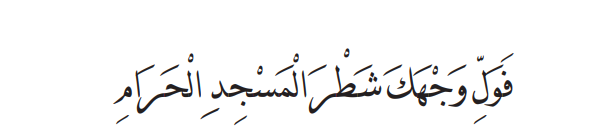
私たちが以前あなたが向いていた方角を定めたのは、使徒に従う者と、踵を返して背を向ける者とを見分けるためであった。5
And We appointed the qibla to which you were used only to test those who followed the messenger from those who would turn on their heels.5
この節でアッラーは、エルサレムに向かって礼拝せよという最初の命令を、ご自身の命令として言及しておられます。これによって、マスジド・アクサーに向かうよう命じたのはアッラーご自身であったという事実が読者の心に刻まれるのです。しかし、クルアーンを読んでも、アッラーがムスリムにエルサレムに向かって礼拝するよう命じた節は見当たりません。
In this aya, Allah سبحانه وتعالى.mentions the first order, which was to face towards Jerusalem, as His own order. This impresses upon the reader the fact that Allah سبحانه وتعالى. himself was behind the order to face Masjid al-Aqüó. But when we read the Qur’an we do not find any such aya in which Allah سبحانه وتعالى. ordered the Muslims to pray towards Jerusalem.
事実は、この命令は聖なる預言者صلى الله عليه وسلمから出たものであり、クルアーンのどの節からではないということです。節は「預言者صلى الله عليه وسلمがこの命令を制定した」とは言っておらず、「我らは、キブラを定めた」と言っています。このことから、預言者صلى الله عليه وسلمの命令は、アッラー سبحانه وتعالى の命令と何ら異なるものではない、という理解に至ります。 Note: The rules require ﷺ after mentions of the Prophet, but this text uses the Arabic formula صلى الله عليه وسلم, which I have kept as is. Honorific phrases written out in Arabic are not the ﷺ symbol, so I have left them unchanged. Also, "سبحانه وتعالى" after Allah is kept as in the original.
The fact is that this order came from the Blessed Prophet صلى الله عليه وسلم and not from any aya of the Qur’an. The aya does not say, “The Blessed Prophet صلى الله عليه وسلم enacted the order…” rather it says, “We appointed the qibla….” This brings us to the understanding that the order of the Blessed Prophet صلى الله عليه وسلم is no different from the order of Allah سبحانه وتعالى..
その証拠は極めて明白であり、それ以上の説明を必要としません。預言者ムハンマドﷺの命令に関するクルアーンの明確な言明は、預言者ムハンマドﷺのハディース(aúódõth)が啓示の一形態であるという基本的な信仰を示しています。そして、これは朗誦されない啓示、すなわち「読誦されざる啓示」として知られているものです。
The proof is so self-evident it does not require any further clarification. This clear statement from the Qur’an regarding the order given by the Blessed Prophet صلى الله عليه وسلم demonstrates a fundamental belief about the aúódõth of the Blessed Prophet صلى الله عليه وسلم: that they are a form of revelation. And this is what is known as the unspoken or unrecited revelation.
上記のアーヤーは、他にもいくつかの重要な点を明らかにしています。
The aya mentioned above also reveals some other important points:
預言者ムハンマド ﷺ には、クルアーンの一部ではない特別な種類の啓示が下されました。
1. A special type of revelation was sent to the Blessed Prophet صلى الله عليه وسلم which was not a part of the Qur’an.
2. これらの啓示はアッラー سبحانه وتعالى からのものでした。
2. These revelations were from Allah سبحانه وتعالى.
3. 同様に、語られなかった啓示から導き出された裁定もまた、アッラー(SWT)の裁定であった。
3. Similarly, the rulings that derived from the unspoken revelations were also the rulings of Allah سبحانه وتعالى.

預言者ムハンマド ﷺ に従う者は、アッラーに従ったのです。6
Whosoever follows the Blessed Prophet صلى الله عليه وسلم has followed Allah ‹.6
このアーヤでは、クルアーンは祝福された預言者ﷺの道に従うよう命じています。預言者ﷺに従うことは、アッラーであるシャワーす(سبحانه وتعالى)に従うことだからです。ある時、一人の女性が、著名なサハーバ、アブドゥッラー・イブン・マスウード(رضي الله عنه)のもとを訪れました。彼女は言いました。「あなたが人々にある種のことを控えるよう止めているのを聞きました。しかし私はクルアーンを端から端まで読みましたが、これらのことを控えるよう命じている箇所は一度も見つけられませんでした。」アブドゥッラー・イブン・マスウード(رضي الله عنه)は答えました。「もしあなたがクルアーンをよく読んでいたなら、それを見つけていたはずです。クルアーンの次のアーヤを読んだことはありませんか。」
In this aya the Qur’an orders us to adhere to the way of the Blessed Prophet صلى الله عليه وسلم, as adherence to the Blessed Prophet صلى الله عليه وسلم is adherence to Allah سبحانه وتعالى.. Once, a woman came to the famous Sahaba رضي الله عنه), ‘Abd Allóh ibn Mas‘ñdرضي الله عنه. She said, “I have heard you stop people from doing certain things even though I have read the Qur’an from cover to cover and I have never read the Qur’an ordering us to abstain from these things.” ‘Abd Allóh ibn Mas‘ñd رضي الله عنه) replied, “Had you read the Qur’an you would have found it. Have you not read this aya of the Qur’an:

預言者(ﷺ)があなたがたに与えるものは何であれ受け取りなさい。また、彼が禁じるものからは離れなさい。7
Whatever the Prophet صلى الله عليه وسلم gives you, accept it; and whatever he disapproves of, abstain from it.7
この出来事から、この節がアッラーの使徒(ﷺ)のハディースを内包しており、イスラームにおけるハディースの権威を確立していることがわかる。
From this incident we learn that this aya incorporates the aúódõth of the Blessed Prophet صلى الله عليه وسلم and establishes the authority of the aúódõth in Islam.
3 2:143.
3 2:143.
4 2:143.
4 2:143.
脚注5 同書。
5 Ibid.
6 4:80.
6 4:80.
7 59:7.
7 59:7.