Preservação do Hadīth
Preservation Of Hadīth
Allah سبحانه وتعالى diz no Alcorão:
Allah سبحانه وتعالى. states in the Qur’an:
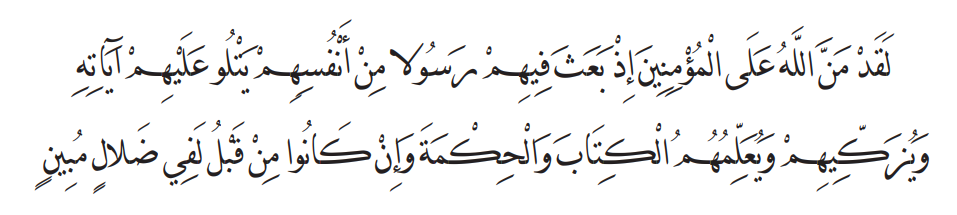
Na verdade, Allah سبحانه وتعالى já concedeu um favor aos crentes ao enviar entre eles um mensageiro dentre eles mesmos, para recitar-lhes os Seus versículos, purificá-los e ensinar-lhes o Livro e a sabedoria.1
Indeed Allah سبحانه وتعالى. has already done a favor to the believers, when He raised amongst them a messenger from themselves to recite to them His verses, purify them and teach them the book and the wisdom.1
Este versículo explica uma das responsabilidades mais importantes do amado Profeta abençoado ﷺ: ensinar o Livro. Essa responsabilidade consiste não apenas em ensinar a pronúncia e a recitação do Livro [pois isso já está coberto na primeira responsabilidade, ou seja, "recitar-lhes Seus versículos"], mas, mais importante ainda, o significado do Alcorão. Seria sem sentido para um muçulmano tentar compreender o significado e a mensagem do Alcorão sem o Profeta ﷺ como professor para explicá-lo para nós.
This aya explains one of the most important responsibilities of the beloved Blessed Prophet صلى الله عليه وسلم: to teach the Book. This responsibility consists of not just teaching the pronunciation and reading of the Book [as that is already covered in the first responsibility, i.e. ‘to recite to them His verses’], but more importantly, the meaning of the Qur’an. It would be meaningless for a Muslim to try to understand the meaning and message of the Qur’an without the Blessed Prophet صلى الله عليه وسلم as a teacher to explain it to us.
A proficiência na língua árabe, por si só, não nos permite compreender o significado do Alcorão. Lembremos que os Sahaba (رضي الله عنه), que falavam fluentemente o árabe, sempre recorriam ao Profeta abençoado ﷺ para compreender os significados mais profundos do Alcorão. As palavras do Alcorão e os seus significados foram explicados tanto verbalmente como na prática pelo Profeta abençoado ﷺ. Estes ditos e explicações do Profeta abençoado ﷺ são chamados ḥadīths e nos fornecem o comentário mais autêntico do Alcorão. Portanto, a promessa de Allah سبحانه وتعالى de preservar o Alcorão significou também a preservação dos ḥadīths.
Proficiency in the Arabic language alone cannot help us grasp the meaning of the Qur’an. Remember, the Sahaba رضي الله عنه) who spoke fluent Arabic, always turned to the Blessed Prophet صلى الله عليه وسلم to understand the deeper meanings of the Qur’an. The Qur’an’s words and its meanings were explained both verbally and practically by the Blessed Prophet صلى الله عليه وسلم. These sayings and explanations of the Blessed Prophet صلى الله عليه وسلم are called úódõth and provide us with the the most authentic commentary of the Qur’an. Therefore, Allah’s سبحانه وتعالى. promise to preserve the Qur’an meant preservation of the aúódõth as well.
Porém, a preservação das palavras por si só serve de pouco. Por exemplo, se o Alcorão ordena aos muçulmanos que estabeleçam a üalót, mas não conseguimos compreender o que esse mandamento envolve [como executá-la], então qual é o benefício de preservar as palavras "estabeleçam a üalót"? Isso prova que a preservação do Alcorão, por necessidade, inclui a preservação da úódõth. Sem a úódõth, a õmón de um muçulmano é incompleta. Afinal, como sabemos que o Alcorão é o livro de Allah سبحانه وتعالى?
However the preservation of words alone serves little purpose. For example, if the Qur’an commands Muslims to establish üalót, but we are unable to understand what this command entails [such as how to perform it], then what benefit is there in preserving the words “establish the üalót?” This proves that the preservation of the Qur’an, by necessity, includes preservation of the úódõth. Without úódõth, the õmón of a Muslim is incomplete. After all, how do we know that the Qur’an is the book of Allah سبحانه وتعالى.?
Se conhecemos o Alcorão e o seu lugar, é apenas porque o Profeta abençoado ﷺ disse: "Este é o Alcorão; é a palavra de Allah (SWT)..." Se rejeitássemos este ḥadīth do Profeta abençoado ﷺ, então todo o alicerce do Islã desabaria. Não saberíamos que o Alcorão é aquilo que afirma ser.3
If we know the Qur’an and its place, it is only because the Blessed Prophet صلى الله عليه وسلم said, “This is the Qur’an; it is the word of Allah سبحانه وتعالى..” If we were to reject this úadīth of the Blessed Prophet صلى الله عليه وسلم then the whole foundation of Islam collapses. We would not know that the Qur’an is what it claims to be.3
Allah سبحانه وتعالى. diz ao Profeta abençoado صلى الله عليه وسلم no Alcorão:
Allah سبحانه وتعالى. says to the Blessed Prophet صلى الله عليه وسلم in the Qur’an:

Enviamos a você a Mensagem, para que você explique claramente aos homens o que lhes foi enviado, e para que eles reflitam. 2
And We have sent unto you the message, that you may explain clearly to men what is sent for them, and that they may give thought. 2
Este āyah prova que o papel fundamental da Sunnah é revelar o significado do Alcorão, o que significa que o Alcorão não pode ser compreendido sem a Sunnah.
This aya proves that the fundamental role of úódõth is to reveal the meaning of the Qur’an, which means that the Qur’an cannot be understood without the aúódõth.
1 3:164.
1 3:164.
2 16:44
2 16:44