Duas Formas de Revelação: A Falada e a Não Falada
Two Types Of Revelation: The Spoken And The Unspoken
O Santo Profeta ﷺ recebeu dois tipos de revelação divina. Uma é a revelação recitada [matluww], e a segunda, a não recitada [ghair-matluww]. A revelação recitada é aquela que é recitada [isto é, o Alcorão]; a revelação não recitada é aquela que não é recitada [isto é, os aḥādīth do Santo Profeta ﷺ]. Uma indicação das raízes da revelação não recitada pode ser encontrada nos āyāt do Alcorão. Allah (SWT) diz no Sagrado Alcorão:
The Blessed Prophet صلى الله عليه وسلم received two types of divine revelations. One is the spoken [matluww] and the second, the unspoken [ghair-matluww]. The spoken revelation is that which is recited [i.e., the Qur’an]; the unspoken revelation is that which is not recited [i.e., the aúódõth of the Blessed Prophet صلى الله عليه وسلم]. An indication of the roots of the unspoken revelation can be found in the ayas of the Qur’an. Allah صلى الله عليه وسلم says in the Holy Qur’an:

E não designamos a qibla à qual você estava acostumado senão para distinguir aqueles que seguiam o Mensageiro ﷺ daqueles que dariam meia-volta sobre seus calcanhares.3
And We appointed the qibla to which you were used only to test those who followed the Messenger from those who would turn on their heels.3
Para obter uma compreensão mais ampla deste verso, é importante examinar o seu contexto histórico.
To gain a broader understanding of this aya, it is important that we look into its historical background.
Logo após a migração para Madina, o Profeta abençoado ﷺ e os Sahaba (que Allah esteja satisfeito com eles) receberam a ordem de orar em direção à Masjid al-Aqsa, em Jerusalém. A Masjid al-Aqsa tornou-se a qibla dos muçulmanos durante dezessete meses. Após dezessete meses, a ordem de orar em direção à Masjid al-Aqsa foi revogada, e os muçulmanos foram ordenados a orar em direção a Makka. Esta ordem foi estabelecida através do seguinte versículo:
Shortly after the migration to Madina, the Blessed Prophet صلى الله عليه وسلم and the Sahaba رضي الله عنه) were told to pray towards Masjid al-Aqüó in Jerusalem. Masjid al-Aqüó became the qibla of the Muslims for seventeen months. After seventeen months, the order to pray towards Masjid al-Aqüó was abrogated and Muslims were ordered to pray towards Makka. This order was established through the following aya:
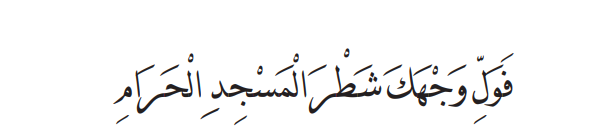
E não estabelecemos a qibla para a qual costumavas voltar-te senão para distinguir quem seguia o Mensageiro ﷺ daquele que voltaria atrás sobre seus calcanhares.5
And We appointed the qibla to which you were used only to test those who followed the messenger from those who would turn on their heels.5
Nesta āyah, Allah سبحانه وتعالى menciona a primeira ordem, que era voltar o rosto em direção a Jerusalém, como Sua própria ordem. Isso leva o leitor a compreender que o próprio Allah سبحانه وتعالى estava por trás da ordem de voltar-se para a Masjid al-Aqsa. Entretanto, ao lermos o Alcorão, não encontramos nenhuma āyah em que Allah سبحانه وتعالى tenha ordenado aos muçulmanos que orassem em direção a Jerusalém.
In this aya, Allah سبحانه وتعالى.mentions the first order, which was to face towards Jerusalem, as His own order. This impresses upon the reader the fact that Allah سبحانه وتعالى. himself was behind the order to face Masjid al-Aqüó. But when we read the Qur’an we do not find any such aya in which Allah سبحانه وتعالى. ordered the Muslims to pray towards Jerusalem.
O fato é que esta ordem veio do Bendito Profeta ﷺ e não de nenhum versículo do Alcorão. O versículo não diz: "O Bendito Profeta ﷺ estabeleceu a ordem…", mas sim: "Designamos a qibla…". Isso nos leva à compreensão de que a ordem do Bendito Profeta ﷺ não é diferente da ordem de Allah سبحانه وتعالى.
The fact is that this order came from the Blessed Prophet صلى الله عليه وسلم and not from any aya of the Qur’an. The aya does not say, “The Blessed Prophet صلى الله عليه وسلم enacted the order…” rather it says, “We appointed the qibla….” This brings us to the understanding that the order of the Blessed Prophet صلى الله عليه وسلم is no different from the order of Allah سبحانه وتعالى..
A prova é tão evidente que não requer qualquer esclarecimento adicional. Esta declaração clara do Alcorão acerca da ordem dada pelo Santo Profeta ﷺ demonstra uma crença fundamental sobre os ahadith do Santo Profeta ﷺ: que são uma forma de revelação. E é isto que é conhecido como a revelação não recitada ou não lida.
The proof is so self-evident it does not require any further clarification. This clear statement from the Qur’an regarding the order given by the Blessed Prophet صلى الله عليه وسلم demonstrates a fundamental belief about the aúódõth of the Blessed Prophet صلى الله عليه وسلم: that they are a form of revelation. And this is what is known as the unspoken or unrecited revelation.
O versículo mencionado acima também revela alguns outros pontos importantes:
The aya mentioned above also reveals some other important points:
1. Um tipo especial de revelação foi enviado ao Profeta abençoado ﷺ, o qual não fazia parte do Alcorão.
1. A special type of revelation was sent to the Blessed Prophet صلى الله عليه وسلم which was not a part of the Qur’an.

Quem segue o Abençoado Profeta ﷺ seguiu a Allah (SWT).6
Whosoever follows the Blessed Prophet صلى الله عليه وسلم has followed Allah ‹.6
Nesta ayah, o Alcorão ordena-nos a seguir o caminho do Abençoado Profeta ﷺ, pois seguir o Profeta ﷺ é seguir Allah سبحانه وتعالى.. Certa vez, uma mulher foi ter com o famoso Sahaba رضي الله عنه), ‘Abd Allóh ibn Mas‘ñd رضي الله عنه. Ela disse: “Ouvi-te proibir as pessoas de fazer certas coisas, embora eu tenha lido o Alcorão de capa a capa e nunca tenha lido no Alcorão uma ordem para nos abstermos dessas coisas.” ‘Abd Allóh ibn Mas‘ñd رضي الله عنه) respondeu: “Se tivesses lido o Alcorão, tê-lo-ias encontrado. Não leste esta ayah do Alcorão:
In this aya the Qur’an orders us to adhere to the way of the Blessed Prophet صلى الله عليه وسلم, as adherence to the Blessed Prophet صلى الله عليه وسلم is adherence to Allah سبحانه وتعالى.. Once, a woman came to the famous Sahaba رضي الله عنه), ‘Abd Allóh ibn Mas‘ñdرضي الله عنه. She said, “I have heard you stop people from doing certain things even though I have read the Qur’an from cover to cover and I have never read the Qur’an ordering us to abstain from these things.” ‘Abd Allóh ibn Mas‘ñd رضي الله عنه) replied, “Had you read the Qur’an you would have found it. Have you not read this aya of the Qur’an:

Tudo o que o Profeta ﷺ lhe der, aceite-o; e tudo do que ele desaprovar, abstenha-se.7
Whatever the Prophet صلى الله عليه وسلم gives you, accept it; and whatever he disapproves of, abstain from it.7
A partir deste incidente aprendemos que este verso incorpora o ḥadīth do Profeta ﷺ e estabelece a autoridade do ḥadīth no Islã.
From this incident we learn that this aya incorporates the aúódõth of the Blessed Prophet صلى الله عليه وسلم and establishes the authority of the aúódõth in Islam.