Сохранение хадисов
Preservation Of Hadīth
Аллах سبحانه وتعالى (SWT) говорит в Коране:
Allah سبحانه وتعالى. states in the Qur’an:
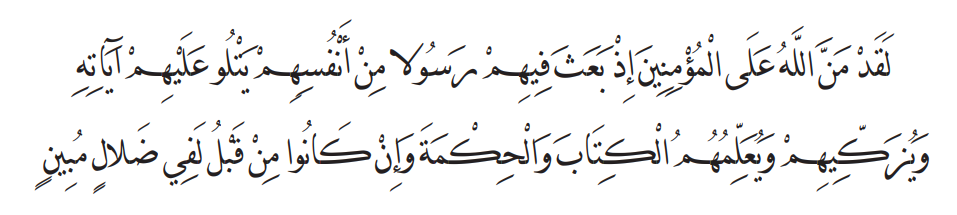
Воистину, Аллах سبحانه وتعالى оказал верующим милость, когда направил среди них посланника из их же числа, чтобы он читал им Его аяты, очищал их и обучал их Книге и мудрости.1
Indeed Allah سبحانه وتعالى. has already done a favor to the believers, when He raised amongst them a messenger from themselves to recite to them His verses, purify them and teach them the book and the wisdom.1
Этот аят разъясняет одну из важнейших обязанностей возлюбленного Благословенного Пророка ﷺ: обучать Писанию. Эта обязанность заключается не только в обучении правильному произношению и чтению Писания [ведь это уже охватывается первой обязанностью, то есть «читать им Его знамения»], но, что более важно, в обучении смыслу Корана. Было бы бессмысленно, если бы мусульманин пытался понять смысл и послание Корана без Пророка ﷺ как учителя, который разъяснил бы его нам.
This aya explains one of the most important responsibilities of the beloved Blessed Prophet صلى الله عليه وسلم: to teach the Book. This responsibility consists of not just teaching the pronunciation and reading of the Book [as that is already covered in the first responsibility, i.e. ‘to recite to them His verses’], but more importantly, the meaning of the Qur’an. It would be meaningless for a Muslim to try to understand the meaning and message of the Qur’an without the Blessed Prophet صلى الله عليه وسلم as a teacher to explain it to us.
Одного знания арабского языка недостаточно для того, чтобы постичь смысл Корана. Помните, что сахаба (да будет доволен ими Аллах), которые свободно владели арабским языком, всегда обращались к Благословенному Пророку ﷺ, чтобы понять глубинные смыслы Корана. Слова Корана и его значения разъяснялись Благословенным Пророком ﷺ как словесно, так и на практике. Эти изречения и разъяснения Благословенного Пророка ﷺ называются хадисами и являются самым достоверным толкованием Корана. Поэтому обещание Аллаха, Всевышнего, сохранить Коран означало сохранение и хадисов.
Proficiency in the Arabic language alone cannot help us grasp the meaning of the Qur’an. Remember, the Sahaba رضي الله عنه) who spoke fluent Arabic, always turned to the Blessed Prophet صلى الله عليه وسلم to understand the deeper meanings of the Qur’an. The Qur’an’s words and its meanings were explained both verbally and practically by the Blessed Prophet صلى الله عليه وسلم. These sayings and explanations of the Blessed Prophet صلى الله عليه وسلم are called úódõth and provide us with the the most authentic commentary of the Qur’an. Therefore, Allah’s سبحانه وتعالى. promise to preserve the Qur’an meant preservation of the aúódõth as well.
Однако сохранение одних лишь слов имеет мало пользы. Например, если Куран повелевает мусульманам совершать «аль-салат» (намаз), но мы не в состоянии понять, что подразумевает эта повеления, [например, как её совершать], то какая польза от сохранения слов «совершайте аль-салат»? Это доказывает, что сохранение Корана по необходимости включает сохранение сунны. Без сунны вера (имән) мусульманина неполна. Ведь откуда мы знаем, что Коран — это Книга Аллаха (SWT)?
However the preservation of words alone serves little purpose. For example, if the Qur’an commands Muslims to establish üalót, but we are unable to understand what this command entails [such as how to perform it], then what benefit is there in preserving the words “establish the üalót?” This proves that the preservation of the Qur’an, by necessity, includes preservation of the úódõth. Without úódõth, the õmón of a Muslim is incomplete. After all, how do we know that the Qur’an is the book of Allah سبحانه وتعالى.?
Если мы знаем Коран и его место, то лишь потому, что Благословенный Пророк ﷺ сказал: «Это Коран; это слово Аллаха (СВТ)». Если бы мы отвергли этот хадис Благословенного Пророка ﷺ, то рухнуло бы всё основание ислама. Мы не знали бы, что Коран является тем, чем он себя называет.3
If we know the Qur’an and its place, it is only because the Blessed Prophet صلى الله عليه وسلم said, “This is the Qur’an; it is the word of Allah سبحانه وتعالى..” If we were to reject this úadīth of the Blessed Prophet صلى الله عليه وسلم then the whole foundation of Islam collapses. We would not know that the Qur’an is what it claims to be.3
Аллах سبحانه وتعالى говорит Благородному Пророку صلى الله عليه وسلم в Коране:
Allah سبحانه وتعالى. says to the Blessed Prophet صلى الله عليه وسلم in the Qur’an:

И Мы ниспослали тебе Напоминание, чтобы ты разъяснял людям то, что ниспослано им, и чтобы они размышляли. {Ан-Нахль: 44}
And We have sent unto you the message, that you may explain clearly to men what is sent for them, and that they may give thought. 2
Этот аят доказывает, что основная роль сунны состоит в раскрытии смысла Корана, а значит, Коран нельзя понять без сунны.
This aya proves that the fundamental role of úódõth is to reveal the meaning of the Qur’an, which means that the Qur’an cannot be understood without the aúódõth.
1 3:164.
1 3:164.
2 16:44
2 16:44