İki Tür Vahiy: Lafızlı Olan ve Lafızsız Olan
Two Types Of Revelation: The Spoken And The Unspoken
Mübarek Peygamber صلى الله عليه وسلم iki tür ilahi vahiy almıştır. Biri matluv (okunan) vahiy, ikincisi ise gayr-i matluv (okunmayan) vahiydir. Okunan vahiy, okunan şeydir [yani Kur'an-ı Kerim]; okunmayan vahiy ise okunmayan şeydir [yani Mübarek Peygamber'in hadisleri]. Okunmayan vahyin kökenlerine dair bir işaret Kur'an'ın ayetlerinde bulunur. Allah ﷺ Kutsal Kur'an'da şöyle buyurur:
The Blessed Prophet صلى الله عليه وسلم received two types of divine revelations. One is the spoken [matluww] and the second, the unspoken [ghair-matluww]. The spoken revelation is that which is recited [i.e., the Qur’an]; the unspoken revelation is that which is not recited [i.e., the aúódõth of the Blessed Prophet صلى الله عليه وسلم]. An indication of the roots of the unspoken revelation can be found in the ayas of the Qur’an. Allah صلى الله عليه وسلم says in the Holy Qur’an:

Ve daha önce yöneldiğin kıbleyi ancak Resulü izleyenleri, topuklarının üzerine dönenlerden ayırt etmek için belirledik.3
And We appointed the qibla to which you were used only to test those who followed the Messenger from those who would turn on their heels.3
Bu âyetin daha geniş bir şekilde anlaşılabilmesi için, tarihsel arka planını incelemek önemlidir.
To gain a broader understanding of this aya, it is important that we look into its historical background.
Medine'ye hicretten kısa bir süre sonra, Muhammed ﷺ ve Sahabe (radıyallahu anh) Kudüs'teki Mescid-i Aksa'ya doğru namaz kılmakla emrolundular. Mescid-i Aksa, Müslümanların on yedi ay boyunca kıblesi oldu. On yedi aydan sonra, Mescid-i Aksa'ya doğru namaz kılma emri neshedildi ve Müslümanlar Mekke'ye doğru namaz kılmakla emrolundular. Bu emir şu ayetle belirlendi:
Shortly after the migration to Madina, the Blessed Prophet صلى الله عليه وسلم and the Sahaba رضي الله عنه) were told to pray towards Masjid al-Aqüó in Jerusalem. Masjid al-Aqüó became the qibla of the Muslims for seventeen months. After seventeen months, the order to pray towards Masjid al-Aqüó was abrogated and Muslims were ordered to pray towards Makka. This order was established through the following aya:
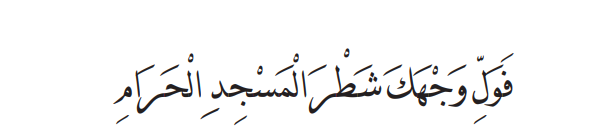
Ve daha önce yöneldiğin kıbleyi, Elçiyi izleyenleri, topuklarının üzerine dönenlerden ayırt etmek için yalnızca bir imtihan olsun diye belirlemiştik.5
And We appointed the qibla to which you were used only to test those who followed the messenger from those who would turn on their heels.5
Bu ayette Allah سبحانه وتعالى, Kudüs'e yönelme emrini ilk emir olarak kendi emri olarak zikretmektedir. Bu da okuyucuya Mescid-i Aksa'ya yönelme emrinin arkasında bizzat Allah سبحانه وتعالى'nin bulunduğu gerçeğini hatırlatmaktadır. Oysa Kur'an'ı okuduğumuzda, Allah سبحانه وتعالى'nin Müslümanlara Kudüs'e doğru namaz kılmalarını emrettiği herhangi bir ayet bulamıyoruz.
In this aya, Allah سبحانه وتعالى.mentions the first order, which was to face towards Jerusalem, as His own order. This impresses upon the reader the fact that Allah سبحانه وتعالى. himself was behind the order to face Masjid al-Aqüó. But when we read the Qur’an we do not find any such aya in which Allah سبحانه وتعالى. ordered the Muslims to pray towards Jerusalem.
Gerçek şu ki, bu emir Kutsal Peygamber ﷺ'den gelmiştir, herhangi bir Kur'an ayetinden değil. Ayet, "Peygamber ﷺ bu emri koydu..." demez; bunun yerine "Biz kıblesi belirledik..." der. Bu da bizi şu anlayışa götürür: Kutsal Peygamber ﷺ'in emri, Allah سبحانه وتعالى'nın emrinden farklı değildir.
The fact is that this order came from the Blessed Prophet صلى الله عليه وسلم and not from any aya of the Qur’an. The aya does not say, “The Blessed Prophet صلى الله عليه وسلم enacted the order…” rather it says, “We appointed the qibla….” This brings us to the understanding that the order of the Blessed Prophet صلى الله عليه وسلم is no different from the order of Allah سبحانه وتعالى..
Bu delil o kadar açıktır ki daha fazla açıklamaya ihtiyaç duymaz. Kur'an'ın, Mübarek Peygamber ﷺ'in emrine dair bu açık ifadesi, Mübarek Peygamber ﷺ'in hadislerinin bir vahiy biçimi olduğu temel inancını ortaya koymaktadır. Ve bu, okunmayan veya tilavet edilmeyen vahiy olarak bilinen şeydir.
The proof is so self-evident it does not require any further clarification. This clear statement from the Qur’an regarding the order given by the Blessed Prophet صلى الله عليه وسلم demonstrates a fundamental belief about the aúódõth of the Blessed Prophet صلى الله عليه وسلم: that they are a form of revelation. And this is what is known as the unspoken or unrecited revelation.
Yukarıda zikredilen âyet, bazı başka önemli noktaları da ortaya koymaktadır:
The aya mentioned above also reveals some other important points:
1. Kutsal Kur'an'ın parçası olmayan, Mübarek Peygamber ﷺ'e gönderilmiş özel bir tür vahiy vardı.
1. A special type of revelation was sent to the Blessed Prophet صلى الله عليه وسلم which was not a part of the Qur’an.
2. Bu vahiyler Allah سبحانه وتعالى tarafındandı.

Kim Mübarek Peygamber'e ﷺ uyarsa, Allah'a (SWT) uymuş olur.6
Whosoever follows the Blessed Prophet صلى الله عليه وسلم has followed Allah ‹.6
Bu âyette Kur'an, Hz. Peygamber'in ﷺ yoluna uymamızı emreder; çünkü Peygamber ﷺ'e uymak, Allah (SWT)'a uymaktır. Bir gün bir kadın, meşhur sahabi 'Abdullah ibn Mes'ud (radıyallahu anh)'a geldi. Kadın şöyle dedi: "Seni, bazı şeyleri yapmaktan insanları men ederken duydum; oysa Kur'an'ı baştan sona okudum ve bu şeylerden kaçınmamızı emreden bir ayet okumadım." 'Abdullah ibn Mes'ud (radıyallahu anh) şöyle cevap verdi: "Kur'an'ı okumuş olsaydın, onu bulurdun. Kur'an'ın şu âyetini okumadın mı:
In this aya the Qur’an orders us to adhere to the way of the Blessed Prophet صلى الله عليه وسلم, as adherence to the Blessed Prophet صلى الله عليه وسلم is adherence to Allah سبحانه وتعالى.. Once, a woman came to the famous Sahaba رضي الله عنه), ‘Abd Allóh ibn Mas‘ñdرضي الله عنه. She said, “I have heard you stop people from doing certain things even though I have read the Qur’an from cover to cover and I have never read the Qur’an ordering us to abstain from these things.” ‘Abd Allóh ibn Mas‘ñd رضي الله عنه) replied, “Had you read the Qur’an you would have found it. Have you not read this aya of the Qur’an:

Peygamber ﷺ size ne verirse onu alın; neyi yasaklarsa da ondan sakının.7
Whatever the Prophet صلى الله عليه وسلم gives you, accept it; and whatever he disapproves of, abstain from it.7
Bu olaydan şunu öğreniyoruz: Bu âyet, Peygamber ﷺ'in hadislerini kapsamakta ve İslam'da hadislerin otoritesini ortaya koymaktadır.
From this incident we learn that this aya incorporates the aúódõth of the Blessed Prophet صلى الله عليه وسلم and establishes the authority of the aúódõth in Islam.