中国:挑战者还是竞逐者
China: Pretender Or Contender
2009年是中国革命六十周年。中国从日本的侵略中获得独立,并击败国民党政权,建立了中华人民共和国。近十年来,许多分析人士将中国的崛起视为美国面临的最大挑战,一些思想家预测,中国将在不久的将来成为世界超级大国。过去二十年间,中国在政治舞台上的迅速崛起令许多人震惊,让另一些人感到困惑,对某些人来说,这标志着全球权力从西方向东方的转移。中国此前从未是世界强国,其近代历史充满了日本的残酷占领,而这段记忆塑造了二战后的中国。对于这个世界人口最多的国家而言,六十周年纪念日标志着其历史上独特的现实,因为中国第一次被视为世界强国。
2009 was the 60th anniversary of the Chinese revolution. China gained independence from Japan and defeated the nationalists to establish the Socialist people’s republic of China. In the last decade many analysts have viewed the rise of China as America's biggest challenge and some thinkers foresee China as the world’s superpower in the not so distant future. The rapid rise of China on the political map in the last 20 years has shocked many, bewildered others and for some marks the shift of global power from West to East. China has never been a world power and its recent history consists of a brutal occupation by Japan, whose memory defined post WW2 China. The 60th anniversary for the world’s most populated nation marks a unique reality in its history as for the first time it is counted as a world power.
中国的发展始于1978年,此后科学技术的发展一直受军事考量主导。这一点可以追溯到毛泽东时代。毛泽东曾宣称其首要目标是建立一个“军事化”的体系,凌驾于其他一切需要之上。这种“军事化”构成了邓小平政策的基础。邓小平的目标是使中国经济多元化,使中国的工业基础不仅服务于国防,也服务于经济增长和民众的繁荣。邓小平在1980年代初提出的著名的十六字方针使这一点更加明确:“军民结合,寓军于民;平战结合,军品优先;科技强军,勤俭建军。”此前,中国采用的是苏联式的中央计划经济,但成效有限。随后,邓小平采用了更为市场导向的经济模式,尤其是在位于广东、福建和海南的经济特区。结果极为显著。中国的经济发生了根本性转变,从生产低质量的简单出口产品转向生产精密的高科技产品。这个国家已从一个封闭落后的经济体,转变为全球出口的巨大引擎,中国的出口额增长了十倍。如今,中国已超过德国,成为世界最大的出口国,每年出口额超过1万亿美元。
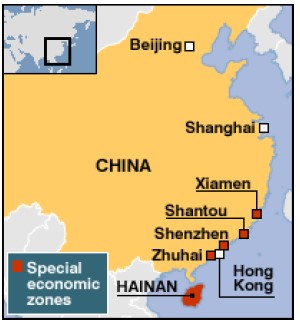
China's development began in 1978 and has been due to military considerations dominating the development of science and technology. This can be traced back to the Mao era. Mao stated his objective of forming a ‘militarization’ complex above all other needs. This ‘militarization’ formed the basis of Deng Xao Ping’s policy. Deng's aim was to diversify the Chinese economy in order for China's industrial base to contribute not just to national defence but also economic growth and civilian prosperity. Deng's famous 16 character guidance in early 1980’s made this clear: ‘integrating military and civilian production; but making sure to balance the military requirements; maintaining military capability; using the civilian economy to serve military modernization.’6 Prior to this the Soviet-style centrally planned economy, was utilized but achieved limited results. Deng then utilized a more market-oriented economy, particularly in the Special Economic Zones (SEZ) located in the Guangdong, Fujian, and Hainan. The results were spectacular. China radically changed its economy moving from producing low quality simple exports to sophisticated high technology goods. The country has changed from an inward backward economy to a global exporting machine, Chinese exports have grown tenfold. Today China has surpassed Germany as the world’s largest exporter, exporting over $1 trillion a year.
自1978年以来,中国一直在推进经济改革,使经济从苏联式的中央计划经济转向更加市场化的经济,但仍置于中国共产党所提供的政治框架之内。这一体制被称为"中国特色社会主义",是混合经济的一种类型。自1978年开始的这些改革帮助数百万人摆脱了贫困,使贫困人口比例从1981年占总人口的53%降至2001年的8%。
Since 1978, China has been reforming its economy from a Soviet-style centrally planned economy to a more market-oriented economy but within the political framework, provided by the Communist Party of China. This system has been called “Socialism with Chinese characteristics” and is one type of mixed economy. These reforms started since 1978 has helped lift millions of people out of poverty, bringing the poverty rate down from 53% of population in 1981 to 8% by 2001.
中国外交政策的实施,相较于北京过去狭隘而被动的全球事务处理方式,代表了一个重要的转变。中国正在摒弃其长期持有的"受害者心态",即一百五十年来的耻辱与屈辱,转而采取大国心态(大国心态)。这一转变的自然延伸,是中国在全球性议题中日益增强的作用。推动这一转变的,是一批未出生于中国革命时期的中共主要领导人,因此他们并非从中国历史的角度看待世界。现任国家主席胡锦涛便是如此,他出生于革命爆发前仅数年,是中国第一位未参加臭名昭著的长征(国民党在1949年战败之前的那场行动)的领导人。正是这些领导人主张摒弃中国的受害者心态,采纳大国心态;也正是这些领导人,越来越倾向于将中国视为与世界主要大国相近的国家。
The execution of China's foreign policy represents an important evolution from Beijing's narrow and reactive approach to global affairs in the past. China is abandoning its long-held victim mentality of 150 years of shame and humiliation and adopting instead a great power mentality (daguo xintai). The natural extension of this is the increasing role of China in global issues. This has been driven by leading members of the Communist party who were not born during the Chinese revolution and hence do not view the world from the perspective of China's history. Leaders, such as the current president Hu Jintao, who was born only a few years before the revolution, was China's first leader not to have taken part in the infamous long march, where the nationalists were defeated in 1949. It is such leaders who believe in the abandonment of China's victim mentality and the adoption of a great power mentality, it is such leaders who are increasingly seeing China more akin to the world’s major powers.
中美关系
Sino - US Relations
美国政策制定者最初在1994至1999财年的《国防规划指导》(DPG)中阐明了其对华战略,这是冷战结束后美国首次正式公布的战略目标。其中写道:"我们[必须]努力防止任何敌对势力支配一个地区,因为该地区的资源一旦被整合控制,足以催生全球性力量。"7 等到乔治·W·布什上任时,只有中国在经济和军事能力上有可能挑战美国这个力图成为超级大国的国家。美国由此制定了遏制而非直接与中国竞争的政策,此举将耗费美国资源,旨在把中国限制在其国境之内,确保没有任何国家与其分享该地区。2000年总统竞选期间,时任德克萨斯州州长的乔治·W·布什的外交政策顾问康多莉扎·赖斯在《外交事务》一文中阐明了这一遏制政策。她写道:"中国是一个大国,有着尚未解决的重大利益,尤其是涉及台湾的问题;中国还对美国在亚太地区所扮演的角色心怀不满。"她称,出于这些原因,"中国不是一个‘维持现状’的强国,而是一个希望改变亚洲力量平衡、使之有利于自己的国家。仅此一点,它就是一个战略竞争对手,而非克林顿政府曾经称呼的‘战略伙伴’。美国必须深化与日本和韩国的合作,并保持在该地区强大的军事存在。"她还说,华盛顿还应"更密切地关注印度在地区平衡中的作用,并将该国纳入一个反华的同盟体系之中"。8
US policy makers spelled out their strategy for China initially in the Defence Planning Guidance (DPG) for fiscal years 1994-99, the first formal statement of US strategic goals in the post-Soviet era "we [must] endeavour to prevent any hostile power from dominating a region whose resources would, under consolidated control, be sufficient to generate global power."7 By the time George W Bush came to office only China possessed the economic and military capacity to challenge the United States as an aspiring superpower. The US developed a policy of containment rather than outright competition with China which would expend US resources, to restrain China within its borders ensuring no-one shares the region with her. This policy of containment was spelt out by Condoleezza Rice while serving as a foreign-policy adviser to George W Bush, then governor of the state of Texas, during the 2000 presidential campaign in a Foreign Affairs article she stated "China is a great power with unresolved vital interests, particularly concerning Taiwan, China also resents the role of the United States in the Asia-Pacific region." For these reasons, she stated, "China is not a ‘status quo' power but one that would like to alter Asia's balance of power in its own favour. That alone makes it a strategic competitor, not the 'strategic partner' the Clinton administration once called it. The United States must deepen its cooperation with Japan and South Korea and maintain its commitment to a robust military presence in the region". Washington should also "pay closer attention to India's role in the regional balance, and bring that country into an anti-Chinese alliance system."8
十年之后,美国与中国在很大程度上已经彼此相互依存。世纪之交时,美国主导着世界的所有地区,但阿富汗和伊拉克战争以及全球金融危机,使美国无法继续主导这些地区,也影响了它与中国的关系。中美相互依存体现在以下几个方面:
A decade on however both the US and China have to a large extent become interdependent upon each other. Whilst the US dominated all regions of the world at the turn of the century, Afghanistan and Iraq as well as the global financial crisis has resulted in the US being unable to dominate such regions and its relationship with China. Sino-US interdependency can be seen from the following:
美国是世界上最大的消费国,其所进口的商品绝大部分来自中国的生产线。
- The US, the world’s largest consumer, imports the vast majority of the goods that come of China’s production lines.
另一方面,那些视中国崛起为威胁的人,一直推动美国政府在中国周围构建一条反华包围圈,以遏制中国。美国升级了与日本的安全关系,并支持日本发展核能力的呼声;这意味着放弃了日本数十年来的宪法防御政策。对美国而言,这将在中国东翼形成一股军事抗衡力量。在西翼,美国则以经济协议、核技术转让以及支持印度获得安理会常任理事国地位等手段拉拢印度。美国同样以类似方式实现了与越南关系的正常化,搁置了双方的历史冲突,并与越南建立了双边伙伴关系。美国成功地促使越南加强与其互动,打破了中国与太平洋地区由来已久的联系。越南在其与中国接壤的北部边界上仍存在领土争端。美国还利用其与朝鲜的冲突来遏制中国。与伊朗相比,美国对平壤的核进展一直保持相当程度的沉默,而中国则推动六方会谈,力图确保自身的“后院”不会起火。这类会谈的结果说法相互矛盾:中国表示会谈前景悲观,且在有关问题上与美国保持距离,而美国则称谈判取得了成功。这为美国在韩国维持持续且大规模的驻军提供了合适的理由。2009年9月,美国还宣布了对缅甸(Burma)的政策转变。它计划超越现行制裁体制,包括与军政府进行直接接触。缅甸在中国的海外能源战略中扮演着核心角色,美国试图通过直接接触,将中国在亚洲势力范围的扩张降至最低。
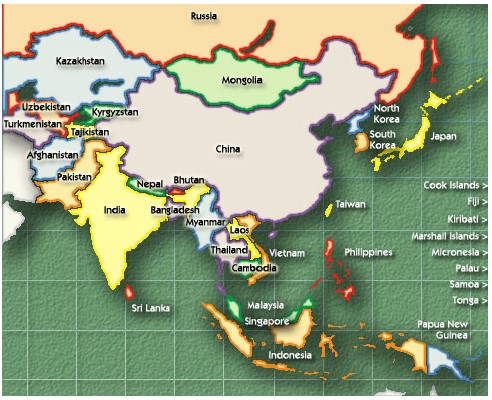
On the other hand those who view China's rise as a threat have pushed for the US administration to develop an anti-Chinese ring around China to contain it. The US has upgraded security relations with Japan and has supported Japanese calls for nuclear development, this would mean abandoning the decades old constitutional defensive policy; for the US this would act as a military counter weight on China’s Eastern flank. On the Western flank India has been wooed with economic deals, the transfer of nuclear technology and ambitions of permanent Security Council status. The US in a similar manner has normalised relations with Vietnam burying its historical conflict and forming bilateral partnerships with it. The US has successfully manoeuvred the Vietnamese to increase interaction with it, breaking the age old Chinese links to the pacific region. Vietnam continues to have a territorial dispute on its northern border with China. The US has also used its conflict with North Korea to contain China. The US has been considerably silent to the nuclear progress in Pyongyang compared to Iran, whilst China has been pursuing six party talks trying to ensure its back door is not set on fire. The statements from such meetings have been contradictory where China has been remarking pessimistic talks with distance on issues to the US remarking successful negotiations. This gives a suitable justification for sustained and substantial US presence in South Korea. The US has also announced in September 2009 a shift in policy towards Myanmar (Burma). It plans to move beyond the current sanctions regime to include direct engagement with the military government. Myanmar is playing a central role in China's overseas energy strategy and through direct engagement the US is attempting to minimise the expansion of a Chinese sphere of influence in Asia.
中国的国内层面
China’s Internal Dimension
在中国五千年的历史中,中国从未成为超级大国,也从未影响过全球均势。即便在采纳共产主义之后,它也从未将其推向国境之外,也从未影响世界上的任何地区。中国五千年历史的大部分时间,都是由为统一国土而进行的内部战争和斗争构成的。中国的对外政策以国内经济发展以及获取实现这些目标所需的全部原材料为核心。中国通过贸易和发展双边关系,削弱美国试图用来遏制中国的国家,以此挑战美国的遏制政策,使美国与澳大利亚、印度、日本和韩国等国的关系有所松动。
In China’s 5000 year history it has never been a superpower and has never influenced the global balance of power. Even when it adopted Communism it never carried this beyond its borders and never influenced any of the regions of the world. Much of China's 5000 year history is composed of internal wars and struggles in order to unify the homeland. China’s foreign policy is centred on domestic economic development and procuring all the necessary raw materials to achieve such aims. China has challenged America’s containment policy by attempting to weaken the nations the US is attempting to use to contain China. This is through using trade and developing bilateral ties to loosen US relations with the likes of Australia, India, Japan and South Korea.
由于这一现实,中国把注意力放在了自己的周边地区,至今在周边以外几乎没有显示出什么雄心。"珍珠链"政策是中国首次向周边以外的地区进行的尝试。美国政府对该政策的描述如下:"'珍珠链'描述了中国日益增长的地缘政治影响力的表现,其手段包括增加进入港口和机场的机会、发展特殊的外交关系以及实现军队现代化,其范围从南海延伸,穿过马六甲海峡,横跨印度洋,直至波斯湾。"10 这些海上航线穿过曼德海峡、马六甲海峡、霍尔木兹海峡和龙目海峡等战略要道,同时还包括沿巴基斯坦、斯里兰卡、马尔代夫和索马里的其他战略海军利益。所有这些都是石油和天然气的关键战略通道,必然会导致与美国的冲突。
Due to this reality China has focussed on its region and as of yet has shown little ambition beyond the region. China’s string of pearls policy is its first venture beyond the region. The policy was described by the US government as follows: “The “String of Pearls” describes the manifestation of China’s rising geopolitical influence through efforts to increase access to ports and airfields, develop special diplomatic relationships, and modernize military forces that extend from the South China Sea through the Strait of Malacca, across the Indian Ocean, and on to the Persian Gulf.”10 The sea lines run through the strategic choke points of Strait of Mandab, Strait of Malacca, Strait of Hormuz and Strait of Lombok as well as other strategic naval interests along Pakistan, Sri Lanka, Maldives and Somalia. All of these are key strategic routes for oil and gas and will inevitably lead to a clash with the US.
目前,中国在构建另一种全球体系方面几乎没有表现出全球性的雄心。事实上,它已经融入了美国主导的全球体系:贸易方面的世界贸易组织、安全方面的联合国,以及金融方面的国际货币基金组织和世界银行。中国似乎是在现有体系内追求自身利益,而不是试图取代它。以如此狭隘的视野,中国在政治上永远无法挑战美国。如果中国真有成为世界超级大国的计划,那么它不仅需要挑战美国,还需要解决一系列国内问题,否则这些问题将在国内引发严重的分裂。这些问题包括:
China currently has shown little global ambition in constructing an alternative global system. It has in fact amalgamated into America’s global system of trade - WTO, security – United Nations and finance – IMF and the World Bank. China appears to be working to achieve its interests from the existing system rather than attempting to replace it. With such a narrow view China will politically never be able to challenge the US. If China has any plans to become the world superpower then it will not just need to challenge the US, but solve a number of domestic issues which would otherwise cause a massive fracture domestically, these include:
几个世纪以来,中国一直努力维系一个幅员辽阔、多民族、多文化的国家,其间历经政治上的集权与分裂。然而,由于发展不均衡以及财富分配极度失衡,文化和语言上的差异日益加剧。身体虐待、监禁、宽松的劳动法规以及微薄得可怜的工资,再加上人们普遍认为中国政府并未解决广大民众的经济需求,这些都在引发内部动荡,并催生了要求政治变革的呼声。2005年,中国处理了87,00012起社会动乱事件,包括公共骚乱、示威游行和内部冲突。就国内局势而言,中国就像一颗随时可能爆炸的炸弹。
For centuries, China has attempted to hold together a vast multi-cultural and multi-ethnic nation despite periods of political centralization and fragmentation. But cultural and linguistic differences have worsened due to uneven growth and a massive misdistribution of wealth. Physical mistreatment, imprisonment, lax labour laws and pitiful pay and the fact that the Chinese government is seen not to have addressed the economic needs of the vast bulk of the population is causing internal strife and calls for political succession. In 2005 China handled 87,00012 cases of social unrest; this is public disturbances, demonstrations and civil strife. Domestically China is a bomb that could go off at any time.
中国在国内实行共产主义,这就是它至今仍是一党制的原因;但在经济上,它正越来越多地走向自由市场。与此同时,中国以民族主义为主导,这导致一些地区提出分离的呼声。在中国确定自身的国家认同之前,这个国家将继续被拉向不同的方向,也永远无法对世界超级大国构成威胁。汉族对其他民族的强加只会加剧这一问题。如果美国认为中国对其利益构成迫在眉睫的威胁,它可以轻而易举地支持某个少数民族群体,从而在中国内部制造问题。
China domestically is ruled by Communism, this is why it still has a one party system, but economically it is moving more and more towards the free market. At the same time China is nationalist led which has led to calls for separation by some regions. Until China decides what its national identity is, the nation will continue to be pulled in different directions and China will never be able to pose a threat to the world's superpower. The imposition of the ethnic Hans over the other ethnicities only contributes towards the problem. If the US felt China poses an immediate threat to its interests it could with much ease support one of the minority groups and cause internal problems for China.
结论
Conclusions
中国目前对美国构成经济挑战,因此双方卷入了多起贸易纠纷。美国对中国轮胎进口实施了限制,而目前中国也是世界贸易组织(WTO)多起反竞争行为案件的被诉方。
China currently posses an economic challenge to the US, for these reasons they are engaged in a number of trade disputes. The US has placed restrictions on Chinese tyre imports, and currently China is on the receiving end of a number of World Trade Organisation (WTO) cases into anti-competitive practices.
对于美国而言,中国在东南亚构成威胁,因此美国希望限制中国潜在的政治野心,同时又想从14亿人口的国内市场中获益。美国中央情报局的评估和四年一度的防务评估不断建议美国在面对中国威胁时增加军费开支。然而,把中国视为对美国的威胁是被夸大了的:目前中国只将其利益和野心限定在本地区之内。一个从未成为世界强国、也从未向国界之外扩张的国家,是否真的怀有全球性的野心,是值得怀疑的。中国有能力将经济重心从外部转向国内发展,其庞大的人口规模将有助于解决其经济困境。
For the US China posses a threat in South East Asia and hence the US wants to restrict potential Chinese political ambitions but at the same time wants to benefit from the 1.4 billion domestic market. US central intelligence estimates and quadrennial reviews constantly propose the US to increase military expenditure in the face of Chinese threats. China as a threat to the US is overblown when China has for the moment restricted its interests and ambitions to its region – it is questionable whether a nation that has never been a world power, who never expanded beyond its borders, even has global ambitions. China is in a strong position to shift its economy from external focus to domestic development, the size of its population would solve its economic dilemma.
目前中国对美国构成经济挑战,因此中国不太可能在短期内取代美国成为世界超级大国。
Currently China poses an economic challenge to the US, therefore it is unlikely China will be replacing the US as the worlds superpower any time soon.