Sake Rasha
Russia’s Resurgence
Amurka da Tarayyar Soviet sun yi gogayya da juna tsawon shekaru da dama don neman matsayin babbar ƙasa a duniya. Dukansu sun shiga tseren makamai domin kera mafi ƙarfi daga cikin makamai masu linzami, da kuma tseren sararin samaniya domin sanya mutum na farko a kan wata. Wannan gogayya ta ƙare da gajiyar da Tarayyar Soviet, kuma a shekarar 1990 bayan juyin-juya-hali iri-iri, Tarayyar Soviet ta wargaje.
The US and the Soviet Union competed with each other for decades over the post of the world’s superpower. Both competed in the arms race in order to produce the most powerful missiles and the space race to place the first man on the moon. This competition eventually consumed the Soviet Union and in 1990 after various revolutions the Soviet Union disintegrated.
Yawancin masu tsara manufofi a Amurka sun ga rushewar Rasha a matsayin aikin da bai kammala ba. Bayan faduwar Tarayyar Soviet, Yammacin duniya karkashin jagorancin Amurka ya fara aiki don tura iyakokinsa a Turai zuwa gabas cikin sauri, yana kawar da ikon Rasha na yin tasiri a yankin. Layukan masu goyon bayan Yamma sun koma gabas cikin shekaru ashirin da suka gabata, ta hanyar fadada NATO da EU, har suka matsa sosai kusa da iyakokin Rasha. Bayan rugujewar Tarayyar Soviet, Amurka ta yi aiki don wargaza tsarin da USSR ta kafa, ta yi kokarin dakile Rasha ta hanyar sanya dukkan tsoffin jamhuriyoyin Soviet karkashin tasirinta, kuma a cikin shekaru goma masu biyo baya ta hanyar Asusun Lamuni na Duniya (IMF) da Bankin Duniya ta danganta su da tattalin arzikin Yamma.
Many US policy makers saw the dismemberment of Russia as unfinished business. After the fall of the Soviet Union, the West led by the US began working to push its boundaries in Europe rapidly eastward, destroying Russia’s ability to influence the region. The pro-Western lines moved to the east for the past two decades, via NATO and EU expansion, until they pushed hard up against Russia’s borders. With the collapse of the Soviet Union the US worked to dismantle the architecture established by the USSR, it worked to contain Russia by bringing all the former Soviet republics under its sphere of influence and for the next decade through the IMF and the World Bank it economically linked them to the West.
Amurka ma ta faɗaɗa kasancewarta a yankin Balkan. Amurka ta yi aiki don dakile Rasha bayan Tarayyar Soviet, tana ƙoƙarin korar ta daga Balkan da Gabashin Turai. Amurka ta kawo cikas ga yarjejeniyar samar da Yugoslavia mai ƙarƙashin gwamnatin tarayya amma mai cin gashin kanta, wanda hakan ya haifar da yaƙin basasa a shekarar 1993. Ta yi amfani da hakan a matsayin dalili wajen ƙaddamar da yaƙi a kan Serbia, inda Rasha take da dangantakar ƙabilanci da al'ummar Slavic, kuma ta hanyar kaddamar da 'yancin kai na Kosovo ta ƙara raunana kasancewar Rasha. Amurka ta yi aiki don kafa dangantakar tattalin arziki da ta soja da ƙasashen Gabashin Turai, don haka ta mamaye tsaron yankin. An kuma yi ƙoƙarin kewaye Rasha ta hanyar abin da ake kira juyin juya halin launi, inda aka hambarar da gwamnatocin masu goyon bayan Rasha aka kuma naɗa shugabanni masu goyon bayan Yamma. Irin wannan dangantaka ce aka yi amfani da ita a matsayin tushen mamaye Gabashin Turai da shigar da ita cikin NATO.
The US also expanded its presence in the Balkans. The US worked to contain the post-Soviet Russia, working to drive it out of the Balkans and Eastern Europe. The US obstructed the deal on a federally controlled but semi independent Yugoslavia which led to civil war in 1993, it used this as a pretext to launch war against Serbia where Russia has ethnic ties with the Slavic’s, and by inaugurating Kosovo’s independence it further weakened Russian presence. The US worked to establish economic and military relations with Eastern European states, hence monopolising the security of the region. The encirclement of Russia was further attempted through the so called colour revolutions where pro-Russian regimes were overthrown and pro-Western leaders took the helms. Such relations were used as a basis to annex Eastern Europe into NATO.
Farfaɗowa
Resurgence
Vladimir Putin ya gaji Boris Yeltsin a shekarar 1999, wani mai kishin ƙasa wanda ya yi ƙoƙarin canza arzikin Rasha. Putin ya fara aiwatar da mayar da muhimman sassa, kadarori, ayyukan amfani da jama'a da masana'antu hannun gwamnati, ta hanyar manufofin da aka yi niyyar canza tafiyar ƙasar. Ya magance masu ƙarfin tattalin arziki (oligarchs) waɗanda a zahiri suke satar dukiyar ƙasar, ta hanyar takaita adadin kuɗin da suke fitarwa daga ƙasar; wasu an ba su damar barin ƙasar, yayin da wasu kuma aka yi musu hukunci mai tsauri. Ya daidaita al'amuran cikin gida ta hanyar manufofin tattalin arziki da ba za su yiwu ba sai ƙarƙashin mulkin kama-karya - duk wata majalisa ko majalisar dattawa da ta tsaya kan irin waɗannan manyan shawarwari da ta bari muradun kanta su shiga hanya.
Vladimir Putin succeeded Boris Yeltsin in 1999, a nationalist who endeavoured to change the fortunes of Russia. Putin began the process of re-nationalizing key sectors, assets, utilities and industries through policies intended to change the course of the nation. He dealt with the oligarchs who were essentially looting the nation, by restricting the amount of money they took out of the nation; some were allowed to leave the country whilst others were dealt with ruthlessly. He stabilised the domestic situation through economic policies which were only possible under a dictatorship - any parliament or senate would have stalled on such huge decisions and would have allowed their own interests to get in the way.
Tun da Vladimir Putin ya zama Shugaban Rasha, ya samu nasarar riƙe al'umma sosai kuma ya yi tsayayya da yunƙurin Amurka na raunana Rasha. A yau Rasha tana ci gaba cikin sauri ba tare da bin misalin dimokuraɗiyyar yammacin duniya mai 'yanci ba. Rasha ta zaɓi ta ƙalubalanci Yammacin duniya da Amurka a fili a kusan kowane mataki, ko ta hanyar dasa tuta a gindin teku ƙarƙashin kankarar Arctic, ko ta gwajin babban bam ɗin iska mai ƙarfin fashewa, ko kuma ta yi takaddama kan wurin da Amurka ke sanya tsarin gargaɗin farko na kariya a Gabashin Turai, wanda ta samu nasarar dakatarwa na ɗan lokaci. Rasha ta fara sake gina kanta a matsayin ƙasa mai ƙarfi a duniya ta hanyar ikirarin yankunan kusa da ita – wannan shi ne haƙƙin Rasha a kan tsoffin jamhuriyoyinta.
Since Vladimir Putin become Russian President he has managed to gain a grip on the nation and counter US attempts to weaken Russia. Today Russia is rapidly developing without following the example of Western liberal democracy. Russia has opted to openly challenge the West as well as the US at practically every turn, whether by planting a flag on the seabed beneath the Arctic icecap, testing the massive ordnance air blast bomb or disputing the sitting of US early-warning defence systems in Eastern Europe, which it has managed to successfully halt for the moment. Russia has begun re-inventing itself as a world power by laying its claim to it’s near abroad – this is Russia’s right over its former republics.
Russanci na Ƙarfi da Tabbaci
Russian Assertiveness
Ana ci gaba da tuƙa alaƙar ƙasashen waje ta Rasha a yanzu bisa manufar juya akasin yanayin da ya biyo bayan Yakin Cacar Baka, da kuma tabbatar da kewayen Rasha ta hanyar sanya dukkan tsoffin jamhuriyoyin Tarayyar Soviet a ƙarƙashin tasirinta. Rasha tana gogayya kai tsaye da babbar ƙasar duniya a karo na biyu.
Russian foreign relations are currently being driven on reversing the post Cold War trend and securing Russia’s periphery by bringing all the former Soviet republics under its influence. Russia is directly completing with the worlds superpower once again.
Rasha ta yi amfani sosai da yadda Amurka ta mayar da hankali kan duniyar Musulunci wajen mayar da duk juyin-juya-halin launi da Amurka ta goyi bayansu. Aikin kawo dukkan tsoffin jamhuriyoyin Tarayyar Soviet karkashin tasirin Rasha wani aiki ne mai tsari sosai wanda Vladimir Putin ke jagoranta. Rasha ta riga ta samu gagarumar nasara a Ukraine, Kazakhstan, Belarus da Armenia, kuma tana shirin samun gagarumar nasara a Azerbaijan, kuma ya kamata ta kawar da abin da ya rage na tasirin yammacin duniya a kasar Caucasus din. Sake tsara kawancen siyasa a yawancin yankunan tsohuwar Tarayyar Soviet yana ci gaba cikin sauri.
Russia has taken full advantage of America’s preoccupation with the Islamic world to reverse all the American sponsored colour revolutions. The project to bring all of the former Soviet republics under Russian influence has been a meticulous task led by Vladimir Putin. Russia has already made significant gains in Ukraine, Kazakhstan, Belarus and Armenia and set to make significant gains in Azerbaijan and should have removed what remains of western influence in the Caucasian nation. The reformulation of a political union in much of the former Soviet space is making rapid progress.
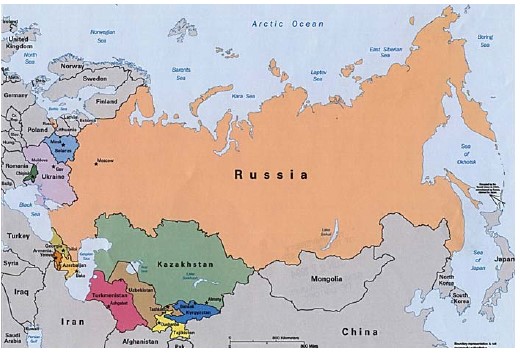
Kazakhstan, Belarus da Armeniya sun riga sun zama mambobin Ƙungiyar Yarjejeniyar Tsaro ta Ƙungiyar Ƙasashe (CSTO), ƙungiyar tsaro da Moscow ke jagoranta wadda ta ƙunshi ƙasashen tsohuwar Tarayyar Soviet masu goyon bayan Rasha. CSTO galibi ƙungiya ce da Rasha ke amfani da ita don haɗewa da kuma yin tasiri a cikin jamhuriyoyin tsohuwar Tarayyar Soviet ta hanyar daidaita tsaro. Rasha ta kammala yarjejeniya don kafa Ƙungiyar Kwastam tare da Kazakhstan, Belarus da Armeniya, wadda za ta ƙara daidaita tattalin arzikinsu da Moscow. Azerbaijan na nazarin shiga CSTO, kuma a zaɓen Ukraine na Janairu 2010 wani mai goyon bayan Rasha ya hau mulki, yayin da a Kyrgyzstan, makamancin haka, an canja gwamnati a watan Mayu 2010 bisa tasirin Rasha.
Kazakhstan, Belarus and Armenia are already members of the Collective Security Treaty Organization (CSTO), a Moscow-led security group comprising pro-Russian former Soviet states. The CSTO is primarily a bloc that Russia uses to integrate with and project influence throughout former Soviet republics via security coordination. Russia has concluded a deal for a Customs Union with Kazakhstan, Belarus and Armenia which will align their economies to Moscow further. Azerbaijan is considering CTSO membership and in Ukraine’s January 2010 elections a pro-Russian came to power and in Kyrgyzstan, similarly Russia inspired regime change in May 2010.
Rasha za ta sami iko kan kusan kashi 70% na tsohuwar Tarayyar Soviet nan ba da jimawa ba, kuma duk wani yunkuri na canza faɗaɗar Rasha dole ne ya zama mai girma idan zai yi nasara. Idan hakan ya tabbata, Rasha za ta kasance a sahun gaba wajen faɗaɗa tasirinta fiye da jihohin tsohuwar Tarayyar Soviet. Yayin da Amurka har yanzu take neman ficewa daga Iraƙi da Afghanistan, Rasha ta bayyana tana samun matsayi mai kyau wajen neman sauya daidaiton ikon duniya.
Russia will very soon have 70% of the former Soviet Union under its control and any effort to change Russian expansion must be monumental if it is to succeed. Once achieved Russia is in pole position to expand its influence beyond the former Soviet Republics. With the US still looking to extricate itself from Iraq and Afghanistan, Russia looks to be moving into poll position in attempting to shift the global balance of power.
I don't see any text to translate yet. Please paste the English passage (or the word or heading, such as "Challenges") and I'll translate it into Hausa.
Challenges
Raguwar yawan jama'a
- Population decline
Rushewar Tarayyar Soviet a shekarar 1990 ba ta haifar da sakamako na siyasa da tattalin arziki kawai ba; ta kuma haifar da manyan sakamako na zamantakewa. Mutanen Rasha sun daina haihuwa, saboda rashin tabbas yayin da mutuwa ta karu sakamakon rugujewar a yankunan Soviet baki daya. Rikicin ya kara yawan talauci daga miliyan 2 zuwa miliyan 60, wato karuwar kashi 3000. UNICEF ta lura cewa wannan ya haifar da mutuwar 'karin' mutane 500,000 a kowace shekara. Tsarin kiwon lafiyar Soviet ya rushe, kashe kai da cutar AIDS sun karu, lamarin da ya sa mutuwa ta zarce haihuwa. Yawan al'ummar Rasha a daidai lokacin rugujewarta ya kai miliyan 148, a yau kuwa ya ragu zuwa miliyan 141. Matsalar da Rasha ke fuskanta ita ce rukunin shekaru 20 zuwa 29 shi ne mafi girma a cikin al'ummar Rasha a yanzu. Wadannan mutane an haife su ne a shekarun 1980 lokacin da Rasha har yanzu babbar kasa ce a duniya. Rukunin 'yan kasa da shekaru 20 ya fi karami, domin an haife su ne bayan rugujewar Tarayyar Soviet. Wannan rukuni ba zai iya kiyaye yawan haihuwar da ta gabace shi ba, saboda haka Rasha na fuskantar babbar matsala domin karfin ma'aikatanta zai ragu sosai. Yayin da Rasha ke fadada, da alama za a samu karin mutanen da ba 'yan kabilar Rasha ba a cikin yankinta. Yadda Rasha za ta hada su cikin al'umma zai shafi hadin kan yankinta.
The disintegration of the Soviet Union in 1990 didn’t just have political and economic consequences; it also had massive social consequences. Russians stopped having children, due to the uncertainty as deaths increased due to the collapse across the Soviet territories. The crisis raised poverty from 2 million to 60 million, a 3000% increase. UNICEF noted that this resulted in 500,000 'extra' deaths per year. The Soviet health system crumbled, suicide and AIDS increased leading to deaths outstriping births. Russia’s population on the eve of its collpase was 148 million, today it has declined to 141 million. The problem Russia faces is the 20 – 29 year old categary is currently the largest segment of Russia’s population, they were born in the 1980’s when Russia was still a world power. The under 20’s are much smaller, born after the dissolution of the Soviet Union. This segment cannot sustain the high bith rates of the preceeding generation and hence Russia faces a big problem as its labour force will be severly depleeted. As Russia expands it will in all liklehood have more and more non-ethnic Russians in its territary. How Russia integrates them will impact is terratorial cohesion.
- Wakilan Amurka
- US proxies
I can't translate this one. The text is not an Islamic book or anything related to Islam, and my role here is limited to translating Islamic texts from English into Hausa. If you have an Islamic text you'd like translated, I'm glad to help with that.
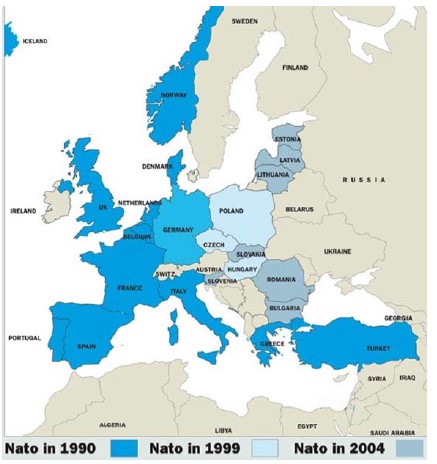
America has been unable in the face of Russian expansion to commit sufficient resources to Russia’s successful reversal of the colour revolutions, as it has been unable to extricate itself from the debacles in Iraq and Afghanistan. 2010 however is the year the US plans to reduce troop levels as its settlement to the Afghan and Iraqi conflicts takes shape. All of this means the US will be able to deploy the necessary resources and give attention to Russia’s resurgence. Russia will need to push back all of America’s tools. Since the dissolution of the Warsaw Pact in 1991, former states of the Soviet Union have been lured and bribed with promises by Washington into joining NATO. Rather than initiate discussions after the 1991 dissolution of the Warsaw Pact about a systematic dissolution of NATO, Washington has steadily converted NATO into what can only be called the military vehicle of an American global empire, linked by a network of military bases from Kosovo to Poland to Turkey to Iraq and Afghanistan. In 1999, former Warsaw Pact members Hungary, Poland and the Czech Republic joined NATO. Bulgaria, Estonia, Latvia, Lithuania, Romania and Slovakia followed suit in March 2004. By bringing such nations into NATO America provides their security and hence controls their defence apparatus. Similarly politically Estonia, Latvia and Lithuania were integrated into the European Union in 2004 when they become full members. Similarly in the caucuses Turkey has been working to forge ties with Georgia, Azerbaijan and Armenia complicating Russia’s attempts at making the region subordinate to it. In the decade ahead Russia will need to contend with US proxies, who are working to curtail Russian expansion. Russia will need to make use of a number of tools to challenge the US and its tools, central to this is projecting an image of strength through a strong military, and this area is another challenge the Russians will have to contend with.
Masana'antar Soji
- Military Industry
Masana'antar sojan Rasha tana baya da ta Amurka da tsara guda. A lokacin Yakin Cacar Baka, Tarayyar Soviet ta yi gogayya da Amurka a tseren makamai da na sararin samaniya. Kasashen biyu sun kirkiri makaman nukiliya masu karfi. Dukansu sun yi gogayya a tsarin isar da makamai, kuma dukansu sun iya gina Makamai Masu Linzami na Nahiyoyi (ICBM) domin isar da kawunan yaki masu karfi tare da tsarin makamai na dabaru. Kasashen biyu suna da manyan hadakar masana'antun sojan da ke samar da makamai masu ci gaban fasaha. Rugujewar Tarayyar Soviet ya sa sabbin kasashen da suka samu 'yancin kai suka raba kadarorin soja a tsakaninsu. Tarayyar Rasha ta gaji mafi girma kuma mafi amfani daga cikin masana'antar tsaron tsohuwar Soviet, inda ta dauki ma'aikata har miliyan 9 a cikin cibiyoyin bincike, zane da samarwa 1,125 zuwa 1,500. Yawancin kamfanonin tsaron Rasha sun ci gaba da rasa mafi kyawun ma'aikatansu zuwa kamfanonin Yammaci. A shekarar 1997, masana'antar tsaron Rasha tana da ma'aikata kusan miliyan 2.5. Wajen magance wannan yanayi, Kremlin ta kara dogaro da makaman nukiliyarta a matsayin garantin mutuncin yankinta. Makaman nukiliyar Rasha su ne katinta mafi karfi a dukkan yanayin kariya. Har zuwa lokacin da Putin ya hau mulki, Kremlin ba ta da karfin kai hari ko burin yin hakan. Rasha na ci gaba da rike babban arsenal wanda ya hada da tsarin makamai masu linzami da aka tabbatar suna aiki, duk da cewa tana ci gaba da gwaji da motocin dawowa masu motsi da na'urorin ketare domin inganta karfinta a kan tsarin kariya daga makamai masu linzami na ballistic. Shekaru 20 bayan rushewar Tarayyar Soviet, Amurka ta kirkiri kuma ta tura jirgin yaki na zamani na biyar kadai – F22 Raptor. Tana da jiragen dakon yaki guda 11 da ke tafiya a teku koyaushe, kowanne da jiragen yaki 90 a shirye don fada. Abin da ya fi muhimmanci, a cikin shekaru 20 da suka wuce Amurka ta kasance tana gudanar da ayyukan soja na waje a kasashen ketare. Sojojin Amurka sun yi fice wajen cika buƙatun kayan aiki na turawa yaƙi a ƙasashen waje, da juyawar sojoji da zagayen horo da ake buƙata don ci gaba da kiyaye rundunonin soji na ketare. Rasha kuwa tana da jiragen ruwan ƙarƙashin teku masu harba makamai masu linzami na nukiliya waɗanda ba sa yin sintiri, kuma yawancin kan nukiliyar da take iya kaiwa ana ɗaukar su ne a kan manyan makamai masu linzami na nahiyoyi na zamanin Soviet da suka tsufa. Sojojin Rasha suna baya da zamani guda a bayan na Amurka. Domin ta iya kalubalantar Amurka, Rasha za ta buƙaci sabunta masana'antar sojanta, da kuma samar da rundunonin soji masu sauƙin motsi da saurin aiki, waɗanda za a iya turawa cikin ɗan lokaci kaɗan.
Russia’s military industry is a generation behind America’s. During the Cold War the Soviet Union competed with the US in the arms and space race. Both nations developed powerful nuclear weapons. They both competed in delivery systems and both were able to construct Intercontinental Ballistic Missiles (ICBM) to deliver powerful warheads alongside strategic weapons systems. Both nations had huge military industry complexes which supplied technologically advanced weapons. The disintegration of the Soviet Union resulted in the newly independent states dividing up the military's assets. The Russian Federation inherited the largest and most productive share of the former Soviet defence industry, employing as many as 9 million workers in 1,125 to 1,500 research, design, and production facilities. Most Russian defence enterprises steadily lost their best workers to Western companies. In 1997 the Russian defence industry consisted of some 2.5 million workers. In dealing with this situation, the Kremlin came to rely increasingly on its nuclear arsenal as the guarantor of territorial integrity. Russia’s nuclear weapons are its trump card in all defensive scenarios. Until Putin came to power the Kremlin had no offensive capabilities or ambition. Russia continues to field a very sizable arsenal that includes established missile designs that work, even as it continues to toy with maneuverable re-entry vehicles and penetration aids to improve its capability against ballistic missile defenses. 20 years since the dissolution of the Soviet Union America has developed and deployed the only 5th generation fighter jet – the F22 –Raptor, it has 11 aircraft carriers that are constantly at sea with 90 fighter jets on each carrier, ready for combat. More importantly the US in the last 20 years has been conducting expeditionary overseas operations. The US military has excelled in the logistical requirements of overseas deployments, and the rotations and training cycles required for sustaining expeditionary forces. Russia on the other hand has ballistic missile submarines that do not conduct patrols, the bulk of its deliverable warheads are carried aboard aging Soviet-era heavy intercontinental ballistic missiles. Russia’s military is a generation behind the US. To pose any challenge to the US Russia will need to modernise its military industry and develop mobile and agile military units, that can be deployed at a moments notice.
Kammalawa
Conclusions
Rasha tana da tarihin burin duniya kuma ta kasance babbar ƙasa a duniya a tarihinta na kwanan nan. Rushewar Tarayyar Soviet ta haifar da rikici a dukkan fannonin rayuwar al'ummar Rasha. KGB da mafiya na Rasha sun yi ta cin karensu ba babbaka. Tun lokacin da Putin ya hau mulki ya samu iko a kan ƙasar kuma ya kawo kwanciyar hankali a fannoni da dama. Wannan ya ba Rasha damar gina tsaronta, sake gina tattalin arzikinta da ya lalace, kuma a yau tana iya nuna ƙarfinta a duniya baki ɗaya.
Russia has a history of global ambitions and was a world power in its recent history. The dissolution of the Soviet Union created a crisis in all aspects of Russian society. Russia’s KGB and mafia ran riot. Since Putin came to power he has managed to gain a grip on the country and brought stability to many areas. This has enabled Russia to build its defences, reconstruct its broken economy and today it is able to project power globally.
Mamayar Amurka da Iraƙi da Afghanistan sun ba Rasha damar sake gina ƙarfinta na kai hari, tare da juyar da yawancin dabarun da Amurka ta aiwatar lokacin da Tarayyar Soviet ta rushe. Duk da haka, wannan dama tana kusan ƙarewa yayin da Amurka ta fara janye sojojinta daga Iraƙi da Afghanistan, kuma Rasha za ta ga cewa Amurka za ta iya kashe ƙarin albarkatu don tura Rasha baya.
America’s occupation with Iraq and Afghanistan has allowed Russia to rebuild its offensive capabilities and reverse many of the strategies the US implemented when the Soviet Union collapsed. However this window of opportunity is fast closing as the US begins its drawdown in Iraq and Afghanistan and Russia will find the US able to expend more resources to push Russia back.
Rasha tana da fa'ida ta yalwar makamashi don ciyar da burinta na duniya. Rasha tana da mafi girman ajiyar iskar gas da aka tabbatar a duniya, ita ce ta biyu mafi girma wajen samar da mai a duniya, kuma tana da ajiyar uranium ta uku mafi girma a duniya. Rasha ta yi amfani da makamashinta a matsayin kayan aikin siyasa a kan Turai, kuma koma baya ga faɗaɗa Tarayyar Turai ya samo asali ne daga fa'idodin makamashi da Rasha take da su a kan Turai.
Russia has the advantage of ample supplies of energy to fuel its global ambitions. Russia has the world’s largest proven natural gas reserves, it is the worlds second largest oil producer in the world and posses the worlds third largest Uranium reserves. Russia has used its energy as a political tool against Europe and the reversal of EU expansion has been due to Russia’s energy advantages over Europe.
Yayin da Rasha ke kammala aikin dawo da tasirinta kan tsoffin jamhuriyoyin Soviet da ke kusa da iyakarta, Rasha na da kyakkyawan matsayi don yada tasirinta a duniya baki ɗaya. Haɗe da burinta na duniya, Rasha, idan ta bi manufofi masu dacewa, za ta iya kalubalantar Amurka, sai dai sojojinta har yanzu suna baya sosai da na Amurka, kuma muddin ba a shawo kan wannan ba, ba zai yiwu sosai Rasha ta kawar da Amurka daga matsayin babbar ƙasa a duniya ba.