4.1 文本的划分
4.1 Divisions Of The Text
节与章
Aya And Sura
"Aya"(复数 ayat)的本义是"迹象"或"征兆"。在专业术语中,它指《古兰经》文本中最短的段落划分,即一个短语或一句话。启示是真主给人类的引导,因此,将其最小的划分称为(引导性的)"迹象",并不令人意外。"verse"(诗节)一词并不恰当,因为《古兰经》不是诗歌。
Aya (pl. ayat) actually means 'sign'. In technical language it is the shortest division of the Qur'anic text, i.e. a phrase or sentence. The revelation is guidance from God to mankind and it is therefore not at all surprising to find that its smallest divisions are called (guiding) 'signs'. The term 'verse' is not appropriate since the Qur'an is not poetry.
“Sura”(复数形式为“Suwar”)字面意思是“排”或“围栏”。在术语上,它指《古兰经》经文按段落划分的章节或部分,与前后文区分开来。
Sura (pl. Suwar) means literally 'row' or 'fence'. In technical language, it is the passage-wise division of the Qur'anic text,i.e. a chapter or part, set apart from the preceding and following text.
《古兰经》共有114章,各章长短不一,最短的一章只有四节经文,最长的一章有286节经文。
The Qur'an has 114 suras of unequal length, the shortest consisting of four and the longest of 286 ayat.
除第9章外,所有章都以“bismillahir rahmanir rahim”开头。这并非后来加入经文的内容,早在穆罕默德受命为先知之前,这句话就已被使用。[参见第27章第30节。]《古兰经》的114章都有章名,充当一种标题。章名常取自经文本身一个重要或特别的词,例如 al-anfal(第8章)或 al-baqara(第2章);另一些情况下,则取自章首的前几个词,例如 ta-ha(第20章)或 al-furqan(第25章)。
All suras (with the exception of Sura 9) begin with the words bismillahir rahmanir rahim. This is not a later addition to the text, but was already used, even before Muhammad's call to prophethood. ' [See Sura 27: 30.] All 114 suras in the Qur'an have names, which serve as a sort of heading. The names are often derived from an important or distinguishing word in the text itself, such as e.g. al-anfal (8) or al-baqara (2). In other cases it is one of the first few words with which the sSra begins e.g. ta-ha (20) or al-furqan (25).
秩序与安排
Order And Arrangement
两件事——经文段落(aya)在每个章(sura)内的次序,以及各章的排列——都是在先知去世那一年最终确定的,当时天使吉卜利里(Gabriel)两次前来,与先知一同修订经文。[参见上文,《古兰经启示的传递》,第31页。] 学者们还把各章分为四类。
Both the order of the ayat within each sura and the arrangement of the suras were finally determined by the Prophet under guidance from the Angel Gabriel in the year of his death, when Gabriel twice came to revise the text with him. [See above. transmission of the Qur'anic revelation, p. 31.] Scholars have also grouped the suras into four kinds:
“Al-Tiwal”(长篇):第2至10章。
al-tiwal (long ones): 2-10.
al-mi'un(Al-Ma'un):约100节经文的章:10-35。
al-mi'un: suras with approximately 100 ayat: 10-35.
al-mathani:少于一百节经文的章:第36至49章。
al-mathani: suras with less than 100 ayat: 36-49.
《忽忽》:古兰经末尾的一段,从第50章《戛夫》开始,至第114章为止。
al-mufassal: the last section of the Qur'an beginning with Sura qaf: 50-114.
其他章节划分的文本
Other Divisions Of The Text
“Juz'”(复数 ajza')字面意为部分、一份。《古兰经》被分为30个长度大致相等的部分,以便于在一个月的30夜里诵读,尤其是在斋月期间。通常以“juz'”一词加上对应的编号来标示,例如:第30卷(juz' 30),始于第78章(Sura 78)。
Juz' (pl. ajza') literally means part, portion. The Qur'an is divided into 30 portions of approximately equal length for easy recitation during the thirty nights of a month, especially of the month of Ramadan. Usually they are indicated by the word and the number of it given alongside, (e.g. juz' 30 beginning with Sura 78).
有些《古兰经》版本将各章分为称为“鲁库尔”(ruku')的段落。这些段落以符号标示,每个符号旁写有阿拉伯数字,其含义如下,例如 2:20:
Some copies of the Qur'an have the suras divided into paragraphs called ruku'. They are indicated by the symbol and the explanation of the Arabic numerals written with each is as follows, e.g. 2:20:
上图中的数字(2)表示这是相应章(此处为白牛章)中完成的第二个鲁古尔。
The top figure (2) indicates that this is the second completed ruku ' in the respective sura (here Sura albaqara)
.
.
中间的数字(13)表示这一完整的“鲁库尔”(ruku')包含13节经文(ayat)。
The middle figure (13) indicates that this completed ruku' contains 13 ayat.
下方的数字(2)表示这是相应的卷(此处为第一卷)中的第二个鲁库尔(ruku')。
The lower figure (2) indicates that this is the second ruku' in the respective juz' (here first juz').
在中东印刷的古兰经版本中,尤其常见的是:每一卷(juz')又被划分为四个哈孜卜(hizb),并以特定符号标示。例如,2:74 是古兰经第二个哈孜卜的开始,由数字 2 标示。
Copies of the Qur'an printed in the Middle East in particular have each juz' subdivided into four hizb indicated by the sign e.g. 2:74 is the beginning of the second hizb of the Qur'an, indicated by the figure 2:
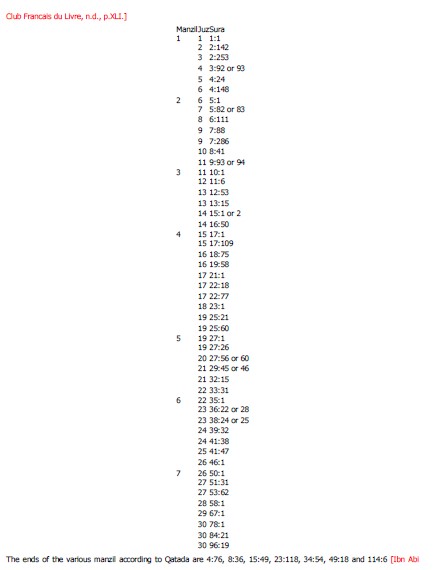
每一个hizb又再细分为四分之一。《古兰经》经文还被划分为七个长度大致相等的部分,称为manzil(曼宰勒),用于七天诵读。在一些抄本中,页边会以manzil一词及相应序号标示。下表显示了经文按juz'(朱兹ʼ)与manzil(曼宰勒)的划分:[Hamidullah, Muhammad: Le Saint Coran. Traduction integraleetnores. Paris:
Each hizb is again subdivided into quarters The Qur'anic text is also divided into seven parts of approximately equal length, called manzil, for recitation over seven days, indicated in some copies by the word manzil and the respective number in the margin. The following table shows the division of the text into juz' and manzil: [Hamidullah, Muhammad: Le Saint Coran. Traduction integraleetnores. Paris: