Akidah da abin da ke fitowa daga cikinta na hukunce-hukunce (Ahkaam) da abin da ake ginawa a kanta na tunani, shi ne tushen At-Taghyeer (sauyi).
The Aqeedah and what emanates from it in terms of Ahkaam and what is built upon it in terms of thoughts, is the basis of At-Taghyeer (change).
Halin ɗan adam yana da alaƙa da abin da yake ɗauke da shi na fahimta (mafaahiim). Mafaahiim su ne imani-imani (qanaa'aat) da ke samuwa sakamakon fahimtar abubuwa da sifofinsu, tare da abin da aka gina bisa wannan fahimta ko kuma abin da ke fitowa daga gare ta na wasu imani-imani.
The conduct of the human is tied to what he carries in terms of concepts. The concepts (Mafaaheem) are convictions (Qanaa’aat) resulting from a comprehension of things and their attributes in addition to what is built upon this comprehension or emanates from it in terms of other convictions.
Akwai nau'i biyu na ra'ayoyi (ma'anoni):
Concepts are of two types:
Na farko:
The first:
Tunanin abubuwa. Waɗannan imani ne ko Ahkaam (hukunce-hukunce) da tushensu shi ne abubuwan kansu. Misalan wannan sun haɗa da maganganu kamar: ‘Wuta tana ƙone’, ‘Guba tana kashewa’, ‘Barasa tana sa mutum ya bugu’, ‘Ana cin nama amma ba a cin ƙasa’, ‘Ƙarin matsin lamba yana haifar da fashewa (irin wadda ta ke a wata ma’ana)’, ‘Al’umma ta ƙunshi tarin mutane waɗanda ke da alaƙoƙi na dindindin’, da kuma ‘Farfaɗowa ba za ta faru ba sai ta hanyar tunani mai haske’.
: Concepts about things. These are convictions or Ahkaam (rulings) whose source is the things themselves. This would include statements like: ‘Fire burns’, ‘Poison kills’, ‘Alcohol intoxicates’, ‘Meat is eaten whilst soil is not eaten’, ‘The increased build-up of pressure generates an explosion (of sorts)’, ‘The society is composed of a collection of individuals bound by permanent relationships’ and ‘Revival would not occur except by way of the enlightened thought’.
Dukkan wadannan tunani bayanai ne ko hukunce-hukunce wadanda tushensu shi ne abin da suke magana a kai. Suna iya zama daidai ko kuskure, ya danganta da yadda suka dace da gaskiyar lamari ko kuma suka saba mata. A dukkan wadannan hali ana daukar su a matsayin ra'ayoyi (mafahim) ga wanda ya yi imani da su. Halayyar dan Adam da dabi'arsa tana da alaka da ra'ayoyinsa game da abubuwa, saboda haka duk wanda ya tabbata cewa abincinsa an sa masa guba ba zai ci daga cikinsa ba, koda kuwa yana jin yunwa. Haka kuma wanda yake jin kishirwa zai nemi ruwa ba wani abu ba, yayin da wanda yake son ya bugu zai nemi giya kadai ba wani abu ba.
All of these thoughts are descriptions or Ahkaam whose source is its subject. They could be correct or incorrect depending on their conformity to the reality or their contradiction to it. In all of these cases they are considered to be concepts in respect to the one who has believed in them. The human behaviour and conduct is tied to his concepts about things and so whoever is convinced that his food has been poisoned would never eat from it and even if he was hungry. Similarly the one who was thirsty would seek water and not something else whilst the one who wanted to be intoxicated would seek alcohol and nothing else.
Nau'i na biyu:
The second type:
Mafaahim (fahimce) game da rayuwa. Su ne imani ko hukunce-hukuncen da tushensu yana waje da abin da suka shafa. Misali irin wadannan maganganu: 'Sallah farilla ce', 'Yaudara haram ce' da 'Kashe mutum haram ne' da sauransu. Tushen wannan hukunci ba shi ne abin kansa ko aikin kansa ba. Wadannan kawai suna wakiltar fagen ko gaskiyar da ake yanke hukunci a kanta, yayin da tushen hukuncin yana wani waje ne daban.
Concepts (Mafaaheem) about life. These are convictions or Ahkaam whose source is external to its subject. This is like the statements: ‘The Salaah is Fard’, ‘Fraud is Haraam’ and ‘Killing someone is Haraam’ etc... The source of this Hukm is not the thing itself or the action and these only represent the subject area or the reality that is being judged upon whilst the source of the judgement is something else and lies elsewhere.
Bayaninmu: ‘Giya tana sa maye’ yana nuna wani bayani ko wata halayya ta ciki da ke da alaka da giya. Hukunci ne da ake yankewa kan wani abu saboda abin da ke cikinsa ko abin da yake haifarwa. Amma maganar ‘Giya haramun ce’ ba hukunci ba ne da ake yankewa kan abu bisa abin da ke cikinsa, a’a, tana wakiltar hukunci daga Allah (SWT).
So our statement: ‘Alcohol intoxicates’ reflects a description or an internal attribute associated to alcohol. It is a judgement made upon a thing due to what it contains or results in. The statement however ‘Alcohol is Haraam’ is not a judgement passed upon a thing on the basis of what is in it but rather it represents a Hukm from Allah (swt)
Wanene ke yanke abin da za a mayar da shi haram da abin da za a mayar da shi mubaah (halal)?
who decides what to make Haraam and what to make Mubaah (permissible).
Halin mutum yana da alaka da tunaninsa game da rayuwa. Idan ya yi imani cewa naman alade abu ne mai ci kuma yana kashe yunwa, to wannan zai zama tunani game da wani abu. Amma tunani game da rayuwa shi ne cewa alade haramun ne, ma'ana wajibi ne a gare shi ya guje shi ya nisance shi. Wannan zai zama tunani ga wanda ya fahimci wannan hukunci kuma ya yi imani da shi, kuma zai yi tasiri a kan halinsa, ya hana shi kashe yunwarsa da naman alade.
The behaviour of the person is also tied to his concepts about life. If he held the concept or understanding about the flesh of pig that it was edible and would satisfy hunger, then this would represent a concept about a thing. The concept about life however is that the pig is Haraam meaning that is obligatory for him to avoid and keep away from it. It would become a concept for the one who has comprehended this Hukm and believed in it and it would have an effect upon his behaviour and prevent him from satisfying his hunger from pig.
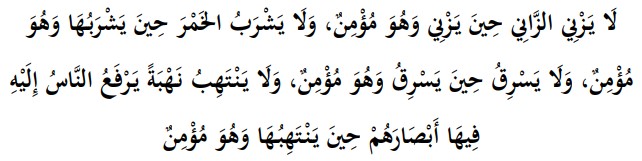
Sa'ad da mai zina ya ke yin zina, ba mumini ba ne; sa'ad da mashayin giya ya ke sha, ba mumini ba ne; sa'ad da barawo ya ke sata, ba mumini ba ne; kuma babu wanda ya ke kwace wani abu mai daraja wanda ya ke jawo hankalin mutane, yana mumini ne a lokacin da ya ke aikata wannan aiki (Al-Bukhaari).
When the fornicator is committing Zinaa he is not a believer, when the alcohol drinker is drinking alcohol he is not a believer, when the thief steals he is not a believer and no plunderer who plunders a valuable thing that attracts the attention of people is a believer whilst he commits this act (AlBukhaari).
Saboda haka, wajibi ne a mayar da gaskiyoyi (Haqaa’iq) cikin zukata domin a gyara halaye da kuma daidaita su. Daga cikin waɗannan akwai: Haqaa’iq (gaskiyoyin) abubuwa da kuma gaskiyoyin Shari'a dangane da akida da hukunce-hukunce. Dole ne a tunatar da su da su, domin su zama sabbi, su samu tushe mai ƙarfi kuma su kasance a bayyane, ta haka za su yi tasiri a kan halaye.
It is therefore obligatory to restore the truths (Haqaa’iq) to the minds to correct the behaviour and to rectify it. These include: The Haqaa’iq (truths) of things and the Shar’iyah truths in terms of beliefs and Ahkaam. They must be reminded with them so that they become fresh, firmly embodied and present, and as such have an effect upon the behaviour.
Allah (SWT) ya ce:
Allah (swt) said:

Kuma ka ci gaba da tunatarwa, domin lalle tunatarwa tana amfanar muminai (Adh-Dhaariyaat 55).
And remind for verily the reminder benefits the believers (Adh-Dhaariyaat 55).
Akasin haka ne ga kafirai, domin tunatar da su gaskiya da ra'ayoyin Shari'a ba ya amfanar da su. Suna jin su a matsayin tunani kawai, ba sa wakiltar gaskiya a gare su, kuma ba sa wakiltar ma'anoni a gare su, don haka ba su da wani tasiri a kan halayensu.
The opposite is the case in respect to the disbelievers because reminding them of the truths and Shar’iyah concepts does not benefit them. They hear them as thoughts but they do not represent truths for them nor do they represent concepts for them and as such they have no effect upon their behaviour.
Saboda haka, ra'ayoyi game da rayuwa su ne ke ƙayyade irin hanyar da mutum yake rayuwa a kanta. Babban abin da ke damunsa ba kawai rayuwa ba ne, sai dai yadda ya kamata ya rayu; kuma babban abin da ke damunsa ba shi ne biyan buƙatunsa ba, sai dai yadda zai biya su. Saboda wannan dalili, ra'ayoyinsa game da rayuwa suna tsara masa wata hanya ta musamman da salon rayuwa.
Therefore the concepts about life are what define the manner by which the human lives. His main concern is not just living but rather how he should live and his main concern is not about satisfying his needs but rather it concerns the manner by which he will satisfy them. For this reason his concepts about life fashion for him a specific manner and style of living.
A cikin halin da tushen ra'ayoyin rayuwa yake waje da abubuwan da kansu da ayyukan kansu, ba zai yiwu a karɓe su ba sai bayan an tabbatar da cewa tushen gaskiya ne ko yana da iko ko izini na yanke hukunci a kansu, kuma cewa hukuncinsa (Ahkaam) ingantattu ne kuma daidai ne.
In the case where the source of the concepts in life are external to the things and actions themselves, it is not possible to adopt them except after being convinced that the source is true or has the power or authority to make a judgment upon them, and that its Ahkaam are valid and correct.
Musulunci ya kafa cewa Alkali (Mai hukunci) shi ne Allah (SWT), kuma tushen hukunce-hukunce shi ne Wahayi (saukar wahayin Allah).
Islaam has established that the Haakim (Judge) is Allah (swt) and that the source of the Ahkaam (rulings) is the Wahi (divine revelation)
an da aka saukar wa Sayyidina Muhammad ﷺ.
revealed upon Sayyidunaa Muhammad (saw).
Allah (SWT) ya ce:
Allah (swt) said:

Hukunci ba na kowa ba ne sai na Allah. Ya umarce ku da kada ku bauta wa wani face shi (Yusuf 40).
Verily the Hukm (rule) is not but for Allah. He commanded that you do not worship other than him (Yousuf 40).
Kuma Ya (SWT) ya ce:
And He (swt) said:

Duk wanda bai yi hukunci da abin da Allah ya saukar ba, to waɗannan su ne kafirai (Al-Ma'ida 44).
And whosoever does not judge by what Allah has revealed then it those who are the disbelievers (Al-Maa’idah 44).
Duk wani hukunci ko shari'a banda hukuncin Allah taghuti ne.
Every ruling or judgement other than the Hukm of Allah is Taaghoot:
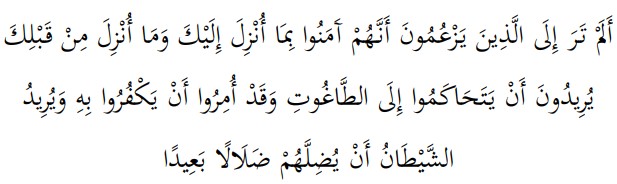
Ko ba ka ga waɗanda suka yi iƙirarin cewa sun yi imani da abin da aka saukar maka, ya Muhammad, da abin da aka saukar kafin ka? Suna son su mayar da hukunci ga Ɗagūt, alhali kuwa an umarce su da su kafirta da shi; kuma Shaiɗan yana son ya ɓatar da su nesa ƙwarai (An-Nisā'i 60).
Have you not seen those who claim to have believed in what was revealed to you, [O Muhammad], and what was revealed before you? They wish to refer legislation to Taghoot, while they were commanded to reject it; and Satan wishes to lead them far astray (An-Nisaa 60).
Saboda haka babu hukunci da ya rage ga hankali ko ga mutum, kuma wannan ba ya nufin an kwashe rawar hankali ko an sanya iyaka ga iyawarsa. Sai dai saboda hankali da mutum ba su da kayan aikin da ake bukata don yin hukunci ko yanke hukunci. Wannan kuwa saboda tushen hukuncin ba shi ne abin kansa ko batun da za a yi hukunci a kansa ba.
As such there is no judgement left to the mind or the human and this does not mean that the role of the mind has been taken away or that a limitation has been placed upon its capabilities. It is rather because the mind and the human do not possess the necessary tools to make judgement or pass a ruling. This is because the source of the ruling is not the thing itself or the subject that the ruling will be made upon.
Don haka waɗanda suka danganta ƙayyade hukunci ga mutane, misali, ba su dogara da wata hujja ba, sai dai sun ɓace sun kauce hanya. Sun ɗauki wata akida wadda ba ta gaskiya ba ce, kuma babu hakikanin abin da take nufi, a lokaci guda kuma sun musanta gaskiya ta hanyar raba addini daga rayuwa, wanda ke nufin cewa babu wani hukunci da yake na Allah.
So those who have allocated the provision of the ruling to the people, for example, have not based this upon evidence and have rather wandered and gone astray. They have carried a concept which is not truthful and has no reality to it, whilst at the same time they have denied the truth by separating the Deen from life which means that there is no Hukm belonging to Allah.
Idan aka ba mutum ikon yanke hukunci da fitar da hukunce-hukunce ba, alhali ba shi da kayan aikin da ake bukata don hakan, to babu abin da zai yi tasiri sai sha'awarsa, karkatarwarsa da muradunsa bisa ga ra'ayinsa. Wadannan kuma za su rika canzawa da sauyawa, kuma zai iya ganin abu mai cutarwa a matsayin mai amfani, ya ga cuta a matsayin magani da waraka.
If the right and power of issuing judgements and rulings was given to the human whilst he does not possess the necessary tools to do that, then nothing would prevail apart from his desires, inclinations and interests according to his viewpoint. These would be changing and fluctuate and he could see something that is damaging as being beneficial and he could see a disease as a medicine and cure.
A cikin wannan mahallin, muhimmancin imani ga Allah, da annabta, da Alkur'ani yana bayyana sosai. Wannan imani shi ne akida wacce take shafar ɗabi'a, domin tana samar wa mutum da ra'ayoyi game da rayuwa waɗanda ke bayyana masa yadda ya kamata ya rayu, manufarsa a rayuwa, da manufar bayan halayensa da ayyukansa, wato neman yardar Allah 'Azza Wa Jalla.
In this context the importance of Imaan in Allah, the Prophethood and the Qur’aan comes to the fore. This Imaan is the Aqeedah that has an effect upon the behaviour as it provides the human with the concepts about life which define for him how he should live, his purpose in the life and his purpose behind his behaviour and conduct, which is to attain the pleasure of Allah ‘Azza Wa Jalla.

Ka ce: Shin, ba za Mu sanar da ku waɗanda suka fi kowa asara ba dangane da ayyukansu? Su ne waɗanda aikinsu ya ɓace a rayuwar duniya, alhali kuwa suna zaton suna aikata alheri (Al-Kahf 103-104).
Say: Shall We inform you of the greatest losers in respect to (their) deeds? [They are] those whose effort is lost in worldly life, whilst they were thinking that they are doing good (Al-Kahf 103-104).
Eh, mutane suna ɓata, al'ummomi suna ɓata, kamar kifi a cikin teku idan ya ci tarko, ko kamar bera da ke gaggawar zuwa abincin da aka sanya a cikin tarkon bera.
Yes the individuals are led astray and the peoples are led astray just like a fish in the ocean when it takes the bait or the mouse that rushes to the food placed in a mouse trap.
Mutum yana yawo ba tare da ya isa ga burinsa ba idan ya bi wata hanya da yake tabbatar da cewa za ta kai shi gare shi, alhali a zahiri yana tafiya ne a akasin hanyar.
The human wanders around and does not arrive at his aim when he proceeds along a path that he is convinced will lead to it whilst in reality he is actually going in the exact opposite direction.
Ya kuma ɓata wa mutum rai idan yana ɗauke da ra'ayoyi marasa kyau game da rayuwa sakamakon jahilci ko murdiya, kamar wanda yake gani ko aka sa shi ya gani cewa riba halal ce, cewa dimokuraɗiyya daga Musulunci take, kuma cewa koyon Shari'a don samun abin duniya ne kawai, kamar kowane fanni ko sana'a. Idan Haƙaiƙa (gaskiyar) Musulunci ta ɓace, zukata kuma suka cika da tunanin ƙarya, kamar tunanin 'yanci marar iyaka, ko cewa sauya halin da ake ciki yanzu ba zai yiwu ba a zamaninmu na yanzu ko cikin shekara ɗari, ko kuma cewa wannan sauyi kyauta ce daga Allah, babu abin da za mu yi sai jira ko jiran Mahdi. Duk wannan yakan mayar da mutane, al'ummomi ko Ummah zuwa gungun mutane masu kasala, ana tafiya da su a duk inda waɗanda suka ba su waɗannan ra'ayoyin suke so, har ya kai su ga zama kayan aiki ga maƙiyansu, alhali sun gaskata cewa suna gwagwarmaya da su.
He is also led astray when he carries incorrect concepts about life as a result of ignorance or distortion like the one who sees or is made to see that Ribaa is Halaal, that democracy is from Islaam and that learning the Sharee’ah is for the sake of earning a living just like any other area of specialisation or profession. When the Haqaa’iq (truths/facts) of Islaam become absent and the minds are filled with false thoughts like the thoughts of general freedoms or that changing the declined reality is impossible in our current generation or one hundred years, or that this change is a gift from Allah and that there is nothing for us to do apart from wait or to wait for the Mahdi. All of this transforms the individuals, peoples or the Ummah into a collection of lazy people sluggishly being driven in whatever direction those who have given them these concepts want them to and it leads them into becoming tools for their enemies whilst they believe that they are actually struggling against them.

Kamar wanda ke miƙa hannunsa zuwa ga ruwa [daga nesa], yana kiran sa don ya kai bakinsa, amma ruwan ba zai kai bakinsa ba (Ar-Ra'd 14).
Like the one who stretches his hands toward water [from afar, calling it] to reach his mouth, but it does not reach it (Ar-Ra’d 14).

Misalinsu kamar misalin wanda ya kunna wuta, amma da ta haskaka abin da ke kewaye da shi, Allah ya kwashe haskensu ya bar su cikin duhu, ba sa iya gani (Al-Baqarah 17).
Their example is that of one who kindled a fire, but when it illuminated what was around him, Allah took away their light and left them in darkness [so] they could not see (Al-Baqarah 17).
Saboda haka, mun sake maimaitawa cewa, domin a canza halayya, a gyara ta, a mai da ita halayya madaidaiciya kuma mai daraja wacce ke kai ga manufarta, wajibi ne a samar da madaidaitan tunani game da abubuwa da rayuwa. A lokacin ne mutum zai kasance cikin yanayi mai kyau na mallakar abubuwa da kuma amfani da su da siffofinsu cikin nasara, kuma zai kasance cikin yanayi mai kyau na ɗaukar halayyar da ke kai shi ga manufarsa, da kuma babbar manufar da ta fi kowace: samun yardar Allah ‘Azza Wa Jall:
Therefore, we repeat, that in order to change the conduct, rectify it and make it a correct elevated conduct that arrives at its purpose, it is essential to generate correct concepts about things and life. At that time the person will be in a good position to subjugate and utilise the things and their attributes successfully and will be in a good position to adopt the conduct that arrives to his purpose and the greatest of all objectives which is the attainment of the pleasure of Allah ‘Azza Wa Jall:

Ka nemi, ta hanyar abin da Allah Ya baka, gidan lahira; kuma kada ka manta da rabonka na duniya. Ka yi alheri kamar yadda Allah Ya yi maka alheri (Al-Qasas 77).
But seek, through that which Allah has given you, the home of the Hereafter; and [yet], do not forget your share of the world. And do good as Allah has done good to you (Al-Qasas 77).
Gaskiyar farko, kuma mafi muhimmanci a cikinsu, ita ce Akida wadda ke bayyana ra'ayoyin mutum game da rayuwa. Akidar ita ce dukkan abubuwa an halicce su ne da Mahalicci wanda shi ne Allah (SWT), cewa Allah ya aiko Manzo wanda shi ne Muhammad ﷺ tare da Risala (sako) ta Musulunci wadda ke bayyana duk abin da ya shafi mutum, kuma cewa zai yi wa mutum hisabi bisa tushen Imani ko Kufri, da kuma bisa ga yadda ya bi abin da Annabi ﷺ ya zo da shi ko kuma yadda bai bi shi ba.
The first of the Haqaa’iq (truths) and absolutely its most important is the Aqeedah that defines the human’s concepts about life. The Aqeedah is that all things have been created by a creator who is Allah (swt), that Allah sent a Messenger who is Muhammad (saw) with the Risaalah (message) of Al-Islaam which explains everything that relates to the human being and that He (swt) will account him upon the basis of Imaan or Kufr and upon the basis of his abiding by what the Nabi (saw) came with or by his non-abidance to it.
Manufar Musulmi a rayuwa:
The Muslim’s purpose in life:
Daga cikin mafi muhimman gaskiyoyi bayan Imani shi ne mutum ya fahimci manufar halittarsa, watau abin da ya wajaba ya yi ƙoƙarin cimmawa.
From amongst the most important Haqaa’iq (truths) after Imaan is that the human understands the purpose of his creation i.e. that which he must strive to accomplish.
Allah (SWT) ya ce:
Allah (swt) said:
Ban halicci aljannai da mutane ba sai don su bauta mini ba (Ad-Dhaariyaat 56).
And I have not created the Jinn or humankind except to worship me (AdDhaariyaat 56).
Ibadar Allah (‘Ibaadah) ga Allah tana nufin yin imani da Shi da kuma biyayya gare Shi. Biyayya gare Shi Ta'aalaa tana nufin ƙudurtawa da tsayawa kan dukkan hukunce-hukuncensa (Al-Iltizaam). Wannan ba a iyakance shi ga ayyukan ibada kaɗai ba, da ɗabi'u (akhlaaq) da mu'amalolin zamantakewa (mu'aamalaat), a'a, ya haɗa da duk abin da Allah (swt)
The worship (‘Ibaadah) to Allah means having Imaan in Him and obedience to Him. Obedience to Him Ta’Aalaa means commitment and abidance (Al-Iltizaam) to all of His Ahkaam. This is not restricted to the acts of ‘Ibaadah, Akhlaaq (morals) and Mu’aamalaat (societal transactions) but rather includes everything that Allah (swt)
ya umarta ko ya hana. Ya haɗa da cewa babu wani da yake da hakkin a bautawa face Allah, kuma babu umarni ko hani da zai iya fitowa daga wani banda Shi (SWT).
has commanded or forbidden. It includes that nothing has a right to be worshipped other than Allah and that no command or forbiddance can come from anyone besides Him (swt).
Ahmad da At-Tirmidhi sun ruwaito cewa 'Adiy bin Haatim (ra) ya zo wurin Manzon Allah ﷺ yayin da yake karanta Aayar:
Ahmad and At-Tirmidhi related that ‘Adiy Bin Haatim (ra) came to the Messenger of Allah (saw) whilst he was reciting the Aayah:
Sun riƙi malamansu da firistocinsu a matsayin ubangiji baya ga Allah, haka kuma Almasihu ɗan Maryam. Alhali ba a umarce su ba sai su bauta wa Allah ɗaya; babu abin bauta face Shi. Tsarki ya tabbata a gare Shi daga abin da suke shirka da Shi (At-Taubah 31).
They have taken their Rabbis and monks as lords besides Allah, and [also] the Maseeh, the son of Mary. And they were not commanded except to worship one God; there is no deity except Him. Exalted is He above whatever they associate with Him (At-Taubah 31).
‘Adiy ya ce: "Ba su bauta musu ba." Sai Manzon Allah ﷺ ya ce:
‘Adiy then said: ‘They did not worship them’. So the Messenger of Allah (saw) said:
Akasin haka, sun halatta haramun a kansu, sun kuma haramta halal a kansu, sannan suka bi su (a cikin haka). Saboda haka wannan ibadarsu ce gare su.
On the contrary, they made the Halaal Haraam upon them and made the Haraam Halaal for them, then they followed them (in this). Therefore this was their worship to them.
Saboda haka, ba wa wani haƙƙin yanke abin da yake halal da abin da yake haram, ko haƙƙin yin doka, ko haƙƙin a yi masa biyayya, yana nufin ibada ce ga wannan mutumin.
As such giving the Haqq (right) to anyone to decide the Halaal and decide the Haraam or the right to make legislation and the right of obedience represents ‘Ibaadah to that person.
Allah (SWT) ya ce:
Allah (swt) said:
Ba ku bautawa wani face da shi sai sunaye kawai da kuka sanya musu, ku da iyayenku, waɗanda Allah bai saukar da wani hujja a kansu ba.
You worship nothing besides Him except [mere] names you have named them with, you and your fathers, for which Allah has sent down no authority.
Hukunci ba na kowa ba ne sai na Allah. Ya umarce ku da kada ku bauta wa kowa sai Shi. Wannan ita ce addini madaidaiciya, amma yawancin mutane ba sa sani (Yusuf 40).
Legislation is not but for Allah. He has commanded that you worship not except Him. That is the correct Deen, but most of the people do not know (Yusuf 40).
Dangane da haƙƙin biyayya da ke ga Hakim (shugaba), Ameer ko iyaye, to wannan yana kasancewa ne saboda Haƙƙin da Allah (SWT)
As for the right of obedience that belongs to the Hakim (ruler), Ameer or parents then this is due to the Haqq (right) that Allah (swt)
...wanda Allah ya bayar da su gare su.
has provided to them.
Ibadar da ake yi wa Allah (SWT) ta ƙunshi biyayya ga abin da ya shafi sa mutane su bauta masa (SWT), wato su miƙa wuya ga Shari'ar Allah, da yaƙar duk wani kasancewar haƙimiyya (haƙƙin yin dokoki) ga wanda ba Allah ba, ko ga wani abu banda Shari'ar Musulunci, tare da yaƙar fita daga hukuncin Allah (SWT) (Khurooj). Wannan shi ne abin da nassosi suka nuna, kuma ma'anar da suka zo da ita; waɗanda suka zo suna umurni da Amr bil Ma'ruf (umurni da kyakkyawa) da Nahi 'an al-Munkar (hana mummuna). Sun umurci a gudanar da tattaunawa, bayani, shawo kan mutane da kiransu ta hanyar Da'wah. Haka kuma sun umurci dukan bulala, yanke hannu, kisa (a matsayin hukunci da hana aikata laifi) da yaƙi da Jihadi don yaɗa hukuncin Allah a doron ƙasa da ɗaga kalmarsa sama.
‘Ibaadah to Allah (swt) includes the obedience in respect to making mankind worship Him (swt) i.e. to make them submit to the Shar’a of Allah and to fight against the existence of any Haakimiyah (right to make rules) to other than Allah or to other than the Sharee’ah of Islaam in addition to fighting against the exiting (Khurooj) from the Hukm (rule) of Allah (swt). This is what the texts have indicated and the meaning that they have come with; those which have come commanding the ‘Amr Bil Ma’rouf’ (Commanding the good) and the ‘Nahi ‘An il-Munkar’ (Forbidding the evil). They have commanded the undertaking of discussions, explanations, convincing people and inviting them by way of Da’wah. Additionally they have commanded lashing, cutting, killing (as punishments and deterrents) and fighting and Al-Jihaad to spread the rule of Allah upon the Earth and to raise His word the highest.
Don haka, mun ga cewa bayan Manzon Allah (saw) ya kafa Daular Musulunci a Al-Madinah Al-Munawwarah kuma ya kafa ginshiƙanta sosai, ya aika manzanni zuwa ga Sarakuna da shugabanni yana kiransu zuwa Musulunci ﷺ. Sannan mun ga Khulafa’ur Rashidun (rah) waɗanda suka zo bayansa (saw) suna aika masu ɗaukar Da’wah, Mujahidai da runduna don kiran mutane zuwa Imani da fitar da su daga duhu zuwa haske. Sun yi yaƙi don maƙasudin sanya ƙasashe da bayi su miƙa wuya ga ikon Musulunci.
As such we saw that after the Messenger of Allah (saw) established the Islamic State in Al-Madinah Al-Munawaarah and established its pillars firmly, he (saw) sent the messengers to the Kings and rulers inviting them to Islaam. We then saw the Khulafaa’ (rah) who came after him (saw) sending out carriers of the Da’wah, Mujaahideen and armies to invite the people to Imaan and to take them out of the darkness and bring them into the light. They fought for the purpose of making the lands and servants submit to the authority of Islaam.
Allah Azza wa Jall ya aiko mu domin mu cece ku daga bautar bayi (mutane) mu kai ku zuwa bautar Ubangijin bayi (mutane), mu cece ku daga zaluncin sauran addinai mu kai ku zuwa adalcin Musulunci, da kuma daga kunkuntar wannan duniya mu kai ku zuwa faɗin wannan duniya da lahira.
Allah Azza wa Jall has sent us to deliver you from the worship of the servants (people) to bring you to the worship of the Lord of the servants (people) and to deliver you from the oppression of other Deens and bring you to the justice of Islaam and from the narrowness of this world and bring you to the vastness of this world and the hereafter.
Wannan ra'ayi an bayyana shi sosai a cikin Alkur'ani, a cikin Sunnah da kuma cikin ayyukan Manzon Allah ﷺ, a cikin nassoshi da suka yi yawa har ba za a iya sanya iyaka a kansu ba. Duk da haka, za mu ambaci wasu daga cikinsu.
This thought has been made very clear in the Qur’aan, the Sunnah and the actions of the Messenger (saw) within texts that are too numerous for a limit to be placed upon them. We will however make a mention of some of them:
Allah (SWT) ya ce:
Allah (swt) said:
Ka ce: Ya ku mutane! Lallai ni Manzon Allah ne zuwa gare ku duka ﷺ (Al-A'raaf 158).
Say: O people! Verily I am the Messenger of Allah to you all (Al-Aa’raaf 158).
Ya ce (swt):
He (swt) said:
Kuma ba mu aiko ka ba sai ga dukan mutane baki ɗaya a matsayin mai bada bushara da mai gargaɗi (Saba' 28).
And we have not sent you except to the entirety of mankind as a bringer of glad tidings and as a warner (Saba’ 28).
Kuma Ya (SWT) ya ce:
And He (swt) said:
Shi ne wanda ya aiko Manzonsa da shiriya da addinin gaskiya domin ya ci galaba a kan dukkan sauran addinai, koda kuwa masu shirka sun ƙi hakan (At-Taubah 33, As-Saff 9).
He its is who has sent His Messenger with the guidance and the Deen of truth so that it prevails over all other Deens and even if the Mushrikeen hate it (AtTaubah 33, As-Saff 9).
Da kuma:
And:
Ya ku waɗanda suka yi imani, ku yaƙi waɗanda suke kusa da ku daga cikin kafirai, kuma su sami tsauri daga gare ku. Kuma ku sani Allah yana tare da masu taƙawa (Attaubah 123).
O you who have believed, fight those adjacent to you of the disbelievers and let them find in you harshness. And know that Allah is with the righteous (AtTaubah 123).
Kuma ku yaƙi waɗanda ba su yi imani da Allah ba, ba kuma da Ranar Lahira ba, waɗanda kuma ba su haramta abin da Allah da ManzonSa suka haramta ba, waɗanda kuma ba su riƙo addinin gaskiya daga waɗanda aka bai wa Littafi ba, har sai sun ba da jizya da yardar ransu, alhali suna ƙasƙantattu (At-Taubah 29).
And: Fight those who do not believe in Allah or in the Last Day and who do not consider unlawful what Allah and His Messenger have made unlawful and who do not adopt the religion of truth from those who were given the Scripture - [fight] until they give the Jizyah willingly while they are subdued (At-Taubah 29).
Manufar da burin shi ne cewa babu wata doka da za a bi ko wata dokar da za a amince da ita, sai wadda Allah (SWT) ya shar'anta.
So the objective and purpose is that no law that is obeyed or no legislation that is adopted can exist except for that which Allah (swt)
ya umarta, kuma babu mai hukunci (mai shari'a) sai Allah. Dangane da barin kafirai a kan imaninsu da ibadunsu kuwa, ana barin su a kan waɗannan al'amura ne bisa ga umarnin Allah (SWT) da kuma biyayya gare shi.
has commanded and that there is no Haakim (law maker) other than Allah. As far as leaving the disbelievers upon their beliefs and worships then they are left upon these matters in accordance to and in compliance to the command of Allah (swt).
Allah (SWT) ya bayyana wannan manufa da dalili game da halittar mutane lokacin da Ya ce:
Allah (swt) has made clear and explained this objective and purpose in respect to His creation of the people when He (swt) said:
Ta haka ne muka sanya ku al'umma mai adalci/mafi kyau, domin ku zama shaidu a kan mutane, Manzo kuma ya zama shaida a kanku (Al-Baqarah 143).
And thus we have made you a just/best Ummah so that you will be witnesses over mankind and the Messenger will be a witness over you (Al-Baqarah 143).
Wannan jawabi an yi shi ne ga Al'ummar Musulunci, kuma yana ɗora mata alhakin shari'a (Takleef) na isar da Saƙo, bayan Manzon Allah ﷺ, ga dukkan ɗan Adam. Kuma hakika Annabi ﷺ ya ɗauki wannan Saƙo, ya isar da shi, ya cika Amanar da aka ɗora masa, kuma ya yi Jihadi saboda Allah da duk abin da yake da shi na ƙarfi, ƙoƙari da iyawa. Ya tsaya ﷺ a Hajjin bankwana na ƙarshe, ya yi wa Al'ummarsa jawabi, ya ce:
This address is to the Islamic Ummah and it entrusts her with the legal responsibility (Takleef) to carry the Message, after the Messenger of Allah (saw), to the whole of mankind. And indeed the Nabi (saw) carried it and after conveying the message, fulfilling his Amaanah and after having performed Al-Jihaad for Allah’s sake with all that he possessed of strength, effort and capability. He (saw) stood in the final farewell Hajj, addressed his Ummah and said:
Reference: Taghyeer (canji) - Mahmoud Abdul-Kareem Hasan
"Kuma lallai na bar muku abin da idan kuka riƙe shi da ƙarfi, ba za ku taɓa ɓata ba: Littafin Allah. Kuma kuna da alhakin abin da ke bayana." Sai suka ce: "Mun shaida cewa ka isar da saƙo, ka cika aiki, kuma ka yi nasiha." Sai ya ɗaga yatsansa na nuni zuwa sama, sannan ya nuna wa mutane, yana cewa: "Ya Allah ka shaida, ya Allah ka shaida, ya Allah ka shaida" (Abu Daawood).
‘And indeed I have left amongst you that which if you hold on firmly to you will never go astray: The Kitaab (book) of Allah, and you are responsible from me (i.e. after me). So what do you all say?’. They said: ‘We bear witness that you have conveyed, fulfilled and advised’. He then said whist raising his index finger to the sky and then towards the people: ‘O Allah bear witness, O Allah bear witness, O Allah bear witness’ (Abu Daawood).
Ta haka ne Annabi ﷺ ya shaida a kanmu da alhakin isar da kuma ɗaukar Amana, kuma ya nemi shaidar Allah a kanmu game da hakan. Saboda haka, bayan haka wajibi ne a kanmu mu zama shaidu a kan mutane bisa ga daidai wannan tsari da Manzon Allah ﷺ mai daraja ya bi. Lalle Allah (SWT) ya bayyana cewa wannan ita ce manufa da burin halitta tun kafin Allah ya halicci Adam (AS).
So in this way the Nabi (saw) bore witness over us with the responsibility of conveying and carrying the Amaanah (trust) and sought Allah’s witness upon us in regards to that. Therefore, after that it is obligatory upon us to be witnesses over the people in accordance to exactly the same methodology that the Noble Messenger (saw) undertook. Indeed Allah (swt) made clear that this is the purpose and objective of the creation before His creation of Aadam (as).
Allah (SWT) ya ce:
Allah (swt) said:
Ka tuna lokacin da Ubangijinka ya ce wa mala'iku, "Lalle ni, zan sanya wakili a bayan ƙasa." Suka ce, "Shin za ka sanya a cikinta wanda zai yi ɓarna a cikinta kuma ya zubar da jini, alhali kuwa mu muna tsarkake ka da yabonka kuma muna tsarkake ka?" Ya ce, "Lalle ni, na san abin da ba ku sani ba."
And [remember] when your Lord said to the angels, "Verily, I will make upon the earth a successive authority." They said, "Will You place upon it one who causes corruption therein and sheds blood, while we declare Your praise and sanctify You?" Allah said, "Indeed, I know that which you do not know." (AlBaqarah 30).
Malaa'ikah (Mala'iku) ƙwararrun bayin Allah ne (SWT) ne, kuma ba sa sabawa Shi.
The Malaa’ikah (Angels) are the servants of Allah (swt) and do not disobey Him:
A kansu akwai mala'iku masu tsanani da karfi; ba sa saba wa Allah a cikin abin da Ya umarce su, kuma suna aikata abin da ake umarnin su (At-Tahreem 6).
Over which are [appointed] angels, harsh and severe; they do not disobey Allah in what He commands them but do what they are commanded (At-Tahreem 6).
Lokacin da Allah (SWT) ya ce musu:
When Allah (swt) said to them:
Lalle ni, zan sanya a bayan ƙasa wani mai maye gurbi (Khalifah)
Verily, I will make upon the earth a successive authority (Khalifah)
Sun fahimci kuma sun gane cewa Shi (SWT) zai sanya a bisa ƙasa waɗanda za su zama marasa biyayya. Wannan ana fahimtar sa ne daga kalmar ‘Khalifah’, domin a wannan mahallin tana nufin wanda Allah zai ba shi maye da wakilci don ya aiwatar da ayyukan gyara da kula, tare da sauran al’amuran da wanda aka damƙa masa amana yake aiwatarwa. Wannan aiki na gyara da kula da al’amura yana nufin za a sami waɗanda ke buƙatar gyara da waɗanda ke buƙatar Ri’aayah (kulawa). Wannan yana nufin cewa za a sami waɗanda za su fita daga umarnin Allah, kuma hakan zai kai ga wahala, baƙin ciki da rashin tsari. Shi ya sa suka ce:
They realised and comprehended that He (swt) will make upon the earth those who will be disobedient. This is understood from the wording ‘Khalifah’ because here in this context it means the one who Allah will give succession and delegate to undertake the acts of correcting and caretaking amongst other matters that the one who is entrusted would undertake. This role or rectifying and taking care of affairs means that their will exist those who need to be rectified and who are need of Ri’aayah (caretaking). This means that there will be those who go outside of the command of Allah and that this will lead to misery, anguish and disorder. This is why they said:
Suka ce: "Shin za Ka sanya waɗanda za su yi ɓarna a cikinta (duniya) kuma su zubar da jini?" (Al-Baqarah 30).
They said: Will you make those who will make corruption in it (the earth) and spill blood (Al-Baqarah 30).
Wato, idan halittar ba ta ƙunshi wani abu da zai zama rashin biyayya ba, to komai zai gudana ne bisa umarnin Allah (SWT). Don haka, idan Allah (SWT) ya so ya halicci wanda zai aikata ayyukan gyara da shiryarwa, to wannan yana nufin za a sami waɗanda za su zaɓi ɓata da rashin biyayya ga Allah.
In other words, if the creation did not include something that would be disobedient then everything would proceed in accordance to the command of Allah (swt). So when Allah (swt) wanted to create someone who will undertake the actions of rectifying and guidance then this means that there will exist those who will choose misguidance and disobedience to Allah.
Saboda haka manufar rayuwa da Allah (SWT) ya bayyana kuma ya yi bayani a kanta kafin halittar Aadam (AS) ita ce cewa za a samu wani mutum wanda bawa ne (‘Abd) ga Allah, kuma zai ɗauki aikin sa wasu su bauta wa Allah daga cikin waɗanda suka ɓace daga bautar Sa ko suka ƙi ta.
Therefore the purpose in life which Allah (swt) has made clear and explained before the creation of Aadam (as) is that there will be a human being who is a slave (‘Abd) to Allah and that he will undertake the work of making others worship Allah (swt) from those who have gone astray from His worship or have rejected it.
Saboda haka rayuwa gwagwarmaya ce ta hankali, ta imani da kuma ta siyasa tsakanin Imani da Kufr. Gwagwarmaya ce ta imani ta fuskar kasancewarta don ɗaukaka kalmar Allah sama da komai, da kuma don addinin mutane ya zama duka kuma gaba ɗaya na Allah. Ta yadda babu hukunci face na Allah, cewa Shi (SWT) ba shi da abokin tarayya, cewa ba a bautar wani abu ko wani mutum banda Allah, kuma cewa biyayya ta kasance ga Shari'ar Allah kawai. Ta haka ne take wakiltar gwagwarmayar siyasa, inda aka wajabta cewa kula da al'amuran ɗan Adam ba za a bar shi ga wata irin doka ba face Shari'ar Musulunci.
The life is therefore an intellectual, belief based and political clash and struggle between Imaan and Kufr. It is belief based in terms of it being for the sake of raising the word of Allah the highest and so that the Deen of the people is all and only for Allah. So that no Hukm exists except that it is for Allah, that He (swt) has no Shareek (partner), that nothing or no one is worshiped aside from Allah and that submission is only to the Shar’a of Allah. In this way it represents a political struggle where the caretaking of the affairs of human beings has been made obligatory to not be entrusted to any form of legislation other than the Sharee’ah of Al-Islaam.