Китай: претендент или соперник
China: Pretender Or Contender
2009 был 60-й годовщиной Китайской революции. Китай обрёл независимость от Японии и победил националистов, чтобы установить Китайскую Народную Республику. В последнее десятилетие многие аналитики рассматривали подъём Китая как главный вызов для Америки, а некоторые мыслители прогнозируют, что Китай станет мировой сверхдержавой в не таком уж далёком будущем. Стремительный выход Китая на политическую арену за последние 20 лет поразил многих, озадачил других и для некоторых знаменует переход глобальной власти с Запада на Восток. Китай никогда не был мировой державой, а его недавняя история включает жестокую оккупацию со стороны Японии, память о которой определила Китай после Второй мировой войны. 60-летие самой населённой страны мира знаменует уникальный момент в её истории, ведь впервые она считается мировой державой.
2009 was the 60th anniversary of the Chinese revolution. China gained independence from Japan and defeated the nationalists to establish the Socialist people’s republic of China. In the last decade many analysts have viewed the rise of China as America's biggest challenge and some thinkers foresee China as the world’s superpower in the not so distant future. The rapid rise of China on the political map in the last 20 years has shocked many, bewildered others and for some marks the shift of global power from West to East. China has never been a world power and its recent history consists of a brutal occupation by Japan, whose memory defined post WW2 China. The 60th anniversary for the world’s most populated nation marks a unique reality in its history as for the first time it is counted as a world power.
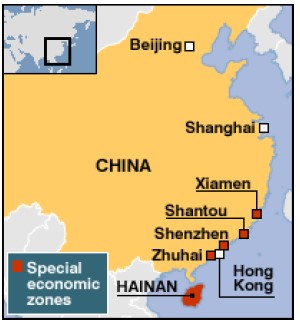
Развитие Китая началось в 1978 году, и на развитие науки и техники определяющее влияние оказывали военные соображения. Это прослеживается ещё со времён Мао. Мао заявлял о своей цели – создании «милитаризованного» комплекса, который стоит выше всех других потребностей. Этот «милитаризм» лёг в основу политики Дэн Сяопина. Целью Дэна было диверсифицировать китайскую экономику, чтобы промышленная база Китая служила не только национальной обороне, но и экономическому росту и благосостоянию гражданского населения. Знаменитое «16-иероглифное» указание Дэна в начале 1980-х годов ясно выразило это: «объединять военное и гражданское производство; но при этом обеспечивать баланс военных требований; поддерживать военный потенциал; использовать гражданскую экономику для служения модернизации армии». До этого применялась централизованно планируемая экономика советского образца, однако она давала ограниченные результаты. Затем Дэн перешёл к более рыночно ориентированной экономике, особенно в особых экономических зонах (ОЭЗ), расположенных в провинциях Гуандун, Фуцзянь и на острове Хайнань. Результаты оказались впечатляющими. Китай коренным образом изменил свою экономику, перейдя от производства простых экспортных товаров низкого качества к производству сложной высокотехнологичной продукции. Страна превратилась из замкнутой отсталой экономики в мощную глобальную экспортную машину: китайский экспорт вырос в десять раз. Сегодня Китай обогнал Германию и стал крупнейшим экспортёром в мире, вывозя товаров более чем на 1 триллион долларов в год.
China's development began in 1978 and has been due to military considerations dominating the development of science and technology. This can be traced back to the Mao era. Mao stated his objective of forming a ‘militarization’ complex above all other needs. This ‘militarization’ formed the basis of Deng Xao Ping’s policy. Deng's aim was to diversify the Chinese economy in order for China's industrial base to contribute not just to national defence but also economic growth and civilian prosperity. Deng's famous 16 character guidance in early 1980’s made this clear: ‘integrating military and civilian production; but making sure to balance the military requirements; maintaining military capability; using the civilian economy to serve military modernization.’6 Prior to this the Soviet-style centrally planned economy, was utilized but achieved limited results. Deng then utilized a more market-oriented economy, particularly in the Special Economic Zones (SEZ) located in the Guangdong, Fujian, and Hainan. The results were spectacular. China radically changed its economy moving from producing low quality simple exports to sophisticated high technology goods. The country has changed from an inward backward economy to a global exporting machine, Chinese exports have grown tenfold. Today China has surpassed Germany as the world’s largest exporter, exporting over $1 trillion a year.
С 1978 года Китай проводит реформы своей экономики, переходя от советской модели централизованно планируемой экономики к более рыночно ориентированной экономике, однако в рамках политической системы, которую обеспечивает Коммунистическая партия Китая. Эта система получила название «социализм с китайской спецификой» и представляет собой один из видов смешанной экономики. Реформы, начатые в 1978 году, помогли вывести из бедности миллионы людей: уровень бедности снизился с 53% населения в 1981 году до 8% к 2001 году.
Since 1978, China has been reforming its economy from a Soviet-style centrally planned economy to a more market-oriented economy but within the political framework, provided by the Communist Party of China. This system has been called “Socialism with Chinese characteristics” and is one type of mixed economy. These reforms started since 1978 has helped lift millions of people out of poverty, bringing the poverty rate down from 53% of population in 1981 to 8% by 2001.
Осуществление внешней политики Китая представляет собой важную эволюцию от узкого и реактивного подхода Пекина к мировым делам в прошлом. Китай отказывается от давно укоренившейся психологии жертвы, связанной со 150 годами позора и унижения, и вместо этого принимает менталитет великой державы (daguo xintai). Естественным продолжением этого становится возрастающая роль Китая в глобальных вопросах. Этому способствовали ведущие члены Коммунистической партии, которые не родились во время Китайской революции и поэтому не смотрят на мир с точки зрения китайской истории. Лидеры, такие как нынешний президент Ху Цзиньтао, который родился лишь за несколько лет до революции, стали первым руководителем Китая, не участвовавшим в печально известном Long March (Великом походе), где в 1949 году националисты были разбиты. Именно такие лидеры верят в отказ от психологии жертвы и принятие менталитета великой державы; именно такие лидеры всё чаще видят Китай ближе к крупнейшим державам мира.
The execution of China's foreign policy represents an important evolution from Beijing's narrow and reactive approach to global affairs in the past. China is abandoning its long-held victim mentality of 150 years of shame and humiliation and adopting instead a great power mentality (daguo xintai). The natural extension of this is the increasing role of China in global issues. This has been driven by leading members of the Communist party who were not born during the Chinese revolution and hence do not view the world from the perspective of China's history. Leaders, such as the current president Hu Jintao, who was born only a few years before the revolution, was China's first leader not to have taken part in the infamous long march, where the nationalists were defeated in 1949. It is such leaders who believe in the abandonment of China's victim mentality and the adoption of a great power mentality, it is such leaders who are increasingly seeing China more akin to the world’s major powers.
Китайско-американские отношения
Sino - US Relations
Američkie politiki izložili svoju stratégiju v otnoshenii Kitaja vpervye v Rukovodstve po planirovaniyu oborony (DPG) na fiskal'nye gody 1994–1999, pervom oficial'nom zayavlenii strategicheskikh tseley SShA v postsovetskuyu epokhu: «[my dolzhny] stremit'sya predotvratit' dominirovanie lyuboy vrazhdebnoy derzhavy v regione, resursy kotorogo pri konsolidirovannom kontrole byli by dostatochny dlya sozdaniya global'noy moshchi»7. K tomu vremeni, kogda Dzhordzh U. Bush prishel k vlasti, tol'ko Kitay obladal ekonomicheskim i voyennym potentsialom, chtoby brosit' vyzov SShA kak stremyashcheysya sverkhderzhave. SShA vyrabotali politiku sderzhivaniya, a ne otkrytogo sorevnovaniya s Kitaem, kotoraya trebovala by zatrat resursov SShA, chtoby ogranichit' Kitay ego predelami i obespechit', chtoby nikto ne razdelyal s nim region. Etu politiku sderzhivaniya izlozhila Kondoliza Rays, rabotavshaya sovetnikom Dzhordzha U. Busha po vneshnepoliticheskim voprosam, kogda tot byl gubernatorom shtata Tekhas, vo vremya predvybornoy kampanii 2000 goda. V state, opublikovannoy v zhurnale «Foreign Affairs», ona zayavila: «Kitay — velikaya derzhava s nereshennymi zhiznenno vazhnymi interesami, osobenno kasayushchimisya Tayvanya; Kitay takzhe nedovolen rol'yu Soedinennykh Shtatov v Aziatsko-Tikhookeanskom regione». Po etim prichinam, zayavila ona, «Kitay — ne derzhava «status-kvo», a derzhava, kotoraya khotela by izmenit' balans sil v Azii v svoyu pol'zu. Tol'ko eto delaet ee strategicheskim sopernikom, a ne «strategicheskim partnerom», kak kogda-to nazyvala ee administratsiya Klintona. Soedinennye Shtaty dolzhny uglubit' sotrudnichestvo s Yaponiey i Yuzhnoy Koreyey i sokhranyat' svoyu priverzhennost' moshchnomu voyennomu prisutstviyu v regione». Vashington takzhe dolzhen «bolee vnimatel'no sledit' za rol'yu Indii v regional'nom balanse i vovlech' etu stranu v antikitayskuyu sistemu al'yansov».8
US policy makers spelled out their strategy for China initially in the Defence Planning Guidance (DPG) for fiscal years 1994-99, the first formal statement of US strategic goals in the post-Soviet era "we [must] endeavour to prevent any hostile power from dominating a region whose resources would, under consolidated control, be sufficient to generate global power."7 By the time George W Bush came to office only China possessed the economic and military capacity to challenge the United States as an aspiring superpower. The US developed a policy of containment rather than outright competition with China which would expend US resources, to restrain China within its borders ensuring no-one shares the region with her. This policy of containment was spelt out by Condoleezza Rice while serving as a foreign-policy adviser to George W Bush, then governor of the state of Texas, during the 2000 presidential campaign in a Foreign Affairs article she stated "China is a great power with unresolved vital interests, particularly concerning Taiwan, China also resents the role of the United States in the Asia-Pacific region." For these reasons, she stated, "China is not a ‘status quo' power but one that would like to alter Asia's balance of power in its own favour. That alone makes it a strategic competitor, not the 'strategic partner' the Clinton administration once called it. The United States must deepen its cooperation with Japan and South Korea and maintain its commitment to a robust military presence in the region". Washington should also "pay closer attention to India's role in the regional balance, and bring that country into an anti-Chinese alliance system."8
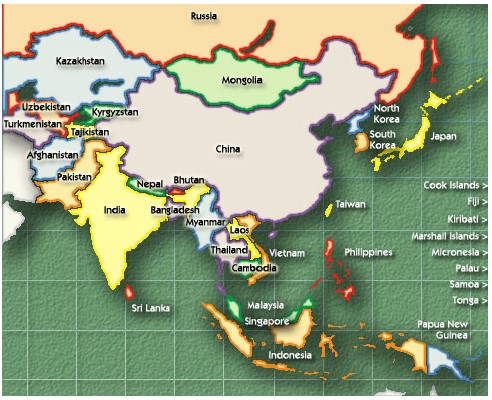
С другой стороны, те, кто видит в подъёме Китая угрозу, добивались того, чтобы администрация США выстроила вокруг Китая антикитайское кольцо для его сдерживания. США укрепили отношения безопасности с Японией и поддержали японские призывы к развитию ядерной программы, что означало бы отказ от многолетней конституционной оборонной политики; для США это действовало бы как военный противовес на восточном фланге Китая. На западном фланге Индию привлекали экономическими сделками, передачей ядерных технологий и амбициями получить постоянное место в Совете Безопасности. Аналогичным образом США нормализовали отношения с Вьетнамом, похоронив историческый конфликт, и создали с ним двусторонние партнёрские отношения. США успешно склонили вьетнамцев к расширению взаимодействия с ними, разрушив давние китайские связи с тихоокеанским регионом. Вьетнам по-прежнему имеет территориальный спор с Китаем на своей северной границе. США также использовали свой конфликт с Северной Кореей для сдерживания Китая. США заметно молчали о ядерном прогрессе Пхеньяна по сравнению с Ираном, тогда как Китай добивался шестисторонних переговоров, стремясь не допустить, чтобы его задний двор был подожжён. Заявления, сделанные по итогам таких встреч, противоречили друг другу: Китай говорил о пессимистичных переговорах и дистанцировался от ряда вопросов, а США сообщали об успешных переговорах. Это даёт подходящее обоснование для длительного и существенного присутствия США в Южной Корее. В сентябре 2009 года США также объявили о смене политики в отношении Мьянмы (Бирмы). Они планируют выйти за рамки действующего режима санкций и включить прямое взаимодействие с военным правительством. Мьянма играет центральную роль в китайской стратегии зарубежной энергетики, и посредством прямого взаимодействия США пытаются минимизировать расширение китайской сферы влияния в Азии.
On the other hand those who view China's rise as a threat have pushed for the US administration to develop an anti-Chinese ring around China to contain it. The US has upgraded security relations with Japan and has supported Japanese calls for nuclear development, this would mean abandoning the decades old constitutional defensive policy; for the US this would act as a military counter weight on China’s Eastern flank. On the Western flank India has been wooed with economic deals, the transfer of nuclear technology and ambitions of permanent Security Council status. The US in a similar manner has normalised relations with Vietnam burying its historical conflict and forming bilateral partnerships with it. The US has successfully manoeuvred the Vietnamese to increase interaction with it, breaking the age old Chinese links to the pacific region. Vietnam continues to have a territorial dispute on its northern border with China. The US has also used its conflict with North Korea to contain China. The US has been considerably silent to the nuclear progress in Pyongyang compared to Iran, whilst China has been pursuing six party talks trying to ensure its back door is not set on fire. The statements from such meetings have been contradictory where China has been remarking pessimistic talks with distance on issues to the US remarking successful negotiations. This gives a suitable justification for sustained and substantial US presence in South Korea. The US has also announced in September 2009 a shift in policy towards Myanmar (Burma). It plans to move beyond the current sanctions regime to include direct engagement with the military government. Myanmar is playing a central role in China's overseas energy strategy and through direct engagement the US is attempting to minimise the expansion of a Chinese sphere of influence in Asia.
Внутреннее измерение Китая
China’s Internal Dimension
В пять тысяч лет истории Китая он никогда не был сверхдержавой и никогда не влиял на глобальный баланс сил. Даже когда он принял коммунизм, он никогда не распространял его за свои пределы и не оказывал влияния ни на один из регионов мира. Значительная часть пятитысячелетней истории Китая состоит из внутренних войн и борьбы за объединение родины. Внешняя политика Китая сосредоточена на внутреннем экономическом развитии и обеспечении всех необходимых сырьевых ресурсов для достижения этих целей. Китай бросил вызов политике сдерживания США, стремясь ослабить государства, которые Соединённые Штаты пытаются использовать для сдерживания Китая. Это достигается с помощью торговли и развития двусторонних связей, призванных ослабить отношения США с такими странами, как Австралия, Индия, Япония и Южная Корея.
In China’s 5000 year history it has never been a superpower and has never influenced the global balance of power. Even when it adopted Communism it never carried this beyond its borders and never influenced any of the regions of the world. Much of China's 5000 year history is composed of internal wars and struggles in order to unify the homeland. China’s foreign policy is centred on domestic economic development and procuring all the necessary raw materials to achieve such aims. China has challenged America’s containment policy by attempting to weaken the nations the US is attempting to use to contain China. This is through using trade and developing bilateral ties to loosen US relations with the likes of Australia, India, Japan and South Korea.
Вследствие этой реальности Китай сосредоточился на своём регионе и пока проявлял мало амбиций за его пределами. Политика «нитки жемчуга» стала его первым шагом за пределы региона. Эту политику описало правительство США следующим образом: «„Нитка жемчуга“ описывает проявление растущего геополитического влияния Китая посредством усилий по расширению доступа к портам и аэродромам, развитию особых дипломатических отношений и модернизации вооружённых сил, которые простираются от Южно-Китайского моря через Малаккский пролив через Индийский океан и до Персидского залива».10 Морские пути проходят через стратегические узкие места: Баб-эль-Мандебский пролив, Малаккский пролив, Ормузский пролив и Ломбокский пролив, а также через другие стратегические военно-морские интересы вдоль Пакистана, Шри-Ланки, Мальдивских островов и Сомали. Все эти маршруты являются ключевыми стратегическими путями для нефти и газа и неизбежно приведут к столкновению с США.
Due to this reality China has focussed on its region and as of yet has shown little ambition beyond the region. China’s string of pearls policy is its first venture beyond the region. The policy was described by the US government as follows: “The “String of Pearls” describes the manifestation of China’s rising geopolitical influence through efforts to increase access to ports and airfields, develop special diplomatic relationships, and modernize military forces that extend from the South China Sea through the Strait of Malacca, across the Indian Ocean, and on to the Persian Gulf.”10 The sea lines run through the strategic choke points of Strait of Mandab, Strait of Malacca, Strait of Hormuz and Strait of Lombok as well as other strategic naval interests along Pakistan, Sri Lanka, Maldives and Somalia. All of these are key strategic routes for oil and gas and will inevitably lead to a clash with the US.
На протяжении веков Китай пытался удерживать воедино огромную многокультурную и многоэтничную нацию, несмотря на периоды политической централизации и раздробленности. Однако культурные и языковые различия обострились из-за неравномерного роста и значительного неравного распределения богатства. Физическое насилие, заключение под стражу, слабое трудовое законодательство и жалкая оплата труда, а также то, что китайское правительство, как считается, не решило экономических потребностей подавляющего большинства населения, вызывают внутренние беспорядки и призывы к политическому отделению. В 2005 году в Китае было зафиксировано 87 000 12 случаев общественных беспорядков, то есть массовых волнений, демонстраций и гражданских столкновений. Внутри страны Китай представляет собой бомбу, которая может взорваться в любой момент.
For centuries, China has attempted to hold together a vast multi-cultural and multi-ethnic nation despite periods of political centralization and fragmentation. But cultural and linguistic differences have worsened due to uneven growth and a massive misdistribution of wealth. Physical mistreatment, imprisonment, lax labour laws and pitiful pay and the fact that the Chinese government is seen not to have addressed the economic needs of the vast bulk of the population is causing internal strife and calls for political succession. In 2005 China handled 87,00012 cases of social unrest; this is public disturbances, demonstrations and civil strife. Domestically China is a bomb that could go off at any time.
В Китае внутри страны правит коммунизм, поэтому там по-прежнему существует однопартийная система, однако в экономике страна всё больше движется в сторону свободного рынка. В то же время Китай возглавляет националистическая идеология, что привело к призывам к отделению со стороны некоторых регионов. Пока Китай не определится со своей национальной идентичностью, страну будут продолжать тянуть в разные стороны, и Китай никогда не сможет представлять угрозу для мировой сверхдержавы. Навязывание ханьцами своей воли другим этническим группам только усугубляет проблему. Если бы США сочли, что Китай представляет непосредственную угрозу их интересам, им было бы довольно легко поддержать одну из меньшинств и вызвать внутренние проблемы в Китае.
China domestically is ruled by Communism, this is why it still has a one party system, but economically it is moving more and more towards the free market. At the same time China is nationalist led which has led to calls for separation by some regions. Until China decides what its national identity is, the nation will continue to be pulled in different directions and China will never be able to pose a threat to the world's superpower. The imposition of the ethnic Hans over the other ethnicities only contributes towards the problem. If the US felt China poses an immediate threat to its interests it could with much ease support one of the minority groups and cause internal problems for China.
Выводы
Conclusions
Китай в настоящее время представляет экономический вызов для США, и по этим причинам он вовлечён в ряд торговых споров. США ввели ограничения на импорт китайских шин, а Китай в настоящее время является ответчиком по ряду дел во Всемирной торговой организации (ВТО) в связи с антиконкурентной практикой.
China currently posses an economic challenge to the US, for these reasons they are engaged in a number of trade disputes. The US has placed restrictions on Chinese tyre imports, and currently China is on the receiving end of a number of World Trade Organisation (WTO) cases into anti-competitive practices.
Для США Китай представляет угрозу в Юго-Восточной Азии, и поэтому Америка стремится ограничить возможные политические амбиции Китая, но в то же время хочет извлечь выгоду из внутреннего рынка в 1,4 миллиарда человек. Оценки американской разведки и четырехгодичные обзоры постоянно предлагают США наращивать военные расходы перед лицом китайской угрозы. Однако считать Китай угрозой для США явное преувеличение, ведь на данный момент он ограничивает свои интересы и амбиции своим регионом. Вызывает сомнение, есть ли у государства, которое никогда не было мировой державой и никогда не расширялось за пределы своих границ, глобальные амбиции. Китай находится в сильной позиции, чтобы перевести свою экономику с внешней ориентации на внутреннее развитие, и размер его населения способен решить его экономическую дилемму.
For the US China posses a threat in South East Asia and hence the US wants to restrict potential Chinese political ambitions but at the same time wants to benefit from the 1.4 billion domestic market. US central intelligence estimates and quadrennial reviews constantly propose the US to increase military expenditure in the face of Chinese threats. China as a threat to the US is overblown when China has for the moment restricted its interests and ambitions to its region – it is questionable whether a nation that has never been a world power, who never expanded beyond its borders, even has global ambitions. China is in a strong position to shift its economy from external focus to domestic development, the size of its population would solve its economic dilemma.
Сейчас Китай представляет собой экономическую угрозу для США, поэтому маловероятно, что в ближайшее время Китай займёт место США в качестве сверхдержавы мира.
Currently China poses an economic challenge to the US, therefore it is unlikely China will be replacing the US as the worlds superpower any time soon.