4. 一种执着的形式
4. A Clinging Form
然后,我们把那滴液体造成为附着之物。
Then We made that drop of fluid into a clinging form
《古兰经》用"阿拉喀"(`alaqah)一词描述人类胚胎发育的下一阶段。该词含有多种含义,包括:悬挂、悬垂、吊着、粘附、攀附、附着、黏合。它还可以表示抓住、被抓住、被固定或被附加。48
The Qur’an describes the next stage of the developing human embryo with the word `alaqah. This word carries various meanings including: to hang, to be suspended, to be dangled, to stick, to cling, to cleave and to adhere. It can also mean to catch, to get caught, to be affixed or subjoined.48
“Alaqah”的其他含义包括:一种像水蛭的物质,形似蠕虫;或具有“爬行”的特性,倾向于吸血。最后,它的含义还包括粘在手上的泥,以及浓稠凝结的血块——因为它们相互粘连。49
Other connotations of the word `alaqah include a leech-like substance, having the resemblance of a worm; or being of a ‘creeping’ disposition inclined to the sucking of blood. Finally, its meaning includes clay that clings to the hand and thick, clotted blood - because of its clinging together. 49
科学的诠释
SCIENTIFIC INTERPRETATION
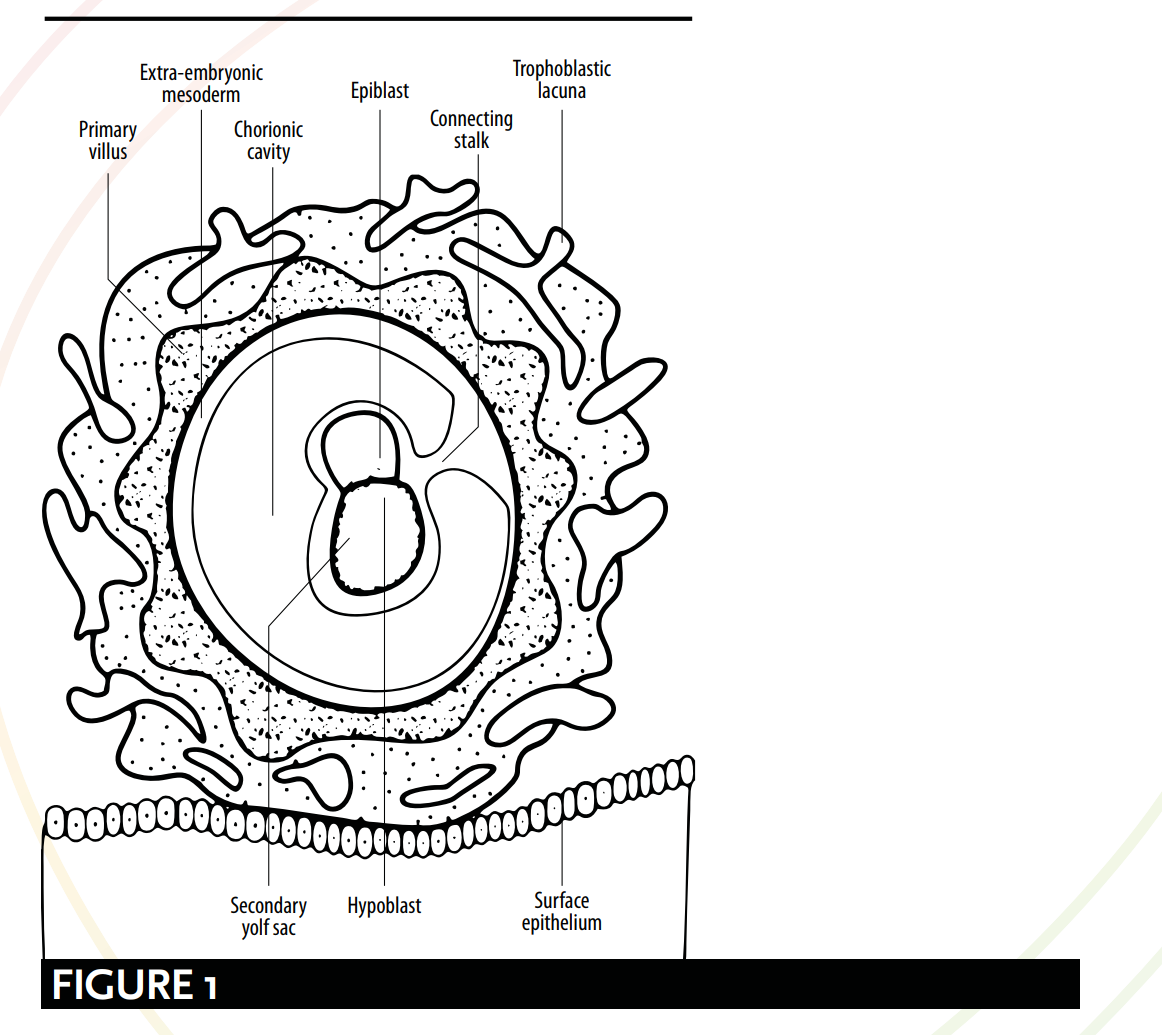
根据现代胚胎学的定义,"alaqah"一词的诸多含义对应于胚胎发育的各个阶段。《古兰经》对胚胎外形及其与子宫关系的描述,可以与科学的描述相互比较。按照现代胚胎学,从第15天起,胚胎通过"连接柄"悬挂或附着(见图1),并通过与母体血管的接触获取营养。这一描述与"alaqah"一词所描绘的图景惊人地相似——一种"悬挂"或"附着"的物质,从其宿主的血液中获取养分。
As defined by modern embryology, the myriad of meanings for the word `alaqah correspond to various stages of the embryo’s development. Comparisons can be drawn between qu’ranic and scientific depictions of the embryo's appearance and its relationship with the womb. According to modern embryology, from day 15 the embryo is hanging or suspended via the ‘connecting stalk’ [see Figure 1] and it obtains nutrients through contact with the maternal blood vessels. This description bears a striking resemblance to the picture painted by the word `alaqah – a ‘hanging’ or ‘suspended’ substance, obtaining nutrients from its host’s blood.
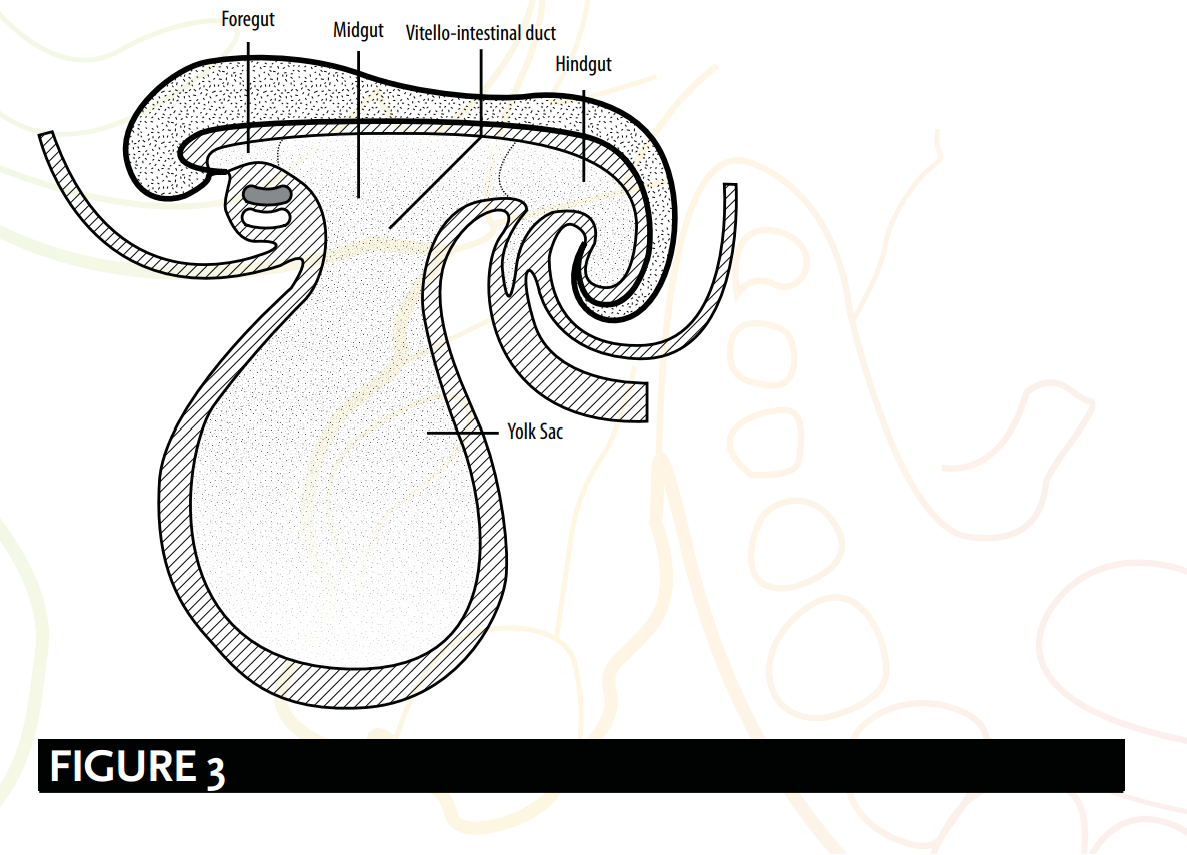
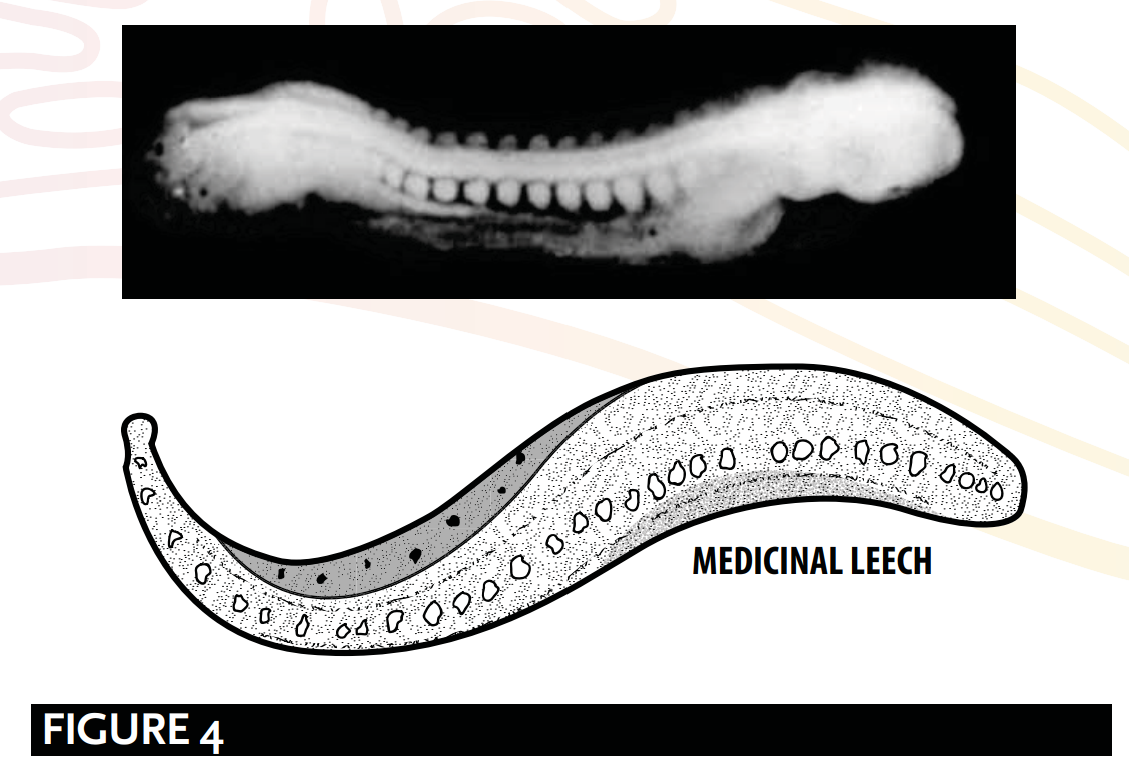
随后,在第四周,发生了两个过程:脑和脊髓的形成,即神经管形成(neurulation);以及胚胎初步折叠的开始。正是这两个过程完成之后,胚胎呈现出一种类似水蛭的形态,这与经文中“alaqah”一词所暗示的形态相符——即一种爬行的、像水蛭或虫子一样的物质[见图2、图3和图4]。
Following this, during the 4th week, two processes occur: the formation of the brain and the spinal cord, known as neurulation; and the initial stages of the folding of the embryo. It is upon the culmination of these two processes that the embryo resembles a leech-like form suggested by the word `alaqah – a creeping, leech or worm-like substance [see Figure 2, 3 and 4].
悬挂/暂停
HANGING/SUSPENDED
胚胎学家Barry Mitchell和Ram Sharma阐述了“alaqah”阶段中“悬挂”或“附着”的特征。他们将胚胎描述为:“通过由胚外中胚层(原始结缔组织)构成的连接柄与细胞滋养层相连。该连接柄是脐带的前身。”50 图1显示胚胎通过连接柄与细胞滋养层相连,宛如悬挂或附着于其上。
Embryologists Barry Mitchell and Ram Sharma explain the ‘hanging’ or ‘suspended’ aspects of the `alaqah stage. They describe the embryo as being, “connected to the cytotrophoblast by a connecting stalk of extra-embryonic mesoderm (primitive connective tissue). The stalk is the forerunner of the umbilical cord.” 50 Figure 1 shows the embryo connected to the cytotrophoblast via a connecting stalk, as if it were hanging or suspended.
通过血管获取营养
OBTAINING NUTRIENTS VIA BLOOD VESSELS
关于胚胎如何通过与母体血管的接触获取营养,Barry Mitchell 和 Ram Sharma 写道:由于胚胎在第二周迅速生长,需要一种更有效的营养与气体交换方式。这一点是在绒毛膜的胚胎血管与蜕膜的母体血管相接触时实现的。51
With regard to the way the embryo obtains its nutrients through contact with the maternal blood vessels, Barry Mitchell and Ram Sharma write: Due to the rapid growth of the embryo during the second week, there is a need for a more efficient means of nutritional and gaseous exchange. This is achieved when the embryonic blood vessels of the chorion come into contact with the maternal blood vessels of the decidua.51.
...[到妊娠第三周时]...母体血液与胎儿血液之间的营养物质、呼吸气体及代谢废物交换,通过绒毛间隙内的胎盘膜进行。母体血液从螺旋动脉进入这些间隙,螺旋动脉是子宫动脉的分支,为胚胎和胎儿输送营养物质与氧气。52
... [by the third week]... The exchange of nutrients, respiratory gases and waste products between the maternal and fetal blood takes place across the placental membrane within intervillous spaces. Maternal blood enters these spaces from the spiral arteries, branches of the uterine artery, bringing nutrients and oxygen for the embryo and fetus.52
这进一步印证了“alaqah”一词的含义,以及它所唤起的意象:一个胚胎通过血液获取其营养。
This reinforces the validity of the meanings of `alaqah, and its evoking images of an entity obtaining its nutrients via blood.
神经褶的形成与胚胎折叠
NEURULATION & THE FOLDING OF THE EMBRYO
“Alaqah阶段暗示着神经管形成和胚胎初步折叠的过程。神经管形成指从大约第19天到第25天大脑和脊髓的形成;胚胎折叠则使头部和尾部相互靠近。这两种生理变化的结合使胚胎类似于水蛭状的物质。
The `alaqah stage suggests the process of neurulation and the initial stages of the folding of the embryo. Neurulation comprises of the formation of the brain and the spinal cord from days 19 to 25 (approx.); and the folding of the embryo involves the head and the tail being brought closer together. The combination of these two physiological changes causes the embryo to resemble a leech-like substance.
神经褶形成
NEURULATION
在神经胚形成结束时,神经管的头端和尾端闭合。此时,胚胎的外观变得像水蛭一样。53 [见图2]
At the end of neurulation the cranial and caudal ends of the neural tube close. The embryo, at this point, becomes leech-like in appearance 53 [see Figure 2].
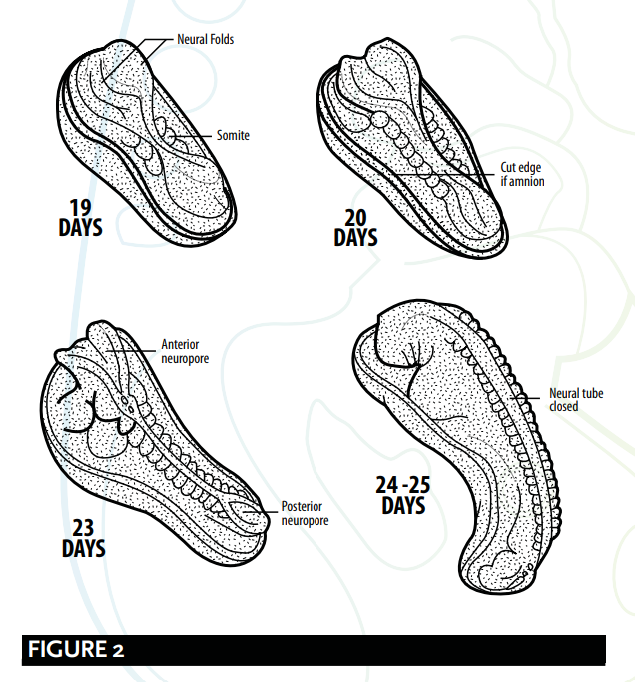
Barry Micthell和Ram Sharma解释了神经褶形成(神经胚形成)的过程。
Barry Micthell and Ram Sharma explain the process of neurulation.
在约第19天时,原条头端的下方中胚层和脊索诱导外胚层形成神经板,神经板随后卷起形成神经褶。神经板最初在头端扩大。第20天时,胚胎中段的神经板仍然较窄,但在尾端扩展。神经板加深形成神经沟,神经管由神经沟形成。神经管的头端和尾端均为开放状态,分别称为前神经孔和后神经孔;这两个孔最终会闭合。54
At about 19 days, at the cranial end of the primitive streak, the underlying mesoderm and notochord induce the ectoderm to form the neural plate, which rounds up to form the neural folds. The neural plate enlarges initially at the cranial end. At 20 days, the neural plate in the mid-region of the embryo remains narrowed, but it expands at the caudal end. The plate deepens to form the neural groove from which the neural tube forms. The cranial and caudal ends of the tube are open and are known as the anterior and posterior neuropores; these eventually close. 54
胚胎的折叠
FOLDING OF THE EMBRYO
胚胎的折叠还负责形成类似水蛭的形状[见图3],或者如胚胎学家所描述的那样,呈圆柱形或管状结构。胚胎学家基思·摩尔和T. V. N. 珀萨德提出:
The folding of the embryo is also responsible for forming a leech-like shape [see Figure 3], or as embryologists have described; a cylindric or tube-like structure. Embryologists Keith Moore and T. V. N. Persaud suggest that:
胚胎身体形态建立过程中的一个重要事件是扁平的三层胚盘折叠成近似圆柱形的胚胎。这种折叠是由胚胎的快速生长引起的,尤其是大脑和脊髓的生长。55
A significant event in the establishment of body form is the folding of the flat trilaminar embryonic disc into a somewhat cylindric embryo. Folding results from the rapid growth of the embryo, particularly the brain and the spinal cord. 55
按照Barry Mitchell和Ram Sharma的解释,这种管状或水蛭状的结构[见图4],是由以下原因造成的:
The tube-like or leech-like structure [see Figure 4], as explained by Barry Mitchell and Ram Sharma, is due to:
纵向折叠发生于第21至24天之间,结果是胚胎弯曲,使头端与尾端相互靠近……形成管状结构。56
longitudinal folding, which occurs between days 21 and 24, result[ing] in … the embryo [bending] so that the head and tail are brought closer together...[to] form a tube-like structure. 56
摘要
SUMMARY
"Alaqah阶段:
The `alaqah stage:
胚胎通过一条连接柄与细胞滋养层相连,就像悬挂着一样。
The embryo is connected to the cytotrophoblast via a connecting stalk, as if it were hanging or suspended.
神经系统的形成(即神经胚形成,neurulation),以及胚胎折叠的初始阶段。正是在这些过程接近完成时,胚胎呈现出蚂蟥状的外观。
The formation of the brain and the spinal cord, known as neurulation; and during the initial stages of the folding of the embryo. It is upon the culmination of these processes that the embryo appears leech-like.
胚胎通过与母体血管的接触获取营养。这与类似水蛭的物质通过血液获取营养的方式相似。
The embryo obtains its nutrients via contact with the maternal blood vessels. This mirrors the action of a leech-like substance obtaining its nutrients via blood.
盖伦与阿拉给
GALEN & `ALAQAH
批评者宣称,"`alaqah"一词的使用是对盖伦所描述的人类胚胎第二阶段的描写。他们将"`alaqah"一词译为"血块",从而给人留下了盖伦对这一阶段描述的印象。
Critics declare that the use of the word `alaqah is a description of Galen’s second stage of the human embryo. Their translation of the word `alaqah to ‘blood clot’ creates an impression of Galen's description of this stage:
但当血块充满了血液,而心脏、大脑和肝脏仍未分化、未成形,但此时已具有一定的坚实度和相当的大小时,这便是第二个阶段;胎儿的物质此时呈现出肉的形态,而不再是精液的形态。57
But when it [the clot] has been filled with blood, and heart, brain and liver are still unarticulated and unshaped yet have by now certain solidarity and considerable size, this is the second period; the substance of the foetus has the form of flesh and no longer the form of semen. 57
这些批评者的观点存在若干缺陷,其所蕴含的推论站不住脚:
There are a number of weaknesses with the implications of these critics:
首先,《古兰经》并没有提及“心脏、大脑和肝脏……”
1. Firstly, the Qur’an does not make a mention of the “heart, brain and liver...
“尚未形成清晰表达与明确形态,但具有一定的团结性,且规模相当可观”。
[being] unarticulated and unshaped yet [with] a certain solidarity and [of a] considerable size”.
其次,"علقة"("'alaqah")一词的本义并非"血液";其主要含义是"附着的形态"和"水蛭状的物质"。一些阿拉伯语言学家将"血块"之义归于"'alaqah"一词,并非因为它充满血液,而是因为其本性是"附着"。这种解释与该词的主要含义相吻合。
2. Secondly, the word `alaqah does not mean blood; rather, its primary meanings are ‘a clinging form’ and ‘a leech-like substance’. Some Arab linguists would attribute the meaning of a ‘blood clot’ to the word `alaqah, not because of it being filled with blood, but instead due to it ‘clinging’ by nature. This interpretation matches the primary meaning of the word.
第三,盖伦坚持认为胎儿在第二阶段“具有肉的形态”,而《古兰经》则肯定,“穆得格”(咀嚼过的肉块或肉团)阶段在“阿拉嘎”阶段之后。
3. Thirdly, Galen insists “the foetus has the form of flesh” during the second stage, whereas the Qur’an affirms the mudghah (a chewed piece of meat or lump of flesh) stage comes after the `alaqah stage.
4. 其次,盖伦在其著作《论自然功能》中写道:精液也是如此:它从一开始就具有其功能。58 盖伦认为精液独自承担遗传物质的说法是错误的,这与《古兰经》和先知圣训是相悖的。如前所述(见亚里士多德、盖伦与Nutfah),伊斯兰的原始经文将nutfah视为来自男性和女性的混合之滴或液体,并确认男性和女性都对孩子的遗传负有责任。59 因此,如果先知ﷺ照搬了盖伦关于人类发育的观点,那么他为何会拒绝那些错误的科学,只采用正确的部分呢?要知道,在七世纪的阿拉伯,人们根本无从判断哪些观点是准确的。
4. Fourthly, in his book On the Natural Faculties, Galen writes: so it is with the semen: its faculties it possessed from the beginning.58 Galen’s incorrect implication of the semen’s sole responsibility for the genetic material is incompatible, and in direct opposition, to the Qur’an and Prophetic traditions. As previously explored (see Aristotle, Galen & Nutfah) the Islamic source texts considers the nutfah as a mingled drop or fluid from both the male and the female, and confirm both the male and female as responsible for the genetics of the child.59 Therefore, if the Prophet ﷺ copied Galen’s views on human development, how is it that he rejected the incorrect science and only used what was correct, even though there was no way in 7th century Arabia of knowing which views were accurate?
误述胚胎的形态
MISREPRESENTING THE EMBRYO’S APPEARANCE
当代的评论者认为,只有在卵黄囊被移除之后,胚胎才会看起来像水蛭,因此关于“阿拉格”(`alaqah)的描述是对胚胎在这一阶段外观的误述。然而,胚胎学家解释说,卵黄囊与胚胎之间隔着一个胚外结构,称为胚外体腔。这一事实驳斥了关于误述的说法,因为卵黄囊并不是胚胎结构的一部分。60
Contemporary commentators argue the embryo only looks leech-like when the yolk sac is removed, and that the `alaqah's description is therefore a misrepresentation of the embryo’s appearance at this stage. However, embryologists explain that the yolk sac is separated from the embryo by an extra-embryonic feature, called the extra-embryonic coelom. This fact disproves claims of misrepresentation as the yolk sac is not part of the structure of the embryo.60