中国:覇権の挑戦者か、それとも覇権を狙う者か
China: Pretender Or Contender
2009年は中国革命の60周年にあたる。中国は日本からの独立を勝ち取り、国民党を破って社会主義人民共和国を樹立した。この10年間、多くの分析家が中国の台頭をアメリカにとって最大の挑戦とみなしており、中には、遠くない将来に中国が世界の超大国になると予測する思想家もいる。この20年間における中国の急速な政治的台頭は、多くの人々を驚かせ、また困惑させ、さらに一部の人々にとっては世界の権力が西洋から東洋へ移ったことを示すものとなっている。中国はこれまで世界の大国であったことはなく、その近代史は日本による残虐な占領に彩られており、その記憶が第二次世界大戦後の中国を形づくってきた。世界で最も人口の多いこの国にとって60周年は、その歴史において特異な現実を示すものであり、初めて世界の大国として数えられるようになったのである。
2009 was the 60th anniversary of the Chinese revolution. China gained independence from Japan and defeated the nationalists to establish the Socialist people’s republic of China. In the last decade many analysts have viewed the rise of China as America's biggest challenge and some thinkers foresee China as the world’s superpower in the not so distant future. The rapid rise of China on the political map in the last 20 years has shocked many, bewildered others and for some marks the shift of global power from West to East. China has never been a world power and its recent history consists of a brutal occupation by Japan, whose memory defined post WW2 China. The 60th anniversary for the world’s most populated nation marks a unique reality in its history as for the first time it is counted as a world power.
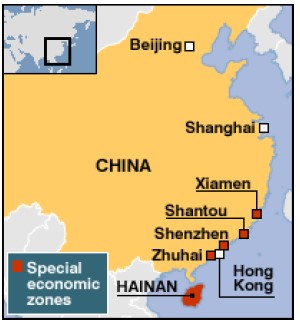
中国の発展は1978年に始まったが、その発展は科学技術の発展を支配してきた軍事的配慮によるものであった。これは毛沢東の時代にまでさかのぼることができる。毛沢東は、他のすべての需要に優先して「軍事化」の複合体を形成するという目標を表明した。この「軍事化」が鄧小平の政策の基礎となった。鄧小平の目的は中国経済を多様化し、中国の産業基盤が国防だけでなく経済成長と市民の繁栄にも貢献できるようにすることであった。1980年代初頭の鄧小平の有名な16字の指針がこれを明確にした。それは「軍事生産と民需生産を統合する。ただし軍事的要求との均衡を図り、軍事能力を維持し、民間経済を軍の近代化に役立てる」というものであった。6 それ以前は、ソ連式の中央計画経済が用いられていたが、限られた成果しか上げなかった。その後、鄧小平はより市場志向の経済を採用し、特に広東省、福建省、海南省に位置する経済特区(SEZ)でそれを用いた。その結果は目覚ましいものであった。中国は経済を根本的に変化させ、低品質で単純な輸出品の生産から、高度なハイテク製品の生産へと移行した。国は内向きで後進的な経済から、世界的な輸出大国へと変貌し、中国の輸出額は十倍に増加した。今日、中国はドイツを抜いて世界最大の輸出国となり、年間1兆ドル以上を輸出している。
China's development began in 1978 and has been due to military considerations dominating the development of science and technology. This can be traced back to the Mao era. Mao stated his objective of forming a ‘militarization’ complex above all other needs. This ‘militarization’ formed the basis of Deng Xao Ping’s policy. Deng's aim was to diversify the Chinese economy in order for China's industrial base to contribute not just to national defence but also economic growth and civilian prosperity. Deng's famous 16 character guidance in early 1980’s made this clear: ‘integrating military and civilian production; but making sure to balance the military requirements; maintaining military capability; using the civilian economy to serve military modernization.’6 Prior to this the Soviet-style centrally planned economy, was utilized but achieved limited results. Deng then utilized a more market-oriented economy, particularly in the Special Economic Zones (SEZ) located in the Guangdong, Fujian, and Hainan. The results were spectacular. China radically changed its economy moving from producing low quality simple exports to sophisticated high technology goods. The country has changed from an inward backward economy to a global exporting machine, Chinese exports have grown tenfold. Today China has surpassed Germany as the world’s largest exporter, exporting over $1 trillion a year.
1978年以来、中国はソビエト型の中央計画経済から、中国共産党が提供する政治的枠組みの中で、より市場志向の経済へと改革を進めてきた。このシステムは「中国の特色ある社会主義」と呼ばれ、混合経済の一種である。1978年から始まったこれらの改革は、何百万もの人々を貧困から脱却させる助けとなり、貧困率を1981年の人口の53%から2001年には8%にまで引き下げた。
Since 1978, China has been reforming its economy from a Soviet-style centrally planned economy to a more market-oriented economy but within the political framework, provided by the Communist Party of China. This system has been called “Socialism with Chinese characteristics” and is one type of mixed economy. These reforms started since 1978 has helped lift millions of people out of poverty, bringing the poverty rate down from 53% of population in 1981 to 8% by 2001.
中国の外交政策の実行は、過去に北京が取っていた狭隘で受け身的な世界情勢への対応から、重要な進化を示している。中国は、150年にわたる屈辱と恥辱の時代に根ざした被害者意識を捨て、代わりに大国意識(daguo xintai)を取り入れつつある。その自然な延長として、地球規模の問題における中国の役割が増している。これを推し進めてきたのは、中国革命の時代に生まれておらず、そのため中国の歴史の視点から世界を見ていない、共産党の有力な指導者たちである。現国家主席の胡錦濤は、革命の数年前に生まれ、1949年に国民党が敗北した悪名高い長征に参加しなかった、中国初の指導者である。中国の被害者意識を捨て大国意識を取り入れるべきだと考えているのはこうした指導者たちであり、中国を世界の主要国により近い存在として捉えるようになっているのも、まさにこうした指導者たちなのである。
The execution of China's foreign policy represents an important evolution from Beijing's narrow and reactive approach to global affairs in the past. China is abandoning its long-held victim mentality of 150 years of shame and humiliation and adopting instead a great power mentality (daguo xintai). The natural extension of this is the increasing role of China in global issues. This has been driven by leading members of the Communist party who were not born during the Chinese revolution and hence do not view the world from the perspective of China's history. Leaders, such as the current president Hu Jintao, who was born only a few years before the revolution, was China's first leader not to have taken part in the infamous long march, where the nationalists were defeated in 1949. It is such leaders who believe in the abandonment of China's victim mentality and the adoption of a great power mentality, it is such leaders who are increasingly seeing China more akin to the world’s major powers.
日中・米中関係
Sino - US Relations
米国の政策立案者たちは、中国に対する戦略を当初、1994年度から1999年度までの国防計画指針(DPG)で明らかにしました。これはソ連崩壊後の時代における米国の戦略目標についての初の正式な表明でした。そこでは、「いかなる敵対勢力も、統合された支配下に置かれれば世界的な力を生み出すのに十分な資源を持つ地域を支配することを防ぐよう努めなければならない」とされていました。ジョージ・W・ブッシュが就任するまでには、米国の超大国化を脅かしうる経済力と軍事力を備えていたのは中国だけになっていました。米国は、中国と正面から競争するのではなく、封じ込め政策を採用しました。これは米国の資源を費やしてでも中国を国境内に抑え込み、その地域を誰とも共有させないようにするものでした。この封じ込め政策は、2000年の大統領選挙期間中に、テキサス州知事であったジョージ・W・ブッシュの外交政策顧問を務めていたコンドリーザ・ライスによって明確に述べられました。彼女は『フォーリン・アフェアーズ』誌の論文で、「中国は、特に台湾に関して未解決の死活的利益を抱える大国である。中国はまた、アジア太平洋地域における米国の役割に憤りを抱いている」と書きました。こうした理由から、彼女は「中国は『現状維持』国ではなく、アジアの勢力均衡を自国に有利な方向に変えたがっている国である。それだけでも中国は戦略的競争相手であり、クリントン政権がかつて呼んだような『戦略的パートナー』ではない。米国は日本および韓国との協力を深め、この地域における強力な軍事的プレゼンスへの関与を維持しなければならない」と述べました。さらにワシントンは、「地域の勢力均衡におけるインドの役割にもっと注意を払い、同国を反中国の同盟体制に引き入れるべきだ」とも主張しました。8
US policy makers spelled out their strategy for China initially in the Defence Planning Guidance (DPG) for fiscal years 1994-99, the first formal statement of US strategic goals in the post-Soviet era "we [must] endeavour to prevent any hostile power from dominating a region whose resources would, under consolidated control, be sufficient to generate global power."7 By the time George W Bush came to office only China possessed the economic and military capacity to challenge the United States as an aspiring superpower. The US developed a policy of containment rather than outright competition with China which would expend US resources, to restrain China within its borders ensuring no-one shares the region with her. This policy of containment was spelt out by Condoleezza Rice while serving as a foreign-policy adviser to George W Bush, then governor of the state of Texas, during the 2000 presidential campaign in a Foreign Affairs article she stated "China is a great power with unresolved vital interests, particularly concerning Taiwan, China also resents the role of the United States in the Asia-Pacific region." For these reasons, she stated, "China is not a ‘status quo' power but one that would like to alter Asia's balance of power in its own favour. That alone makes it a strategic competitor, not the 'strategic partner' the Clinton administration once called it. The United States must deepen its cooperation with Japan and South Korea and maintain its commitment to a robust military presence in the region". Washington should also "pay closer attention to India's role in the regional balance, and bring that country into an anti-Chinese alliance system."8
十年が経った今、米国と中国は、かなりの程度まで互いに相互依存する関係になっている。世紀の変わり目には米国が世界のあらゆる地域を支配していたが、アフガニスタンやイラクでの戦争、そして世界金融危機によって、米国はそうした地域や中国との関係を支配することができなくなっている。米中の相互依存は、以下のような点に見ることができる。
A decade on however both the US and China have to a large extent become interdependent upon each other. Whilst the US dominated all regions of the world at the turn of the century, Afghanistan and Iraq as well as the global financial crisis has resulted in the US being unable to dominate such regions and its relationship with China. Sino-US interdependency can be seen from the following:
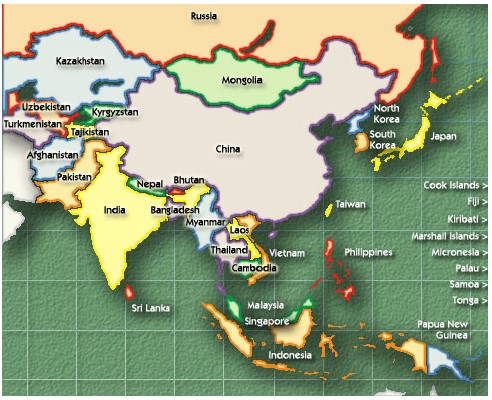
一方で、中国の台頭を脅威と見なす人々は、中国を封じ込めるため、米国政権に対中包囲網の構築を働きかけてきました。米国は日本との安全保障関係を格上げし、日本の核開発の要求を支持してきましたが、これは数十年来の憲法上の防衛政策を放棄することを意味します。米国にとって、これは中国の東側面に対する軍事的な対抗勢力として機能するものです。西側面では、インドに対して経済協定、原子力技術の移転、国連安全保障理事会の常任理事国入りへの野心によって働きかけが行われてきました。同様に米国は、ベトナムとの関係を正常化し、歴史的な対立を葬り去って二国間パートナーシップを築いてきました。米国はベトナムが米国との関わりを深めるよう巧みに導くことに成功し、太平洋地域に対する中国の古くからのつながりを断ち切ろうとしています。ベトナムは依然として北の国境で中国との領土紛争を抱えています。米国はまた、北朝鮮との対立を利用して中国を封じ込めてきました。米国はイランに比べて平壌の核開発の進展に対してかなり沈黙を守ってきました。一方、中国は六者会合を通じて、自国の裏庭に火がつかないよう努めてきました。こうした会合の声明は食い違っており、中国は協議が悲観的で、米国との間の問題について距離を置いていると述べる一方、米国は交渉が成功したと発表してきました。これは、韓国における米国の持続的かつ相当規模の駐留を正当化する格好の口実となっています。米国はまた、2009年9月にミャンマー(ビルマ)に対する政策の転換を発表しました。現行の制裁体制を超えて、軍事政権との直接的な関与を含めることを計画しています。ミャンマーは中国の海外エネルギー戦略において中心的な役割を果たしており、米国は直接的な関与を通じて、アジアにおける中国の勢力圏の拡大を最小限に抑えようとしています。
On the other hand those who view China's rise as a threat have pushed for the US administration to develop an anti-Chinese ring around China to contain it. The US has upgraded security relations with Japan and has supported Japanese calls for nuclear development, this would mean abandoning the decades old constitutional defensive policy; for the US this would act as a military counter weight on China’s Eastern flank. On the Western flank India has been wooed with economic deals, the transfer of nuclear technology and ambitions of permanent Security Council status. The US in a similar manner has normalised relations with Vietnam burying its historical conflict and forming bilateral partnerships with it. The US has successfully manoeuvred the Vietnamese to increase interaction with it, breaking the age old Chinese links to the pacific region. Vietnam continues to have a territorial dispute on its northern border with China. The US has also used its conflict with North Korea to contain China. The US has been considerably silent to the nuclear progress in Pyongyang compared to Iran, whilst China has been pursuing six party talks trying to ensure its back door is not set on fire. The statements from such meetings have been contradictory where China has been remarking pessimistic talks with distance on issues to the US remarking successful negotiations. This gives a suitable justification for sustained and substantial US presence in South Korea. The US has also announced in September 2009 a shift in policy towards Myanmar (Burma). It plans to move beyond the current sanctions regime to include direct engagement with the military government. Myanmar is playing a central role in China's overseas energy strategy and through direct engagement the US is attempting to minimise the expansion of a Chinese sphere of influence in Asia.
中国の国内的側面
China’s Internal Dimension
中国の5000年の歴史において、中国が超大国となったことは一度もなく、世界の勢力均衡に影響を及ぼしたこともありません。共産主義を採用したときでさえ、その思想を国境の外へ広げることはなく、世界のいずれの地域にも影響を与えませんでした。中国の5000年の歴史の大部分は、国土を統一するための内乱と闘争によって構成されています。中国の外交政策は、国内経済の発展と、そのために必要なあらゆる原材料の確保を中心に据えています。中国は、米国が中国を封じ込めるために利用しようとしている国々を弱体化させようとすることで、米国の封じ込め政策に挑戦してきました。それは、貿易を利用し二国間関係を発展させることによって、米国とオーストラリア、インド、日本、韓国といった国々との関係を弱めようとするものです。
In China’s 5000 year history it has never been a superpower and has never influenced the global balance of power. Even when it adopted Communism it never carried this beyond its borders and never influenced any of the regions of the world. Much of China's 5000 year history is composed of internal wars and struggles in order to unify the homeland. China’s foreign policy is centred on domestic economic development and procuring all the necessary raw materials to achieve such aims. China has challenged America’s containment policy by attempting to weaken the nations the US is attempting to use to contain China. This is through using trade and developing bilateral ties to loosen US relations with the likes of Australia, India, Japan and South Korea.
このような現実を背景に、中国は地域への注力を続けており、これまでのところ地域を越えた野心はほとんど示していません。中国の「真珠の首飾り」政策は、地域を越えた最初の試みです。この政策について、米国政府は次のように説明しています。「「真珠の首飾り」とは、港湾や飛行場へのアクセスを拡大し、特別な外交関係を築き、軍事力を近代化することを通じて、中国の高まる地政学的影響力が現れたものを指す。その範囲は南シナ海からマラッカ海峡、インド洋を越えてペルシャ湾にまで及ぶ。」10 海上交通路は、マンデブ海峡、マラッカ海峡、ホルムズ海峡、ロンボク海峡といった戦略上の要衝を通り、さらにパキスタン、スリランカ、モルディブ、ソマリア沿岸の戦略的な海軍の利害関係地域にも及んでいます。これらはいずれも石油と天然ガスの重要な戦略ルートであり、必然的に米国との衝突につながるでしょう。
Due to this reality China has focussed on its region and as of yet has shown little ambition beyond the region. China’s string of pearls policy is its first venture beyond the region. The policy was described by the US government as follows: “The “String of Pearls” describes the manifestation of China’s rising geopolitical influence through efforts to increase access to ports and airfields, develop special diplomatic relationships, and modernize military forces that extend from the South China Sea through the Strait of Malacca, across the Indian Ocean, and on to the Persian Gulf.”10 The sea lines run through the strategic choke points of Strait of Mandab, Strait of Malacca, Strait of Hormuz and Strait of Lombok as well as other strategic naval interests along Pakistan, Sri Lanka, Maldives and Somalia. All of these are key strategic routes for oil and gas and will inevitably lead to a clash with the US.
現在の中国は、代替となる世界システムを構築することにほとんど世界的な野心を示してきていません。実際には、中国は貿易におけるアメリカの世界システム、すなわちWTO、安全保障における国連、金融におけるIMFおよび世界銀行へと組み込まれてきました。中国は、既存のシステムを置き換えようとするのではなく、むしろそのシステムの中から自国の利益を実現しようとしているように見えます。このような狭い視野のままでは、中国が政治的にアメリカに挑戦することは決してできないでしょう。もし中国が世界の超大国になる計画を持っているのであれば、アメリカに挑戦するだけでなく、そうしなければ国内に大きな亀裂を生じさせかねないいくつかの国内問題を解決する必要があります。それには次のものが含まれます。
China currently has shown little global ambition in constructing an alternative global system. It has in fact amalgamated into America’s global system of trade - WTO, security – United Nations and finance – IMF and the World Bank. China appears to be working to achieve its interests from the existing system rather than attempting to replace it. With such a narrow view China will politically never be able to challenge the US. If China has any plans to become the world superpower then it will not just need to challenge the US, but solve a number of domestic issues which would otherwise cause a massive fracture domestically, these include:
何世紀にもわたり、中国は政治的な中央集権と分裂の時期を経ながらも、広大で多文化・多民族からなる国家をまとめようとしてきた。しかし、不均等な成長と富の極端な偏在により、文化的・言語的な違いは悪化してきた。身体的な虐待、投獄、緩い労働法、哀れなほど低い賃金、そして中国政府が人口の大部分の経済的ニーズに対処していないと見られていることが、内部の対立と政治的分離を求める声を引き起こしている。2005年には、中国は87,00012件の社会不安事案に対応した。これは公共の騒乱、デモ、内乱を含むものである。国内的に見れば、中国はいつ爆発してもおかしくない爆弾のようなものである。
For centuries, China has attempted to hold together a vast multi-cultural and multi-ethnic nation despite periods of political centralization and fragmentation. But cultural and linguistic differences have worsened due to uneven growth and a massive misdistribution of wealth. Physical mistreatment, imprisonment, lax labour laws and pitiful pay and the fact that the Chinese government is seen not to have addressed the economic needs of the vast bulk of the population is causing internal strife and calls for political succession. In 2005 China handled 87,00012 cases of social unrest; this is public disturbances, demonstrations and civil strife. Domestically China is a bomb that could go off at any time.
中国は国内では共産主義によって統治されており、そのため今も一党制が続いています。しかし経済面では、次第に自由市場へと向かいつつあります。同時に、中国は民族主義に主導されており、それが一部の地域による分離独立の要求を招いてきました。中国が自国のアイデンティティは何であるかを決めるまで、この国はさまざまな方向に引き裂かれ続けるでしょうし、世界の超大国にとって脅威となることは決してできないでしょう。漢族が他の民族の上に立ち、押し付けを行っていることも、この問題を悪化させるだけです。もし米国が、中国が自国の利益にとって差し迫った脅威だと感じたなら、少数民族の一つを支援し、中国国内に問題を引き起こすことは極めて容易でしょう。
China domestically is ruled by Communism, this is why it still has a one party system, but economically it is moving more and more towards the free market. At the same time China is nationalist led which has led to calls for separation by some regions. Until China decides what its national identity is, the nation will continue to be pulled in different directions and China will never be able to pose a threat to the world's superpower. The imposition of the ethnic Hans over the other ethnicities only contributes towards the problem. If the US felt China poses an immediate threat to its interests it could with much ease support one of the minority groups and cause internal problems for China.
結論
Conclusions
現在、中国は経済面で米国にとっての挑戦となっており、そのため同国は数多くの貿易紛争に関与しています。米国は中国産タイヤの輸入に制限を設けており、現在、中国は世界貿易機関(WTO)に、反競争的慣行をめぐる複数の訴訟の被告となっています。
China currently posses an economic challenge to the US, for these reasons they are engaged in a number of trade disputes. The US has placed restrictions on Chinese tyre imports, and currently China is on the receiving end of a number of World Trade Organisation (WTO) cases into anti-competitive practices.
アメリカにとって中国は東南アジアにおける脅威であり、そのためアメリカは中国の政治的野心を抑え込みたいと考えている。しかし同時に、14億人規模の国内市場の恩恵も受けたいと考えている。アメリカの中央情報機関による評価や四年ごとの国防政策見直し(クアドレニアル・レビュー)は、中国の脅威を理由に軍事費の増額を繰り返し提案している。しかし、中国がアメリカにとって脅威だというのは誇張されすぎている。中国は当面、その利益と野心を自国の地域に限定しているからだ。これまで一度も世界的な大国になったことがなく、国境を越えて拡大したこともない国が、世界的な野心を持っているかどうかは疑問である。中国は経済の重心を対外志向から国内開発へと移す上で有利な立場にあり、その巨大な人口規模こそが経済的ジレンマを解決するだろう。
For the US China posses a threat in South East Asia and hence the US wants to restrict potential Chinese political ambitions but at the same time wants to benefit from the 1.4 billion domestic market. US central intelligence estimates and quadrennial reviews constantly propose the US to increase military expenditure in the face of Chinese threats. China as a threat to the US is overblown when China has for the moment restricted its interests and ambitions to its region – it is questionable whether a nation that has never been a world power, who never expanded beyond its borders, even has global ambitions. China is in a strong position to shift its economy from external focus to domestic development, the size of its population would solve its economic dilemma.
現在、中国はアメリカに対して経済的な挑戦を突きつけています。したがって、中国が近いうちにアメリカに代わって世界の超大国となる可能性は低いでしょう。
Currently China poses an economic challenge to the US, therefore it is unlikely China will be replacing the US as the worlds superpower any time soon.