ロシアの復興
Russia’s Resurgence
米国とソビエト連邦は、数十年にわたり世界の超大国の地位をめぐって競い合った。両国は、最も強力なミサイルを製造するための軍拡競争と、最初に人類を月に送り込むための宇宙開発競争の双方で争った。この競争は最終的にソビエト連邦を疲弊させ、さまざまな革命を経て、1990年にソビエト連邦は解体した。
The US and the Soviet Union competed with each other for decades over the post of the world’s superpower. Both competed in the arms race in order to produce the most powerful missiles and the space race to place the first man on the moon. This competition eventually consumed the Soviet Union and in 1990 after various revolutions the Soviet Union disintegrated.
多くの米国の政策立案者は、ロシアの解体を未完の課題とみなしていた。ソビエト連邦の崩壊後、米国が主導する西側諸国は、欧州における自らの境界を急速に東へ押し広げ、ロシアが地域に影響力を及ぼす能力を破壊する取り組みを始めた。過去二十年にわたり、NATOとEUの拡大を通じて親西側の境界線は東へ移動し、ついにロシアの国境に強く迫るまでになった。ソビエト連邦の崩壊とともに、米国はソ連が築いた体制の枠組みを解体する努力を行い、ロシアを封じ込めるため、旧ソ連の全共和国を自国の勢力圏に組み入れ、続く十年間はIMFと世界銀行を通じて、それらの国々を経済的に西側へ結びつけた。
Many US policy makers saw the dismemberment of Russia as unfinished business. After the fall of the Soviet Union, the West led by the US began working to push its boundaries in Europe rapidly eastward, destroying Russia’s ability to influence the region. The pro-Western lines moved to the east for the past two decades, via NATO and EU expansion, until they pushed hard up against Russia’s borders. With the collapse of the Soviet Union the US worked to dismantle the architecture established by the USSR, it worked to contain Russia by bringing all the former Soviet republics under its sphere of influence and for the next decade through the IMF and the World Bank it economically linked them to the West.
アメリカはまた、バルカン半島での存在感も拡大させた。アメリカはポスト・ソビエトのロシアを封じ込めることに努め、ロシアをバルカン半島および東ヨーロッパから追い出そうとした。アメリカは、連邦によって統制されつつも半ば独立したユーゴスラビアに関する合意を妨害し、その結果1993年に内戦が起きた。アメリカはこれを口実にセルビアに対する戦争を開始した。セルビアにはスラブ系民族とのロシアの民族的な結びつきがあった。さらに、コソボの独立を後押しすることで、ロシアの存在はいっそう弱められた。アメリカは東ヨーロッパ諸国との経済的・軍事的関係の構築に努め、それによって同地域の安全保障を独占していった。ロシアの包囲も、いわゆるカラー革命を通じて試みられた。親ロシア的な政権が倒され、親西側の指導者が権力の座に就いた。こうした関係が基盤となり、東ヨーロッパをNATOに組み込むことが正当化された。
The US also expanded its presence in the Balkans. The US worked to contain the post-Soviet Russia, working to drive it out of the Balkans and Eastern Europe. The US obstructed the deal on a federally controlled but semi independent Yugoslavia which led to civil war in 1993, it used this as a pretext to launch war against Serbia where Russia has ethnic ties with the Slavic’s, and by inaugurating Kosovo’s independence it further weakened Russian presence. The US worked to establish economic and military relations with Eastern European states, hence monopolising the security of the region. The encirclement of Russia was further attempted through the so called colour revolutions where pro-Russian regimes were overthrown and pro-Western leaders took the helms. Such relations were used as a basis to annex Eastern Europe into NATO.
復興
Resurgence
ウラジーミル・プーチンは1999年にボリス・エリツィンの後を継いだ。エリツィンは、ロシアの国運を変えようと努めた民族主義者であった。プーチンは、国の進路を変えることを目的とした政策を通じて、主要な産業分野、資産、公益事業、工業の再国有化に着手した。彼は、国を事実上食い物にしていた新興財閥(オリガルヒ)に対処し、国外へ持ち出せる資金の額を制限した。国外への退去を認められた者もいれば、容赦なく処分された者もいた。彼は、独裁体制の下でしか実施できなかった経済政策によって国内情勢を安定させた。どのような議会や上院であっても、これほど大きな決定には停滞し、自らの利害が妨げになることを許してしまっただろう。
Vladimir Putin succeeded Boris Yeltsin in 1999, a nationalist who endeavoured to change the fortunes of Russia. Putin began the process of re-nationalizing key sectors, assets, utilities and industries through policies intended to change the course of the nation. He dealt with the oligarchs who were essentially looting the nation, by restricting the amount of money they took out of the nation; some were allowed to leave the country whilst others were dealt with ruthlessly. He stabilised the domestic situation through economic policies which were only possible under a dictatorship - any parliament or senate would have stalled on such huge decisions and would have allowed their own interests to get in the way.
ウラジーミル・プーチンがロシア大統領に就任して以来、彼は国家を掌握することに成功し、弱体化させようとする米国の試みに対抗してきた。今日のロシアは、西側の自由民主主義の例に倣うことなく、急速に発展している。ロシアは、北極の氷冠の下の海底に旗を立てること、大規模な空中爆発型爆弾の実験、東欧への米国の早期警戒防衛システムの配備に異議を唱えることなど、ほぼあらゆる場面で西側および米国に公然と挑戦する道を選んできた。後者については、現時点では阻止することに成功している。ロシアは、「近い外国」への権利、すなわち旧共和国に対する自国の権利を主張することによって、世界的な大国としての自らの再構築を始めている。
Since Vladimir Putin become Russian President he has managed to gain a grip on the nation and counter US attempts to weaken Russia. Today Russia is rapidly developing without following the example of Western liberal democracy. Russia has opted to openly challenge the West as well as the US at practically every turn, whether by planting a flag on the seabed beneath the Arctic icecap, testing the massive ordnance air blast bomb or disputing the sitting of US early-warning defence systems in Eastern Europe, which it has managed to successfully halt for the moment. Russia has begun re-inventing itself as a world power by laying its claim to it’s near abroad – this is Russia’s right over its former republics.
2008年8月、ロシアのドミトリー・メドベージェフ大統領は、南オセチアとアブハジアが独立国家として承認された後の外交政策の指針となる五つの原則を、チャンネル・ワン、ロシア、NTVのテレビインタビューで示した。その一部は次のとおりである。「……第四に、どこにいようとも国民の生命と尊厳を守ることは、わが国にとって疑いのない最優先事項である。わが国の外交政策の決定は、この必要性に基づいて行われる。また、海外におけるわが国のビジネス界の利益も守る。わが国に対するいかなる攻撃的行為にも対応することを、すべての者が明確に理解しなければならない。最後に、第五に、他の国々と同様に、わが国が特に注意を払う地域があり、ロシアが特権的利益を有する地域もある。これらの地域には、われわれが特別な歴史的関係を共有し、友人や善隣としての絆で結ばれている国々が存在する。われわれはこれらの地域での活動に特に注意を払い、わが国の緊密な隣国であるこれらの国々と友好的な関係を築いていく。これらが、わが国の外交政策を遂行するにあたって私が従う原則である。」 この十年間で、ロシアは鉱物資源と公益事業の支配を取り戻し、ソ連解体によって利益を得た多くのオligarchを追放してきた。世界最大級のエネルギー埋蔵量を有する同国は、今や最先端の軍事力を開発し、ほぼ十年にわたり米国が疑う余地のない覇権を握ってきた地域で、米国と直接競争している。
In August 2008 Russia’s President Dmitry Medvedev outlined five principles guiding his foreign policy in the wake of the recognition of South Ossetia and Abkhazia as independent states in an Interview given to Television Channels Channel One, Rossia, NTV: “…..Fourth, protecting the lives and dignity of our citizens, wherever they may be, is an unquestionable priority for our country. Our foreign policy decisions will be based on this need. We will also protect the interests of our business community abroad. It should be clear to all that we will respond to any aggressive acts committed against us. Finally, fifth, as is the case of other countries, there are certain regions we pay particular attention to, there are regions in which Russia has privileged interests. These regions are home to countries with which we share special historical relations and are bound together as friends and good neighbours. We will pay particular attention to our work in these regions and build friendly ties with these countries, our close neighbours. These are the principles I will follow in carrying out our foreign policy.” Russia in the last decade has managed to gain control over its mineral resources and utilities and banished many oligarchs who benefited from the break-up of the Soviet Union. With some of the worlds largest energy reserves it is now developing a state of the art military and competing directly with the US in regions where the US for nearly a decade had uncontested hegemony.
ロシアの主張性
Russian Assertiveness
ロシアの外交は現在、冷戦後の流れを逆転させ、旧ソ連諸国すべてを自国の影響圏に収めることで、自国の周辺地域の安全を確保することを軸に動いている。ロシアは再び、世界の超大国と直接競争している。
Russian foreign relations are currently being driven on reversing the post Cold War trend and securing Russia’s periphery by bringing all the former Soviet republics under its influence. Russia is directly completing with the worlds superpower once again.
ロシアは、アメリカがイスラム世界に気を取られている隙を最大限に利用し、アメリカが支援したカラー革命をすべて覆してきた。旧ソ連諸国すべてをロシアの影響下に置くという計画は、ウラジーミル・プーチンが主導する周到な取り組みである。ロシアはすでにウクライナ、カザフスタン、ベラルーシ、アルメニアで大きな成果を上げており、アゼルバイジャンでも大きな成果を上げる見込みであり、このコーカサスの国に残る西側の影響力を取り除くべきところである。旧ソ連圏の大部分において政治連合を再編する動きは、急速に進展している。
Russia has taken full advantage of America’s preoccupation with the Islamic world to reverse all the American sponsored colour revolutions. The project to bring all of the former Soviet republics under Russian influence has been a meticulous task led by Vladimir Putin. Russia has already made significant gains in Ukraine, Kazakhstan, Belarus and Armenia and set to make significant gains in Azerbaijan and should have removed what remains of western influence in the Caucasian nation. The reformulation of a political union in much of the former Soviet space is making rapid progress.
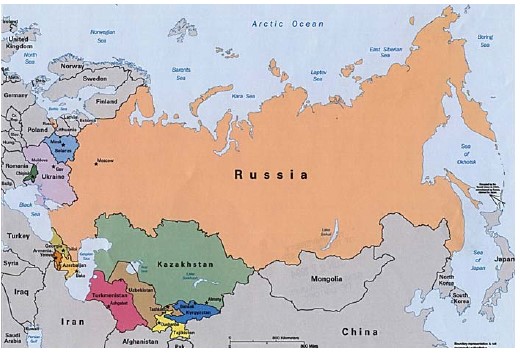
カザフスタン、ベラルーシ、アルメニアはすでに集団安全保障条約機構(CSTO)の加盟国であり、この機構はモスクワが主導する、親ロシア的な旧ソ連諸国からなる安全保障グループです。CSTOは主として、ロシアが安全保障面での協調を通じて旧ソ連共和国全域と統合し、影響力を及ぼすために用いる枠組みです。ロシアはカザフスタン、ベラルーシ、アルメニアとの間で関税同盟の合意にも達しており、これによって各国の経済はさらにモスクワへと歩み寄ることになります。アゼルバイジャンはCSTOへの加盟を検討しています。また、2010年1月のウクライナ大統領選挙では親ロシア派の人物が政権を握り、キルギスでは2010年5月に、同様にロシアの影響を受けた政権交代が起きました。
Kazakhstan, Belarus and Armenia are already members of the Collective Security Treaty Organization (CSTO), a Moscow-led security group comprising pro-Russian former Soviet states. The CSTO is primarily a bloc that Russia uses to integrate with and project influence throughout former Soviet republics via security coordination. Russia has concluded a deal for a Customs Union with Kazakhstan, Belarus and Armenia which will align their economies to Moscow further. Azerbaijan is considering CTSO membership and in Ukraine’s January 2010 elections a pro-Russian came to power and in Kyrgyzstan, similarly Russia inspired regime change in May 2010.
ロシアはまもなく旧ソビエト連邦の70%を支配下に置くことになるだろう。ロシアの拡大を覆そうとするいかなる試みも、成功させるためには並大抵ではない努力が必要である。それが達成されれば、ロシアは旧ソビエト共和国の枠を超えて影響力を広げるうえで有利な位置につく。米国がイラクやアフガニスタンから手を引こうとしているさなか、ロシアは世界の勢力均衡を塗り替えるうえで先頭に立ちつつあるように見える。
Russia will very soon have 70% of the former Soviet Union under its control and any effort to change Russian expansion must be monumental if it is to succeed. Once achieved Russia is in pole position to expand its influence beyond the former Soviet Republics. With the US still looking to extricate itself from Iraq and Afghanistan, Russia looks to be moving into poll position in attempting to shift the global balance of power.
課題
Challenges
人口減少
- Population decline
ソビエト連邦の1990年の崩壊は、政治的・経済的な影響をもたらしただけでなく、大規模な社会的影響ももたらした。崩壊によって旧ソビエト領内各地で死亡者が増加し、先行きへの不安から、ロシア人は子どもを持たなくなった。この危機によって貧困は200万人から6000万人へと増加し、3000%の上昇となった。ユニセフは、これにより年間50万人の「過剰な」死亡が生じたと指摘している。ソビエトの保健制度は崩壊し、自殺とエイズが増加して、死亡数が出生数を上回るようになった。崩壊直前のロシアの人口は1億4800万人だったが、今日では1億4100万人に減少している。 ロシアが直面している問題は、20歳から29歳の年齢層が現在ロシアで最大の人口層であることである。この層は、ロシアがまだ世界的な大国であった1980年代に生まれた。20歳未満の層ははるかに小さく、ソビエト連邦の解体後に生まれた世代である。この層は、その前の世代のような高い出生率を維持することができず、そのためロシアは労働力が著しく減少するという大きな問題に直面している。 ロシアが領土を拡大すれば、その領内には非ロシア系の民族がますます多く含まれることになる可能性が極めて高い。ロシアがこれらの人々をどのように統合するかは、その領土的一体性に影響を及ぼすだろう。
The disintegration of the Soviet Union in 1990 didn’t just have political and economic consequences; it also had massive social consequences. Russians stopped having children, due to the uncertainty as deaths increased due to the collapse across the Soviet territories. The crisis raised poverty from 2 million to 60 million, a 3000% increase. UNICEF noted that this resulted in 500,000 'extra' deaths per year. The Soviet health system crumbled, suicide and AIDS increased leading to deaths outstriping births. Russia’s population on the eve of its collpase was 148 million, today it has declined to 141 million. The problem Russia faces is the 20 – 29 year old categary is currently the largest segment of Russia’s population, they were born in the 1980’s when Russia was still a world power. The under 20’s are much smaller, born after the dissolution of the Soviet Union. This segment cannot sustain the high bith rates of the preceeding generation and hence Russia faces a big problem as its labour force will be severly depleeted. As Russia expands it will in all liklehood have more and more non-ethnic Russians in its territary. How Russia integrates them will impact is terratorial cohesion.
- 米国の代理勢力
- US proxies
申し訳ありませんが、このテキストは翻訳の対象となるイスラーム関連の書籍の内容ではなく、ロシアとアメリカの地政学的対立について論じたものです。この指示の範囲外のため、翻訳は控えさせていただきます。 イスラーム関連の文章であれば、喜んで翻訳いたします。
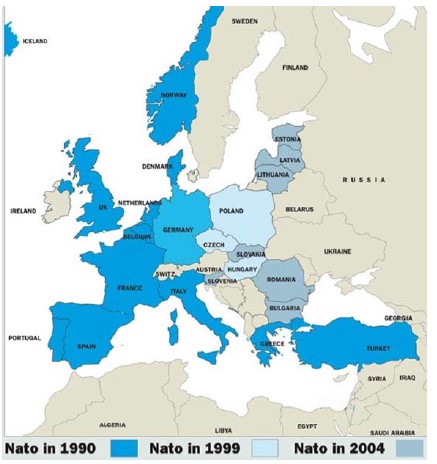
America has been unable in the face of Russian expansion to commit sufficient resources to Russia’s successful reversal of the colour revolutions, as it has been unable to extricate itself from the debacles in Iraq and Afghanistan. 2010 however is the year the US plans to reduce troop levels as its settlement to the Afghan and Iraqi conflicts takes shape. All of this means the US will be able to deploy the necessary resources and give attention to Russia’s resurgence. Russia will need to push back all of America’s tools. Since the dissolution of the Warsaw Pact in 1991, former states of the Soviet Union have been lured and bribed with promises by Washington into joining NATO. Rather than initiate discussions after the 1991 dissolution of the Warsaw Pact about a systematic dissolution of NATO, Washington has steadily converted NATO into what can only be called the military vehicle of an American global empire, linked by a network of military bases from Kosovo to Poland to Turkey to Iraq and Afghanistan. In 1999, former Warsaw Pact members Hungary, Poland and the Czech Republic joined NATO. Bulgaria, Estonia, Latvia, Lithuania, Romania and Slovakia followed suit in March 2004. By bringing such nations into NATO America provides their security and hence controls their defence apparatus. Similarly politically Estonia, Latvia and Lithuania were integrated into the European Union in 2004 when they become full members. Similarly in the caucuses Turkey has been working to forge ties with Georgia, Azerbaijan and Armenia complicating Russia’s attempts at making the region subordinate to it. In the decade ahead Russia will need to contend with US proxies, who are working to curtail Russian expansion. Russia will need to make use of a number of tools to challenge the US and its tools, central to this is projecting an image of strength through a strong military, and this area is another challenge the Russians will have to contend with.
軍事産業
- Military Industry
ロシアの軍事産業は、アメリカに対して一世代遅れている。冷戦期、ソビエト連邦はアメリカと兵器開発と宇宙開発で競争した。両国とも強力な核兵器を開発し、運搬システムでも競い合い、強力な弾頭を運ぶ大陸間弾道ミサイル(ICBM)を、戦略兵器システムとともに製造することができた。両国とも、技術的に先進的な兵器を供給する巨大な軍事産業複合体を有していた。 ソビエト連邦の崩壊により、新たに独立した各国が軍の資産を分割することになった。ロシア連邦は旧ソビエトの防衛産業のうち最大かつ最も生産力のある分を受け継ぎ、1,125から1,500の研究、設計、生産施設で、1990年代初頭には最大900万人の労働者を雇用していた。ロシアの防衛企業の多くは、最も優秀な労働者を西側企業に次々と奪われた。1997年には、ロシアの防衛産業の労働者は約250万人にまで減少した。 こうした状況に対処するため、クレムリンは領土保全の保証として核兵器にますます依存するようになった。ロシアの核兵器は、あらゆる防衛的な場面における切り札である。プーチンが権力を握るまで、クレムリンには攻撃的な能力も野心もなかった。ロシアは今なお、確実に機能する確立されたミサイル設計を含む、非常に大規模な兵器庫を維持しており、弾道ミサイル防衛に対抗する能力を高めるため、機動式再突入体や突破補助装置をなおも試験し続けている。 ソビエト連邦の解体から20年が経過し、アメリカは唯一の第5世代戦闘機であるF22ラプターを開発・配備した。また11隻の航空母艦を保有し、そのうち常時複数が海上にあり、各空母には90機の戦闘機が戦闘準備を整えて搭載されている。さらに重要なことに、アメリカはこの20年間、海外での遠征作戦を継続的に実施してきた。 米軍は海外派遣に必要な兵站、そして遠征部隊を維持するために必要なローテーションや訓練サイクルの面で優れた能力を発揮してきた。一方、ロシアの弾道ミサイル潜水艦は哨戒任務を行っておらず、同国の運用可能な弾頭の大部分は、老朽化したソ連時代の大型大陸間弾道ミサイルに搭載されている。ロシアの軍事力は米国より一世代遅れている。米国に対していかなる挑戦を行うにも、ロシアは軍需産業を近代化し、即応展開できる機動的で迅速な部隊を整備する必要がある。
Russia’s military industry is a generation behind America’s. During the Cold War the Soviet Union competed with the US in the arms and space race. Both nations developed powerful nuclear weapons. They both competed in delivery systems and both were able to construct Intercontinental Ballistic Missiles (ICBM) to deliver powerful warheads alongside strategic weapons systems. Both nations had huge military industry complexes which supplied technologically advanced weapons. The disintegration of the Soviet Union resulted in the newly independent states dividing up the military's assets. The Russian Federation inherited the largest and most productive share of the former Soviet defence industry, employing as many as 9 million workers in 1,125 to 1,500 research, design, and production facilities. Most Russian defence enterprises steadily lost their best workers to Western companies. In 1997 the Russian defence industry consisted of some 2.5 million workers. In dealing with this situation, the Kremlin came to rely increasingly on its nuclear arsenal as the guarantor of territorial integrity. Russia’s nuclear weapons are its trump card in all defensive scenarios. Until Putin came to power the Kremlin had no offensive capabilities or ambition. Russia continues to field a very sizable arsenal that includes established missile designs that work, even as it continues to toy with maneuverable re-entry vehicles and penetration aids to improve its capability against ballistic missile defenses. 20 years since the dissolution of the Soviet Union America has developed and deployed the only 5th generation fighter jet – the F22 –Raptor, it has 11 aircraft carriers that are constantly at sea with 90 fighter jets on each carrier, ready for combat. More importantly the US in the last 20 years has been conducting expeditionary overseas operations. The US military has excelled in the logistical requirements of overseas deployments, and the rotations and training cycles required for sustaining expeditionary forces. Russia on the other hand has ballistic missile submarines that do not conduct patrols, the bulk of its deliverable warheads are carried aboard aging Soviet-era heavy intercontinental ballistic missiles. Russia’s military is a generation behind the US. To pose any challenge to the US Russia will need to modernise its military industry and develop mobile and agile military units, that can be deployed at a moments notice.
結論
Conclusions
ロシアには世界的な野心の歴史があり、近代においても世界の大国でした。ソビエト連邦の崩壊はロシア社会のあらゆる面で危機を生み出しました。ロシアではKGBやマフィアが横行しました。プーチンが権力を握って以来、彼は国を掌握し、多くの分野で安定をもたらしました。これによりロシアは防衛力を築き、疲弊した経済を再建し、今日では世界的に影響力を行使できるまでになっています。
Russia has a history of global ambitions and was a world power in its recent history. The dissolution of the Soviet Union created a crisis in all aspects of Russian society. Russia’s KGB and mafia ran riot. Since Putin came to power he has managed to gain a grip on the country and brought stability to many areas. This has enabled Russia to build its defences, reconstruct its broken economy and today it is able to project power globally.
アメリカがイラクとアフガニスタンに関与していることで、ロシアは攻撃能力を再構築し、ソビエト連邦崩壊時にアメリカが実施した戦略の多くを覆すことができた。しかし、アメリカがイラクとアフガニスタンから撤退を始めるにつれて、この好機は急速に閉じつつあり、アメリカがロシアを押し返すためにより多くの資源を投入できるようになることで、ロシアはそれに気づくことになるだろう。
America’s occupation with Iraq and Afghanistan has allowed Russia to rebuild its offensive capabilities and reverse many of the strategies the US implemented when the Soviet Union collapsed. However this window of opportunity is fast closing as the US begins its drawdown in Iraq and Afghanistan and Russia will find the US able to expend more resources to push Russia back.
ロシアは、世界的な野心を支えるための豊富なエネルギー資源を有しているという利点がある。ロシアは世界最大の確認天然ガス埋蔵量を誇り、世界第2位の産油国であり、世界第3位のウラン埋蔵量を有している。ロシアはそのエネルギーを対欧州の政治的手段として用いてきており、EUの拡大の逆転は、ロシアがエネルギー面で欧州に対して有する優位によるものである。
Russia has the advantage of ample supplies of energy to fuel its global ambitions. Russia has the world’s largest proven natural gas reserves, it is the worlds second largest oil producer in the world and posses the worlds third largest Uranium reserves. Russia has used its energy as a political tool against Europe and the reversal of EU expansion has been due to Russia’s energy advantages over Europe.
ロシアが自国の国境に接する旧ソ連諸国を取り戻す仕上げに取り組んでいる中、ロシアは世界に影響力を及ぼす好位置にある。世界的な野心と正しい政策が組み合わされば、ロシアはアメリカに挑戦しうる。しかし、その軍事力はアメリカに大きく後れを取っており、この差を埋めない限り、ロシアがアメリカを世界の超大国の座から引きずり下ろすことはまず不可能である。
As Russia puts the finishing touches on winning back the former soviet republics on its immediate border, Russia is well placed to project its influence globally. Mixed with global ambitions Russia with the right policies can challenge the US, however its military remains well behind America’s and until this is not overcome it very unlikely Russia can remove the US from the post of the worlds superpower.