China: Pretender of Uitdager
China: Pretender Or Contender
2009 was het 60-jarig jubileum van de Chinese revolutie. China verkreeg onafhankelijkheid van Japan en versloeg de nationalisten om de Socialistische Volksrepubliek China te stichten. In het afgelopen decennium hebben veel analisten de opkomst van China beschouwd als de grootste uitdaging voor Amerika, en sommige denkers voorzien dat China in de niet zo verre toekomst de wereldmacht zal zijn. De snelle opkomst van China op de politieke kaart in de afgelopen 20 jaar heeft velen geschokt, anderen verbijsterd, en markeert voor sommigen de verschuiving van de wereldmacht van West naar Oost. China is nooit een wereldmacht geweest en de recente geschiedenis bestaat uit een brute bezetting door Japan, wiens herinnering het China na de Tweede Wereldoorlog heeft bepaald. Het 60-jarig jubileum van de meest bevolkte natie ter wereld markeert een unieke realiteit in haar geschiedenis, aangezien het voor het eerst wordt geteld als een wereldmacht.
2009 was the 60th anniversary of the Chinese revolution. China gained independence from Japan and defeated the nationalists to establish the Socialist people’s republic of China. In the last decade many analysts have viewed the rise of China as America's biggest challenge and some thinkers foresee China as the world’s superpower in the not so distant future. The rapid rise of China on the political map in the last 20 years has shocked many, bewildered others and for some marks the shift of global power from West to East. China has never been a world power and its recent history consists of a brutal occupation by Japan, whose memory defined post WW2 China. The 60th anniversary for the world’s most populated nation marks a unique reality in its history as for the first time it is counted as a world power.
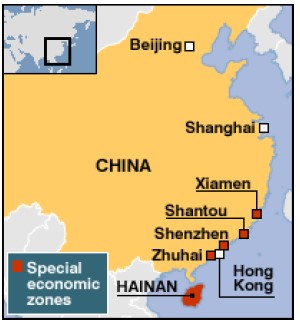
De ontwikkeling van China begon in 1978 en is te wijten aan militaire overwegingen die de ontwikkeling van wetenschap en technologie domineerden. Dit kan worden teruggevoerd naar het Mao-tijdperk. Mao verklaarde zijn doel om boven alle andere behoeften een 'militair' complex te vormen. Deze 'militarisering' vormde de basis van het beleid van Deng Xao Ping. Het doel van Deng was om de Chinese economie te diversifiëren, zodat de industriële basis van China niet alleen zou bijdragen aan de nationale defensie, maar ook aan economische groei en burgerlijke welvaart. Dengs beroemde leidraad van 16 karakters in de vroege jaren 80 maakte dit duidelijk: 'het integreren van militaire en civiele productie; maar ervoor zorgen de militaire vereisten in evenwicht te houden; het militaire vermogen te behouden; de civiele economie te gebruiken om militaire modernisering te dienen.' Voorafgaand aan dit alles werd de centraal geleide economie in Sovjet-stijl gebruikt, maar deze behaalde beperkte resultaten. Deng maakte vervolgens gebruik van een meer marktgeoriënteerde economie, met name in de Speciale Economische Zones (SEZ) gelegen in Guangdong, Fujian en Hainan. De resultaten waren spectaculair. China veranderde zijn economie radicaal door de overstap van de productie van eenvoudige exportproducten van lage kwaliteit naar geavanceerde hoogwaardige technologische goederen. Het land is veranderd van een naar binnen gekeerde, achtergebleven economie naar een wereldwijde exportmachine; de Chinese export is tienvoudig gegroeid. Vandaag de dag heeft China Duitsland ingehaald als de grootste exporteur ter wereld, met een export van meer dan $1 biljoen per jaar.
China's development began in 1978 and has been due to military considerations dominating the development of science and technology. This can be traced back to the Mao era. Mao stated his objective of forming a ‘militarization’ complex above all other needs. This ‘militarization’ formed the basis of Deng Xao Ping’s policy. Deng's aim was to diversify the Chinese economy in order for China's industrial base to contribute not just to national defence but also economic growth and civilian prosperity. Deng's famous 16 character guidance in early 1980’s made this clear: ‘integrating military and civilian production; but making sure to balance the military requirements; maintaining military capability; using the civilian economy to serve military modernization.’6 Prior to this the Soviet-style centrally planned economy, was utilized but achieved limited results. Deng then utilized a more market-oriented economy, particularly in the Special Economic Zones (SEZ) located in the Guangdong, Fujian, and Hainan. The results were spectacular. China radically changed its economy moving from producing low quality simple exports to sophisticated high technology goods. The country has changed from an inward backward economy to a global exporting machine, Chinese exports have grown tenfold. Today China has surpassed Germany as the world’s largest exporter, exporting over $1 trillion a year.
Sinds 1978 heeft China zijn economie hervormd van een op de Sovjet-stijl gebaseerde centraal geleide economie naar een meer marktgeoriënteerde economie, maar binnen het politieke kader dat wordt geboden door de Communistische Partij van China. Dit systeem wordt "socialisme met Chinese kenmerken" genoemd en is een type gemengde economie. Deze hervormingen die sinds 1978 zijn ingezet, hebben geholpen miljoenen mensen uit de armoede te tillen, waardoor het armoedecijfer daalde van 53% van de bevolking in 1981 naar 8% in 2001.
Since 1978, China has been reforming its economy from a Soviet-style centrally planned economy to a more market-oriented economy but within the political framework, provided by the Communist Party of China. This system has been called “Socialism with Chinese characteristics” and is one type of mixed economy. These reforms started since 1978 has helped lift millions of people out of poverty, bringing the poverty rate down from 53% of population in 1981 to 8% by 2001.
De uitvoering van het buitenlandse beleid van China vertegenwoordigt een belangrijke evolutie van de nauwe en reactieve benadering van Beijing ten aanzien van wereldwijde zaken in het verleden. China laat zijn langdurige slachtoffermentaliteit, voortkomend uit 150 jaar van schande en vernedering, achter zich en neemt in plaats daarvan een grootmachtenmentaliteit (daguo xintai) aan. De natuurlijke verlenging hiervan is de toenemende rol van China in mondiale kwesties. Dit is gedreven door vooraanstaande leden van de Communistische partij die niet zijn geboren tijdens de Chinese revolutie en daarom de wereld niet bekijken vanuit het perspectief van de Chinese geschiedenis. Leiders zoals de huidige president Hu Jintao, die slechts enkele jaren voor de revolutie werd geboren, was China's eerste leider die niet had deelgenomen aan de beruchte lange mars, waarbij de nationalisten in 1949 werden verslagen. Het zijn dergelijke leiders die geloven in het afschudden van China's slachtoffermentaliteit en het aannemen van een grootmachtenmentaliteit; het zijn dergelijke leiders die China steeds meer gaan zien als gelijkwaardig aan de grote wereldmachten.
The execution of China's foreign policy represents an important evolution from Beijing's narrow and reactive approach to global affairs in the past. China is abandoning its long-held victim mentality of 150 years of shame and humiliation and adopting instead a great power mentality (daguo xintai). The natural extension of this is the increasing role of China in global issues. This has been driven by leading members of the Communist party who were not born during the Chinese revolution and hence do not view the world from the perspective of China's history. Leaders, such as the current president Hu Jintao, who was born only a few years before the revolution, was China's first leader not to have taken part in the infamous long march, where the nationalists were defeated in 1949. It is such leaders who believe in the abandonment of China's victim mentality and the adoption of a great power mentality, it is such leaders who are increasingly seeing China more akin to the world’s major powers.
Sino-Amerikaanse betrekkingen
Sino - US Relations
Amerikaanse beleidsmakers zetten hun strategie voor China aanvankelijk uiteen in de Defence Planning Guidance (DPG) voor de fiscale jaren 1994-99, de eerste formele verklaring van Amerikaanse strategische doelen in het post-Sovjet tijdperk: "wij [moeten] ernaar streven om elke vijandige macht te voorkomen die een regio domineert waarvan de middelen, onder geconsolideerde controle, voldoende zouden zijn om wereldwijde macht te genereren."7 Tegen de tijd dat George W Bush aantrad, bezat alleen China de economische en militaire capaciteit om de Verenigde Staten uit te dagen als een opkomende supermacht. De VS ontwikkelden een beleid van indamming (containment) in plaats van directe concurrentie met China die de Amerikaanse middelen zou uitputten, om China binnen zijn grenzen te beperken en ervoor te zorgen dat niemand de regio met haar deelt. Dit beleid van indamming werd uiteengezet door Condoleezza Rice terwijl zij diende als adviseur voor buitenlands beleid voor George W Bush, destijds gouverneur van de staat Texas, tijdens de presidentscampagne van 2000; in een artikel in Foreign Affairs stelde zij: "China is een grootmacht met onopgeloste vitale belangen, met name met betrekking tot Taiwan, China verzet zich ook tegen de rol van de Verenigde Staten in de Aziatisch-Pacifische regio." Om deze redenen stelde zij: "China is geen 'status quo'-macht, maar een macht die de machtsbalans in Azië in haar eigen voordeel wil veranderen. Dat alleen al maakt het een strategische concurrent, niet de 'strategische partner' die de Clinton-administratie het ooit noemde. De Verenigde Staten moeten hun samenwerking met Japan en Zuid-Korea verdiepen en hun toewijding aan een robuuste militaire aanwezigheid in de regio handhaven". Washington zou ook "nauwgezetter aandacht moeten besteden aan de rol van India in het regionale evenwicht, en dat land in een anti-Chinees alliantiesysteem moeten brengen."8
US policy makers spelled out their strategy for China initially in the Defence Planning Guidance (DPG) for fiscal years 1994-99, the first formal statement of US strategic goals in the post-Soviet era "we [must] endeavour to prevent any hostile power from dominating a region whose resources would, under consolidated control, be sufficient to generate global power."7 By the time George W Bush came to office only China possessed the economic and military capacity to challenge the United States as an aspiring superpower. The US developed a policy of containment rather than outright competition with China which would expend US resources, to restrain China within its borders ensuring no-one shares the region with her. This policy of containment was spelt out by Condoleezza Rice while serving as a foreign-policy adviser to George W Bush, then governor of the state of Texas, during the 2000 presidential campaign in a Foreign Affairs article she stated "China is a great power with unresolved vital interests, particularly concerning Taiwan, China also resents the role of the United States in the Asia-Pacific region." For these reasons, she stated, "China is not a ‘status quo' power but one that would like to alter Asia's balance of power in its own favour. That alone makes it a strategic competitor, not the 'strategic partner' the Clinton administration once called it. The United States must deepen its cooperation with Japan and South Korea and maintain its commitment to a robust military presence in the region". Washington should also "pay closer attention to India's role in the regional balance, and bring that country into an anti-Chinese alliance system."8
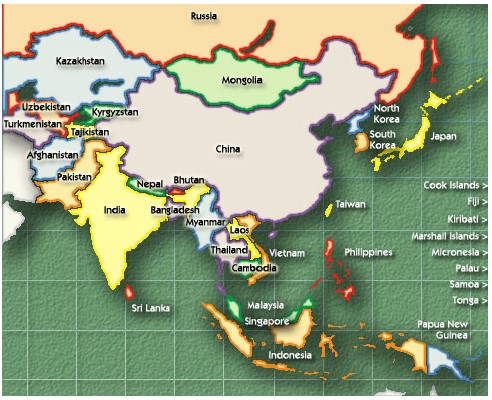
Aan de andere kant hebben degenen die de opkomst van China als een bedreiging beschouwen, erop aangedrongen dat de Amerikaanse regering een anti-Chinese ring rond China ontwikkelt om het in te dammen. De VS hebben de veiligheidsrelaties met Japan opgevoerd en hebben Japanse oproepen voor nucleaire ontwikkeling ondersteund; dit zou het opgeven van het decennia oude constitutionele defensieve beleid betekenen; voor de VS zou dit fungeren als een militair tegenwicht aan de oostflank van China. Aan de westflank is India verleid met economische deals, de overdracht van nucleaire technologie en ambities voor een permanente status in de Veiligheidsraad. Op een vergelijkbare manier heeft de VS de relaties met Vietnam genormaliseerd, waarbij het historische conflict is begraven en bilaterale partnerschappen zijn gevormd. De VS hebben de Vietnamezen er succesvol in geslaagd de interactie met hen te vergroten, waardoor de eeuwenoude Chinese banden met de Pacific-regio zijn doorbroken. Vietnam heeft nog steeds een territoriaal geschil aan zijn noordgrens met China. De VS hebben ook hun conflict met Noord-Korea gebruikt om China in te dammen. De VS zijn aanzienlijk zwijgzamer geweest over de nucleaire vooruitgang in Pyongyang in vergelijking met Iran, terwijl China de zespartijgesprekken heeft nagestreefd om te proberen te voorkomen dat zijn achterdeur in brand wordt gestoken. De verklaringen van dergelijke bijeenkomsten zijn tegenstrijdig geweest, waarbij China pechtige gesprekken met afstand tot de VS opmerkte over kwesties, terwijl de VS succesvolle onderhandelingen opmerkten. Dit geeft een geschikte rechtvaardiging voor een aanhoudende en substantiële Amerikaanse aanwezigheid in Zuid-Korea. De VS hebben in september 2009 ook een beleidswijziging ten aanzien van Myanmar (Birma) aangekondigd. Het plan is om verder te gaan dan het huidige sanctieregime door directe betrokkenheid bij de militaire regering op te nemen. Myanmar speelt een centrale rol in de buitenlandse energiestrategie van China, en door directe betrokkenheid probeert de VS de uitbreiding van een Chinese invloedssfeer in Azië te minimaliseren.
On the other hand those who view China's rise as a threat have pushed for the US administration to develop an anti-Chinese ring around China to contain it. The US has upgraded security relations with Japan and has supported Japanese calls for nuclear development, this would mean abandoning the decades old constitutional defensive policy; for the US this would act as a military counter weight on China’s Eastern flank. On the Western flank India has been wooed with economic deals, the transfer of nuclear technology and ambitions of permanent Security Council status. The US in a similar manner has normalised relations with Vietnam burying its historical conflict and forming bilateral partnerships with it. The US has successfully manoeuvred the Vietnamese to increase interaction with it, breaking the age old Chinese links to the pacific region. Vietnam continues to have a territorial dispute on its northern border with China. The US has also used its conflict with North Korea to contain China. The US has been considerably silent to the nuclear progress in Pyongyang compared to Iran, whilst China has been pursuing six party talks trying to ensure its back door is not set on fire. The statements from such meetings have been contradictory where China has been remarking pessimistic talks with distance on issues to the US remarking successful negotiations. This gives a suitable justification for sustained and substantial US presence in South Korea. The US has also announced in September 2009 a shift in policy towards Myanmar (Burma). It plans to move beyond the current sanctions regime to include direct engagement with the military government. Myanmar is playing a central role in China's overseas energy strategy and through direct engagement the US is attempting to minimise the expansion of a Chinese sphere of influence in Asia.
China’s interne dimensie
China’s Internal Dimension
In de 5000 jaar geschiedenis van China is het nooit een wereldmacht geweest en heeft het nooit de wereldwijde machtsbalans beïnvloed. Zelfs toen het het communisme adopteerde, bracht het dit nooit buiten zijn grenzen en beïnvloedde het geen enkele regio van de wereld. Een groot deel van China's 5000 jaar geschiedenis bestaat uit interne oorlogen en strijd om het vaderland te verenigen. Het buitenlandse beleid van China is gericht op binnenlandse economische ontwikkeling en het verwerven van alle noodzakelijke grondstoffen om dergelijke doelen te bereiken. China heeft het containmentbeleid van Amerika uitgedaagd door te proberen de naties te verzwakken die de VS probeert te gebruiken om China in te dammen. Dit gebeurt door het gebruik van handel en het ontwikkelen van bilaterale banden om de relaties van de VS met landen als Australië, India, Japan en Zuid-Korea te versoepelen.
In China’s 5000 year history it has never been a superpower and has never influenced the global balance of power. Even when it adopted Communism it never carried this beyond its borders and never influenced any of the regions of the world. Much of China's 5000 year history is composed of internal wars and struggles in order to unify the homeland. China’s foreign policy is centred on domestic economic development and procuring all the necessary raw materials to achieve such aims. China has challenged America’s containment policy by attempting to weaken the nations the US is attempting to use to contain China. This is through using trade and developing bilateral ties to loosen US relations with the likes of Australia, India, Japan and South Korea.
Vanwege deze realiteit heeft China zich gericht op zijn eigen regio en heeft tot dusver weinig ambitie getoond buiten de regio. China’s "string of pearls"-beleid is zijn eerste onderneming buiten de regio. Het beleid werd door de Amerikaanse regering als volgt beschreven: “De ‘String of Pearls’ beschrijft de manifestatie van China’s stijgende geopolitieke invloed door inspanningen om de toegang tot havens en vliegvelden te vergroten, speciale diplomatieke relaties te ontwikkelen en militaire strijdkrachten te moderniseren die zich uitstrekken van de Zuid-Chinese Zee via de Straat van Malakka, over de Indische Oceaan, tot aan de Perzische Golf.”10 De zeeroutes lopen door de strategische knelpunten van de Straat van Mandab, de Straat van Malacca, de Straat van Hormuz en de Straat van Lombok, evenals andere strategische maritieme belangen langs Pakistan, Sri Lanka, de Maldives en Somalië. Al deze routes zijn cruciale strategische routes voor olie en gas en zullen onvermijdelijk leiden tot een botsing met de VS.
Due to this reality China has focussed on its region and as of yet has shown little ambition beyond the region. China’s string of pearls policy is its first venture beyond the region. The policy was described by the US government as follows: “The “String of Pearls” describes the manifestation of China’s rising geopolitical influence through efforts to increase access to ports and airfields, develop special diplomatic relationships, and modernize military forces that extend from the South China Sea through the Strait of Malacca, across the Indian Ocean, and on to the Persian Gulf.”10 The sea lines run through the strategic choke points of Strait of Mandab, Strait of Malacca, Strait of Hormuz and Strait of Lombok as well as other strategic naval interests along Pakistan, Sri Lanka, Maldives and Somalia. All of these are key strategic routes for oil and gas and will inevitably lead to a clash with the US.
Eeuwenlang heeft China geprobeerd een enorme multiculturele en multi-etnische natie bij elkaar te houden, ondanks perioden van politieke centralisatie en fragmentatie. Maar culturele en taalkundige verschillen zijn verergerd door ongelijke groei en een massale herverdeling van rijkdom. Fysieke mishandeling, gevangenschap, lakse arbeidswetten en een erbarmelijk loon, en het feit dat de Chinese regering niet wordt geacht de economische behoeften van de enorme massa van de bevolking te hebben aangepakt, veroorzaken interne strijd en oproepen voor politieke opvolging. In 2005 behandelde China 87.000 gevallen van sociale onrust; dit betreft publieke verstoringen, demonstraties en burgerlijke strijd. Binnenlands is China een bom die op elk moment kan ontploffen.
For centuries, China has attempted to hold together a vast multi-cultural and multi-ethnic nation despite periods of political centralization and fragmentation. But cultural and linguistic differences have worsened due to uneven growth and a massive misdistribution of wealth. Physical mistreatment, imprisonment, lax labour laws and pitiful pay and the fact that the Chinese government is seen not to have addressed the economic needs of the vast bulk of the population is causing internal strife and calls for political succession. In 2005 China handled 87,00012 cases of social unrest; this is public disturbances, demonstrations and civil strife. Domestically China is a bomb that could go off at any time.
Binnenlands wordt China geregeerd door het communisme, wat de reden is dat het nog steeds een eenpartijstelsel heeft, maar economisch gezien beweegt het steeds meer richting de vrije markt. Tegelijkertijd wordt China geleid door nationalisme, wat heeft geleid tot oproepen tot afscheiding door sommige regio's. Zolang China niet beslist wat zijn nationale identiteit is, zal de natie in verschillende richtingen blijven worden getrokken en zal China nooit in staat zijn een bedreiging te vormen voor de wereldwijde supermacht. De oplegging van de etnische Han over de andere etniciteiten draagt alleen maar bij aan het probleem. Als de VS zou voelen dat China een directe bedreiging vormt voor haar belangen, zou zij met veel gemak een van de minderheidsgroepen kunnen steunen en interne problemen voor China kunnen veroorzaken.
China domestically is ruled by Communism, this is why it still has a one party system, but economically it is moving more and more towards the free market. At the same time China is nationalist led which has led to calls for separation by some regions. Until China decides what its national identity is, the nation will continue to be pulled in different directions and China will never be able to pose a threat to the world's superpower. The imposition of the ethnic Hans over the other ethnicities only contributes towards the problem. If the US felt China poses an immediate threat to its interests it could with much ease support one of the minority groups and cause internal problems for China.
Conclusies
Conclusions
China vormt momenteel een economische uitdaging voor de VS, en om deze redenen zijn zij betrokken bij een aantal handelsgeschillen. De VS heeft beperkingen opgelegd aan de import van Chinese banden, en momenteel is China het doelwit van een aantal zaken bij de Wereldhandelsorganisatie (WTO) betreffende concurrentieonvriendelijke praktijken.
China currently posses an economic challenge to the US, for these reasons they are engaged in a number of trade disputes. The US has placed restrictions on Chinese tyre imports, and currently China is on the receiving end of a number of World Trade Organisation (WTO) cases into anti-competitive practices.
Voor de VS vormt China een bedreiging in Zuidoost-Azië en daarom wil de VS de potentiële Chinese politieke ambities beperken, maar tegelijkertijd wil zij profiteren van de binnenlandse markt van 1,4 miljard mensen. De schattingen van de Amerikaanse centrale inlichtingendienst en vierjaarlijkse evaluaties stellen voortdurend voor dat de VS de militaire uitgaven verhoogt in het aangezicht van Chinese dreigingen. China als een bedreiging voor de VS is overdreven, aangezien China op dit moment zijn belangen en ambities heeft beperkt tot zijn eigen regio – het is twijfelachtig of een natie die nooit een wereldmacht is geweest en nooit buiten haar grenzen is uitgebreid, zelfs wel wereldwijde ambities heeft. China bevindt zich in een sterke positie om zijn economie te verschuiven van een externe focus naar binnenlandse ontwikkeling; de omvang van de bevolking zou het economische dilemma kunnen oplossen.
For the US China posses a threat in South East Asia and hence the US wants to restrict potential Chinese political ambitions but at the same time wants to benefit from the 1.4 billion domestic market. US central intelligence estimates and quadrennial reviews constantly propose the US to increase military expenditure in the face of Chinese threats. China as a threat to the US is overblown when China has for the moment restricted its interests and ambitions to its region – it is questionable whether a nation that has never been a world power, who never expanded beyond its borders, even has global ambitions. China is in a strong position to shift its economy from external focus to domestic development, the size of its population would solve its economic dilemma.
Momenteel vormt China een economische uitdaging voor de VS, daarom is het onwaarschijnlijk dat China binnenkort de plaats van de VS als wereldwijde supermacht zal innemen.
Currently China poses an economic challenge to the US, therefore it is unlikely China will be replacing the US as the worlds superpower any time soon.