De wederopstanding van Rusland
Russia’s Resurgence
De VS en de Sovjet-Unie streden decennialang met elkaar om de positie van de wereldwijde supermacht. Beiden namen deel aan de wapenwedloop om de krachtigste raketten te produceren en aan de ruimterace om de eerste mens op de maan te plaatsen. Deze competitie putte uiteindelijk de Sovjet-Unie uit en in 1990 viel de Sovjet-Unie, na diverse revoluties, uiteen.
The US and the Soviet Union competed with each other for decades over the post of the world’s superpower. Both competed in the arms race in order to produce the most powerful missiles and the space race to place the first man on the moon. This competition eventually consumed the Soviet Union and in 1990 after various revolutions the Soviet Union disintegrated.
Veel Amerikaanse beleidsmakers zagen de ontmanteling van Rusland als een onvoltooide zaak. Na de val van de Sovjet-Unie begon het Westen, onder leiding van de VS, eraan te werken om zijn grenzen in Europa snel naar het oosten uit te breiden, waardoor het vermogen van Rusland om de regio te beïnvloeden werd vernietigd. De pro-westerse linies zijn de afgelopen twee decennia naar het oosten opgeschoven via de uitbreiding van de NAVO en de EU, totdat ze hard tegen de grenzen van Rusland aanstootten. Met de ineenstorting van de Sovjet-Unie werkte de VS eraan om de door de USSR gevestigde architectuur af te breken; het werkte aan het inperken van Rusland door alle voormalige Sovjetrepublieken onder haar invloedssfeer te brengen en gedurende het volgende decennium via het IMF en de Wereldbank economisch aan het Westen te koppelen.
Many US policy makers saw the dismemberment of Russia as unfinished business. After the fall of the Soviet Union, the West led by the US began working to push its boundaries in Europe rapidly eastward, destroying Russia’s ability to influence the region. The pro-Western lines moved to the east for the past two decades, via NATO and EU expansion, until they pushed hard up against Russia’s borders. With the collapse of the Soviet Union the US worked to dismantle the architecture established by the USSR, it worked to contain Russia by bringing all the former Soviet republics under its sphere of influence and for the next decade through the IMF and the World Bank it economically linked them to the West.
De VS breidde ook haar aanwezigheid op de Balkan uit. De VS werkte aan het indammen van het post-Sovjet-Rusland, waarbij zij probeerde het uit de Balkan en Oost-Europa te verdrijven. De VS belemmerden de overeenkomst over een federaal gecontroleerd maar semi-onafhankelijk Joegoslavië, wat in 1993 leidde tot een burgeroorlog; zij gebruikten dit als voorwendsel om een oorlog tegen Servië te ontketenen, waar Rusland etnische banden heeft met de Slaven, en door de onafhankelijkheid van Kosovo in te wijden, verzwakten zij de Russische aanwezigheid verder. De VS werkte aan het vestigen van economische en militaire relaties met Oost-Europese staten, waardoor zij het veiligheidsmonopolie in de regio verwierven. De omsingeling van Rusland werd verder geprobeerd via de zogenaamde kleurrevoluties, waarbij pro-Russische regimes werden omvergeworpen en pro-Westerse leiders het roer overnamen. Dergelijke relaties werden gebruikt als basis om Oost-Europa bij de NAVO te voegen.
The US also expanded its presence in the Balkans. The US worked to contain the post-Soviet Russia, working to drive it out of the Balkans and Eastern Europe. The US obstructed the deal on a federally controlled but semi independent Yugoslavia which led to civil war in 1993, it used this as a pretext to launch war against Serbia where Russia has ethnic ties with the Slavic’s, and by inaugurating Kosovo’s independence it further weakened Russian presence. The US worked to establish economic and military relations with Eastern European states, hence monopolising the security of the region. The encirclement of Russia was further attempted through the so called colour revolutions where pro-Russian regimes were overthrown and pro-Western leaders took the helms. Such relations were used as a basis to annex Eastern Europe into NATO.
Wederopstanding
Resurgence
Vladimir Putin volgde Boris Yeltsin op in 1999, een nationalist die ernaar streefde het lot van Rusland te veranderen. Putin begon het proces van het renationaliseren van belangrijke sectoren, activa, nutsvoorzieningen en industrieën via beleid dat bedoeld was om de koers van de natie te veranderen. Hij ging om met de oligarchen die in essentie de natie plunderden, door het bedrag aan geld dat zij uit het land haalden te beperken; sommigen mochten het land verlaten, terwijl anderen meedogenloos werden aangepakt. Hij stabiliseerde de binnenlandse situatie door middel van economisch beleid dat alleen mogelijk was onder een dictatuur – elk parlement of senaat zou de voortgang hebben vertraagd bij dergelijke enorme beslissingen en zou hun eigen belangen de vrije loop hebben laten gaan.
Vladimir Putin succeeded Boris Yeltsin in 1999, a nationalist who endeavoured to change the fortunes of Russia. Putin began the process of re-nationalizing key sectors, assets, utilities and industries through policies intended to change the course of the nation. He dealt with the oligarchs who were essentially looting the nation, by restricting the amount of money they took out of the nation; some were allowed to leave the country whilst others were dealt with ruthlessly. He stabilised the domestic situation through economic policies which were only possible under a dictatorship - any parliament or senate would have stalled on such huge decisions and would have allowed their own interests to get in the way.
Sinds Vladimir Putin president van Rusland is geworden, is het hem gelukt om grip op de natie te krijgen en de pogingen van de VS om Rusland te verzwakken tegen te gaan. Vandaag de dag ontwikkelt Rusland zich snel zonder het voorbeeld van de westerse liberale democratie te volgen. Rusland heeft ervoor gekozen om het Westen en de VS bij vrijwel elke gelegenheid openlijk uit te dagen, of het nu gaat om het planten van een vlag op de zeebodem onder de Arctische ijskap, het testen van de massieve luchtverplaatsingsbom, of het betwisten van de plaatsing van Amerikaanse vroege-waarschuwingsverdedigingssystemen in Oost-Europa, wat het er voor het moment in is geslaagd succesvol te stoppen. Rusland is begonnen zichzelf opnieuw uit te vinden als wereldmacht door aanspraak te maken op zijn directe nabije omgeving – dit is het recht van Rusland over zijn voormalige republieken.
Since Vladimir Putin become Russian President he has managed to gain a grip on the nation and counter US attempts to weaken Russia. Today Russia is rapidly developing without following the example of Western liberal democracy. Russia has opted to openly challenge the West as well as the US at practically every turn, whether by planting a flag on the seabed beneath the Arctic icecap, testing the massive ordnance air blast bomb or disputing the sitting of US early-warning defence systems in Eastern Europe, which it has managed to successfully halt for the moment. Russia has begun re-inventing itself as a world power by laying its claim to it’s near abroad – this is Russia’s right over its former republics.
Russische assertiviteit
Russian Assertiveness
De Russische buitenlandse betrekkingen worden momenteel gedreven door het omkeren van de trend na de Koude Oorlog en het veiligstellen van de periferie van Rusland door alle voormalige Sovjetrepublieken onder haar invloed te brengen. Rusland concurreert opnieuw rechtstreeks met de wereldsupermacht.
Russian foreign relations are currently being driven on reversing the post Cold War trend and securing Russia’s periphery by bringing all the former Soviet republics under its influence. Russia is directly completing with the worlds superpower once again.
Rusland heeft optimaal gebruikgemaakt van de preoccupatie van Amerika met de islamitische wereld om alle door Amerika gesponsorde kleurrevoluties terug te draaien. Het project om alle voormalige Sovjetrepublieken onder Russische invloed te brengen, is een nauwgezette taak geweest onder leiding van Vladimir Putin. Rusland heeft al aanzienlijke winst geboekt in Oekraïne, Kazachstan, Wit-Rusland en Armenië, staat op het punt aanzienlijke winst te boeken in Azerbeidzjan en zou wat er nog over is van de westerse invloed in de Kaukasische natie moeten hebben verwijderd. De herformulering van een politieke unie in een groot deel van de voormalige Sovjetruimte maakt snelle voortgang.
Russia has taken full advantage of America’s preoccupation with the Islamic world to reverse all the American sponsored colour revolutions. The project to bring all of the former Soviet republics under Russian influence has been a meticulous task led by Vladimir Putin. Russia has already made significant gains in Ukraine, Kazakhstan, Belarus and Armenia and set to make significant gains in Azerbaijan and should have removed what remains of western influence in the Caucasian nation. The reformulation of a political union in much of the former Soviet space is making rapid progress.
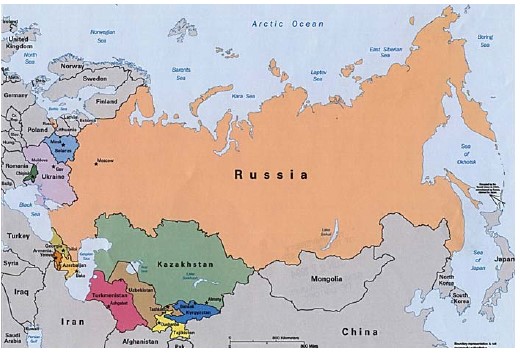
Kazachstan, Wit-Rusland en Armenië zijn al lid van de Collectieve Veiligheidsverdragsorganisatie (CSTO), een door Moskou geleide veiligheidsgroep bestaande uit pro-Russische voormalige Sovjetstaten. De CSTO is in de eerste plaats een blok dat Rusland gebruikt om via veiligheidscoördinatie te integreren met en invloed uit te oefenen in de voormalige Sovjetrepublieken. Rusland heeft een overeenkomst gesloten voor een Douane-unie met Kazachstan, Wit-Rusland en Armenië, wat hun economieën verder zal afstemmen op Moskou. Azerbeidzjan overweegt lidmaatschap van de CSTO en in de Oekraïense verkiezingen van januari 2010 kwam een pro-Russische aan de macht, en in Kirgizië inspireerde Rusland in mei 2010 op vergelijkbare wijze een regimeverandering.
Kazakhstan, Belarus and Armenia are already members of the Collective Security Treaty Organization (CSTO), a Moscow-led security group comprising pro-Russian former Soviet states. The CSTO is primarily a bloc that Russia uses to integrate with and project influence throughout former Soviet republics via security coordination. Russia has concluded a deal for a Customs Union with Kazakhstan, Belarus and Armenia which will align their economies to Moscow further. Azerbaijan is considering CTSO membership and in Ukraine’s January 2010 elections a pro-Russian came to power and in Kyrgyzstan, similarly Russia inspired regime change in May 2010.
Rusland zal zeer binnenkort 70% van de voormalige Sovjet-Unie onder zijn controle hebben, en elke poging om de Russische expansie te veranderen moet monumentaal zijn om te slagen. Eenmaal bereikt, bevindt Rusland zich in de hoofdrol om zijn invloed uit te breiden voorbij de voormalige Sovjetrepublieken. Terwijl de VS nog steeds probeert zichzelf uit Irak en Afghanistan te trekken, lijkt Rusland de hoofdrol te veroveren in een poging om het wereldwijde machtsevenwicht te verschuiven.
Russia will very soon have 70% of the former Soviet Union under its control and any effort to change Russian expansion must be monumental if it is to succeed. Once achieved Russia is in pole position to expand its influence beyond the former Soviet Republics. With the US still looking to extricate itself from Iraq and Afghanistan, Russia looks to be moving into poll position in attempting to shift the global balance of power.
Uitdagingen
Challenges
- Bevolkingsafname
- Population decline
De ontbinding van de Sovjet-Unie in 1990 had niet alleen politieke en economische gevolgen; het had ook enorme sociale gevolgen. Russen stopten met het krijgen van kinderen vanwege de onzekerheid, aangezien het aantal sterfgevallen toenam door de ineenstorting in de gehele Sovjet-gebieden. De crisis deed het aantal mensen in armoede stijgen van 2 miljoen naar 60 miljoen, een toename van 3000%. UNICEF merkte op dat dit resulteerde in 500.000 'extra' sterfgevallen per jaar. Het Sovjet-gezondheidssysteem stortte in, zelfmoord en aids namen toe, wat leidde tot meer sterfgevallen dan geboorten. De Russische bevolking aan de vooravond van de ineenstorting bedroeg 148 miljoen; tegenwoordig is deze gedaald naar 141 miljoen. Het probleem waarmee Rusland wordt geconfronteerd, is dat de categorie van 20 tot 29-jarigen momenteel het grootste segment van de Russische bevolking vormt; zij werden geboren in de jaren 1980, toen Rusland nog een wereldmacht was. De groep onder de 20 is veel kleiner, geboren na de ontbinding van de Sovjet-Unie. Dit segment kan de hoge geboortecijfers van de voorgaande generatie niet volhouden, en daarom staat Rusland voor een groot probleem omdat de beroepsbevolking ernstig zal uitdunnen. Naarmate Rusland zich uitbreidt, zal het naar alle waarschijnlijkheid steeds meer niet-etnische Russen in zijn territorium hebben. Hoe Rusland hen integreert, zal van invloed zijn op de territoriale cohesie.
The disintegration of the Soviet Union in 1990 didn’t just have political and economic consequences; it also had massive social consequences. Russians stopped having children, due to the uncertainty as deaths increased due to the collapse across the Soviet territories. The crisis raised poverty from 2 million to 60 million, a 3000% increase. UNICEF noted that this resulted in 500,000 'extra' deaths per year. The Soviet health system crumbled, suicide and AIDS increased leading to deaths outstriping births. Russia’s population on the eve of its collpase was 148 million, today it has declined to 141 million. The problem Russia faces is the 20 – 29 year old categary is currently the largest segment of Russia’s population, they were born in the 1980’s when Russia was still a world power. The under 20’s are much smaller, born after the dissolution of the Soviet Union. This segment cannot sustain the high bith rates of the preceeding generation and hence Russia faces a big problem as its labour force will be severly depleeted. As Russia expands it will in all liklehood have more and more non-ethnic Russians in its territary. How Russia integrates them will impact is terratorial cohesion.
- Amerikaanse vazallen
- US proxies
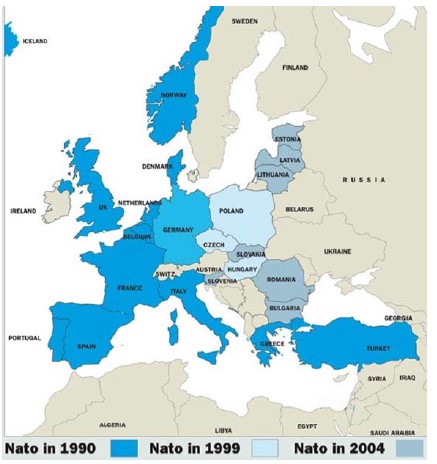
Amerika is er in het aangezicht van de Russische expansie niet in geslaagd om voldoende middelen vrij te maken voor de succesvolle omkering van de kleurrevoluties door Rusland, net zoals het er niet in is geslaagd zichzelf te bevrijden uit de debacles in Irak en Afghanistan. 2010 is echter het jaar waarin de VS van plan is om de troepensterkte te verminderen naarmate haar oplossing voor de Afghaanse en Iraakse conflicten vorm krijgt. Al dit betekent dat de VS in staat zal zijn om de nodige middelen in te zetten en aandacht te besteden aan de wederopstanding van Rusland. Rusland zal alle instrumenten van Amerika moeten terugdringen. Sinds de ontbinding van het Warschaupact in 1991 zijn voormalige staten van de Sovjet-Unie door Washington met beloften gelokt en omgekocht om zich bij de NAVO aan te sluiten. In plaats van na de ontbinding van het Warschaupact in 1991 discussies te initiëren over een systematische ontbinding van de NAVO, heeft Washington de NAVO gestaag omgevormd tot wat alleen maar het militaire voertuig van een Amerikaans wereldrijk kan worden genoemd, verbonden door een netwerk van militaire bases van Kosovo tot Polen, tot Turkije, tot Irak en Afghanistan. In 1999 sloten voormalige Warschaupact-leden Hongarije, Polen en de Tsjechische Republiek zich aan bij de NAVO. Bulgarije, Estland, Letland, Litouwen, Roemenië en Slowakije volgden in maart 2004. Door dergelijke naties in de NAVO te brengen, biedt Amerika hun veiligheid en controleert het daarmee hun defensieapparaat. In politieke zin werden Estland, Letland en Litouwen in 2004 op vergelijkbare wijze geïntegreerd in de Europese Unie toen zij voltallige leden werden. In de Kaukasus werkt Turkije eveneals aan het smeden van banden met Georgië, Azerbeidzjan en Armenië, wat de pogingen van Rusland om de regio aan zich te onderwerpen bemoeilijkt. In het komende decennium zal Rusland zich moeten strijden tegen Amerikaanse vazallen, die werken aan het inperken van de Russische expansie. Rusland zal een aantal instrumenten moeten gebruiken om de VS en haar middelen uit te dagen; centraal hierin staat het uitstralen van een imago van kracht door middel van een sterk leger, en dit gebied is een andere uitdaging waar de Russen mee te maken zullen krijgen.
America has been unable in the face of Russian expansion to commit sufficient resources to Russia’s successful reversal of the colour revolutions, as it has been unable to extricate itself from the debacles in Iraq and Afghanistan. 2010 however is the year the US plans to reduce troop levels as its settlement to the Afghan and Iraqi conflicts takes shape. All of this means the US will be able to deploy the necessary resources and give attention to Russia’s resurgence. Russia will need to push back all of America’s tools. Since the dissolution of the Warsaw Pact in 1991, former states of the Soviet Union have been lured and bribed with promises by Washington into joining NATO. Rather than initiate discussions after the 1991 dissolution of the Warsaw Pact about a systematic dissolution of NATO, Washington has steadily converted NATO into what can only be called the military vehicle of an American global empire, linked by a network of military bases from Kosovo to Poland to Turkey to Iraq and Afghanistan. In 1999, former Warsaw Pact members Hungary, Poland and the Czech Republic joined NATO. Bulgaria, Estonia, Latvia, Lithuania, Romania and Slovakia followed suit in March 2004. By bringing such nations into NATO America provides their security and hence controls their defence apparatus. Similarly politically Estonia, Latvia and Lithuania were integrated into the European Union in 2004 when they become full members. Similarly in the caucuses Turkey has been working to forge ties with Georgia, Azerbaijan and Armenia complicating Russia’s attempts at making the region subordinate to it. In the decade ahead Russia will need to contend with US proxies, who are working to curtail Russian expansion. Russia will need to make use of a number of tools to challenge the US and its tools, central to this is projecting an image of strength through a strong military, and this area is another challenge the Russians will have to contend with.
- Militaire industrie
- Military Industry
De Russische militaire industrie loopt een generatie achter op die van Amerika. Tijdens de Koude Oorlog concurreerde de Sovjet-Unie met de VS in de wapenwedloop en de ruimterace. Beide naties ontwikkelden krachtige kernwapens. Beiden concurreerden in afgiftesystemen en beiden waren in staat om intercontinentale ballistische raketten (ICBM) te construeren om krachtige kernkoppen af te leveren naast strategische wapensystemen. Beide naties beschikten over enorme militaire industriecomplexen die technologisch geavanceerde wapens leverden. Het uiteenvallen van de Sovjet-Unie leidde ertoe dat de nieuw onafhankelijke staten de bezittingen van het leger onderling verdeelden. De Russische Federatie erfde het grootste en meest productieve deel van de voormalige Sovjet-defensie-industrie, met maar liefst 9 miljoen werknemers in 1.125 tot 1.500 onderzoeks-, ontwerp- en productiefaciliteiten. De meeste Russische defensiebedrijven verloren gestaag hun beste werknemers aan westerse bedrijven. In 1997 bestond de Russische defensie-industrie uit ongeveer 2,5 miljoen werknemers. Bij het omgaan met deze situatie begon het Kremlin steeds meer te vertrouwen op zijn nucleaire arsenaal als de garant voor territoriale integriteit. De Russische kernwapens zijn zijn troefkaart in alle defensieve scenario's. Totdat Putin aan de macht kwam, had het Kremlin geen offensieve capaciteiten of ambities. Rusland blijft een zeer omvangrijk arsenaal inzetten dat gevestigde raketsontwerpen bevat die werken, zelfs terwijl het blijft experimenteren met manoeuvreerbare terugkeervoertuigen en penetratiehulpmiddelen om zijn capaciteit tegen ballistische raketafweersystemen te verbeteren. Twintig jaar na de ontbinding van de Sovjet-Unie heeft Amerika het enige gevechtsvliegtuig van de vijfde generatie ontwikkeld en ingezet – de F22 Raptor; het beschikt over 11 vliegdekschepen die constant op zee zijn met 90 gevechtsvliegtuigen op elk schip, klaar voor de strijd. Belangrijker nog is dat de VS in de afgelopen 20 jaar expeditie-operaties overzee heeft uitgevoerd. Het Amerikaanse leger heeft uitblinken in de logistieke vereisten van overzeese uitzendoperaties, en de rotaties en trainingscycli die nodig zijn voor het in stand houden van expeditiekrachten. Rusland heeft daarentegen ballistische raketonderzeeërs die geen patrouilles uitvoeren; het grootste deel van de inzetbare kernkoppen wordt vervoerd aan boord van verouderde, uit het Sovjet-tijdperk afkomstige zware intercontinentale ballistische raketten. Het Russische leger loopt een generatie achter op de VS. Om enige uitdaging voor de VS te vormen, zal Rusland zijn militaire industrie moeten moderniseren en mobiele en wendbare militaire eenheden moeten ontwikkelen die op elk moment kunnen worden ingezet.
Russia’s military industry is a generation behind America’s. During the Cold War the Soviet Union competed with the US in the arms and space race. Both nations developed powerful nuclear weapons. They both competed in delivery systems and both were able to construct Intercontinental Ballistic Missiles (ICBM) to deliver powerful warheads alongside strategic weapons systems. Both nations had huge military industry complexes which supplied technologically advanced weapons. The disintegration of the Soviet Union resulted in the newly independent states dividing up the military's assets. The Russian Federation inherited the largest and most productive share of the former Soviet defence industry, employing as many as 9 million workers in 1,125 to 1,500 research, design, and production facilities. Most Russian defence enterprises steadily lost their best workers to Western companies. In 1997 the Russian defence industry consisted of some 2.5 million workers. In dealing with this situation, the Kremlin came to rely increasingly on its nuclear arsenal as the guarantor of territorial integrity. Russia’s nuclear weapons are its trump card in all defensive scenarios. Until Putin came to power the Kremlin had no offensive capabilities or ambition. Russia continues to field a very sizable arsenal that includes established missile designs that work, even as it continues to toy with maneuverable re-entry vehicles and penetration aids to improve its capability against ballistic missile defenses. 20 years since the dissolution of the Soviet Union America has developed and deployed the only 5th generation fighter jet – the F22 –Raptor, it has 11 aircraft carriers that are constantly at sea with 90 fighter jets on each carrier, ready for combat. More importantly the US in the last 20 years has been conducting expeditionary overseas operations. The US military has excelled in the logistical requirements of overseas deployments, and the rotations and training cycles required for sustaining expeditionary forces. Russia on the other hand has ballistic missile submarines that do not conduct patrols, the bulk of its deliverable warheads are carried aboard aging Soviet-era heavy intercontinental ballistic missiles. Russia’s military is a generation behind the US. To pose any challenge to the US Russia will need to modernise its military industry and develop mobile and agile military units, that can be deployed at a moments notice.
Conclusies
Conclusions
Rusland heeft een geschiedenis van wereldwijde ambities en was in zijn recente geschiedenis een wereldmacht. De ontbinding van de Sovjet-Unie veroorzaakte een crisis in alle aspecten van de Russische samenleving. De KGB en de maffia in Rusland heersten ongecontroleerd. Sinds Poetin aan de macht kwam, is hij erin geslaagd grip te krijgen op het land en stabiliteit te brengen in veel gebieden. Dit heeft Rusland in staat gesteld om zijn defensie op te bouwen, zijn gebroken economie te reconstrueren en vandaag de dag is het in staat om wereldwijd macht uit te oefenen.
Russia has a history of global ambitions and was a world power in its recent history. The dissolution of the Soviet Union created a crisis in all aspects of Russian society. Russia’s KGB and mafia ran riot. Since Putin came to power he has managed to gain a grip on the country and brought stability to many areas. This has enabled Russia to build its defences, reconstruct its broken economy and today it is able to project power globally.
De Amerikaanse bezetting van Irak en Afghanistan heeft Rusland de mogelijkheid gegeven om zijn offensieve capaciteiten te herbouwen en veel van de strategieën die de VS implementeerde na de ineenstorting van de Sovjet-Unie, terug te draaien. Deze kansperiode sluit zich echter snel nu de VS begint met de terugtrekking uit Irak en Afghanistan, en Rusland zal merken dat de VS in staat zal zijn om meer middelen in te zetten om Rusland terug te dringen.
America’s occupation with Iraq and Afghanistan has allowed Russia to rebuild its offensive capabilities and reverse many of the strategies the US implemented when the Soviet Union collapsed. However this window of opportunity is fast closing as the US begins its drawdown in Iraq and Afghanistan and Russia will find the US able to expend more resources to push Russia back.
Rusland heeft het voordeel van ruime energievoorraden om zijn wereldwijde ambities te voeden. Rusland heeft de grootste bewezen aardgasreserves ter wereld, is de tweede grootste olieproducent ter wereld en beschikt over de op twee na grootste uraniumreserves ter wereld. Rusland heeft zijn energie als politiek instrument tegen Europa gebruikt en het omkeren van de EU-uitbreiding is te wijten aan de energievoordelen van Rusland ten opzichte van Europa.
Russia has the advantage of ample supplies of energy to fuel its global ambitions. Russia has the world’s largest proven natural gas reserves, it is the worlds second largest oil producer in the world and posses the worlds third largest Uranium reserves. Russia has used its energy as a political tool against Europe and the reversal of EU expansion has been due to Russia’s energy advantages over Europe.
Terwijl Rusland de laatste hand legt aan het heroveren van de voormalige Sovjetrepublieken aan zijn directe grens, is Rusland goed gepositioneerd om zijn invloed wereldwijd uit te oefenen. Gecombineerd met wereldwijde ambities kan Rusland met het juiste beleid de VS uitdagen, hoewel zijn militaire macht nog ver achter die van Amerika ligt, en zolang dit niet wordt overwonnen, is het zeer onwaarschijnlijk dat Rusland de VS van de positie als wereldwijde supermacht kan verdrijven.