Aqeedah na yale yanayotokana nayo katika hukumu za kisheria (Ahkaam) na yale yanayojengwa juu yake katika mawazo, ndiyo msingi wa At-Taghyeer (mabadiliko).
The Aqeedah and what emanates from it in terms of Ahkaam and what is built upon it in terms of thoughts, is the basis of At-Taghyeer (change).
Mwenendo wa mwanadamu unahusiana na yale anayoyabeba kwa upande wa dhana. Dhana (Mafaaheem) ni imani za kina (Qanaa'aat) zinazotokana na kuelewa mambo na sifa zake, pamoja na yale yanayojengwa juu ya uelewa huu au yanayotokana nao kwa upande wa imani nyingine.
The conduct of the human is tied to what he carries in terms of concepts. The concepts (Mafaaheem) are convictions (Qanaa’aat) resulting from a comprehension of things and their attributes in addition to what is built upon this comprehension or emanates from it in terms of other convictions.
Dhana ni za aina mbili:
Concepts are of two types:
The first
The first:
Dhana kuhusu mambo. Hizi ni itikadi au Ahkaam (hukumu) ambazo chanzo chake ni mambo wenyewe. Hii inajumuisha kauli kama: 'Moto huunguza', 'Sumu huua', 'Pombe hulevya', 'Nyama huliwa wakati udongo hauliwi', 'Kuongezeka kwa shinikizo hutoa mlipuko (wa aina fulani)', 'Jamii imeundwa na mkusanyiko wa watu binafsi waliofungamana na mahusiano ya kudumu' na 'Uamsho hautatokea isipokuwa kwa njia ya fikra zilizoelimika'.
: Concepts about things. These are convictions or Ahkaam (rulings) whose source is the things themselves. This would include statements like: ‘Fire burns’, ‘Poison kills’, ‘Alcohol intoxicates’, ‘Meat is eaten whilst soil is not eaten’, ‘The increased build-up of pressure generates an explosion (of sorts)’, ‘The society is composed of a collection of individuals bound by permanent relationships’ and ‘Revival would not occur except by way of the enlightened thought’.
Mawazo haya yote ni maelezo au Ahkaam ambazo chanzo chake ni mada yenyewe. Yanaweza kuwa sahihi au si sahihi, kutegemea kama yanalingana na uhalisia au yanapingana nao. Katika hali zote hizi, yanachukuliwa kuwa dhana kwa mtu aliyeyaamini. Tabia na mwenendo wa binadamu vimefungamana na dhana zake kuhusu mambo, hivyo yeyote aliyeamini kwamba chakula chake kimetiwa sumu hatakila hata kama ana njaa. Vilevile, mwenye kiu atatafuta maji na si kitu kingine, huku mwenye kutaka kulewa atatafuta pombe na si kitu kingine.
All of these thoughts are descriptions or Ahkaam whose source is its subject. They could be correct or incorrect depending on their conformity to the reality or their contradiction to it. In all of these cases they are considered to be concepts in respect to the one who has believed in them. The human behaviour and conduct is tied to his concepts about things and so whoever is convinced that his food has been poisoned would never eat from it and even if he was hungry. Similarly the one who was thirsty would seek water and not something else whilst the one who wanted to be intoxicated would seek alcohol and nothing else.
Aina ya pili:
The second type:
Mafaaheem kuhusu maisha. Hizi ni imani au Ahkaam ambazo chanzo chake kiko nje ya kitu kinachohukumiwa. Mfano wa hizi ni kauli kama: 'Swalah ni Fardh', 'Udanganyifu ni Haraam' na 'Kumuua mtu ni Haraam' n.k. Chanzo cha Hukmu hii si kitu chenyewe wala kitendo chenyewe; haya yanawakilisha tu eneo la uhalisia au hali inayohukumiwa, ilhali chanzo cha hukumu ni kitu kingine, na kiko mahali pengine.
Concepts (Mafaaheem) about life. These are convictions or Ahkaam whose source is external to its subject. This is like the statements: ‘The Salaah is Fard’, ‘Fraud is Haraam’ and ‘Killing someone is Haraam’ etc... The source of this Hukm is not the thing itself or the action and these only represent the subject area or the reality that is being judged upon whilst the source of the judgement is something else and lies elsewhere.
Kauli yetu: 'Pombe hulevya' inaonyesha maelezo au sifa ya ndani inayohusishwa na pombe. Ni hukumu inayotolewa juu ya kitu kwa sababu ya kile kilichomo ndani yake au kinachosababisha. Lakini kauli 'Pombe ni Haramu' si hukumu inayotolewa juu ya kitu kwa msingi wa kilichomo ndani yake, bali inawakilisha Hukmu kutoka kwa Allah (SWT).
So our statement: ‘Alcohol intoxicates’ reflects a description or an internal attribute associated to alcohol. It is a judgement made upon a thing due to what it contains or results in. The statement however ‘Alcohol is Haraam’ is not a judgement passed upon a thing on the basis of what is in it but rather it represents a Hukm from Allah (swt)
Nani anaamua nini kiwe Haram na nini kiwe Mubaah (halali)?
who decides what to make Haraam and what to make Mubaah (permissible).
Tabia ya mtu pia imefungamana na dhana zake kuhusu maisha. Ikiwa angekuwa na dhana au ufahamu kuhusu nyama ya nguruwe kwamba ni chakula kinachoweza kuliwa na kwamba kinaweza kumshibisha njaa, basi hiyo ingewakilisha dhana kuhusu kitu. Dhana kuhusu maisha, hata hivyo, ni kwamba nguruwe ni Haramu, yaani ni wajibu kwake kuepuka na kujiweka mbali nayo. Hii inakuwa dhana kwa yule ambaye ameelewa Hukmu hii na kuiamini, nayo itaathiri tabia yake na kumzuia kutosheleza njaa yake kwa nyama ya nguruwe.
The behaviour of the person is also tied to his concepts about life. If he held the concept or understanding about the flesh of pig that it was edible and would satisfy hunger, then this would represent a concept about a thing. The concept about life however is that the pig is Haraam meaning that is obligatory for him to avoid and keep away from it. It would become a concept for the one who has comprehended this Hukm and believed in it and it would have an effect upon his behaviour and prevent him from satisfying his hunger from pig.
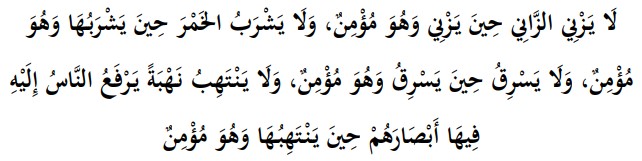
Mzinzi anapofanya zinaa hana imani, mnywaji wa pombe anapokunywa pombe hana imani, mwizi anapoiba hana imani, na mnyang'anyi yeyote anayenyang'anya kitu chenye thamani kinachovuta macho ya watu hana imani wakati anapofanya kitendo hicho (Al-Bukhaari).
When the fornicator is committing Zinaa he is not a believer, when the alcohol drinker is drinking alcohol he is not a believer, when the thief steals he is not a believer and no plunderer who plunders a valuable thing that attracts the attention of people is a believer whilst he commits this act (AlBukhaari).
Kwa hiyo, ni wajibu kuzirejesha haqaaiq (ukweli) akilini ili kurekebisha tabia na kuisahihisha. Miongoni mwa hizo ni: haqaaiq za mambo, pamoja na haqaaiq za Shariah kuhusu itikadi na hukmu (Ahkaam). Lazima zikumbushwe kwa hizo ili ziwe hai, zimejikita imara na zipo, na hivyo ziwe na athari juu ya tabia.
It is therefore obligatory to restore the truths (Haqaa’iq) to the minds to correct the behaviour and to rectify it. These include: The Haqaa’iq (truths) of things and the Shar’iyah truths in terms of beliefs and Ahkaam. They must be reminded with them so that they become fresh, firmly embodied and present, and as such have an effect upon the behaviour.
Allah (SWT) amesema:
Allah (swt) said:

Na kumbusha, kwa hakika kumbusho linawanufaisha Waumini. (Adh-Dhaariyaat 55)
And remind for verily the reminder benefits the believers (Adh-Dhaariyaat 55).
Kinyume chake ndicho kilicho kwa makafiri, kwani kuwakumbusha ukweli na dhana za Shari'ah hakuwafaidishi. Wao huzisikia kama mawazo tu, lakini haziwakilishi ukweli kwao wala haziwakilishi dhana kwao, na hivyo hazina athari yoyote juu ya tabia zao.
The opposite is the case in respect to the disbelievers because reminding them of the truths and Shar’iyah concepts does not benefit them. They hear them as thoughts but they do not represent truths for them nor do they represent concepts for them and as such they have no effect upon their behaviour.
Kwa hiyo dhana za mwanadamu kuhusu maisha ndizo zinazobainisha namna ambavyo binadamu anaishi. Jambo lake kuu si kuishi tu, bali ni jinsi anavyopaswa kuishi, na jambo lake kuu si kutosheleza mahitaji yake, bali linahusu namna atakavyoyatosheleza. Kwa sababu hii, dhana zake kuhusu maisha humtengenezea mtindo na njia maalum ya kuishi.
Therefore the concepts about life are what define the manner by which the human lives. His main concern is not just living but rather how he should live and his main concern is not about satisfying his needs but rather it concerns the manner by which he will satisfy them. For this reason his concepts about life fashion for him a specific manner and style of living.
Katika hali ambapo chanzo cha dhana za maisha kiko nje ya mambo wenyewe na vitendo wenyewe, haiwezekani kuzikubali isipokuwa baada ya kuridhika kwamba chanzo hicho ni cha kweli au kina nguvu au mamlaka ya kutoa hukumu juu yake, na kwamba Ahkaam zake ni halali na sahihi.
In the case where the source of the concepts in life are external to the things and actions themselves, it is not possible to adopt them except after being convinced that the source is true or has the power or authority to make a judgment upon them, and that its Ahkaam are valid and correct.
Uislamu umeweka wazi kwamba Al-Hakim (Mwamuzi) ni Allah (SWT), na kwamba chanzo cha Ahkaam (hukumu) ni Wahyi (ufunuo wa Mungu).
Islaam has established that the Haakim (Judge) is Allah (swt) and that the source of the Ahkaam (rulings) is the Wahi (divine revelation)
ilishuka kwa Sayyidina Muhammad ﷺ.
revealed upon Sayyidunaa Muhammad (saw).
Allah (SWT) amesema:
Allah (swt) said:

Hakika hukumu si ya yeyote isipokuwa ya Allah. Ameamuru kwamba msiabudu chochote isipokuwa Yeye (Yusuf 40).
Verily the Hukm (rule) is not but for Allah. He commanded that you do not worship other than him (Yousuf 40).
Na Yeye (SWT) akasema:
And He (swt) said:

Na yeyote asiyehukumu kwa yale aliyoyateremsha Allah, basi hao ndio makafiri (Al-Maa'idah 44).
And whosoever does not judge by what Allah has revealed then it those who are the disbelievers (Al-Maa’idah 44).
Kila hukumu au uamuzi usiyokuwa hukumu ya Allah ni Twaaghuut:
Every ruling or judgement other than the Hukm of Allah is Taaghoot:
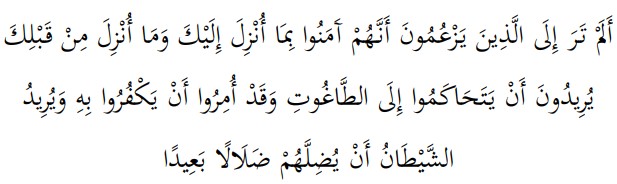
Je, hujamwona wale wanaodai kwamba wameamini yale yaliyoteremshwa kwako, [Ewe Muhammad], na yale yaliyoteremshwa kabla yako? Wao wanataka kuhukumiana kwa Twaghuut, ilhali waliamrishwa kuyakataa; na Shetani anataka kuwapotoa mbali sana.
Have you not seen those who claim to have believed in what was revealed to you, [O Muhammad], and what was revealed before you? They wish to refer legislation to Taghoot, while they were commanded to reject it; and Satan wishes to lead them far astray (An-Nisaa 60).
Hivyo basi, hakuna hukumu iliyobaki kwa akili wala kwa binadamu, na hii haimaanishi kwamba nafasi ya akili imeondolewa au kwamba uwezo wake umewekewa mipaka. Badala yake, ni kwa sababu akili na binadamu hawana zana zinazohitajika ili kutoa hukumu au kutamka uamuzi. Hii ni kwa sababu chanzo cha hukumu si jambo lenyewe wala somo ambalo hukumu itatolewa juu yake.
As such there is no judgement left to the mind or the human and this does not mean that the role of the mind has been taken away or that a limitation has been placed upon its capabilities. It is rather because the mind and the human do not possess the necessary tools to make judgement or pass a ruling. This is because the source of the ruling is not the thing itself or the subject that the ruling will be made upon.
Basi wale ambao wamewapa watu mamlaka ya kutoa hukumu, kwa mfano, hawajaegemeza hilo juu ya dalili, bali wamepotea na kupotoka. Wamebeba dhana isiyo ya kweli na isiyo na uhalisia wowote, na wakati huo huo wameikataa haki kwa kutenganisha Dini na maisha, jambo linalomaanisha kwamba hakuna Hukm inayomilikiwa na Allah.
So those who have allocated the provision of the ruling to the people, for example, have not based this upon evidence and have rather wandered and gone astray. They have carried a concept which is not truthful and has no reality to it, whilst at the same time they have denied the truth by separating the Deen from life which means that there is no Hukm belonging to Allah.
Ikiwa haki na mamlaka ya kutoa hukumu na maamuzi yangepewa binadamu, ilhali hana zana zinazohitajika kufanya hivyo, basi hakuna kitakachotawala isipokuwa matamanio yake, mielekeo yake na maslahi yake kulingana na mtazamo wake. Hayo yangekuwa yakibadilika na kuyumba, na angeweza kuona kitu chenye madhara kuwa chenye manufaa, na angeweza kuona ugonjwa kuwa dawa na tiba.
If the right and power of issuing judgements and rulings was given to the human whilst he does not possess the necessary tools to do that, then nothing would prevail apart from his desires, inclinations and interests according to his viewpoint. These would be changing and fluctuate and he could see something that is damaging as being beneficial and he could see a disease as a medicine and cure.
Katika muktadha huu, umuhimu wa Imani kwa Mwenyezi Mungu, Unabii, na Qur'ani unajitokeza waziwazi. Imani hii ni Aqeedah inayoathiri tabia, kwa kuwa inamtolea mwanadamu dhana kuhusu maisha zinazombainishia jinsi anavyopaswa kuishi, lengo lake maishani, na kusudi la tabia na mwenendo wake, ambalo ni kupata radhi za Allah 'Azza Wa Jalla.
In this context the importance of Imaan in Allah, the Prophethood and the Qur’aan comes to the fore. This Imaan is the Aqeedah that has an effect upon the behaviour as it provides the human with the concepts about life which define for him how he should live, his purpose in the life and his purpose behind his behaviour and conduct, which is to attain the pleasure of Allah ‘Azza Wa Jalla.

Sema: Je, tuwaambie walio hasirika zaidi kwa sababu ya matendo yao? Ni wale ambao juhudi zao zimepotea katika maisha ya dunia, ilhali wao walikuwa wanadhani kwamba wanatenda mema (Al-Kahf 103-104).
Say: Shall We inform you of the greatest losers in respect to (their) deeds? [They are] those whose effort is lost in worldly life, whilst they were thinking that they are doing good (Al-Kahf 103-104).
Ndio, watu binafsi wanapotoka njiani na jamii nazo zinapotoka njiani, kama samaki baharini anapoimeza chambo, au panya anayekimbilia chakula kilichowekwa kwenye mtego wa panya.
Yes the individuals are led astray and the peoples are led astray just like a fish in the ocean when it takes the bait or the mouse that rushes to the food placed in a mouse trap.
Mwanadamu huzunguka-zunguka wala hafikii lengo lake anapoendelea kwenye njia ambayo anaamini kwa dhati kwamba itamfikisha huko, ilhali kwa kweli anakwenda kinyume kabisa na lengo hilo.
The human wanders around and does not arrive at his aim when he proceeds along a path that he is convinced will lead to it whilst in reality he is actually going in the exact opposite direction.
Pia anapotoshwa na kupotea anapobeba dhana zisizo sahihi kuhusu maisha, kwa sababu ya ujinga au upotoshaji, kama yule anayeona au anayefanywa aone kwamba riba ni halali, kwamba demokrasia inatokana na Uislamu, na kwamba kujifunza Shari'ah ni kwa ajili ya kupata riziki tu, kama fani au taaluma nyingine yoyote. Haqaa'iq (ukweli) za Uislamu zinapotoweka na akili zikajaa mawazo ya uongo, kama mawazo ya uhuru wa jumla, au kwamba kubadilisha hali iliyoporomoka hakuwezekani katika kizazi chetu cha sasa au katika miaka mia moja, au kwamba mabadiliko haya ni zawadi kutoka kwa Allah na kwamba hakuna kitu cha kufanya kwetu isipokuwa kungoja, au kungoja Mahdi. Yote haya yanageuza watu binafsi, mataifa au Ummah kuwa kundi la watu wavivu wanaosukumwa kwa uvivu upande wowote wale waliowapa dhana hizi wanaotaka, na hilo linawageuza kuwa zana za maadui zao, wakati wao wanaamini kwamba kwa kweli wanapambana nao.
He is also led astray when he carries incorrect concepts about life as a result of ignorance or distortion like the one who sees or is made to see that Ribaa is Halaal, that democracy is from Islaam and that learning the Sharee’ah is for the sake of earning a living just like any other area of specialisation or profession. When the Haqaa’iq (truths/facts) of Islaam become absent and the minds are filled with false thoughts like the thoughts of general freedoms or that changing the declined reality is impossible in our current generation or one hundred years, or that this change is a gift from Allah and that there is nothing for us to do apart from wait or to wait for the Mahdi. All of this transforms the individuals, peoples or the Ummah into a collection of lazy people sluggishly being driven in whatever direction those who have given them these concepts want them to and it leads them into becoming tools for their enemies whilst they believe that they are actually struggling against them.

Kama aliye kunyoosha mikono yake kuelekea majini ili yafike mdomoni mwake, lakini hayafiki (Ar-Ra’d 14).
Like the one who stretches his hands toward water [from afar, calling it] to reach his mouth, but it does not reach it (Ar-Ra’d 14).

Mfano wao ni kama wa yule aliyewasha moto, lakini ulipoangaza yaliyo karibu yake, Allah aliondoa nuru yao na kuwaacha gizani, [hivyo] wasiweze kuona. {Mfano wao ni kama wa yule aliyewasha moto, lakini ulipoangaza yaliyo karibu yake, Allah aliondoa nuru yao na kuwaacha gizani, hawawezi kuona} (Al-Baqarah 17).
Their example is that of one who kindled a fire, but when it illuminated what was around him, Allah took away their light and left them in darkness [so] they could not see (Al-Baqarah 17).
Kwa hiyo, tunarudia tena kusema kwamba ili kubadilisha mwenendo, kuurekebisha na kuufanya mwenendo sahihi, wenye hadhi ya juu unaofikia lengo lake, ni lazima kujenga dhana sahihi kuhusu mambo na maisha. Wakati huo mtu atakuwa katika nafasi nzuri ya kuyatiisha na kuyatumia mambo pamoja na sifa zake kwa mafanikio, na atakuwa katika nafasi nzuri ya kupitisha mwenendo unaofikia lengo lake na lengo kubwa kuliko yote, ambalo ni kupata radhi za Allah ‘Azza Wa Jall:
Therefore, we repeat, that in order to change the conduct, rectify it and make it a correct elevated conduct that arrives at its purpose, it is essential to generate correct concepts about things and life. At that time the person will be in a good position to subjugate and utilise the things and their attributes successfully and will be in a good position to adopt the conduct that arrives to his purpose and the greatest of all objectives which is the attainment of the pleasure of Allah ‘Azza Wa Jall:

Lakini tafuta, kwa yale Mwenyezi Mungu aliyokupa, nyumba ya Akhera; wala usisahau fungu lako la dunia. Na fanya wema kama Mwenyezi Mungu alivyokufanyia wema (Al-Qasas 77).
But seek, through that which Allah has given you, the home of the Hereafter; and [yet], do not forget your share of the world. And do good as Allah has done good to you (Al-Qasas 77).
Ukweli wa kwanza, na wa muhimu kabisa kuliko yote, ni Aqeedah inayobainisha dhana za binadamu kuhusu maisha. Aqeedah ni kwamba vitu vyote vimeumbwa na Muumba ambaye ni Allah (swt), kwamba Allah alimtuma Mjumbe ambaye ni Muhammad ﷺ mwenye Risaalah (ujumbe) wa Al-Islaam, ambao unaeleza kila kitu kinachohusiana na binadamu, na kwamba Yeye (swt) atamhesabu binadamu kwa msingi wa Imani au Kufuru, na kwa msingi wa kufuata kwake yale aliyokuja nayo Nabii ﷺ au kutoyafuata kwake.
The first of the Haqaa’iq (truths) and absolutely its most important is the Aqeedah that defines the human’s concepts about life. The Aqeedah is that all things have been created by a creator who is Allah (swt), that Allah sent a Messenger who is Muhammad (saw) with the Risaalah (message) of Al-Islaam which explains everything that relates to the human being and that He (swt) will account him upon the basis of Imaan or Kufr and upon the basis of his abiding by what the Nabi (saw) came with or by his non-abidance to it.
Lengo la Muislamu maishani:
The Muslim’s purpose in life:
Miongoni mwa mambo muhimu zaidi ya ukweli (Haqaa'iq) baada ya Imani ni kwamba mwanadamu aelewe lengo la uumbaji wake, yaani lile ambalo lazima ajitahidi kulitimiza.
From amongst the most important Haqaa’iq (truths) after Imaan is that the human understands the purpose of his creation i.e. that which he must strive to accomplish.
Allah (SWT) amesema:
Allah (swt) said:
Sikuwaumba majini na binadamu isipokuwa waniabudu (Adh-Dhaariyaat 56).
And I have not created the Jinn or humankind except to worship me (AdDhaariyaat 56).
Ibada kwa Allah inamaanisha kuwa na imani kwake na kumtii. Kumtii Yeye Ta'ala kunamaanisha kujitolea na kuendelea kushikamana (Al-Iltizaam) na amri zake zote. Hili halijazuiliwa kwa vitendo vya ibada, akhlaq (maadili) na mu'amalaat (miamala ya kijamii) pekee, bali linajumuisha kila kitu ambacho Allah (swt)
The worship (‘Ibaadah) to Allah means having Imaan in Him and obedience to Him. Obedience to Him Ta’Aalaa means commitment and abidance (Al-Iltizaam) to all of His Ahkaam. This is not restricted to the acts of ‘Ibaadah, Akhlaaq (morals) and Mu’aamalaat (societal transactions) but rather includes everything that Allah (swt)
...ameamuru au kukataza. Hii inajumuisha kwamba hakuna yeyote mwenye haki ya kuabudiwa isipokuwa Allah, na kwamba hakuna amri wala katazo linaloweza kutoka kwa mwingine yeyote isipokuwa Yeye (SWT).
has commanded or forbidden. It includes that nothing has a right to be worshipped other than Allah and that no command or forbiddance can come from anyone besides Him (swt).
Ahmad na At-Tirmidhi wamepokea kwamba ‘Adiy Bin Haatim (ra) alimjia Mtume wa Allah ﷺ alipokuwa akisoma Aya hii:
Ahmad and At-Tirmidhi related that ‘Adiy Bin Haatim (ra) came to the Messenger of Allah (saw) whilst he was reciting the Aayah:
Wamewachukua Mapadri wao na watawa wao kuwa miungu badala ya Mwenyezi Mungu, na pia Al-Masihi, mwana wa Maryamu. Nao hawakuamrishwa kitu isipokuwa kumwabudu Mungu Mmoja; hakuna mungu isipokuwa Yeye. Ametakasika juu ya yale wanayomshirikisha nayo (At-Tawbah 31).
They have taken their Rabbis and monks as lords besides Allah, and [also] the Maseeh, the son of Mary. And they were not commanded except to worship one God; there is no deity except Him. Exalted is He above whatever they associate with Him (At-Taubah 31).
‘Adiy akasema: ‘Hawakuwaabudu.’ Ndipo Mtume wa Allah ﷺ akasema:
‘Adiy then said: ‘They did not worship them’. So the Messenger of Allah (saw) said:
Kinyume chake, waliharamisha kwao yaliyo halali na wakahalalisha kwao yaliyo haramu, kisha wakawafuata (katika hilo). Basi hiyo ndiyo ibada yao kwao.
On the contrary, they made the Halaal Haraam upon them and made the Haraam Halaal for them, then they followed them (in this). Therefore this was their worship to them.
Kwa hiyo, kumpa mtu haki ya kuamua halali na haramu, au haki ya kutunga sheria, na haki ya kutiiwa, ni kumwabudu mtu huyo.
As such giving the Haqq (right) to anyone to decide the Halaal and decide the Haraam or the right to make legislation and the right of obedience represents ‘Ibaadah to that person.
Allah (SWT) amesema:
Allah (swt) said:
Nyinyi hamwabudu kitu chochote badala yake isipokuwa majina tu mliyoyapa, nyinyi na baba zenu, ambayo Mwenyezi Mungu hakuteremsha ushahidi wowote juu yake.
You worship nothing besides Him except [mere] names you have named them with, you and your fathers, for which Allah has sent down no authority.
Hukumu si ya yeyote isipokuwa Allah. Ameamuru kwamba msiabudu isipokuwa Yeye. Huo ndio Dini iliyo sahihi, lakini watu wengi hawajui (Yusuf 40).
Legislation is not but for Allah. He has commanded that you worship not except Him. That is the correct Deen, but most of the people do not know (Yusuf 40).
Kuhusu haki ya utiifu ambayo ni ya Hakim (mtawala), Ameer au wazazi, basi hii ni kwa sababu ya Haqq (haki) ambayo Allah (swt)
As for the right of obedience that belongs to the Hakim (ruler), Ameer or parents then this is due to the Haqq (right) that Allah (swt)
...ambayo Allah amewapa.
has provided to them.
Ibada kwa Allah (SWT) inajumuisha utii kwa kuwafanya wanadamu wamwabudu Yeye (SWT), yaani kuwafanya wanyenyekee Shariah ya Allah, na kupigana dhidi ya kuwepo kwa Haakimiyah (haki ya kutunga sheria) kwa yeyote asiyekuwa Allah, au kwa jambo lisilokuwa Shariah ya Uislamu, pamoja na kupigana dhidi ya kutoka nje (Khurooj) ya Hukm (utawala) wa Allah (SWT). Hivi ndivyo maandiko yanavyoonyesha na maana ambayo yamekuja nayo; yale yaliyokuja yakiamrisha ‘Amr Bil Ma’rouf’ (kuamrisha mema) na ‘Nahi ‘An il-Munkar’ (kukataza maovu). Yameamrisha kufanya mijadala, maelezo, kuwashawishi watu na kuwaalika kwa njia ya Da’wah. Zaidi ya hayo, yameamrisha kuchapwa viboko, kukatwa, kuuawa (kama adhabu na kuzuia) na kupigana vita pamoja na Al-Jihaad ili kueneza utawala wa Allah duniani na kuinua neno Lake juu kabisa.
‘Ibaadah to Allah (swt) includes the obedience in respect to making mankind worship Him (swt) i.e. to make them submit to the Shar’a of Allah and to fight against the existence of any Haakimiyah (right to make rules) to other than Allah or to other than the Sharee’ah of Islaam in addition to fighting against the exiting (Khurooj) from the Hukm (rule) of Allah (swt). This is what the texts have indicated and the meaning that they have come with; those which have come commanding the ‘Amr Bil Ma’rouf’ (Commanding the good) and the ‘Nahi ‘An il-Munkar’ (Forbidding the evil). They have commanded the undertaking of discussions, explanations, convincing people and inviting them by way of Da’wah. Additionally they have commanded lashing, cutting, killing (as punishments and deterrents) and fighting and Al-Jihaad to spread the rule of Allah upon the Earth and to raise His word the highest.
Kwa hiyo tuliona kwamba baada ya Mtume wa Allah ﷺ kuanzisha Dola ya Kiislamu katika Al-Madinah Al-Munawwarah na kuimarisha nguzo zake, alituma wajumbe kwa wafalme na watawala kuwalingania kwenye Uislamu. Kisha tukaona Khalifa (radhi za Allah ziwe juu yao) waliofuata baada yake ﷺ wakituma wabebaji wa Da'wah, Mujahidina na majeshi ili kuwalingania watu kwenye Imani na kuwatoa gizani na kuwaingiza kwenye nuru. Walipigana kwa lengo la kuzifanya ardhi na watumwa wanyenyekee kwenye mamlaka ya Uislamu.
As such we saw that after the Messenger of Allah (saw) established the Islamic State in Al-Madinah Al-Munawaarah and established its pillars firmly, he (saw) sent the messengers to the Kings and rulers inviting them to Islaam. We then saw the Khulafaa’ (rah) who came after him (saw) sending out carriers of the Da’wah, Mujaahideen and armies to invite the people to Imaan and to take them out of the darkness and bring them into the light. They fought for the purpose of making the lands and servants submit to the authority of Islaam.
Allah Azza wa Jall ametutuma ili kukuokoa na ibada ya watumishi (watu) na kukuleta kwenye ibada ya Mola wa watumishi (watu), na kukuokoa na dhuluma ya dini nyinginezo na kukuleta kwenye uadilifu wa Uislamu, na kutoka kwenye ufinyu wa dunia hii na kukuleta kwenye upana wa dunia hii na Akhera.
Allah Azza wa Jall has sent us to deliver you from the worship of the servants (people) to bring you to the worship of the Lord of the servants (people) and to deliver you from the oppression of other Deens and bring you to the justice of Islaam and from the narrowness of this world and bring you to the vastness of this world and the hereafter.
Wazo hili limefafanuliwa wazi katika Qur'ani, Sunnah na vitendo vya Mtume ﷺ, katika matini ambazo ni nyingi mno kiasi kwamba haiwezekani kuziwekea kikomo. Hata hivyo, tutataja baadhi yake.
This thought has been made very clear in the Qur’aan, the Sunnah and the actions of the Messenger (saw) within texts that are too numerous for a limit to be placed upon them. We will however make a mention of some of them:
Allah (SWT) amesema:
Allah (swt) said:
Sema: Enyi watu! Hakika mimi ni Mtume wa Allah kwenu nyote ﷺ (Al-A'raaf 158).
Say: O people! Verily I am the Messenger of Allah to you all (Al-Aa’raaf 158).
Alisema (SWT):
He (swt) said:
Na hatukukutuma wewe isipokuwa kwa watu wote kuwa mbashiri na mwonyaji (Saba' 28).
And we have not sent you except to the entirety of mankind as a bringer of glad tidings and as a warner (Saba’ 28).
Na Yeye (SWT) akasema:
And He (swt) said:
Yeye ndiye aliyemtuma Mtume wake kwa uongofu na dini ya haki, ili iyashinde dini nyingine zote, hata kama washirikina wanaichukia (At-Tawbah 33, As-Saff 9).
He its is who has sent His Messenger with the guidance and the Deen of truth so that it prevails over all other Deens and even if the Mushrikeen hate it (AtTaubah 33, As-Saff 9).
Na:
And:
Enyi mlioamini, pigeni vita dhidi ya makafiri walio karibu nanyi, na wawakute ndani yenu ukali. Na jueni kwamba Mwenyezi Mungu yuko pamoja na wacha Mungu (Attawbah 123).
O you who have believed, fight those adjacent to you of the disbelievers and let them find in you harshness. And know that Allah is with the righteous (AtTaubah 123).
Na piganeni na wale wasiomwamini Allah wala Siku ya Mwisho, na wasioharamisha yale ambayo Allah na Mtume wake wameyaharamisha, na wasiofuata dini ya haki miongoni mwa wale waliopewa Kitabu, mpaka wakubali kulipa jizya kwa hiari yao huku wao wakiwa wamedhalilishwa. {Na piganeni na wale wasiomwamini Allah wala Siku ya Mwisho, na wasiyaharamisha yale aliyoyaharamisha Allah na Mtume wake, wala hawaidhinishi dini ya haki, miongoni mwa wale waliopewa Kitabu, mpaka watoe jizya kwa mkono wao wakiwa wanyonge.} (At-Tawbah 29)
Kwa hiyo lengo na madhumuni ni kwamba hakuna sheria inayotiiwa wala kanuni inayopitishwa isipokuwa ile ambayo ni ya Allah (SWT).
So the objective and purpose is that no law that is obeyed or no legislation that is adopted can exist except for that which Allah (swt)
ameamuru na kwamba hakuna Haakim (mtunga sheria) isipokuwa Allah. Kwa upande wa kuwaacha makafiri juu ya imani zao na ibada zao, basi wanaachwa juu ya mambo haya kulingana na kwa kufuata amri ya Allah (SWT).
has commanded and that there is no Haakim (law maker) other than Allah. As far as leaving the disbelievers upon their beliefs and worships then they are left upon these matters in accordance to and in compliance to the command of Allah (swt).
Allah (SWT) ameweka wazi na kueleza lengo hili na kusudi hili kuhusiana na uumbaji wake wa watu pale alipoyasema (SWT):
Allah (swt) has made clear and explained this objective and purpose in respect to His creation of the people when He (swt) said:
Na hivyo ndivyo tulivyokufanya umma wa wastani/bora ili mwe mashahidi juu ya watu, na Mtume awe shahidi juu yenu (Al-Baqarah 143).
And thus we have made you a just/best Ummah so that you will be witnesses over mankind and the Messenger will be a witness over you (Al-Baqarah 143).
Hotuba hii inaelekezwa kwa Umma wa Kiislamu na inaukabidhi jukumu la kisheria (Takleef) la kubeba Ujumbe, baada ya Mjumbe wa Allah ﷺ, kuufikisha kwa binadamu wote. Hakika Nabii ﷺ aliubeba na baada ya kuufikisha ujumbe, akitekeleza Amana yake na baada ya kufanya Al-Jihaad kwa ajili ya Allah kwa kila alichokuwa nacho cha nguvu, juhudi na uwezo. Alisimama ﷺ katika Hijja ya mwisho ya kuaga, akaihutubia Umma wake na kusema:
This address is to the Islamic Ummah and it entrusts her with the legal responsibility (Takleef) to carry the Message, after the Messenger of Allah (saw), to the whole of mankind. And indeed the Nabi (saw) carried it and after conveying the message, fulfilling his Amaanah and after having performed Al-Jihaad for Allah’s sake with all that he possessed of strength, effort and capability. He (saw) stood in the final farewell Hajj, addressed his Ummah and said:
Reference: Taghyeer (mabadiliko) - Mahmoud Abdul-Kareem Hasan
"Na hakika nimewaachia miongoni mwenu kitu ambacho mkikishikilia kwa nguvu hamtapotea kamwe: Kitabu cha Allah, na mtawajibika kwangu (yaani baada yangu). Basi, mnasemaje nyinyi nyote?" Wakasema: "Tunashuhudia kwamba umefikisha, umetekeleza na umenasihi." Kisha akasema huku akinyanyua kidole chake cha shahada kuelekea mbinguni, kisha kuelekea kwa watu: "Ee Allah, shuhudia, ee Allah, shuhudia, ee Allah, shuhudia." (Abu Daawood)
‘And indeed I have left amongst you that which if you hold on firmly to you will never go astray: The Kitaab (book) of Allah, and you are responsible from me (i.e. after me). So what do you all say?’. They said: ‘We bear witness that you have conveyed, fulfilled and advised’. He then said whist raising his index finger to the sky and then towards the people: ‘O Allah bear witness, O Allah bear witness, O Allah bear witness’ (Abu Daawood).
Kwa njia hii Nabii ﷺ alitoa ushahidi juu yetu kwa wajibu wa kufikisha na kubeba Amana, na akamtaka Allah awe shahidi wetu kuhusu hilo. Kwa hiyo, baada ya hapo, ni wajibu kwetu kuwa mashahidi juu ya watu kwa kufuata kabisa mbinu ile ile aliyoifuata Mtume mtukufu ﷺ. Hakika Allah (SWT) ameweka wazi kwamba hili ndilo lengo na madhumuni ya uumbaji, kabla ya kuumbwa Aadam (as).
So in this way the Nabi (saw) bore witness over us with the responsibility of conveying and carrying the Amaanah (trust) and sought Allah’s witness upon us in regards to that. Therefore, after that it is obligatory upon us to be witnesses over the people in accordance to exactly the same methodology that the Noble Messenger (saw) undertook. Indeed Allah (swt) made clear that this is the purpose and objective of the creation before His creation of Aadam (as).
Allah (SWT) amesema:
Allah (swt) said:
Na kumbukeni [wakati] Mola wako alipowaambia Malaika, "Hakika mimi nitaweka khalifa katika ardhi." Wakasema, "Je, Utaweka humo ambaye atafanya ufisadi humo na kumwaga damu, nasi tunatakasa sifa zako na kukutakasa?" Allah akasema, "Hakika Mimi najua mnayoyajua msiyoyajua." (Al-Baqarah 30).
And [remember] when your Lord said to the angels, "Verily, I will make upon the earth a successive authority." They said, "Will You place upon it one who causes corruption therein and sheds blood, while we declare Your praise and sanctify You?" Allah said, "Indeed, I know that which you do not know." (AlBaqarah 30).
Malaika (Malaika) ni waja wa Allah (SWT) na hawamuasi Yeye:
The Malaa’ikah (Angels) are the servants of Allah (swt) and do not disobey Him:
Juu yake wamesimamishwa malaika walio wakali na wenye nguvu; hawamuasi Allah katika Anachowaamuru, bali hutekeleza wanachoamriwa (At-Tahriim 6).
Over which are [appointed] angels, harsh and severe; they do not disobey Allah in what He commands them but do what they are commanded (At-Tahreem 6).
Allah (SWT) alipowaambia:
When Allah (swt) said to them:
Hakika, nitaweka juu ya ardhi mamlaka itakayofuatana (Khalifah)
Verily, I will make upon the earth a successive authority (Khalifah)
Walitambua na kuelewa kwamba Yeye (SWT) atawafanya juu ya ardhi wale ambao watakuwa waasi. Hili linaeleweka kutokana na neno ‘Khalifah’, kwa sababu katika muktadha huu linamaanisha yule ambaye Allah atampa urithi na kumkabidhi jukumu la kutekeleza vitendo vya kurekebisha na kutunza, pamoja na mambo mengine ambayo mtu aliyekabidhiwa jukumu hilo hufanya. Nafasi hii ya kurekebisha na kutunza mambo ina maana kwamba zitakuwepo zile zinazohitaji kurekebishwa na zenye haja ya Ri’aayah (kutunzwa). Hii ina maana kwamba zitakuwepo zile zinazotoka nje ya amri ya Allah, na kwamba hilo litapelekea dhiki, huzuni na machafuko. Ndiyo maana walisema:
They realised and comprehended that He (swt) will make upon the earth those who will be disobedient. This is understood from the wording ‘Khalifah’ because here in this context it means the one who Allah will give succession and delegate to undertake the acts of correcting and caretaking amongst other matters that the one who is entrusted would undertake. This role or rectifying and taking care of affairs means that their will exist those who need to be rectified and who are need of Ri’aayah (caretaking). This means that there will be those who go outside of the command of Allah and that this will lead to misery, anguish and disorder. This is why they said:
Wakasema: Je, utaweka humo wale watakaoleta ufisadi ndani yake (ardhini) na kumwaga damu (Al-Baqarah 30).
They said: Will you make those who will make corruption in it (the earth) and spill blood (Al-Baqarah 30).
Kwa maneno mengine, ikiwa uumbaji haungejumuisha kitu ambacho kingekuwa cha kutotii, basi kila kitu kingeendelea kulingana na amri ya Allah (swt). Kwa hiyo, Allah (swt) alipotaka kumuumba mtu atakayechukua hatua za kurekebisha na kuongoza, hii inamaanisha kwamba kutakuwepo na wale watakaochagua upotofu na kutomtii Allah.
In other words, if the creation did not include something that would be disobedient then everything would proceed in accordance to the command of Allah (swt). So when Allah (swt) wanted to create someone who will undertake the actions of rectifying and guidance then this means that there will exist those who will choose misguidance and disobedience to Allah.
Kwa hiyo, lengo la maisha ambalo Allah (SWT) amelifafanua na kulieleza kabla ya kuumbwa kwa Aadam (AS) ni kwamba kutakuwepo binadamu ambaye ni mja ('Abd) wa Allah, na kwamba atafanya kazi ya kuwafanya wengine wamwabudu Allah (SWT) miongoni mwa wale ambao wamepotoka katika ibada yake au wameikataa.
Therefore the purpose in life which Allah (swt) has made clear and explained before the creation of Aadam (as) is that there will be a human being who is a slave (‘Abd) to Allah and that he will undertake the work of making others worship Allah (swt) from those who have gone astray from His worship or have rejected it.
Maisha kwa hiyo ni mapambano ya kiakili, ya kiimani na ya kisiasa baina ya Imani na Kufr. Ni ya kiimani kwa kuwa ni kwa ajili ya kuinua neno la Allah juu kabisa, na ili Dini ya watu iwe yote na kwa Allah pekee. Hivyo kwamba hakuna Hukmu inayokuwepo isipokuwa ni kwa ajili ya Allah, kwamba Yeye (subhanahu wa ta'ala) hana mshirika, kwamba hakuna kitu wala mtu anayeabudiwa isipokuwa Allah, na kwamba utiifu ni kwa Shari'a ya Allah pekee. Kwa njia hii inawakilisha mapambano ya kisiasa ambapo usimamizi wa mambo ya wanadamu umefanywa kuwa wajibu usikabidhiwe kwa aina yoyote ya sheria nyingine isipokuwa Shari'ah ya Al-Islaam.
The life is therefore an intellectual, belief based and political clash and struggle between Imaan and Kufr. It is belief based in terms of it being for the sake of raising the word of Allah the highest and so that the Deen of the people is all and only for Allah. So that no Hukm exists except that it is for Allah, that He (swt) has no Shareek (partner), that nothing or no one is worshiped aside from Allah and that submission is only to the Shar’a of Allah. In this way it represents a political struggle where the caretaking of the affairs of human beings has been made obligatory to not be entrusted to any form of legislation other than the Sharee’ah of Al-Islaam.