“阿கீ代”(信仰)及其所衍生的教法规定,以及在此之上建立的各种思想,是变革(At-Taghyeer)的根基。
The Aqeedah and what emanates from it in terms of Ahkaam and what is built upon it in terms of thoughts, is the basis of At-Taghyeer (change).
人的行为与他所持有的概念相关联。概念(Mafaaheem,مفاهيم)是对事物及其属性的理解所形成的信念(Qanaa'aat,قناعات),以及基于这种理解而建立、或由此衍生出的其他信念。
The conduct of the human is tied to what he carries in terms of concepts. The concepts (Mafaaheem) are convictions (Qanaa’aat) resulting from a comprehension of things and their attributes in addition to what is built upon this comprehension or emanates from it in terms of other convictions.
概念分为两类:
Concepts are of two types:
The first
The first:
关于事物的概念。这些是信念或律例(Ahkaam,即裁定),其来源是事物本身。例如:“火会燃烧”、“毒药会致死”、“酒会使人醉”、“肉可以吃,而泥土不可以吃”、“压力的不断累积会产生某种爆炸”、“社会是由一群以持久关系相联结的个体所组成”,以及“复兴只能通过开明的思想才能实现”。
: Concepts about things. These are convictions or Ahkaam (rulings) whose source is the things themselves. This would include statements like: ‘Fire burns’, ‘Poison kills’, ‘Alcohol intoxicates’, ‘Meat is eaten whilst soil is not eaten’, ‘The increased build-up of pressure generates an explosion (of sorts)’, ‘The society is composed of a collection of individuals bound by permanent relationships’ and ‘Revival would not occur except by way of the enlightened thought’.
所有这些想法都是描述或律法(Ahkaam),其来源是其所指的对象。它们可能正确,也可能不正确,取决于它们是否符合实际,还是与实际相矛盾。无论哪种情况,对于相信它们的人而言,它们都被视为概念。人的行为与举止与他对事物的概念相联系:因此,一个确信自己的食物已被下毒的人,即使饥饿,也绝不会吃它。同样,口渴的人会去寻找水,而不会去寻找其他东西;想要醉酒的人会去寻找酒,而不会寻找别的东西。
All of these thoughts are descriptions or Ahkaam whose source is its subject. They could be correct or incorrect depending on their conformity to the reality or their contradiction to it. In all of these cases they are considered to be concepts in respect to the one who has believed in them. The human behaviour and conduct is tied to his concepts about things and so whoever is convinced that his food has been poisoned would never eat from it and even if he was hungry. Similarly the one who was thirsty would seek water and not something else whilst the one who wanted to be intoxicated would seek alcohol and nothing else.
第二种类型:
The second type:
“概念”(Mafaaheem)是关于生活的信念,或者说是一些判断(Ahkaam),其来源在于其所指的对象之外。例如这样的表述:“拜功是法定的(Fard)”、“欺诈是非法的(Haraam)”、“杀人是非法的(Haraam)”等等。这些判断的来源不是事物本身或行为本身,它们只是代表了被判断的对象领域或现实,而判断的依据却是另外一个东西,存在于别处。
Concepts (Mafaaheem) about life. These are convictions or Ahkaam whose source is external to its subject. This is like the statements: ‘The Salaah is Fard’, ‘Fraud is Haraam’ and ‘Killing someone is Haraam’ etc... The source of this Hukm is not the thing itself or the action and these only represent the subject area or the reality that is being judged upon whilst the source of the judgement is something else and lies elsewhere.
“酒使人醉”这句话,反映的是与酒相关的一种描述或内在属性,是基于其所含成分或其所产生的结果而对事物作出的判断。而“酒是哈拉姆”这句话,则不是依据其所含之物而对事物作出的判断,而是代表了真主(SWT)的一条法律裁定(Hukm)。
So our statement: ‘Alcohol intoxicates’ reflects a description or an internal attribute associated to alcohol. It is a judgement made upon a thing due to what it contains or results in. The statement however ‘Alcohol is Haraam’ is not a judgement passed upon a thing on the basis of what is in it but rather it represents a Hukm from Allah (swt)
谁来决定什么是哈拉姆(禁止的),什么是穆巴赫(允许的)。
who decides what to make Haraam and what to make Mubaah (permissible).
人的行为也与其对生活的观念相关联。如果他对猪肉的看法是它可以食用、能够充饥,那么这就代表了一种关于事物的观念。而关于生活的观念则是:猪肉是哈拉姆(禁忌之物),也就是说,他有义务避开它、远离它。当一个人理解了这一律法(Hukm)并相信它时,它便成为他的观念,并会影响他的行为,阻止他用猪肉来充饥。
The behaviour of the person is also tied to his concepts about life. If he held the concept or understanding about the flesh of pig that it was edible and would satisfy hunger, then this would represent a concept about a thing. The concept about life however is that the pig is Haraam meaning that is obligatory for him to avoid and keep away from it. It would become a concept for the one who has comprehended this Hukm and believed in it and it would have an effect upon his behaviour and prevent him from satisfying his hunger from pig.
谁认为偶像能够影响他的安康、安全、生计,或能助他达成所愿;或认为某些已逝者也具有这种能力,那么他在这些偶像面前就会被敬畏之情所支配,或者会向逝者寻求帮助与援助。
The one who holds the concept that the idol has an effect upon his well-being, safety, rizq or to help things come to pass for him, or that some of those who have passed away also possess this capability, he would then be gripped by the feelings of veneration in the presence of such idols or he would seek help and assistance from the dead.
这与那些不信这些事情的人正好相反,他对这些偶像毫不犹豫地表示蔑视,并指出向死者寻求帮助之人的错误。
This is the opposite to the one who does not believe in any of these matters and he would not hesitate to show his disdain towards these idols and show the error of those who seek help from the dead.
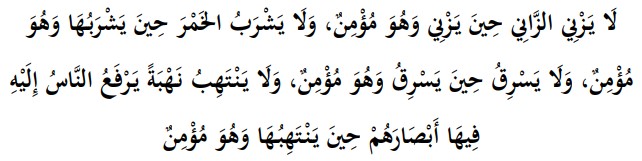
当奸淫者在行奸淫时,他不是信士;饮酒者在饮酒时,他不是信士;窃贼在行窃时,他不是信士;掠夺者掠夺那让众人瞩目的贵重财物时,他在做这件事的时候也不是信士。(布哈里圣训集)
When the fornicator is committing Zinaa he is not a believer, when the alcohol drinker is drinking alcohol he is not a believer, when the thief steals he is not a believer and no plunderer who plunders a valuable thing that attracts the attention of people is a believer whilst he commits this act (AlBukhaari).
因此,有必要将真理(Haqaa’iq)重新植入人们的心智,以端正行为、使之走上正道。这些真理包括:事物的真理(Haqaa’iq),以及在信仰与律例(Ahkaam)方面的教法真理(Shar’iyah)。必须经常提醒人们这些真理,使它们保持鲜活、牢固地扎根于心中并时刻在场,从而对行为产生影响。
It is therefore obligatory to restore the truths (Haqaa’iq) to the minds to correct the behaviour and to rectify it. These include: The Haqaa’iq (truths) of things and the Shar’iyah truths in terms of beliefs and Ahkaam. They must be reminded with them so that they become fresh, firmly embodied and present, and as such have an effect upon the behaviour.
安拉(SWT)说:
Allah (swt) said:

而你应当提醒,因为提醒确实对信士有益。(《播散的风》51:55)
And remind for verily the reminder benefits the believers (Adh-Dhaariyaat 55).
与此相反的是不信道者的情形:提醒他们真理和沙里尔概念并不能使他们受益。他们听到这些内容,只当作一种思想,它们对他们而言既不代表真理,也不代表概念,因此对他们的行为毫无影响。
The opposite is the case in respect to the disbelievers because reminding them of the truths and Shar’iyah concepts does not benefit them. They hear them as thoughts but they do not represent truths for them nor do they represent concepts for them and as such they have no effect upon their behaviour.
因此,人对生命的观念决定了人如何生活。人所关心的,不仅仅是活着,而是应当如何生活;人所关心的,也不仅仅是满足自己的需要,而是如何去满足这些需要。正因为如此,他对生命的观念为他塑造了一种特定的生活方式和风格。
Therefore the concepts about life are what define the manner by which the human lives. His main concern is not just living but rather how he should live and his main concern is not about satisfying his needs but rather it concerns the manner by which he will satisfy them. For this reason his concepts about life fashion for him a specific manner and style of living.
在事物和行为本身之外,存在生活中各种概念来源的情况下,除非确信该来源是真实的,或者具有对这些事物作出裁决的权力或权威,并且其律例是有效和正确的,否则不可能采纳这些概念。
In the case where the source of the concepts in life are external to the things and actions themselves, it is not possible to adopt them except after being convinced that the source is true or has the power or authority to make a judgment upon them, and that its Ahkaam are valid and correct.
伊斯兰教确立了:裁决者(Al-Haakim)是真主(SWT),而律例(Ahkaam)的来源是启示(Wahi)。
Islaam has established that the Haakim (Judge) is Allah (swt) and that the source of the Ahkaam (rulings) is the Wahi (divine revelation)
降示于我们的先知穆罕默德ﷺ。
revealed upon Sayyidunaa Muhammad (saw).
安拉(SWT)说:
Allah (swt) said:

诚然,裁决唯属真主。祂命令你们不要崇拜祂以外的任何(神灵)。(优素福章 40)
Verily the Hukm (rule) is not but for Allah. He commanded that you do not worship other than him (Yousuf 40).
他(swt)说:
And He (swt) said:

凡不依照安拉所降示的来裁决的人,他们就是不信道者。(《筵席》44)
And whosoever does not judge by what Allah has revealed then it those who are the disbelievers (Al-Maa’idah 44).
凡是不以安拉的裁决为依归的裁决或判决,都是塔古特(Taaghoot)。
Every ruling or judgement other than the Hukm of Allah is Taaghoot:
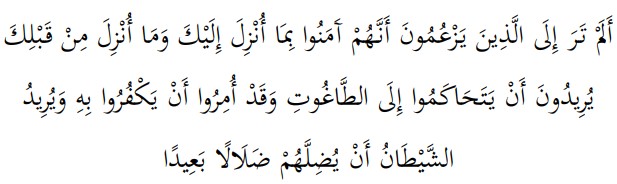
您难道没有看见那些自称信仰了降示给您的(穆罕默德ﷺ)经典,以及降示给您以前的经典的人吗?他们却想把判决交给塔古特,而他们曾被命令拒绝它;而撒旦想要使他们迷失得很远。(《妇女章》60节)
Have you not seen those who claim to have believed in what was revealed to you, [O Muhammad], and what was revealed before you? They wish to refer legislation to Taghoot, while they were commanded to reject it; and Satan wishes to lead them far astray (An-Nisaa 60).
因此,判断已不再由理智或人来做出,这并不意味着理智的作用被剥夺,也不意味着其能力受到了限制。恰恰相反,是因为理智和人并不具备作出判断或裁定所必需的工具。原因在于,裁定的来源并不是事物本身,也不是将要对其作出裁定的对象。
As such there is no judgement left to the mind or the human and this does not mean that the role of the mind has been taken away or that a limitation has been placed upon its capabilities. It is rather because the mind and the human do not possess the necessary tools to make judgement or pass a ruling. This is because the source of the ruling is not the thing itself or the subject that the ruling will be made upon.
因此,那些把裁决权归于人民的人,例如,他们并非基于证据而如此主张,而是迷失了方向、误入歧途。他们所持的是一个不真实、毫无实际依据的观念;同时,他们把宗教与生活割裂开来,从而否认了真理,以致安拉的裁决不复存在。
So those who have allocated the provision of the ruling to the people, for example, have not based this upon evidence and have rather wandered and gone astray. They have carried a concept which is not truthful and has no reality to it, whilst at the same time they have denied the truth by separating the Deen from life which means that there is no Hukm belonging to Allah.
如果将作出判断和裁决的权利与权力交给人类,而人并不具备做到这一点所必需的工具,那么除了他的私欲、倾向和利益(依其个人观点而定)之外,别无任何事物能够占上风。这些东西会不断变化、波动,他可能把有害之物看作有益,把疾病看作良药和治疗。
If the right and power of issuing judgements and rulings was given to the human whilst he does not possess the necessary tools to do that, then nothing would prevail apart from his desires, inclinations and interests according to his viewpoint. These would be changing and fluctuate and he could see something that is damaging as being beneficial and he could see a disease as a medicine and cure.
在此背景下,对真主、先知身份以及《古兰经》的信仰之重要性便凸显出来。这种信仰即是影响人之行为的"阿கீ代"(信条),因为它为人提供了关于生活的种种观念,为他界定应当如何生活、生命的目的为何、其行为与操守背后的目的何在——即是为了获得真主"Azza Wa Jalla"的喜悦。
In this context the importance of Imaan in Allah, the Prophethood and the Qur’aan comes to the fore. This Imaan is the Aqeedah that has an effect upon the behaviour as it provides the human with the concepts about life which define for him how he should live, his purpose in the life and his purpose behind his behaviour and conduct, which is to attain the pleasure of Allah ‘Azza Wa Jalla.
同样,在这一语境中,关于事物与生命的概念是否正确、是否真实,其重要性也随之显现,即这些概念代表着"Haqaa'iq"(真理/事实)。与此同时,散布无知、欺骗,并宣扬谬论以使民众形成错误概念的运动所带来的危害也显而易见。其结果是,人们沦为无知与迷误的受害者:
Similarly in this context the importance of the concepts about things and about the life being correct and truthful also becomes apparent i.e. that they are representative of Haqaa’iq (truths/facts). The danger of the campaign of spreading ignorance, deception and propagating fallacies in order to generate amongst the people incorrect concepts is also evident. As a result of which they become victims of ignorance and misguidance:

你说:"我来告诉你们,谁是行为上最大的亏损者吗?"他们是那些在今世的努力白费了,而他们却以为自己做得很好的人。(《古兰经》18:103-104)
Say: Shall We inform you of the greatest losers in respect to (their) deeds? [They are] those whose effort is lost in worldly life, whilst they were thinking that they are doing good (Al-Kahf 103-104).
是的,个人会迷失,民族也会迷失,就像鱼儿在海中吞下诱饵,又像老鼠急于扑向放在捕鼠器里的食物。
Yes the individuals are led astray and the peoples are led astray just like a fish in the ocean when it takes the bait or the mouse that rushes to the food placed in a mouse trap.
人在行走时,若他确信自己所走的道路能通向目标,实际上却是朝着完全相反的方向前进,那么他便会四处徘徊,无法抵达自己的目的地。
The human wanders around and does not arrive at his aim when he proceeds along a path that he is convinced will lead to it whilst in reality he is actually going in the exact opposite direction.
他也会因无知或被扭曲而持有错误的人生观念,从而误入歧途,例如有人认为利息(Ribaa)是合法的,认为民主源自伊斯兰,或认为学习伊斯兰教法与学习其他任何专业或职业一样,只是为了谋生。当伊斯兰的真相(Haqaa'iq)缺失,人们的头脑中充满了错误的想法,比如普遍自由的观念,或认为在我们这一代,甚至一百年之内,都不可能改变已经衰败的现实,又或认为这种改变是真主的恩赐,我们除了等待或等待马赫迪之外无事可做。所有这些都会把个人、民族或乌玛变成一群懒散的人,被那些灌输这些观念的人随意驱使,使他们沦为敌人的工具,而他们自己却以为是在与敌人斗争。
He is also led astray when he carries incorrect concepts about life as a result of ignorance or distortion like the one who sees or is made to see that Ribaa is Halaal, that democracy is from Islaam and that learning the Sharee’ah is for the sake of earning a living just like any other area of specialisation or profession. When the Haqaa’iq (truths/facts) of Islaam become absent and the minds are filled with false thoughts like the thoughts of general freedoms or that changing the declined reality is impossible in our current generation or one hundred years, or that this change is a gift from Allah and that there is nothing for us to do apart from wait or to wait for the Mahdi. All of this transforms the individuals, peoples or the Ummah into a collection of lazy people sluggishly being driven in whatever direction those who have given them these concepts want them to and it leads them into becoming tools for their enemies whilst they believe that they are actually struggling against them.

如同伸手向水,想让水够到他的嘴,但水却够不到他(《雷德》14)。
Like the one who stretches his hands toward water [from afar, calling it] to reach his mouth, but it does not reach it (Ar-Ra’d 14).

他们的比喻就像那个点燃一堆火的人,火光照亮了他周围的一切,真主却夺走了他们的光明,使他们置身于黑暗之中,什么也看不见(《古莱赫》17)。
Their example is that of one who kindled a fire, but when it illuminated what was around him, Allah took away their light and left them in darkness [so] they could not see (Al-Baqarah 17).
因此,我们再次强调:要改变行为、纠正行为,使其成为正确而高尚、能够达成目标的行为,就必须先建立关于事物和生活的正确观念。届时,人便能够成功地驾驭并利用事物及其属性,并能够采取通向其目标的行为,而所有目标中最伟大的,便是获得安拉——至尊至大——的喜悦。
Therefore, we repeat, that in order to change the conduct, rectify it and make it a correct elevated conduct that arrives at its purpose, it is essential to generate correct concepts about things and life. At that time the person will be in a good position to subjugate and utilise the things and their attributes successfully and will be in a good position to adopt the conduct that arrives to his purpose and the greatest of all objectives which is the attainment of the pleasure of Allah ‘Azza Wa Jall:

然而,你要借着真主所赐予你的,去追求后世的住所;同时,也不要忘记你在今世的那一份。你要行善,正如真主待你行善一样。(《故事》77)
But seek, through that which Allah has given you, the home of the Hereafter; and [yet], do not forget your share of the world. And do good as Allah has done good to you (Al-Qasas 77).
《哈盖伊格》(真理)中的第一条,也是最重要的一条,是确定人对生命概念的信仰根基(阿给伊代)。这一信仰的内容是:万物都由造物主创造,这位造物主就是安拉(SWT);安拉派遣了使者穆罕默德ﷺ,携带伊斯兰的使命(Risaalah),该使命阐明了与人类相关的一切事务;安拉(SWT)将依据人的信仰(Imaan)或不信(Kufr),以及他是否遵从先知ﷺ所带来的教导或背离其教导,对他进行清算。
The first of the Haqaa’iq (truths) and absolutely its most important is the Aqeedah that defines the human’s concepts about life. The Aqeedah is that all things have been created by a creator who is Allah (swt), that Allah sent a Messenger who is Muhammad (saw) with the Risaalah (message) of Al-Islaam which explains everything that relates to the human being and that He (swt) will account him upon the basis of Imaan or Kufr and upon the basis of his abiding by what the Nabi (saw) came with or by his non-abidance to it.
穆斯林的人生目标:
The Muslim’s purpose in life:
在信仰之后最重要的真理之中,有一条是:人应当理解自己被造的目的,即他必须为之努力实现的事情。
From amongst the most important Haqaa’iq (truths) after Imaan is that the human understands the purpose of his creation i.e. that which he must strive to accomplish.
安拉(SWT)说:
Allah (swt) said:
我创造精灵和人类,只是为了让他们崇拜我。(《风雨飘摇》51:56)
And I have not created the Jinn or humankind except to worship me (AdDhaariyaat 56).
“崇拜”('Ibaadah)真主,指的是对祂怀有信仰(Imaan),并服从祂。服从祂至高无上的真主,意味着坚守并遵循祂的一切律例(Ahkaam)。这不限于崇拜的行为、品德(Akhlaaq)和社会交往(Mu'aamalaat),而是包括真主(SWT)所颁布的一切。
The worship (‘Ibaadah) to Allah means having Imaan in Him and obedience to Him. Obedience to Him Ta’Aalaa means commitment and abidance (Al-Iltizaam) to all of His Ahkaam. This is not restricted to the acts of ‘Ibaadah, Akhlaaq (morals) and Mu’aamalaat (societal transactions) but rather includes everything that Allah (swt)
……下达命令或禁止。它包括:除安拉之外,没有任何东西有权被崇拜;任何命令或禁止都不能来自安拉之外的任何人(SWT)。
has commanded or forbidden. It includes that nothing has a right to be worshipped other than Allah and that no command or forbiddance can come from anyone besides Him (swt).
艾哈迈德和提尔米兹都转述道:阿迪·本·哈提姆(愿真主喜悦他)来到真主的使者ﷺ那里,那时他正在诵读这段经文:
Ahmad and At-Tirmidhi related that ‘Adiy Bin Haatim (ra) came to the Messenger of Allah (saw) whilst he was reciting the Aayah:
他们把自己的学者和修士当作主,舍安拉而崇拜;他们还把麦尔彦之子麦西哈也当作主。然而他们只被命令崇拜独一的主,除他之外别无应受崇拜的主。赞美他,超绝他们所用以配他的一切。(忏悔章 31节)
They have taken their Rabbis and monks as lords besides Allah, and [also] the Maseeh, the son of Mary. And they were not commanded except to worship one God; there is no deity except Him. Exalted is He above whatever they associate with Him (At-Taubah 31).
"阿迪说:'他们并没有崇拜他们。'于是安拉的使者ﷺ说:"
‘Adiy then said: ‘They did not worship them’. So the Messenger of Allah (saw) said:
恰恰相反,他们将合法的事物视为非法,将非法的事物视为合法,然后他们就服从了他们。因此,这就是他们对那些人的崇拜。
On the contrary, they made the Halaal Haraam upon them and made the Haraam Halaal for them, then they followed them (in this). Therefore this was their worship to them.
因此,把决定合法与非法的权利、制定律法的权利以及服从的权利交给任何人,就等同于把崇拜(Ibaadah)归于那个人。
As such giving the Haqq (right) to anyone to decide the Halaal and decide the Haraam or the right to make legislation and the right of obedience represents ‘Ibaadah to that person.
安拉(SWT)说:
Allah (swt) said:
你们除了崇拜真主之外,所崇拜的只不过是你们和你们的祖先所起的名称,真主并没有为此降示任何权据。
You worship nothing besides Him except [mere] names you have named them with, you and your fathers, for which Allah has sent down no authority.
立法权唯属真主。祂命令你们除祂之外不要崇拜任何人。这才是正确的宗教,但大多数人并不知道(《优素福》40)。
Legislation is not but for Allah. He has commanded that you worship not except Him. That is the correct Deen, but most of the people do not know (Yusuf 40).
至于统治者(Hakim)、埃米尔或父母所拥有的服从之权利,这是因为真主(SWT)所赋予的权利(Haqq)。
As for the right of obedience that belongs to the Hakim (ruler), Ameer or parents then this is due to the Haqq (right) that Allah (swt)
他们所获得的(这些)。
has provided to them.
对安拉(subhanahu wa ta'ala)的崇拜,包括服从于使人类崇拜祂,即使他们顺服安拉的沙里尔(Shar'a),并与任何归属于安拉之外、或归属于伊斯兰教沙里尔之外的立法权(Haakimiyah,即制定规则的权利)的存在作斗争,同时与脱离安拉的统治(Hukm)的行为(Khurooj)作斗争。这正是经文所指示的内涵,也是经文所带来的含义;那些命令“劝善”('Amr Bil Ma'rouf,即命人行善)和“戒恶”(Nahi 'An il-Munkar,即禁止作恶)的经文,都是如此。经文命令进行讨论、解释、说服众人,并以宣教(Da'wah)的方式邀请人们。此外,经文还命令施以鞭刑、断肢、处死(作为惩罚与威慑),并命令为使安拉的统治遍及大地、使祂的言语至高无上而进行战斗与圣战(Al-Jihaad)。
‘Ibaadah to Allah (swt) includes the obedience in respect to making mankind worship Him (swt) i.e. to make them submit to the Shar’a of Allah and to fight against the existence of any Haakimiyah (right to make rules) to other than Allah or to other than the Sharee’ah of Islaam in addition to fighting against the exiting (Khurooj) from the Hukm (rule) of Allah (swt). This is what the texts have indicated and the meaning that they have come with; those which have come commanding the ‘Amr Bil Ma’rouf’ (Commanding the good) and the ‘Nahi ‘An il-Munkar’ (Forbidding the evil). They have commanded the undertaking of discussions, explanations, convincing people and inviting them by way of Da’wah. Additionally they have commanded lashing, cutting, killing (as punishments and deterrents) and fighting and Al-Jihaad to spread the rule of Allah upon the Earth and to raise His word the highest.
因此我们看到,先知穆罕默德(saw)在麦地那·穆南瓦拉建立伊斯兰国家并使其支柱稳固之后,他派遣使者前往各国君主和统治者处,邀请他们皈依伊斯兰。随后我们又看到,继他之后的哈里发们(rah)派遣宣教者、圣战者和军队,邀请人们信仰,将他们从黑暗引向光明。他们作战的目的,是使土地和民众服从伊斯兰的权威。
As such we saw that after the Messenger of Allah (saw) established the Islamic State in Al-Madinah Al-Munawaarah and established its pillars firmly, he (saw) sent the messengers to the Kings and rulers inviting them to Islaam. We then saw the Khulafaa’ (rah) who came after him (saw) sending out carriers of the Da’wah, Mujaahideen and armies to invite the people to Imaan and to take them out of the darkness and bring them into the light. They fought for the purpose of making the lands and servants submit to the authority of Islaam.
它所代表的是一种达瓦(伊斯兰呼吁),即除安拉之外不崇拜任何对象,且除安拉塔阿拉之外,不存在任何哈基米亚(统治权)。这一目标代表着穆斯林为之而活的思想,高贵的圣门弟子拉比尔·本·阿米尔(愿安拉喜悦他)就此作了精妙的表达:当时波斯军队统帅鲁斯塔姆对拉比尔所呼吁的内容感到惊讶,便问他:“你们带来了什么?”拉比尔(愿安拉喜悦他)回答说:
It represents a Da’wah for there to be nothing worshiped other than Allah and for there to be no Haakimiyah (right to rule) to other than Allah Ta’Alaa. This objective represents the thought that the Muslim lives for and this was expressed exquisitely by the Noble Sahaabi Rab’iy Bin ‘Aamir when Rustam the head of the Persian army was astonished by what Rab’iy invited to and asked him: What have you brought with you? And Rab’iy (ra) replied:
真主——愿祂尊贵至高——派遣我们,是为了把你们从崇拜众仆人(世人)中解救出来,引导你们去崇拜众仆人的主宰;把你们从其他宗教的压迫中解救出来,引导你们走向伊斯兰的公正;把你们从今世的狭窄中解救出来,引导你们走向今世与后世的广阔。
Allah Azza wa Jall has sent us to deliver you from the worship of the servants (people) to bring you to the worship of the Lord of the servants (people) and to deliver you from the oppression of other Deens and bring you to the justice of Islaam and from the narrowness of this world and bring you to the vastness of this world and the hereafter.
这一思想在《古兰经》、圣训以及先知(愿主赐福并使他平安)的言行中都已表述得非常清楚,相关经文和圣训多到无法一一列举。在此,我们仅提及其中的一些。
This thought has been made very clear in the Qur’aan, the Sunnah and the actions of the Messenger (saw) within texts that are too numerous for a limit to be placed upon them. We will however make a mention of some of them:
安拉(SWT)说:
Allah (swt) said:
说吧:“人们啊!我确实是安拉派给你们所有人的使者。”(《高处章》158节)
Say: O people! Verily I am the Messenger of Allah to you all (Al-Aa’raaf 158).
他(swt)说:
He (swt) said:
我没有派遣你,只是向全人类报喜和警告。(赛伯ʾ 28)
And we have not sent you except to the entirety of mankind as a bringer of glad tidings and as a warner (Saba’ 28).
他(swt)说:
And He (swt) said:
祂就是派遣其使者携带正道与真理之教,使其凌驾于一切宗教之上的那一位,即便多神教徒厌恶(《忏悔》33,《列队》9)。
He its is who has sent His Messenger with the guidance and the Deen of truth so that it prevails over all other Deens and even if the Mushrikeen hate it (AtTaubah 33, As-Saff 9).
And:
And:
{ 哦,信道的人们啊!你们当与你们附近的不信道者作战,让他们在你们身上感到严厉。你们当知道,真主与敬畏者同在。}(《忏悔章》123节)
O you who have believed, fight those adjacent to you of the disbelievers and let them find in you harshness. And know that Allah is with the righteous (AtTaubah 123).
并且:你们要与那些不信真主、不信末日、不以真主及其使者所禁止之事为禁物、也不遵从真理之教的有经人作战,直到他们心甘情愿地缴纳人头税(jizyah),并且自甘卑服。(《悔罪章》9:29)
And: Fight those who do not believe in Allah or in the Last Day and who do not consider unlawful what Allah and His Messenger have made unlawful and who do not adopt the religion of truth from those who were given the Scripture - [fight] until they give the Jizyah willingly while they are subdued (At-Taubah 29).
安拉的使者ﷺ说:
And the Messenger of Allah (sw) said:
谁为了使真主的话语至高无上而战斗,他就是在真主之道上(Fee Sabeelillah)。(双方公认的圣训)
Whoever has fought so that the word of Allah is made the highest he is Fee Sabeelillah (In the way of Allah) (Agreed upon).
通过这种方式,不信道者被迫服从伊斯兰的权威,并服从其沙里亚(Sharee'ah)的主权(Siyaadah),尽管他们并未被强迫进入伊斯兰教,这是因为安拉的经文所言(SWT):
In this way the disbelievers are made (forced) to submit to the authority of Islaam and to the sovereignty (Siyaadah) of its Sharee’ah despite not being forced to enter into Islaam due to Allah’s statement (swt):
所以,其目标与宗旨是:除了真主(SWT)所颁布的律法之外,不存在任何可以被遵从或被采纳的法律或立法。
So the objective and purpose is that no law that is obeyed or no legislation that is adopted can exist except for that which Allah (swt)
……并且除真主之外没有任何立法者(Haakim)。至于听任不信道者保持其信仰与崇拜,那是遵照真主的命令,并顺从真主的命令而行。
has commanded and that there is no Haakim (law maker) other than Allah. As far as leaving the disbelievers upon their beliefs and worships then they are left upon these matters in accordance to and in compliance to the command of Allah (swt).
安拉(SWT)已经明确阐述了这一目标和宗旨,当祂(SWT)说:
Allah (swt) has made clear and explained this objective and purpose in respect to His creation of the people when He (swt) said:
这样,我们使你们成为一个中正/最优秀的民族,好让你们在众人面前作证,使者也在你们面前作证。(黄牛章143节)
And thus we have made you a just/best Ummah so that you will be witnesses over mankind and the Messenger will be a witness over you (Al-Baqarah 143).
这段讲话是对伊斯兰乌玛说的,它把传达使命的法律责任(Takleef)托付给她,使其在先知(愿主赐福并使其平安)之后,向全人类传达这一讯息。先知(愿主赐福并使其平安)确已承担并传达了这一使命,完成了他的托付,并以他所拥有的全部力量、努力与能力为主道而奋斗。他(愿主赐福并使其平安)在最后的告别朝觐中站立起来,向他的乌玛讲话,说道:
This address is to the Islamic Ummah and it entrusts her with the legal responsibility (Takleef) to carry the Message, after the Messenger of Allah (saw), to the whole of mankind. And indeed the Nabi (saw) carried it and after conveying the message, fulfilling his Amaanah and after having performed Al-Jihaad for Allah’s sake with all that he possessed of strength, effort and capability. He (saw) stood in the final farewell Hajj, addressed his Ummah and said:
Reference: Taghyeer(改变) - Mahmoud Abdul-Kareem Hasan
“我确已在你们中间留下了一样东西,你们若坚守它,就永远不会迷误:那就是真主的经典。你们对我负有责任。那么,你们怎么说呢?”他们说:“我们作证,你已传达、已尽责、已劝诫。”然后他举起食指指向天空,又指向众人,说:“主啊,请作证!主啊,请作证!主啊,请作证!”(艾布·达乌德辑录)
‘And indeed I have left amongst you that which if you hold on firmly to you will never go astray: The Kitaab (book) of Allah, and you are responsible from me (i.e. after me). So what do you all say?’. They said: ‘We bear witness that you have conveyed, fulfilled and advised’. He then said whist raising his index finger to the sky and then towards the people: ‘O Allah bear witness, O Allah bear witness, O Allah bear witness’ (Abu Daawood).
因此,先知(saw)以传达和承载托付(Amaanah)的责任为我们作证,并请求真主为此事为我们作证。所以在此之后,我们有义务按照尊贵的使者(saw)所遵循的完全相同的方法,为世人作证。真主(swt)确已阐明,这正是在创造阿丹(as)之前,造物的目的和宗旨。
So in this way the Nabi (saw) bore witness over us with the responsibility of conveying and carrying the Amaanah (trust) and sought Allah’s witness upon us in regards to that. Therefore, after that it is obligatory upon us to be witnesses over the people in accordance to exactly the same methodology that the Noble Messenger (saw) undertook. Indeed Allah (swt) made clear that this is the purpose and objective of the creation before His creation of Aadam (as).
安拉(SWT)说:
Allah (swt) said:
当你的主对天使说:"我要在大地上设立一位继承者。"他们说:"你要在地上设立一个在其中作恶、流血的人吗?我们赞颂你,并奉你为圣洁。"主说:"我所知道的,你们不知道。"(黄牛章30)
And [remember] when your Lord said to the angels, "Verily, I will make upon the earth a successive authority." They said, "Will You place upon it one who causes corruption therein and sheds blood, while we declare Your praise and sanctify You?" Allah said, "Indeed, I know that which you do not know." (AlBaqarah 30).
天使(Malaa'ikah)是安拉(SWT)的仆人,他们不违抗祂。
The Malaa’ikah (Angels) are the servants of Allah (swt) and do not disobey Him:
在其上有天使看守,他们粗暴严厉,不违抗真主对他们的命令,并且奉命行事。{(禁戒章 6)}
Over which are [appointed] angels, harsh and severe; they do not disobey Allah in what He commands them but do what they are commanded (At-Tahreem 6).
当安拉(SWT)对他们说:
When Allah (swt) said to them:
诚然,我要在大地上设立一位继承者(哈里发)。
Verily, I will make upon the earth a successive authority (Khalifah)
他们认识到并领会到,(真主)将会在大地上设立那些将会违抗命令的人。这一点可以从“哈里发”一词的含义中理解,因为在此语境中,它指的是真主将授予其继承权、并委托其承担纠正与照management之责以及被托付者所应承担的其他事务的人。这种纠正与照管事务的职责,意味着将会存在需要被纠正、需要被照管(Ri'aayah)的人。这也就意味着会有人超出真主的命令之外,而这将导致痛苦、忧虑与混乱。因此他们说:
They realised and comprehended that He (swt) will make upon the earth those who will be disobedient. This is understood from the wording ‘Khalifah’ because here in this context it means the one who Allah will give succession and delegate to undertake the acts of correcting and caretaking amongst other matters that the one who is entrusted would undertake. This role or rectifying and taking care of affairs means that their will exist those who need to be rectified and who are need of Ri’aayah (caretaking). This means that there will be those who go outside of the command of Allah and that this will lead to misery, anguish and disorder. This is why they said:
他们说:"你要在地上设置那些将在其中作恶、流血的人吗?"(黄牛章 30)
They said: Will you make those who will make corruption in it (the earth) and spill blood (Al-Baqarah 30).
换句话说,如果受造物之中没有包含悖逆之事,那么一切都会按照真主的命令而进行。因此,当真主(SWT)想要创造一个将承担正道与引导之责的人时,这就意味着必定会有人选择迷误和违抗真主。
In other words, if the creation did not include something that would be disobedient then everything would proceed in accordance to the command of Allah (swt). So when Allah (swt) wanted to create someone who will undertake the actions of rectifying and guidance then this means that there will exist those who will choose misguidance and disobedience to Allah.
因此,安拉(SWT)在创造阿丹(AS)之前所阐明和解释的人生目的,就是有一些人成为安拉的仆人('Abd),并且他们将承担起使那些偏离对安拉崇拜或拒绝崇拜安拉的人去崇拜安拉的工作。
Therefore the purpose in life which Allah (swt) has made clear and explained before the creation of Aadam (as) is that there will be a human being who is a slave (‘Abd) to Allah and that he will undertake the work of making others worship Allah (swt) from those who have gone astray from His worship or have rejected it.
因此,人生是信仰与政治层面上的理智、信念之争,是伊玛尼与库夫尔之间的斗争。说它是基于信念的,是因为它是为了使安拉的话语至高无上,为了使人们的宗教完全归于安拉,唯独归于安拉。除安拉之外,没有任何律例存在;安拉(SWT)没有伙伴,除安拉之外无物或无人可被崇拜;顺服唯独归于安拉的沙里亚。如此,它也代表着一场政治斗争:人类事务的管理必须唯独交给伊斯兰的沙里亚,而不得交给其他任何形式的立法。
The life is therefore an intellectual, belief based and political clash and struggle between Imaan and Kufr. It is belief based in terms of it being for the sake of raising the word of Allah the highest and so that the Deen of the people is all and only for Allah. So that no Hukm exists except that it is for Allah, that He (swt) has no Shareek (partner), that nothing or no one is worshiped aside from Allah and that submission is only to the Shar’a of Allah. In this way it represents a political struggle where the caretaking of the affairs of human beings has been made obligatory to not be entrusted to any form of legislation other than the Sharee’ah of Al-Islaam.