٥۔ قطعۂ گوشت
5. A Lump Of Flesh
ثُمَّ خَلَقْنَا النُّطْفَةَ عَلَقَةً فَخَلَقْنَا الْعَلَقَةَ مُضْغَةً
and then We made that form into a lump of flesh
المرحلة التالية من مراحل تطور الإنسان التي يحددها القرآن الكريم هي المُضغة. ويعني هذا المصطلح المَضغ، والمضغ نفسه، وأن يُمضغ، وقطعة صغيرة من اللحم.61 62 ويصف أيضًا الجنين بعد انتقاله إلى مرحلة أخرى وتحوّله إلى لحم.63 ومن المعاني الأخرى: ما أثرت فيه الأسنان بالمضغ فبقيت له علامات ظاهرة؛ والعلامات التي تتغير أثناء المضغ بسبب تكرار الفعل.64 وتُفصَّل مرحلة المُضغة أكثر في موضع آخر من القرآن الكريم:
The next stage of human development defined in the Qur’an is mudghah. This term means to chew, mastication, chewing, to be chewed, and a small piece of meat.61 62 It also describes the embryo after it passes to another stage and becomes flesh.63 Other meanings include something that teeth have chewed and left visible marks on; and marks that change in the process of chewing due to the repetitive act.64 The mudghah stage is elaborated on further, elsewhere in the Qur'an:
ثُمَّ مِنْ مُضْغَةٍ مُخَلَّقَةٍ وَغَيْرِ مُخَلَّقَةٍ 65
then from a fleshy lump (mudghah), formed and unformed. 65
الكلمة العربية المستعملة هنا للفظ "formed" هي مُخلَّقة، والتي يمكن أن تعني أيضًا "مُشكَّلة" أو "مُصوَّرة".66
The Arabic word used here for ‘formed’ is mukhallqah which can also mean ‘shaped’ or ‘moulded’.66
التفسير العلمي
SCIENTIFIC INTERPRETATION
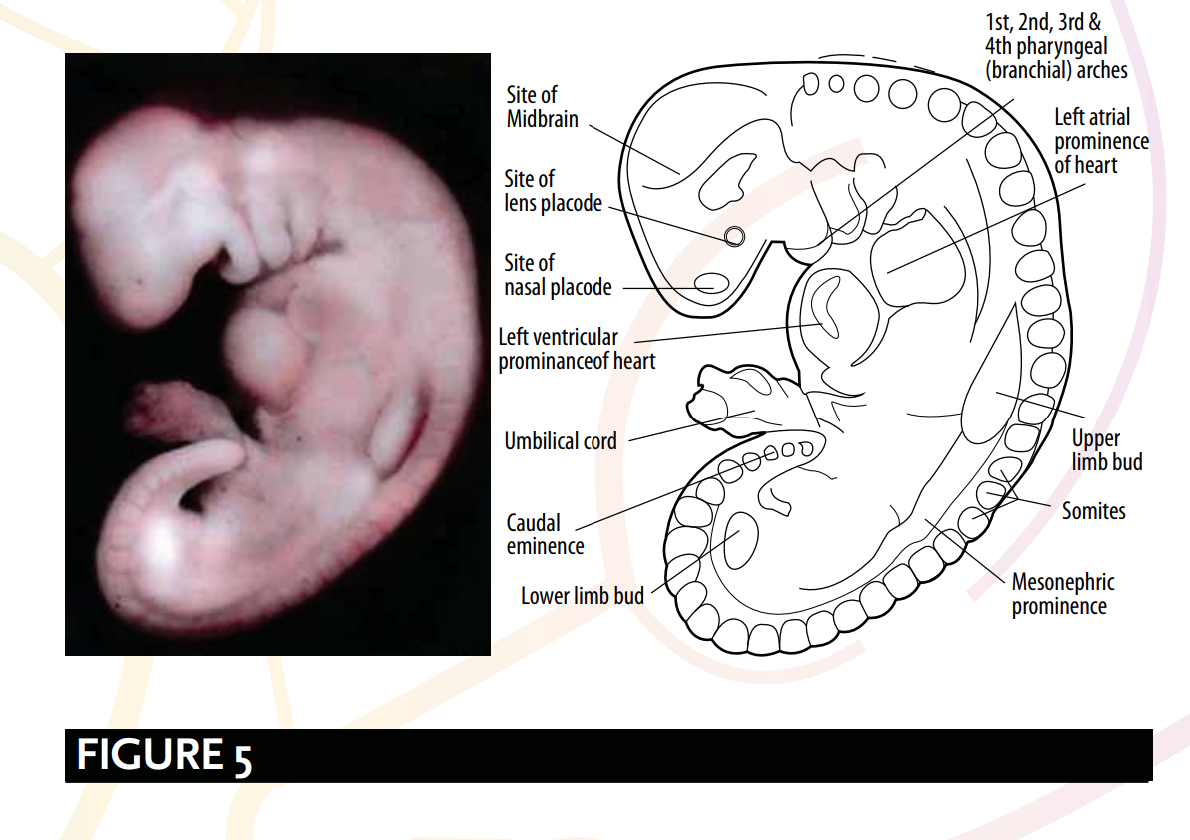
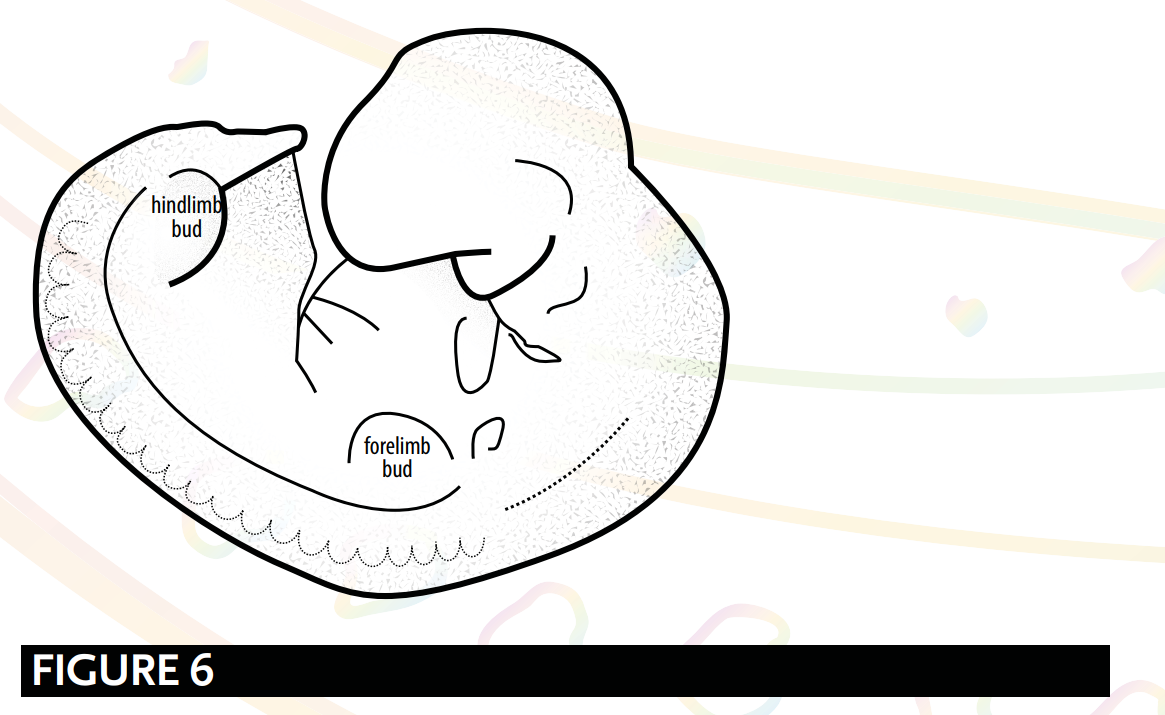
باتباع المنهج اللغوي في تفسير الكلمة، تتناول هذه المرحلة الأسبوع الرابع، حين تبدأ تكوّن الأُدَيْمات (Somites)، التي تشبه آثار الأسنان [انظر الشكلين 5 و6]. ويتوافق مظهر الجنين في هذه المرحلة، بسبب تكوّن الأُدَيْمات، مع معنيين: "أن يُمضغ" و"ما تركته الأسنان من آثار ظاهرة بعد مضغه". وفي شأن تكوّن الأُدَيْمات يكتب باري ميتشل ورام شارما:
Taking a lexical approach to the interpretation of the word, this stage deals with the 4th week, when somites, which resemble tooth-marks [see Figures 5 and 6], begin to develop. The appearance of the embryo at this stage, due to somite development, corresponds with the meanings: ‘to be chewed’ and ‘something that teeth have chewed and left visible marks on’. Concerning somite development, Barry Mitchell and Ram Sharma write:
في الأسبوع الرابع، تهاجر الخلايا الوسيطة المتوسطة المزيمية من الصُّدغيات نحو الحبل الظهري لتكوّن الاسكليروتومات [المزيم نسيج ضام جنيني فضفاض الترتيب في الجنين].67
In the fourth week, the medially placed mesenchymal cells of the somites migrate towards the notochord to form scelerotomes [mesenchyme is the loosely arranged embryonic connective tissue in the embryo].67
ومن معاني كلمة «مضغة» أيضاً: ما يشبه قطعة اللحم الصغيرة، وهذا وصفٌ دقيقٌ كذلك لشكل الجنين في هذه المرحلة. والمثير للاهتمام أن تفسير القرآن لـ«المضغة» بأنها «مخلّقة وغير مخلّقة» يمكن أن يشير إلى مرحلة تكوّن الأعضاء، التي تبدأ فيها جميع الأعضاء الرئيسية بالتكوّن، لكنها لم تكتمل بعد.[68] وتقع هذه المرحلة كذلك في حدود الأسبوع الرابع تقريباً.
Another meaning for the word mudghah includes something looking like a morsel of flesh. This too is an accurate description of the embryo's appearance at this stage. Interestingly, the qur’anic explanation of mudghah as being “formed and unformed”, can refer to the organogenetic period, during which all the main organs have begun to develop, but are not yet fully formed.68 This period also occurs at around the 4th week
مادّہ جو چبایا گیا ہو
A CHEWED SUBSTANCE
يُوجِّه النقّاد اعتراضًا مفاده أنّ المضغة أو القطعة اللحمية لا تشبه الجنين في أي مرحلة من المراحل التي يصفها علم الأجنة الحديث. وللرد على هذا الاعتراض، لا بد من توضيح ما يُقصد بـ«القطعة اللحمية الممضوغة». فهي تشمل لا المضغ المتكرر فحسب، بل ما يُمضغ مرةً واحدة كذلك. وهذا يحفظ معنى كلمة «المضغة»، إذ إن آثار العضّ تشبه قطعةً من اللحم قد مُضغت مرةً واحدة. ويتجلّى ذلك في معناها الآخر: «ما أثّرت فيه الأسنان مضغًا وتركت عليه علامات ظاهرة».
An argument raised by critics concerning the mudghah stage is that a chewed piece of meat or a lump of flesh does not resemble the embryo at any stage described by modern embryology. In responding to this, it is necessary to clarify what constitutes a ‘chewed piece of flesh’. It includes, not just mastication, but also something being chewed just the once. This maintains the meaning of the word mudghah as the bite marks do resemble a piece of meat chewed once. This is highlighted by its other meaning: ‘something that teeth have chewed and left visible marks on’.
الملخص
SUMMARY
المُضغة
The `mudghah stage:
تَكَوُّنُ الْمُضَغِ (الصُّيُوْبِ) فِي الْجَنِيْنِ يُعْطِيْهِ مَظْهَرَ مَادَّةٍ مَمْضُوْغَةٍ، فَيَبْدُو كَقِطْعَةٍ مِنَ اللَّحْمِ الْمُمْضُوْغِ، وَهُوَ وَصْفٌ دَقِيْقٌ لِمَظْهَرِ الْجَنِيْنِ فِي هَذِهِ الْمَرْحَلَةِ.
The development of somites giving the embryo the appearance of a chewed substance. What looks like a morsel of flesh - an accurate description of embryo's appearance at this stage.
ويصف أيضاً المرحلة العضوية التكوينية (تكوّن الأعضاء، ولم تكتمل بعد).
It also describes the organogenetic period (the development of organs, not yet fully formed).
كما جرت العادة، حاول البعض مقارنة المصطلح القرآني «المُضغة» بكتابات جالينوس لتدعيم القول بأن النبي محمداً ﷺ اقتبس من الكتابات اليونانية في نمو الإنسان. غير أنه عند تحليل كتابات جالينوس، ومقابلتها بالمعاني المتعددة والواسعة لكلمة «المُضغة»، يتبين فرق واضح ومميز. يقول جالينوس:
As ever, there have been attempts to compare the qur’anic term mudghah with Galen’s work to substantiate the view that the Prophet Muhammad ﷺ plagiarised from Greek writings on human development. However, upon analysing Galen’s writings, bringing it in contrast to the various and extensive meanings of the word mudghah, a pointed difference is made distinct. Galen states:
تأتي المرحلة الثالثة بعد ذلك، حين يكون، كما قيل، من الممكن رؤية الأجزاء الحاكمة الثلاثة بوضوح، ونوعٍ من الخطوط العامة، أو الظل، إن صح التعبير، لجميع الأجزاء الأخرى. فسترى تشكّل الأجزاء الحاكمة الثلاثة بوضوح أكبر، وتشكّل أجزاء المعدة بصورة أخفى، وأخفى من ذلك كثيراً تشكّل الأطراف. ثم تتكوّن بعد ذلك «الفروع الصغيرة»، كما عبّر عنها أبقراط، مشيراً بهذا المصطلح إلى شبهها بالأغصان.69
The third period follows on this, when, as was said, it is possible to see the three ruling parts clearly and a kind of outline, a silhouette, as it were, of all the other parts. You will see the conformation of the three ruling parts more clearly, that of the parts of the stomach more dimly, and much more still, that of the limbs. Later on they form ‘twigs’, as Hippocrates expressed it, indicating by the term their similarity to branches.69
كما تبيّن سابقًا، يذكر القرآن الكريم «المُضغة» بوصفها شيئًا يشبه الممضوغ وقطعةً صغيرةً من لحم. وفي المقابل، يتحدث جالينوس عن «تشكيل» «الأجزاء الحاكمة الثلاثة»، و«الأشباح»، و«الأغصان»، وهو على الأرجح إشارة إلى تكوّن عظام الأطراف. ويصف هذه الأجزاء الحاكمة الثلاثة بأنها أظهر من المعدة والأطراف. غير أن القرآن الكريم لا يذكر شيئًا من ذلك، وإنما يذكر تكوّن عظام الأطراف في المرحلة التالية. لذلك فإن القول بأن النبي محمدًا ﷺ قد نقل عن كتب جالينوس قولٌ بعيدٌ عن المعقول وغير عملي، إذ إن القرآن الكريم لا يتضمن أيًّا من الأوصاف التي ذكرها جالينوس في هذه المرحلة.
As explored, the Qur’an mentions mudghah as a chewed-like substance and a small piece of flesh. In contrast, Galen discusses the “conformation” of “the three ruling parts”, “silhouettes” and “twigs”, which is most likely in reference to limb bone formation. He details these three ruling parts as being more visible than the stomach and the limbs. However, the Qur’an makes no mention of this, and its mention of the limb bone formation comes at the next stage. It is both implausible and impractical, therefore, to suggest the Prophet Muhammad ﷺ copied the works of Galen as the Qur’an does not include any of the descriptions provided by Galen at this stage