6. العظام
6. Bones
فَخَلَقْنَا الْمُضْغَةَ عِظَامًا
and We made that lump into bones
من مرحلة المضغة تُخلق العظام. وهذه هي المرحلة التالية. وكلمة العظام في اللغة العربية تعني العظم، وتُطلق خصوصًا على عظام اليدين والرجلين، أو عظام الذراعين والساقين من الحيوان، التي عليها اللحم.70
From the mudghah stage, `idhaam are created. This is the next stage. The word `idhaam in the Arabic language means bone, and is specifically applied to the bones of the hands and feet, or of the arms and legs of an animal, upon which is the flesh.70
التفسير العلمي
SCIENTIFIC INTERPRETATION
مرحلة الإدغام تتعلق بتطور الهيكل المحوري والأطراف، وتحدث حوالي الأسبوع الخامس. يشرح باري ميتشل ورام شارما:
The `idhaam stage pertains to the development of the axial and limb skeleton, occuring at around the 5th week. Barry Mitchell and Ram Sharma explain:
تختلف منشأ الخلايا الوسيطة المكوِّنة للأنسجة الهيكلية باختلاف مناطق الجسم. فالخلايا الوسيطة التي تكوِّن الهيكل المحوري تنشأ من الصفائح الجسدية المتوسطة (الصُّوميتات)، بينما تُشتَق عظام الهيكل الطرفي من النسيج الوسيط الجداري (السوماتوبلورِيك) للمتوسط الصفائحي الجانبي. وبعد وصول الخلايا الوسيطة إلى موضعها، تتكثف وتشكِّل نماذج للعظام. ويخضع تمايزها اللاحق إلى الخلايا الغضروفية أو الخلايا العظمية لتحكُّمٍ جيني.71.
The origin of mesenchymal cells forming the skeletal tissues varies in different regions of the body. Mesenchymal cells forming the axial skeleton arise from the mesodermal somites, whereas the bones of the appendicular skeleton are derived from the somatopleuric mesenchyme of the lateral plate mesoderm. After reaching their destination the mesenchymal cells condense and form models of bones. The subsequent differentiation of mesenchymal cells into chondroblasts or osteoblasts is genetically controlled.71.
ﻭﺍﻟﻌﻈﺎﻡ ﻓﻲ ﺍﻹﺩﺍﻣﺔ ﺗﻌﻨﻲ "ﻋﻈﺎﻡ ﺍﻷﻃﺮﺍﻑ"، ﻭﻟﻬﺬﺍ ﻳﻤﻜﻦ ﺃﻥ ﺗﺸﻴﺮ ﺇﻟﻰ ﺗﻜﻮّﻥ ﺑﺮﺍﻋﻢ ﺍﻷﻃﺮﺍﻑ ﺍﻟﺘﻲ ﺗﻨﺸﺄ ﻋﻨﻬﺎ ﺍﻷﻃﺮﺍﻑ ﻭﺍﻟﻬﻴﻜﻞ ﺍﻟﻌﻈﻤﻲ ﺍﻟﺰﺍﺋﺪ. ﻭﻳﻔﺼّﻞ ﺑﺎﺭﻱ ﻣﻴﺘﺸﻴﻞ ﻭﺭﺍﻡ ﺷﺎﺭﻣﺎ ﺗﻜﻮّﻥ ﺍﻷﻃﺮﺍﻑ ﻭﺍﻟﻬﻴﻜﻞ ﺍﻟﻌﻈﻤﻲ ﺍﻟﺰﺍﺋﺪ ﻓﻲ ﻫﺬﺍ ﺍﻟﺸﺄﻥ ﻗﺎﺋﻠﻴﻦ:
‘Limb bones’ is the specified meaning of the word `idhaam, and therefore can refer to the development of the limb buds which give rise to the development of the limbs and the appendicular skeleton. Barry Mitchell and Ram Sharma elaborate on the formation of the limb and appendicular skeleton:
يتكوّن الهيكل الطرفي من الأحزمة الطرفية وعظام الأطراف. وتنشأ عظام الهيكل الطرفي من تكثّفات الميزانكيم التي تتحول إلى نماذج غضروفية.72 [See Figure 7]
The appendicular skeleton consists of limb girdles and the bones of the limbs. The bones of the appendicular skeleton develop from mesenchymal condensations which become cartilaginous models.72 [See Figure 7]
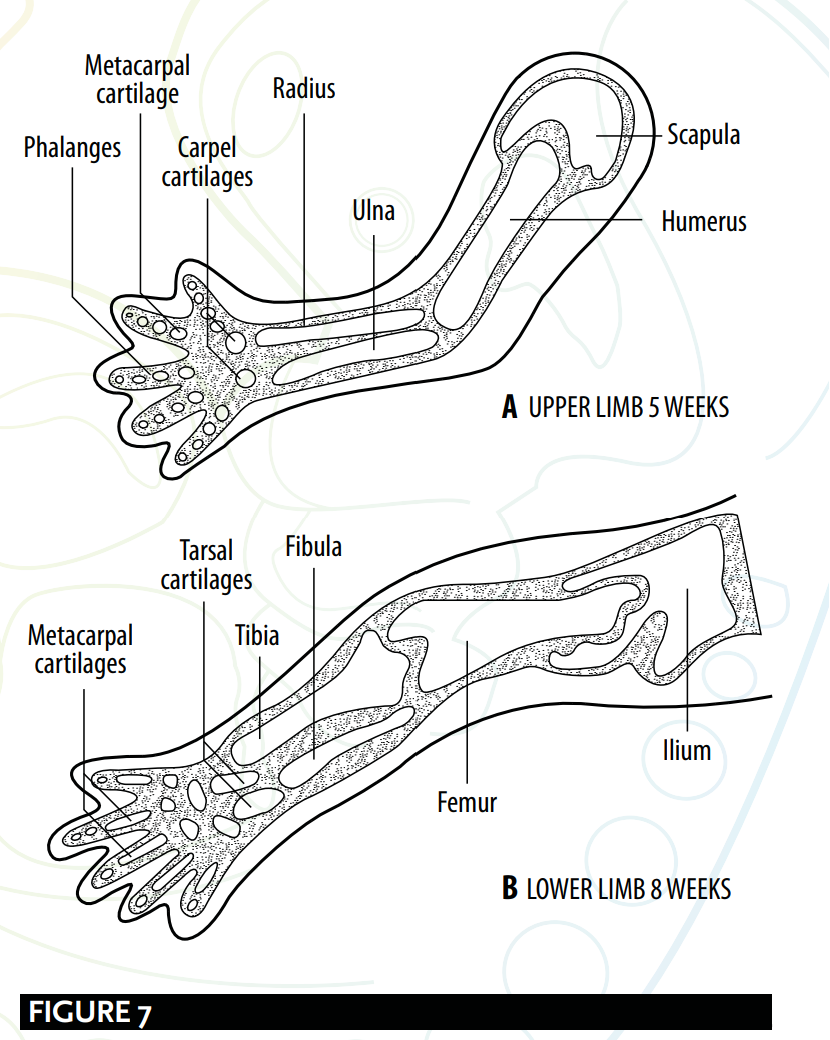
جون ألن وبيفرلي كرامر يعلّقان أيضاً على تكوّن عظام الأطراف.
John Allen and Beverley Kramer also comment on limb bone formation.
تكون الوسيطة الأولية للأطراف في البداية كتلةً متجانسة، ثم تحدث فيها لاحقًا تكثفات تتحول إلى غضروف، فتشكّل نماذج غضروفية للعظام المختلفة. ويحيط بكل نموذج غضروفي سمحاق غضروفي، وهو تكثف من الوسيطة الأولية. ثم يتكون مركز تعظّم (مركز التعظم الأولي) على كل نموذج غضروفي بنمو خلايا بانية للعظم (الأرومات العظمية) إليه من الوسيطة الأولية المحيطة. وتُسمّى الوسيطة المحيطة الآن بالسمحاق (المحيط بالعظم). وتنتج الأرومات العظمية العظم، الذي يُعطي العناصر الهيكلية للأطراف. 73.
The limb mesenchyme is at first a homogenous mass but soon condensations occur in it and these chondrify to form cartilaginous models of the various bones. Each cartilage model is surrounded by perichondrium which is a condensation of mesenchyme. An ossific centre (primary ossification centre) is formed upon each cartilage model by the ingrowth of osteobalsts (bone-forming cells) from the surrounding mesenchyme. The surrounding mesenchyme is now termed periosteum (surrounding the bone). Osteoblasts now produce bone which give rise to the skeletal elements of the limbs. 73.
هناك أوجه شبه واضحة بين مرحلة «الإضغام» في القرآن الكريم وبين ما تقرره علم الأجنة الحديث، أي تكوّن الهيكل المحوري والأطراف والهيكل الزائد عن الجذع (الهيكل الطرفي).
There are clear parallels between the qur'anic `idhaam stage and the view modern embryology takes i.e. the development of the axial, limb and appendicular skeleton.
الملخص
SUMMARY
مرحلة الإدغام: تكوّن الهيكل المحوري والهيكل الطرفي والهيكل الزائد (الملحق).
The `idhaam stage: The formation of the axial, limb and appendicular skeleton.
من علقةٍ إلى عظام
FROM A LUMP TO BONES
ومن الفهم الخاطئ الشائع، الذي يقع فيه عادةً غير المتخصصين في العربية، أن يُترجم هذا الآية ترجمةً حرفية هكذا: «وجعلنا تلك المضغةَ عظامًا»، ومن ثم يستنتجون أن الآية غير علمية، إذ لا يمكن أن تتحول قطعة لحم إلى كتلة من العظام. غير أن هذا مبني على فهمٍ ساذج لقواعد النحو العربي وبلاغة القرآن. فالآية، من الناحية النحوية، تحتمل معاني: «وجعلنا من المضغة عظامًا»، أو «جعلنا من/في/بالمضغة عظامًا».
A common misconception, usually made by non-Arabists, is that this verse can be literally translated as “and We made that lump into bones”. From this, they conclude that this verse is unscientific because a lump of flesh cannot turn into a mass of bones. However, this is based upon a crude understanding of Arabic grammar and the Qur’an's eloquence. This verse, from a grammatical perspective, has the meanings of: “and We made of/from/out of the lump bones”.
لِهذا تَرجَمَ يوسف علي هذه الآية بأنّ «ثمّ جعلنا من تلك المُضغة عظاماً»٧٤، وترجمها شاكر بأنّ «ثمّ جعلنا في المُضغة عظاماً»، أمّا آرثر جون آربري، في ترجمته للقرآن التي ما زال الأكاديميون يستعملونها إلى اليوم، فترجمها بأنّ «ثمّ خلقنا من النسيج عظاماً».75
This is why Yusuf Ali translates this verse as “then we made out of that lump bones”74; Shakir translates it as “then We made (in) the lump of flesh bones”; and A J Arberry, in his translation of the Qur’an which is still used by academics today, translates this verse as “then We created of the tissue bones”.75
NOT REAL BONES
NOT REAL BONES
ومن الآراء الأخرى التي يطرحها المعلّقون أنه لا توجد في هذه المرحلة عظام حقيقية. ويُقال إن العظام الظاهرة ليست سوى غضاريف، لأن التعظّم لم يكتمل بعد، وبناءً على ذلك يكون القرآن غير دقيق. وهذا الاعتراض، وإن كان له وجه، إلا أنه في غير موضعه. فكلمة «عظام» (العِظام) تشمل الصورة الغضروفية للعظام عندما يُركَّب الهيكل العظمي. وفضلاً عن ذلك، تبدأ عملية التعظّم بحلول الأسبوع الثامن،[76] وتستمر بعد الولادة، ولا تكتمل تماماً إلا في نحو سنّ البلوغ. ويوضح باري ميتشل وَرام شارما ذلك قائلين:
Another proposition from commentators is that at this stage there are no real bones. It is argued that the apparent bones are mere cartilage as ossification is incomplete and, as such, the Qur’an must therefore be inaccurate. Although a valid contention, it is misplaced. `idhaam encompasses the cartilaginous form of the bones as the skeletal framework is put in place. Additionally, the process of ossification begins by the 8th week,76 continuing on after birth, with the eventual completion of the ossification process at around puberty. Barry Mitchell and Ram Sharma explain:
تظهر مراكز التعظم في عظام الأطراف لأول مرة خلال الأسبوع الثامن. وبحلول الأسبوع الثاني عشر، تكون أجسام عظام الأطراف قد تعظّمت، إلا أن العظام الرسغية في المعصم تبقى غضروفية حتى بعد الولادة. ويبدأ تعظّم أكبر العظام الثلاثة في مفصل الكاحل نحو الأسبوع السادس عشر، أما بعض العظام الرسغية الصغيرة في القدم فلا تتعظم إلا بعد الولادة بثلاث سنوات.77.
The centres of ossification first appear in the limb bones during the eighth week. By the twelfth week, the shafts of the limb bones are ossified, though the carpal bones of the wrist remain cartilaginous until after birth. The ossification of the three largest tarsal bones of the ankle begins about 16 weeks, but some of the smaller tarsal bones do not ossify until 3 years after birth.77.
من هذا المنظور، يكون من العبث الطبي أن يُفترض أن المواليد أو صغار المراهقين لا عظام لهم لمجرد أنهم يحتاجون إلى التعظُّم، لا سيما وأن التعظُّم يكتمل عند نهاية الطفرة النموّية في البلوغ. ومع ذلك، لو كان الأمر كذلك، وأخذنا هذه المرحلة على أنها "بلا عظام" بمعنى ما، فإن دلالات كلمة "الإدغام" تتسع لتفسير شامل، لأن "النماذج الغضروفية للعظام المختلفة" داخلة في معناها.
From this perspective, it would be a medical absurdity to assume newborns or young teenagers do not have bones simply because they require ossification, especially since ossification completes at the end of the growth-spurt of puberty. Nevertheless if this were the case, and we are to take this stage as being ‘boneless’, as it were, the derisions of the word `idhaam allow for an all encompassing interpretation because the “cartilaginous models of the various bones”78 is included in its meaning.