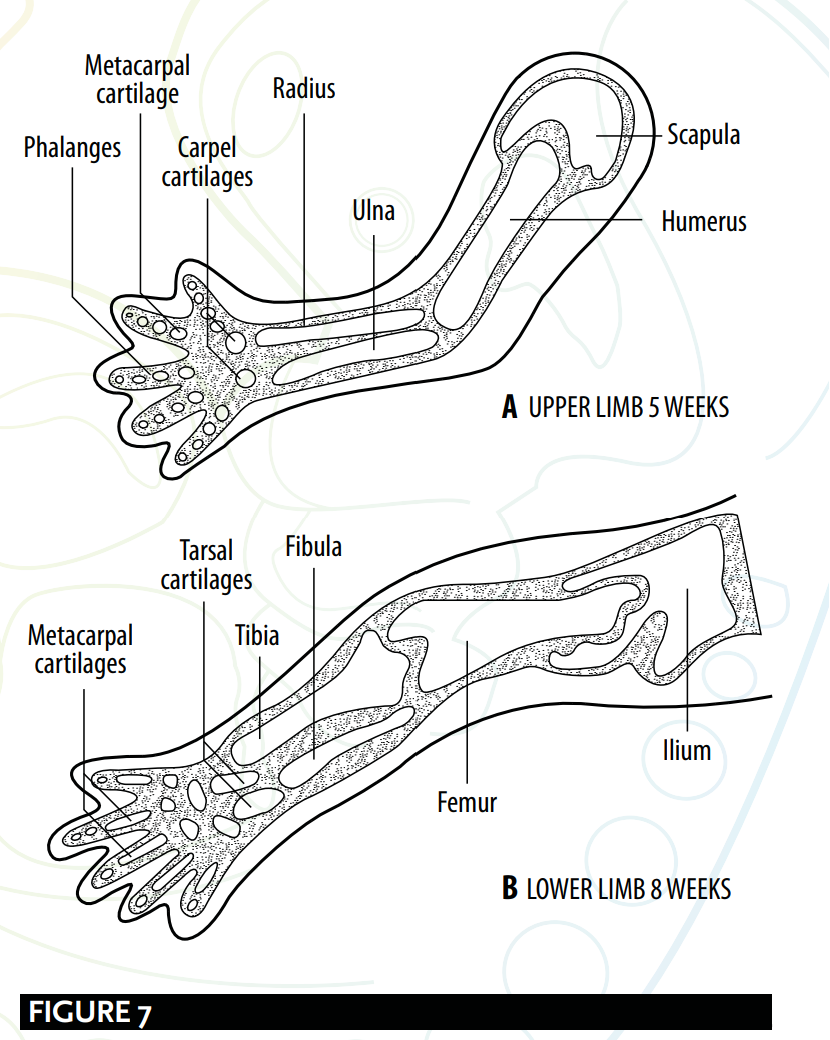
অন্য কিছু ভাষ্যকারের মত হলো, এই পর্যায়ে প্রকৃত হাড় থাকে না। তাদের যুক্তি, দৃশ্যমান হাড়গুলো আসলে নিছক তরুণাস্থি (cartilage), কারণ অস্থিভবন (ossification) তখনও অসম্পূর্ণ থাকে; তাই কুরআন নির্ভুল নয়। যদিও এই দাবি যুক্তিসঙ্গত, তবু তা ভুল জায়গায় প্রয়োগ করা হয়েছে। ইযাম (`idhaam) কঙ্কালের কাঠামো গঠিত হওয়ার সময় হাড়ের তরুণাস্থিময় রূপকেও অন্তর্ভুক্ত করে। এ ছাড়া অস্থিভবন প্রক্রিয়া ৮ম সপ্তাহের মধ্যেই শুরু হয়ে যায়[76], জন্মের পরেও তা চলতে থাকে, এবং বয়ঃসন্ধির কাছাকাছি সময়ে অস্থিভবন প্রক্রিয়া সম্পূর্ণ হয়। ব্যারি মিচেল ও রাম শর্মা এ বিষয়ে ব্যাখ্যা দিয়েছেন:
Another proposition from commentators is that at this stage there are no real bones. It is argued that the apparent bones are mere cartilage as ossification is incomplete and, as such, the Qur’an must therefore be inaccurate. Although a valid contention, it is misplaced. `idhaam encompasses the cartilaginous form of the bones as the skeletal framework is put in place. Additionally, the process of ossification begins by the 8th week,76 continuing on after birth, with the eventual completion of the ossification process at around puberty. Barry Mitchell and Ram Sharma explain:
অষ্টম সপ্তাহে হাড়ের অস্থিভবনের কেন্দ্রগুলো প্রথম অঙ্গের হাড়ে দেখা যায়। দ্বাদশ সপ্তাহের মধ্যে অঙ্গের হাড়গুলোর দণ্ডাংশ অস্থিভূত হয়ে যায়, যদিও কব্জির কার্পাল হাড়গুলো জন্মের পর পর্যন্ত তরুণাস্থিময় থাকে। গোড়ালির তিনটি সবচেয়ে বড় টারসাল হাড়ের অস্থিভবন প্রায় ১৬ সপ্তাহে শুরু হয়, তবে কিছু ছোট টারসাল হাড় জন্মের ৩ বছর পর পর্যন্ত অস্থিভূত হয় না।৭৭
The centres of ossification first appear in the limb bones during the eighth week. By the twelfth week, the shafts of the limb bones are ossified, though the carpal bones of the wrist remain cartilaginous until after birth. The ossification of the three largest tarsal bones of the ankle begins about 16 weeks, but some of the smaller tarsal bones do not ossify until 3 years after birth.77.
এই দৃষ্টিকোণ থেকে, নবজাতক বা অল্পবয়সী কিশোরদের হাড় নেই বলে ধরে নেওয়া চিকিৎসাবিজ্ঞানের দিক থেকে একটি হাস্যকর কথা হবে, বিশেষত যেহেতু অস্থিভবন (ossification) বয়ঃসন্ধির দ্রুত বৃদ্ধির শেষে সম্পূর্ণ হয়। তবুও যদি ধরেও নেওয়া হয় যে এই পর্যায়টি একরকম 'হাড়বিহীন' অবস্থা, তাহলে 'ইযাম' (idhaam) শব্দের অর্থের ব্যাপকতা এমন একটি সর্বব্যাপী ব্যাখ্যার সুযোগ দেয়, কারণ এর অর্থের মধ্যে "বিভিন্ন হাড়ের তরুণাস্থিময় প্রতিরূপ"৭৮ও অন্তর্ভুক্ত।
From this perspective, it would be a medical absurdity to assume newborns or young teenagers do not have bones simply because they require ossification, especially since ossification completes at the end of the growth-spurt of puberty. Nevertheless if this were the case, and we are to take this stage as being ‘boneless’, as it were, the derisions of the word `idhaam allow for an all encompassing interpretation because the “cartilaginous models of the various bones”78 is included in its meaning.