۵. یک پاره گوشت
5. A Lump Of Flesh
سپس آن نطفه را به صورت قطعهٔ گوشتی درآوردیم
and then We made that form into a lump of flesh
المرحلة التالية من مراحل تطور الإنسان التي حددها القرآن الكريم هي المُضغة. ويعني هذا المصطلح المَضغ، والعلك، والمضغ، وأن يُمضغ، وقطعة صغيرة من اللحم. كما يصف الجنين بعد أن ينتقل إلى مرحلة أخرى فيصير لحمًا. ومن معانيه أيضًا ما مضغته الأسنان وتركت فيه آثارًا ظاهرة، والآثار التي تتغير أثناء المضغ بسبب تكرار الفعل. وقد فُصّلت مرحلة المُضغة في موضع آخر من القرآن الكريم:
The next stage of human development defined in the Qur’an is mudghah. This term means to chew, mastication, chewing, to be chewed, and a small piece of meat.61 62 It also describes the embryo after it passes to another stage and becomes flesh.63 Other meanings include something that teeth have chewed and left visible marks on; and marks that change in the process of chewing due to the repetitive act.64 The mudghah stage is elaborated on further, elsewhere in the Qur'an:
سپس از یک تکه گوشت (مُضغة)، شکلیافته و شکلنایافته. 65
then from a fleshy lump (mudghah), formed and unformed. 65
کلمهٔ عربی «مُخَلَّقَة» که در اینجا برای «شکلگرفته» به کار رفته، میتواند به معنای «شکلدادهشده» یا «قالبریزیشده» نیز باشد.66
The Arabic word used here for ‘formed’ is mukhallqah which can also mean ‘shaped’ or ‘moulded’.66
تفسیر علمی
SCIENTIFIC INTERPRETATION
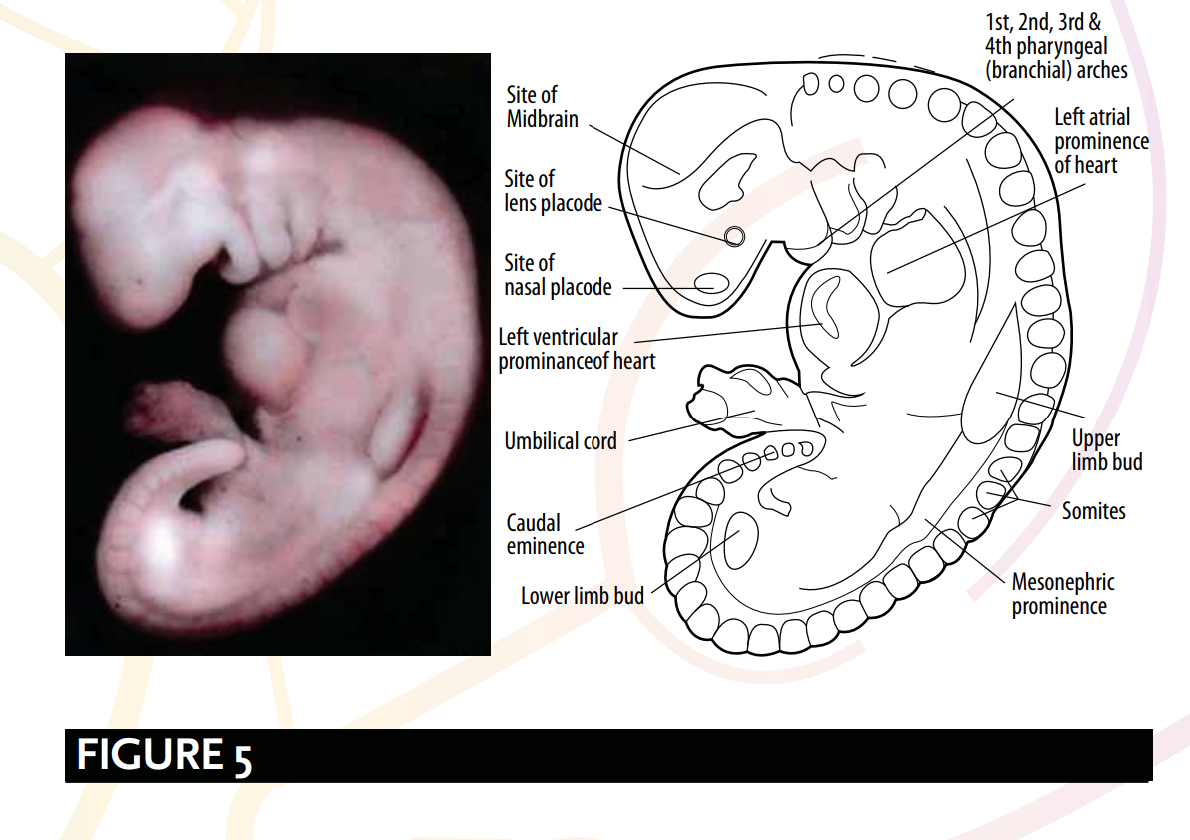
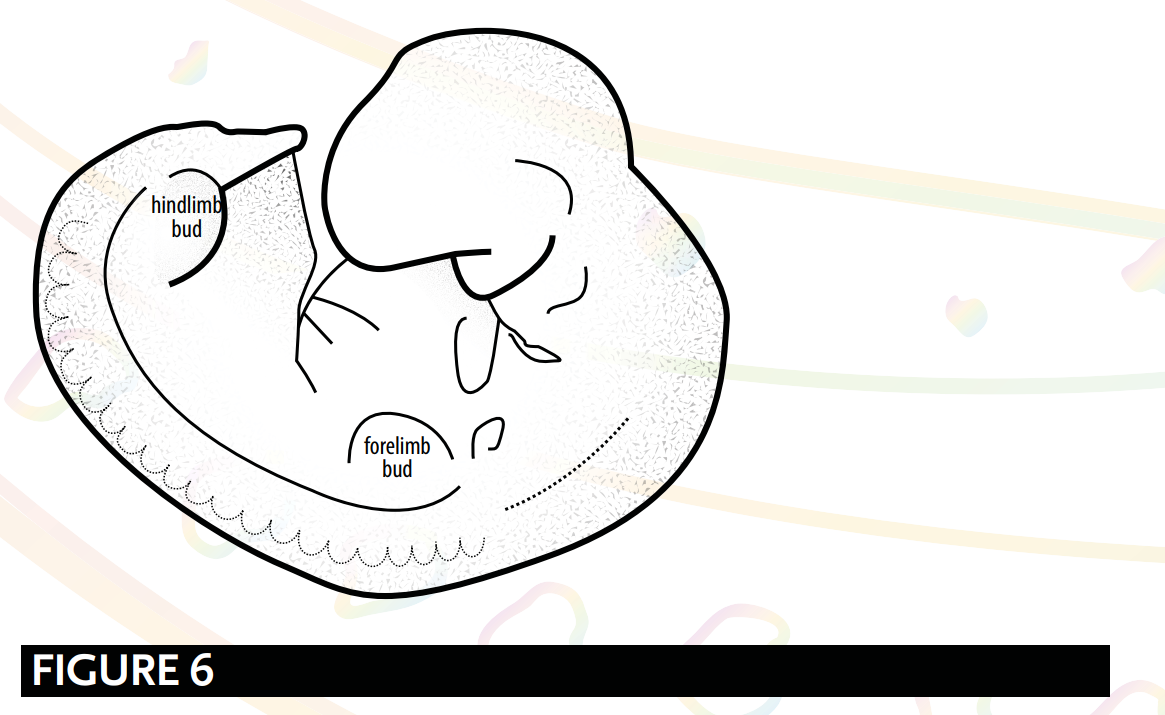
از دیدگاه واژهشناختی، این مرحله به هفته چهارم مربوط میشود که در آن سومیتها، که شبیه به جای دندان روی چیزی هستند [نگاه کنید به شکلهای ۵ و ۶]، شروع به شکلگیری میکنند. ظاهر جنین در این مرحله، به دلیل رشد سومیتها، با معانی «جویده شدن» و «چیزی که دندانها آن را جویده و نشانههای قابل مشاهدهای بر آن گذاشتهاند» مطابقت دارد. دربارهٔ رشد سومیتها، بری میچل و رام شارما چنین مینویسند:
Taking a lexical approach to the interpretation of the word, this stage deals with the 4th week, when somites, which resemble tooth-marks [see Figures 5 and 6], begin to develop. The appearance of the embryo at this stage, due to somite development, corresponds with the meanings: ‘to be chewed’ and ‘something that teeth have chewed and left visible marks on’. Concerning somite development, Barry Mitchell and Ram Sharma write:
در هفته چهارم، سلولهای مزانشیمی میانی سومیتها به سمت notochord مهاجرت میکنند تا اسکلروتومها را تشکیل دهند [مزانشیم بافت همبند جنینی با آرایش شل است که در جنین وجود دارد].67
In the fourth week, the medially placed mesenchymal cells of the somites migrate towards the notochord to form scelerotomes [mesenchyme is the loosely arranged embryonic connective tissue in the embryo].67
معنای دیگری که برای واژه مُضغة ذکر شده، چیزی است شبیه یک تکه گوشت جویدهشده. این نیز توصیف دقیقی از ظاهر جنین در این مرحله است. جالب آنکه تفسیر قرآنی مُضغة بهعنوان «مُخلّقة و غیر مُخلّقة» میتواند به دوره اندامزایی اشاره داشته باشد، دورانی که در آن همه اندامهای اصلی آغاز به رشد کردهاند، اما هنوز کاملاً شکل نگرفتهاند.[68] این دوره نیز حدود هفته چهارم رخ میدهد.
Another meaning for the word mudghah includes something looking like a morsel of flesh. This too is an accurate description of the embryo's appearance at this stage. Interestingly, the qur’anic explanation of mudghah as being “formed and unformed”, can refer to the organogenetic period, during which all the main organs have begun to develop, but are not yet fully formed.68 This period also occurs at around the 4th week
مادهی جویدهشده
A CHEWED SUBSTANCE
یکی از اشکالاتی که منتقدان درباره مرحلهٔ «مُضغه» مطرح میکنند این است که قطعهٔ جویدهشدهای از گوشت یا تودهای از گوشت، به هیچیک از مراحلی که علم جنینشناسی مدرن توصیف کرده است شباهتی ندارد. در پاسخ به این اشکال، لازم است روشن شود که «قطعهٔ جویدهشدهٔ گوشت» چه چیزی را در بر میگیرد. این عبارت نهتنها جویدن مکرر، بلکه چیزی را هم که فقط یک بار جویده شده باشد در بر میگیرد. این معنا، معنای واژهٔ مُضغه را حفظ میکند، زیرا آثار دندانها بر آن شبیه قطعه گوشتی است که یک بار جویده شده باشد. این معنا با معنای دیگر این واژه نیز روشن میشود: «چیزی که دندانها آن را جویده و آثار قابلرؤیتی بر آن بر جا گذاشتهاند».
An argument raised by critics concerning the mudghah stage is that a chewed piece of meat or a lump of flesh does not resemble the embryo at any stage described by modern embryology. In responding to this, it is necessary to clarify what constitutes a ‘chewed piece of flesh’. It includes, not just mastication, but also something being chewed just the once. This maintains the meaning of the word mudghah as the bite marks do resemble a piece of meat chewed once. This is highlighted by its other meaning: ‘something that teeth have chewed and left visible marks on’.
خلاصه
SUMMARY
مرحلهٔ «مُضغَه»
The `mudghah stage:
تشکیل سومیتها که به جنین ظاهری شبیه به یک ماده جویدهشده میبخشد. آنچه شبیه به یک تکه گوشت است - توصیفی دقیق از ظاهر جنین در این مرحله.
The development of somites giving the embryo the appearance of a chewed substance. What looks like a morsel of flesh - an accurate description of embryo's appearance at this stage.
این متن همچنین دورهٔ اندامزایی (یعنی دورهٔ تشکیل اندامها که هنوز کامل شکل نگرفتهاند) را توصیف میکند.
It also describes the organogenetic period (the development of organs, not yet fully formed).
همانند همیشه، تلاشهایی صورت گرفته است تا اصطلاح قرآنی «مضغه» با آثار جالینوس مقایسه شود تا این دیدگاه تقویت شود که پیامبر محمد ﷺ از نوشتههای یونانی درباره رشد انسان رونویسی کرده است. با این حال، با بررسی نوشتههای جالینوس و مقابله آن با معانی گوناگون و گسترده واژه «مضغه»، تفاوتی آشکار و برجسته میشود. جالینوس میگوید:
As ever, there have been attempts to compare the qur’anic term mudghah with Galen’s work to substantiate the view that the Prophet Muhammad ﷺ plagiarised from Greek writings on human development. However, upon analysing Galen’s writings, bringing it in contrast to the various and extensive meanings of the word mudghah, a pointed difference is made distinct. Galen states:
دورهٔ سوم به دنبال این مرحله میآید؛ مرحلهای که همانطور که گفته شد، در آن میتوان بهروشنی سه بخش حاکم را دید و نوعی طرح کلی، بهتعبیری یک سایهروشن، از تمامی بخشهای دیگر. در این مرحله شکلبندی سه بخش حاکم را روشنتر خواهید دید، شکل بخشهای معده را کمرنگتر، و شکل اندامها را حتی بسیار کمرنگتر. بعدها این اعضا «شاخههایی» را پدید میآورند، همانگونه که بُقراط بیان کرده است؛ او با این واژه به شباهت آنها با شاخههای درخت اشاره میکند.69
The third period follows on this, when, as was said, it is possible to see the three ruling parts clearly and a kind of outline, a silhouette, as it were, of all the other parts. You will see the conformation of the three ruling parts more clearly, that of the parts of the stomach more dimly, and much more still, that of the limbs. Later on they form ‘twigs’, as Hippocrates expressed it, indicating by the term their similarity to branches.69
همانطور که بررسی شد، قرآن «مضغه» را بهعنوان مادهای شبیه به جویدهشده و قطعهای کوچک از گوشت ذکر میکند. در مقابل، جالینوس از «شکلگیری» «سه بخش فرمانروا»، «سایهها» و «شاخهها» سخن میگوید که به احتمال زیاد اشاره به شکلگیری استخوانهای اندام دارد. او این سه بخش فرمانروا را آشکارتر از معده و اندامها توصیف میکند. با این حال، قرآن هیچ اشارهای به این موضوع ندارد و ذکر شکلگیری استخوانهای اندام در قرآن در مرحله بعدی آمده است. بنابراین، این ادعا که پیامبر محمد ﷺ آثار جالینوس را رونویسی کرده باشد، هم نامعقول است و هم غیرعملی، زیرا قرآن در این مرحله هیچیک از توصیفات جالینوس را دربر ندارد.
As explored, the Qur’an mentions mudghah as a chewed-like substance and a small piece of flesh. In contrast, Galen discusses the “conformation” of “the three ruling parts”, “silhouettes” and “twigs”, which is most likely in reference to limb bone formation. He details these three ruling parts as being more visible than the stomach and the limbs. However, the Qur’an makes no mention of this, and its mention of the limb bone formation comes at the next stage. It is both implausible and impractical, therefore, to suggest the Prophet Muhammad ﷺ copied the works of Galen as the Qur’an does not include any of the descriptions provided by Galen at this stage