۶. استخوانها
6. Bones
و سپس آن پارهگوشت را به استخوانها تبدیل کردیم
and We made that lump into bones
از مرحلهٔ مُضغه، استخوانها (عِظام) آفریده میشوند. این مرحلهٔ بعدی است. واژهٔ عِظام در زبان عربی به معنای استخوان است و بهطور خاص بر استخوانهای دست و پا، یا بازوها و پاهای یک حیوان اطلاق میشود که گوشت بر روی آنها قرار دارد.70
From the mudghah stage, `idhaam are created. This is the next stage. The word `idhaam in the Arabic language means bone, and is specifically applied to the bones of the hands and feet, or of the arms and legs of an animal, upon which is the flesh.70
تفسیر علمی
SCIENTIFIC INTERPRETATION
مرحلهٔ «ادغام» به رشد اسکلت محوری و اندامی مربوط است و تقریباً در هفتهٔ پنجم رخ میدهد. بری میچل و رام شارما توضیح میدهند:
The `idhaam stage pertains to the development of the axial and limb skeleton, occuring at around the 5th week. Barry Mitchell and Ram Sharma explain:
منشأ سلولهای مزانشیمی که بافتهای اسکلتی را میسازند در نواحی مختلف بدن متفاوت است. سلولهای مزانشیمی که اسکلت محوری را میسازند از سومیتهای مزodermal برمیخیزند، در حالی که استخوانهای اسکلت زائدهای از مزانشیم سوماتوپلوریک مزودرم صفحهای جانبی منشأ میگیرند. سلولهای مزانشیمی پس از رسیدن به مقصد خود متراکم میشوند و الگوهای استخوان را میسازند. تمایز بعدیِ سلولهای مزانشیمی به کندروبلاستها یا استئوبلاستها بهصورت ژنتیکی کنترل میشود.[71]
The origin of mesenchymal cells forming the skeletal tissues varies in different regions of the body. Mesenchymal cells forming the axial skeleton arise from the mesodermal somites, whereas the bones of the appendicular skeleton are derived from the somatopleuric mesenchyme of the lateral plate mesoderm. After reaching their destination the mesenchymal cells condense and form models of bones. The subsequent differentiation of mesenchymal cells into chondroblasts or osteoblasts is genetically controlled.71.
«عِظام» به معنای «استخوانهای اندام» است؛ و از این رو میتواند به رشد جوانههای اندام اشاره کند که منجر به شکلگیری اندامها و اسکلت زائدهای (استخوانبندی اندامها) میشود. بری میچل و رام شارما درباره شکلگیری اندام و اسکلت زائدهای توضیح میدهند:
‘Limb bones’ is the specified meaning of the word `idhaam, and therefore can refer to the development of the limb buds which give rise to the development of the limbs and the appendicular skeleton. Barry Mitchell and Ram Sharma elaborate on the formation of the limb and appendicular skeleton:
اسکلت اندامی (اپندیکولار) از کمربندهای اندام و استخوانهای اندامها تشکیل شده است. استخوانهای اسکلت اندامی از تراکمهای مزانشیمی ایجاد میشوند که به الگوهای غضروفی تبدیل میگردند.72 [See Figure 7]
The appendicular skeleton consists of limb girdles and the bones of the limbs. The bones of the appendicular skeleton develop from mesenchymal condensations which become cartilaginous models.72 [See Figure 7]
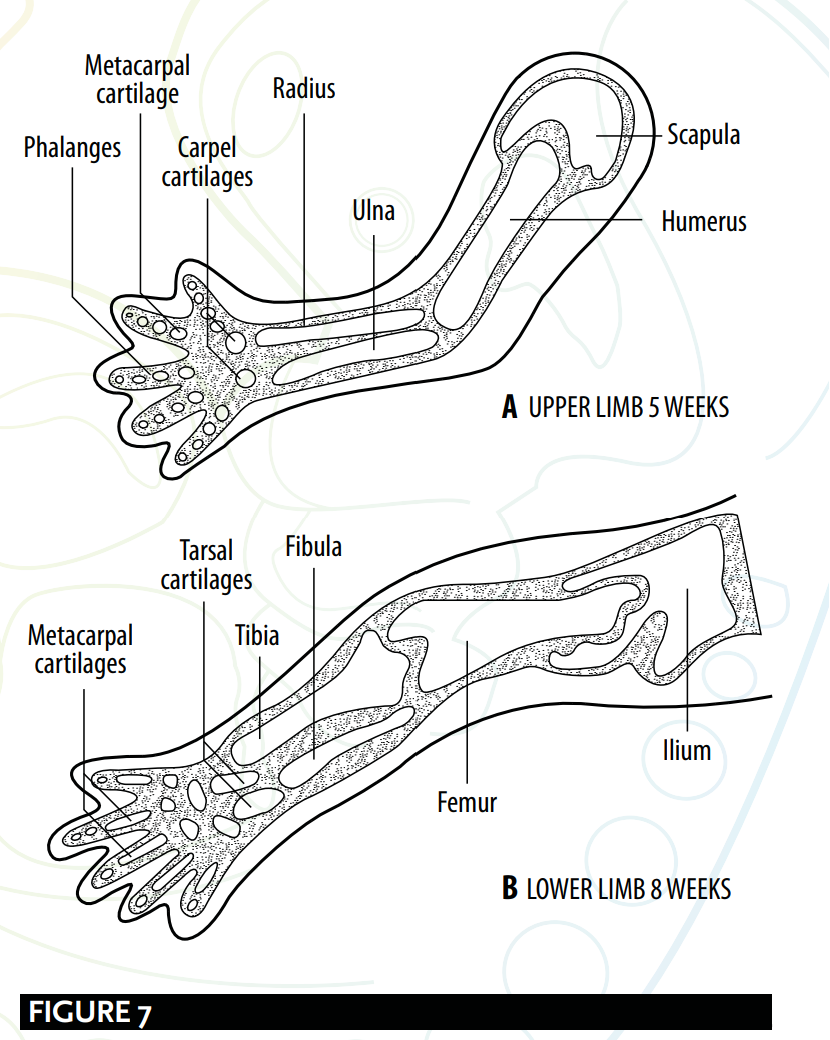
جان آلن و بورلی کرامر نیز درباره شکلگیری استخوانهای اندامها نظر دادهاند.
John Allen and Beverley Kramer also comment on limb bone formation.
مزانشیمِ اندام در ابتدا تودهای همگن است، اما بهزودی در آن تراکمهایی پدید میآید و این تراکمها غضروفی میشوند و الگوهای غضروفی استخوانهای گوناگون را میسازند. هر الگوی غضروفی با پریکندریوم احاطه میشود که خود تراکمی از مزانشیم است. با ورود استئوبلاستها (سلولهای استخوانساز) از مزانشیم اطراف، یک مرکز استخوانسازی (مرکز استخوانسازی اولیه) بر روی هر الگوی غضروفی شکل میگیرد. مزانشیم اطراف اکنون پریوستئوم (پوشش بیرونی استخوان) نامیده میشود. استئوبلاستها اکنون استخوان میسازند و این استخوانها عناصر اسکلتی اندامها را پدید میآورند. 73.
The limb mesenchyme is at first a homogenous mass but soon condensations occur in it and these chondrify to form cartilaginous models of the various bones. Each cartilage model is surrounded by perichondrium which is a condensation of mesenchyme. An ossific centre (primary ossification centre) is formed upon each cartilage model by the ingrowth of osteobalsts (bone-forming cells) from the surrounding mesenchyme. The surrounding mesenchyme is now termed periosteum (surrounding the bone). Osteoblasts now produce bone which give rise to the skeletal elements of the limbs. 73.
بین مرحلهٔ «العظام» در قرآن کریم و دیدگاهی که جنینشناسی مدرن دربارهی رشد اسکلت محوری، اسکلت اندامی و اسکلت زائد (آپendicular) دارد، شباهتهای روشنی وجود دارد.
There are clear parallels between the qur'anic `idhaam stage and the view modern embryology takes i.e. the development of the axial, limb and appendicular skeleton.
خلاصه
SUMMARY
مرحلهٔ «إدغام»: شکلگیری اسکلت محوری، اسکلت اندامی و اسکلت زائد.
The `idhaam stage: The formation of the axial, limb and appendicular skeleton.
از گِلپاره تا استخوان
FROM A LUMP TO BONES
یک سوءبرداشت رایج، که معمولاً از سوی غیرعربیدانان صورت میگیرد، این است که این آیه را میتوان بهصورت تحتاللفظی چنین ترجمه کرد: «و آن پارهگوشت را استخوانها گردانیدیم». از همینجا نتیجه میگیرند که این آیه غیرعلمی است، زیرا یک پارهگوشت نمیتواند به مجموعهای از استخوانها تبدیل شود. با این حال، این برداشت بر درکی سطحی از دستور زبان عربی و از بلاغت قرآن استوار است. این آیه از نظر دستوری میتواند چنین معنایی داشته باشد: «و از آن پارهگوشت استخوانها را پدید آوردیم»، یعنی «از/با/از درون» پارهگوشت، استخوانها ساخته شدند.
A common misconception, usually made by non-Arabists, is that this verse can be literally translated as “and We made that lump into bones”. From this, they conclude that this verse is unscientific because a lump of flesh cannot turn into a mass of bones. However, this is based upon a crude understanding of Arabic grammar and the Qur’an's eloquence. This verse, from a grammatical perspective, has the meanings of: “and We made of/from/out of the lump bones”.
بر همین اساس است که یوسف علی این آیه را چنین ترجمه کرده است: «سپس از آن پارهگوشت استخوانها را ساختیم»؛ شاکر آن را چنین ترجمه کرده است: «سپس ما در پارهگوشت استخوانها را ساختیم»؛ و آ. ج. آربری در ترجمهاش از قرآن که هنوز هم امروزه توسط پژوهشگران دانشگاهی به کار میرود، این آیه را چنین ترجمه کرده است: «سپس ما از بافت، استخوانها را آفریدیم».75
This is why Yusuf Ali translates this verse as “then we made out of that lump bones”74; Shakir translates it as “then We made (in) the lump of flesh bones”; and A J Arberry, in his translation of the Qur’an which is still used by academics today, translates this verse as “then We created of the tissue bones”.75
استخوانهای واقعی نیستند
NOT REAL BONES
یکی دیگر از ادعاهای مفسران این است که در این مرحله هیچ استخوان واقعی وجود ندارد. گفته میشود که استخوانهای ظاهری در واقع صرفاً غضروف هستند، زیرا استخوانیشدن ناقص است و بنابراین قرآن باید نادرست باشد. این ادعا هرچند قابل طرح است، اما نادرست بودن آن روشن است. واژه «عِظام» (ʿidhaam) شکل غضروفی استخوانها را نیز در بر میگیرد، زمانی که چارچوب اسکلتی برپا میشود. افزون بر این، فرایند استخوانیشدن از هفته هشتم آغاز میشود،[76] و پس از تولد ادامه مییابد و تکمیل نهایی آن تقریباً در زمان بلوغ انجام میگیرد. بری میچل و رام شارما توضیح میدهند:
Another proposition from commentators is that at this stage there are no real bones. It is argued that the apparent bones are mere cartilage as ossification is incomplete and, as such, the Qur’an must therefore be inaccurate. Although a valid contention, it is misplaced. `idhaam encompasses the cartilaginous form of the bones as the skeletal framework is put in place. Additionally, the process of ossification begins by the 8th week,76 continuing on after birth, with the eventual completion of the ossification process at around puberty. Barry Mitchell and Ram Sharma explain:
مراکز استخوانیشدن در استخوانهای اندامها در هفتهی هشتم ظاهر میشوند. تا هفتهی دوازدهم، تنهی استخوانهای اندامها استخوانی شدهاند، هرچند استخوانهای مچ دست (کارپال) تا پس از تولد هنوز غضروفی باقی میمانند. استخوانیشدن سه استخوان بزرگتر تارسال مچ پا حدود هفتهی شانزدهم آغاز میشود، اما برخی از استخوانهای تارسال کوچکتر تا ۳ سال پس از تولد استخوانی نمیشوند.۷۷
The centres of ossification first appear in the limb bones during the eighth week. By the twelfth week, the shafts of the limb bones are ossified, though the carpal bones of the wrist remain cartilaginous until after birth. The ossification of the three largest tarsal bones of the ankle begins about 16 weeks, but some of the smaller tarsal bones do not ossify until 3 years after birth.77.
از این منظر، فرض اینکه نوزادان یا نوجوانان کمسن استخوان ندارند، صرفاً به این دلیل که به استخوانسازی (ossification) نیاز دارند، از نظر پزشکی سخنی بیپایه است؛ بهویژه که استخوانسازی در پایان دوره جهش رشد در بلوغ کامل میشود. با این همه، اگر فرض کنیم این مرحله «بیاستخوان» است، آنگونه که گفته میشود، آنگاه واژه «عظام» در معنای خود گسترهای دارد که همه آن را دربرمیگیرد، زیرا «الگوهای غضروفی استخوانهای گوناگون»⁷⁸ نیز در معنای آن جای میگیرد.
From this perspective, it would be a medical absurdity to assume newborns or young teenagers do not have bones simply because they require ossification, especially since ossification completes at the end of the growth-spurt of puberty. Nevertheless if this were the case, and we are to take this stage as being ‘boneless’, as it were, the derisions of the word `idhaam allow for an all encompassing interpretation because the “cartilaginous models of the various bones”78 is included in its meaning.