5. د غوښې یوه ټوټه
5. A Lump Of Flesh
او بیا مو هغه نطفه یوه ټوټه وینه جوړه کړه
and then We made that form into a lump of flesh
د انساني پراختیا هغه بل پړاو چې قرآن کریم یې بیان کړی، «مُضغة» دی. دا اصطلاح د غوړولو، چوي کولو، غوړولو او ورکولو معنا لري، او د غوښې یوه کوچنۍ ټوټه هم ده.۶۱ ۶۲ همدارنګه دا د هغه جنین بیانولو لپاره هم کارول کېږي چې بل پړاو ته لاړ او غوښه شو.۶۳ نورې معناوې دادي: هغه څه چې غاښونو چوي کړي او په کې د غاښونو ښکاره نښې پاتې وي؛ او هغه نښې چې د تکرار شوي چوي کولو له امله بدلون مومي.۶۴ د مُضغة پړاو په قرآن کریم کې په بل ځای کې نور هم تشریح شوی دی:
The next stage of human development defined in the Qur’an is mudghah. This term means to chew, mastication, chewing, to be chewed, and a small piece of meat.61 62 It also describes the embryo after it passes to another stage and becomes flesh.63 Other meanings include something that teeth have chewed and left visible marks on; and marks that change in the process of chewing due to the repetitive act.64 The mudghah stage is elaborated on further, elsewhere in the Qur'an:
بیا له یوې ګوښې ګوښې ټوټې (مُضغة) څخه، چې جوړه شوې وي او ناجوړه هم.
then from a fleshy lump (mudghah), formed and unformed. 65
په دې ځای کې کارول شوی عربي کلمه «مُخَلَّقَة» ده، چې «جوړ شوی» په معنا دی، خو د «شکل ورکړل شوی» یا «ټاکل شوی» معنا هم ورکولی شي.66
The Arabic word used here for ‘formed’ is mukhallqah which can also mean ‘shaped’ or ‘moulded’.66
علمي تفسير
SCIENTIFIC INTERPRETATION
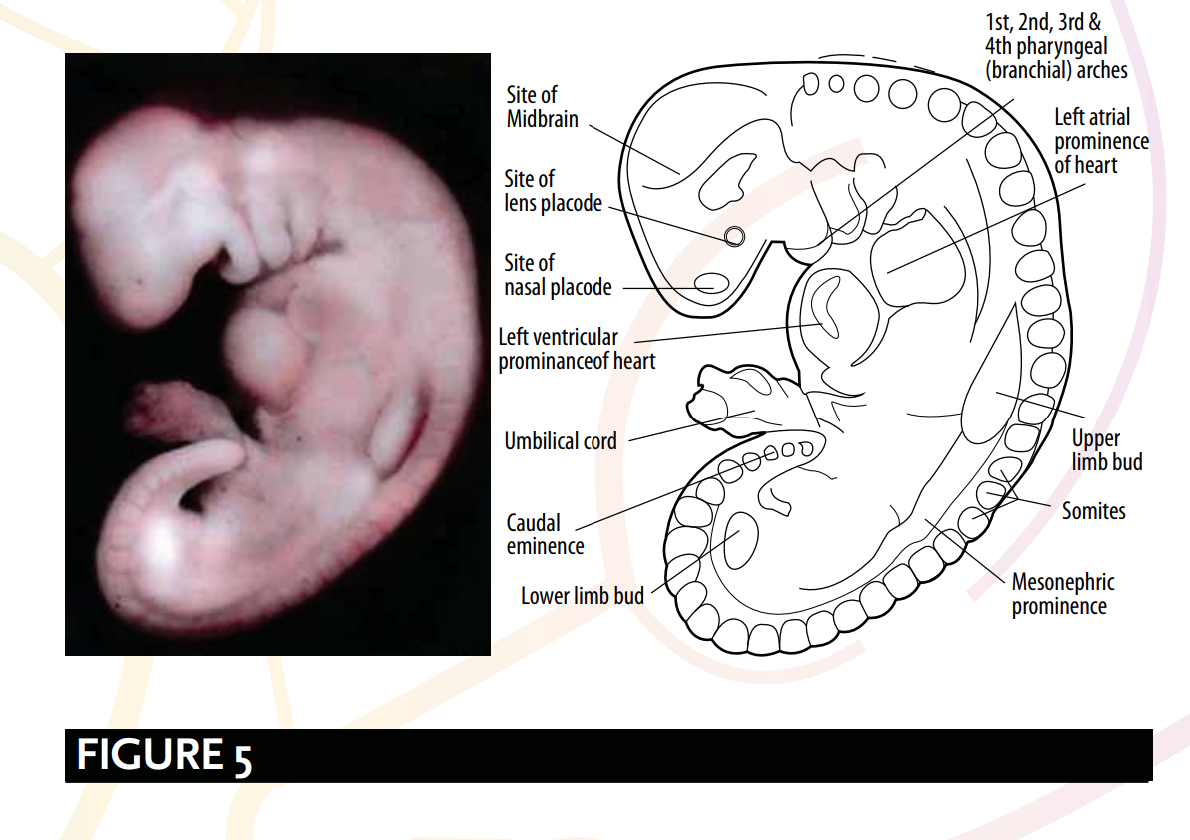
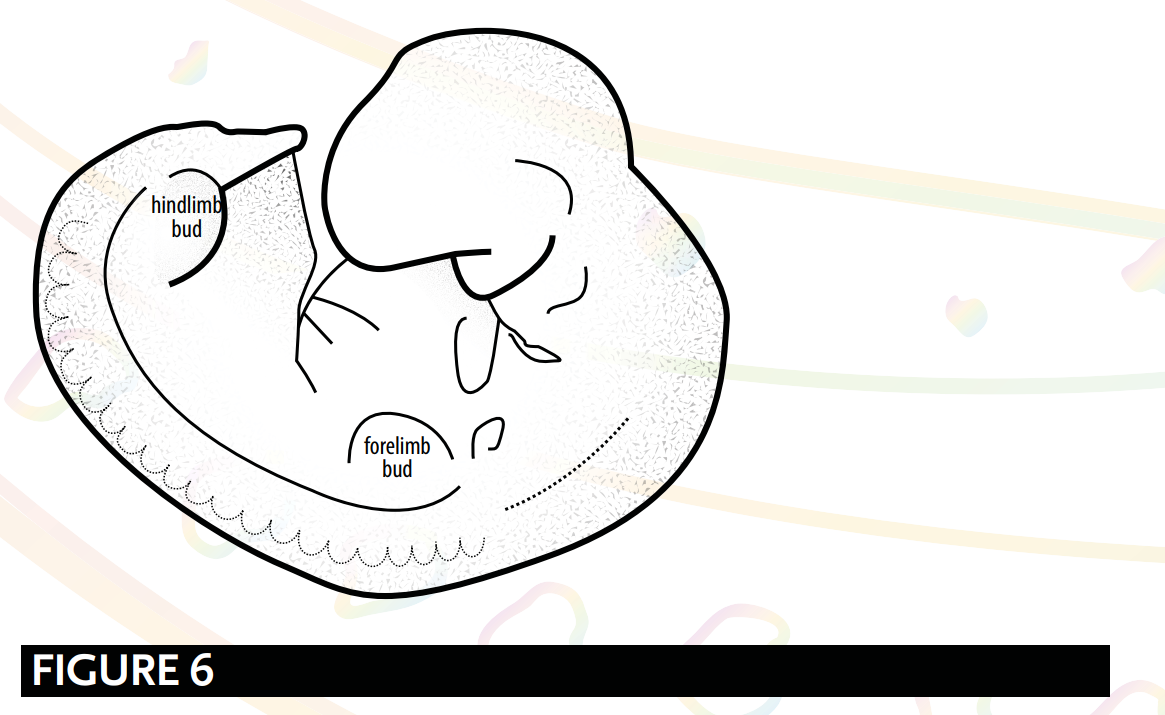
لغوی تشریح کے طریقے کو اختیار کرتے ہوئے، یہ مرحلہ چوتھے ہفتے سے متعلق ہے، جب سومائٹس (somites) بننا شروع ہوتے ہیں، جو دانتوں کے نشانات کے مشابہ ہوتے ہیں [دیکھیے شکل 5 اور 6]۔ جنین کی اس مرحلے پر ظاہری شکل، سومائٹس کی نشوونما کے باعث، ’’چبایا جانا‘‘ اور ’’وہ چیز جسے دانتوں نے چبایا ہو اور اس پر نمایاں نشانات چھوڑے ہوں‘‘ کے معانی کے مطابق ہے۔ سومائٹس کی نشوونما کے بارے میں بیری مچل اور رام شرما لکھتے ہیں:
Taking a lexical approach to the interpretation of the word, this stage deals with the 4th week, when somites, which resemble tooth-marks [see Figures 5 and 6], begin to develop. The appearance of the embryo at this stage, due to somite development, corresponds with the meanings: ‘to be chewed’ and ‘something that teeth have chewed and left visible marks on’. Concerning somite development, Barry Mitchell and Ram Sharma write:
په څلورمه اونۍ کې، د سومایټونو هغه مزنشیمي حجرې چې په منځنۍ برخه کې واقع دي، د نوټوکورډ په لور مهاجرت کوي ترڅو سکلیروټومونه جوړ کړي [مزنشیم د جنین هغه نرم، په ڈیر څه بې ترتیبه شکل کې تنظیم شوی ایمبریونی همبستګي نسج دی].67
In the fourth week, the medially placed mesenchymal cells of the somites migrate towards the notochord to form scelerotomes [mesenchyme is the loosely arranged embryonic connective tissue in the embryo].67
د مضغة بل معنا هم شته چې د غوښې د ټوټې په څیر څه ښکاري. دا هم د جنین د بڼې یوه سمه تشریح ده په دې پړاو کې. په زړه پورې دا ده چې د قرآن کریم له مخې د مضغة تفسیر «مخلقة وغير مخلقة» (جوړ شوې او نا جوړه شوې) کیدای شي د عضوي جوړښت هغه دوره وښيي، چې پکې ټول اصلي غړي پیل کوي وده کول، خو لا بشپړ نه وي جوړ شوي. دا دوره هم د شاوخوا ۴ مې اونۍ په شاوخوا کې پیښیږي۔
Another meaning for the word mudghah includes something looking like a morsel of flesh. This too is an accurate description of the embryo's appearance at this stage. Interestingly, the qur’anic explanation of mudghah as being “formed and unformed”, can refer to the organogenetic period, during which all the main organs have begun to develop, but are not yet fully formed.68 This period also occurs at around the 4th week
یو چبایل شوی مادہ
A CHEWED SUBSTANCE
د مضغه مرحلې په اړه نیوکه کونکو یوه دلیل داسې وړاندې کړی دی چې یوه خایې شوې ټوټه غوښه یا د غوښې یوه ټوټه د عصري جنین پیژندنې (ایمبریالوژۍ) له هغو مرحلو سره ورته والی نه لري چې په هغې کې بیان شوي دي. د دې ځواب لپاره اړینه ده چې وښودل شي "خایې شوې ټوټه غوښه" څه ته وايي. دا یوازې د جوي کولو (چوینې) پورې نه تړاو لري، بلکې یو ځل خایل شوې شیان هم پکې شامل دي. دا د "مضغه" کلمې معنا ساتي، ځکه د خوړلو نښې د یوځل خایل شوې غوښې ټوټې سره ورته والی لري. دا خبره د دې کلمې بل معنا لخوا هم ښکاره کېږي: "هغه شی چې غاښونو خایلی وي او د هغه په سر لیدل کېدونکي نښې پاتې وي."
An argument raised by critics concerning the mudghah stage is that a chewed piece of meat or a lump of flesh does not resemble the embryo at any stage described by modern embryology. In responding to this, it is necessary to clarify what constitutes a ‘chewed piece of flesh’. It includes, not just mastication, but also something being chewed just the once. This maintains the meaning of the word mudghah as the bite marks do resemble a piece of meat chewed once. This is highlighted by its other meaning: ‘something that teeth have chewed and left visible marks on’.
خلاصه
SUMMARY
د مُضغہ مرحلہ
The `mudghah stage:
د سومایټونو وده چې جنین ته د یو جویدلي شوي مادې ښکارندوی ډول ورکوي. دا څه چې د غوښې یوه ټوټه ښکاري - د جنین د دې مرحلې د ښکارندوی یو دقیق توضیح.
The development of somites giving the embryo the appearance of a chewed substance. What looks like a morsel of flesh - an accurate description of embryo's appearance at this stage.
دا همدارنګه د عضوي جوړښت دوره (د عضوو وده، چې لا بشپړه نه وي جوړه شوې) بیانوي۔
It also describes the organogenetic period (the development of organs, not yet fully formed).
همیشه کسانو هڅه کړې ده چې د قرآني اصطلاح "مضغه" د جالینوس د لیکنو سره پرتله کړي، ترڅو دا نظر ثابت کړي چې پیغمبر محمد ﷺ د انساني پیدایښت په اړه د یونانی لیکنو څخه سرقه کړې ده. خو کله چې د جالینوس لیکنې وڅیړل شي او دا د "مضغه" کلمې د ډېرو او پراخو معنو سره پرتله شي، نو یو څرگند توپیر ښکاره کیږي. جالینوس وایي:
As ever, there have been attempts to compare the qur’anic term mudghah with Galen’s work to substantiate the view that the Prophet Muhammad ﷺ plagiarised from Greek writings on human development. However, upon analysing Galen’s writings, bringing it in contrast to the various and extensive meanings of the word mudghah, a pointed difference is made distinct. Galen states:
دریمه دوره دې ته دوام ورکوي، کله چې، لکه څنګه چې وویل شول، دریو واکمنو برخو ښکاره لیدل ممکن وي او د نورو ټولو برخو یوه ډول نښه یا سیلویټ، ګویا، لیدل کیږي. تاسو به د دریو واکمنو برخو جوړښت ډیر ښکاره وویني، د معدې د برخو جوړښت ډیر مبهم، او د اندامونو جوړښت لا ډیر ډیر مبهم. وروسته دوی "ډنډي" جوړوي، لکه څنګه چې بقراط یې څرګنده کړې، دې اصطلاح سره د ښاخونو سره د دوی ورته والي ښیي.69
The third period follows on this, when, as was said, it is possible to see the three ruling parts clearly and a kind of outline, a silhouette, as it were, of all the other parts. You will see the conformation of the three ruling parts more clearly, that of the parts of the stomach more dimly, and much more still, that of the limbs. Later on they form ‘twigs’, as Hippocrates expressed it, indicating by the term their similarity to branches.69
څرنګه چې مخکې وڅیړل شو، قرآن مجیدې مضغه یو داسې شی بیانوي چې د خوړلو شوي شي په څیر دی او د غوښې یو کوچنی ټوټه ده. په مقابل کې، جالینوس د "د درې حاکمو برخو" د "جوړښت"، "سیوري" او "ټهنو" په اړه خبرې کوي، چې ډېره احتمال لري د هډوکو د غړو د جوړښت په اړه وي. هغه دا درې حاکمې برخې د معدې او غړو په پرتله ډیرې ښکاره بیانوي. په هرصورت، قرآن مجید دا څه نه بیانوي، او د غړو د هډوکو د جوړښت ذکر یې په راتلونکي پړاو کې راځي. نو دا وړاندیز چې پیغمبر محمد ﷺ د جالینوس کتابونه نقل کړي، هم نامعقول دی او هم عملي نه دی، ځکه چې قرآن په دې پړاو کې د جالینوس هیڅ هغه تشریح نه لري.
As explored, the Qur’an mentions mudghah as a chewed-like substance and a small piece of flesh. In contrast, Galen discusses the “conformation” of “the three ruling parts”, “silhouettes” and “twigs”, which is most likely in reference to limb bone formation. He details these three ruling parts as being more visible than the stomach and the limbs. However, the Qur’an makes no mention of this, and its mention of the limb bone formation comes at the next stage. It is both implausible and impractical, therefore, to suggest the Prophet Muhammad ﷺ copied the works of Galen as the Qur’an does not include any of the descriptions provided by Galen at this stage