۶. ہڈیاں
6. Bones
او مونږ هغه ټوټه ډډې وګرځولې
and We made that lump into bones
له مضغې څخه، عظام پیدا کیږي. دا وروسته پړاو دی. د عربي ژبې په کلمه «عظام» کې معنا هډوکي ده، او دا په ځانګړې توګه د لاسونو او پښو هډوکو ته، یا د یو حیوان د لاسونو او پښو هډوکو ته ویل کیږي چې په دې باندې غوښه وي.70
From the mudghah stage, `idhaam are created. This is the next stage. The word `idhaam in the Arabic language means bone, and is specifically applied to the bones of the hands and feet, or of the arms and legs of an animal, upon which is the flesh.70
علمي تفسير
SCIENTIFIC INTERPRETATION
د ادغام مرحله د محوري او اندامی ڈھانچے د پیدایښت پورې اړه لري، چې د حمل د پنځمې اونۍ په شاوخوا کې پیښیږي. بیري مچیل او رام شرما تشریح کوي:
The `idhaam stage pertains to the development of the axial and limb skeleton, occuring at around the 5th week. Barry Mitchell and Ram Sharma explain:
د هډوکو جوړونکي مزانشیمي حجرو منشأ د بدن په مختلفو برخو کې توپیر لري. د محوري هډوکي چوکاټ مزانشیمي حجرې له مزودرمي سومایټونو (سومایټونو) څخه راځي، پداسې حال کې چې د اپینډیکولر هډوکي چوکاټ هډوکي د جانبي پلیټ مزودرم د سوماټوپلیوریک مزانشیم څخه اخیستل شوي دي. خپل ځای ته رسیدو وروسته مزانشیمي حجرې سره راټولیږي او د هډوکو ماډلونه جوړوي. وروسته مزانشیمي حجرې چې څنګه چونڈروبلاسټونو یا اوسټیوبلاستونو ته بدلیږي، دا د جینیاتي کنټرول لاندې ده.71.
The origin of mesenchymal cells forming the skeletal tissues varies in different regions of the body. Mesenchymal cells forming the axial skeleton arise from the mesodermal somites, whereas the bones of the appendicular skeleton are derived from the somatopleuric mesenchyme of the lateral plate mesoderm. After reaching their destination the mesenchymal cells condense and form models of bones. The subsequent differentiation of mesenchymal cells into chondroblasts or osteoblasts is genetically controlled.71.
«عظام» کے معنیٰ ده، یعنی «ټنډي هډوکي» (اعضاء کې هډوکي)، ځکه دا کلمه د ځانګړي معنا لرونکې ده، او په دې معنا سره د اعضاؤ د جوړښت ابتدایي برخې، یعنې د اعضاؤ د غټ پوړیو (لمبو) او د اپینډیکولر سکلیټن په وده پورې اړه لري. بیرې مچل او رام شرما د اعضاؤ او د اپینډیکولر سکلیټن په جوړښت باندې دا تفصیل بیانوي:
‘Limb bones’ is the specified meaning of the word `idhaam, and therefore can refer to the development of the limb buds which give rise to the development of the limbs and the appendicular skeleton. Barry Mitchell and Ram Sharma elaborate on the formation of the limb and appendicular skeleton:
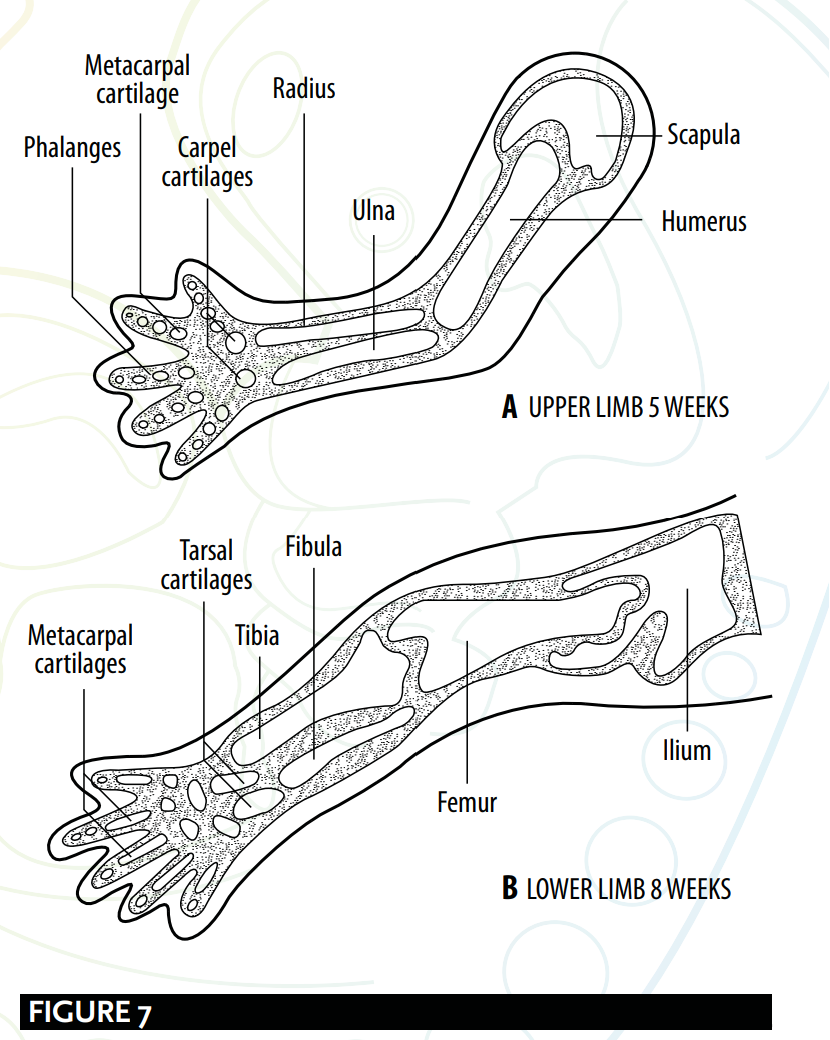
د اپینڈیکولر سکیلیٹن (د اندامونو ہڈیوں ڈھانچہ) د اندامونو د کمربندونو (limb girdles) او د اندامونو د ہڈیوں څخہ جوړ دی۔ د اپینڈیکولر سکیلیٹن ہڈیاں د مزنکیمل کثافتونو (mesenchymal condensations) څخہ پیدا کیږی، کوم چې بیا غضروفي نمونو (cartilaginous models) ته اوړی۔72 [See Figure 7]
The appendicular skeleton consists of limb girdles and the bones of the limbs. The bones of the appendicular skeleton develop from mesenchymal condensations which become cartilaginous models.72 [See Figure 7]
جان الین او بیورلي کرامر هم د لنډو هډوکو د جوړښت په اړه تبصره کوي۔
John Allen and Beverley Kramer also comment on limb bone formation.
اعضاء کا میزینکائم (mesenchyme) ابتدا میں یکساں ماده (homogenous mass) ہوتا ہے، مگر جلد ہی اس میں تکاثف (condensations) واقع ہوتے ہیں اور یہ تکاثف غضروفی (cartilaginous) بن کر مختلف ہڈیوں کے غضروفی نمونے (cartilage models) بناتے ہیں۔ ہر غضروفی نمونے کے گرد غضروف کی جھلی (perichondrium) ہوتی ہے جو میزینکائم کا تکاثف ہے۔ ہر غضروفی نمونے پر ارد گرد کے میزینکائم سے استخوان ساز خلیوں (osteoblasts، یعنی ہڈی بنانے والے خلیات) کے اندر آنے سے ایک تعظیمی مرکز (primary ossification centre، یعنی اولین تعظیمی مرکز) بنتا ہے۔ اب ارد گرد کے میزینکائم کو پیریوسٹیم (periosteum، یعنی ہڈی کے گرد کی جھلی) کہا جاتا ہے۔ استخوان ساز خلیے اب ہڈی پیدا کرتے ہیں، جس سے اعضاء کے ہڈیوں کے ڈھانچے کے اجزاء وجود میں آتے ہیں۔ [73]
The limb mesenchyme is at first a homogenous mass but soon condensations occur in it and these chondrify to form cartilaginous models of the various bones. Each cartilage model is surrounded by perichondrium which is a condensation of mesenchyme. An ossific centre (primary ossification centre) is formed upon each cartilage model by the ingrowth of osteobalsts (bone-forming cells) from the surrounding mesenchyme. The surrounding mesenchyme is now termed periosteum (surrounding the bone). Osteoblasts now produce bone which give rise to the skeletal elements of the limbs. 73.
د قرآنی «اذام» مرحلې او د عصري جنینولوژۍ ترمنځ، یعنې د محوري، اندامي او ضمیمه ای هډوکو د پراختیا په اړه، واضح ورته والی شته.
There are clear parallels between the qur'anic `idhaam stage and the view modern embryology takes i.e. the development of the axial, limb and appendicular skeleton.
خلاصه
SUMMARY
د ایضاح مرحله: محوري، عضوي او زائد ډانچې جوړېدل۔
The `idhaam stage: The formation of the axial, limb and appendicular skeleton.
له ټکړې څخه تر هډوکو پورې
FROM A LUMP TO BONES
یو عام غلط فہمی، جو عموماً عربی زبان سے ناواقف لوگ کرتے ہیں، یہ ہے کہ اس آیت کا لفظی ترجمہ کیا جا سکتا ہے: "اور ہم نے اس لوتھڑے کو ہڈیاں بنا دیا"۔ اسی بنیاد پر وہ یہ نتیجہ نکالتے ہیں کہ یہ آیت غیر سائنسی ہے، کیونکہ گوشت کا لوتھڑا ہڈیوں کے ڈھانچے میں تبدیل نہیں ہو سکتا۔ تاہم، یہ اعتراض عربی گرامر اور قرآن کی بلاغت کی سطحی سمجھ پر مبنی ہے۔ گرامر کے نقطۂ نظر سے یہ آیت اس طرح بھی معنی دیتی ہے: "اور ہم نے اس لوتھڑے میں سے ہڈیاں بنائیں"، یعنی "لوتھڑے سے/میں سے/کے اندر سے ہڈیاں"۔
A common misconception, usually made by non-Arabists, is that this verse can be literally translated as “and We made that lump into bones”. From this, they conclude that this verse is unscientific because a lump of flesh cannot turn into a mass of bones. However, this is based upon a crude understanding of Arabic grammar and the Qur’an's eloquence. This verse, from a grammatical perspective, has the meanings of: “and We made of/from/out of the lump bones”.
دې ته په پام کې ونیسئ، یوسف علي دې آیت ته داسې ژباړه کړې ده: «بیا مو له هغه ټوټې څخه هډوکي جوړ کړل»۔ شاکر دې ته داسې ژباړه کړې ده: «بیا مو د غوښې په ټوټه کې هډوکي جوړ کړل»۔ او ا. ج. اربیري، چې د هغه د قرآن ژباړه تراوسه هم علمي حلقو کې کارول کیږي، دا آیت داسې ژباړلی دی: «بیا مو د نسج څخه هډوکي پیدا کړل»۔75
This is why Yusuf Ali translates this verse as “then we made out of that lump bones”74; Shakir translates it as “then We made (in) the lump of flesh bones”; and A J Arberry, in his translation of the Qur’an which is still used by academics today, translates this verse as “then We created of the tissue bones”.75
NOT REAL BONES
NOT REAL BONES
یو بل دلیل چې مفسرین یې بیانوي دا دی چې د دې مرحلې په وخت کې ریښتیني هډوکي نه وي. ویل کیږي چې ښکاره هډوکي یوازې غضروف دي، ځکه چې استخوان جوړیدل ناتمام وي، او په همدې اساس قرآن کریم باید ناسم وي. که څه هم دا خبره منل شوې ده، خو بیا هم غلطه ده. «عظام» د هډوکو غضروفي شکل هم پکې شامل دی، کله چې د هډوکو چوکاټ ځای پر ځای کیږي. سربیره پردې، د استخوان جوړیدل (ossification) د ۸ اونۍ په شاوخوا کې پیلیږي،۷۶ او زیږون وروسته هم دوام کوي، او د استخوان جوړیدل بشپړیږي چې د بلوغ په شاوخوا کې ختمیږي. باري متچل او رام شارما داسې تشریح کوي:
Another proposition from commentators is that at this stage there are no real bones. It is argued that the apparent bones are mere cartilage as ossification is incomplete and, as such, the Qur’an must therefore be inaccurate. Although a valid contention, it is misplaced. `idhaam encompasses the cartilaginous form of the bones as the skeletal framework is put in place. Additionally, the process of ossification begins by the 8th week,76 continuing on after birth, with the eventual completion of the ossification process at around puberty. Barry Mitchell and Ram Sharma explain:
د ځنګلي ډبرو تشکیل (ossification) مرکزونه لومړی د اتم اونۍ په شاوخوا کې د غړو په هډوکو کې ښکاره کیږي. د دولسمې اونۍ په پای کې د غړو د هډوکو شافټونه ډبره شوي وي، خو د لاسونو د مڼې کارپل هډوکي تر زیږون وروسته پورې غضروفي پاتې کیږي. د پښې د تخنې درې ترټولو لوی تارسل هډوکي شاوخوا ۱۶ اونۍ کې ډبره کیدل پیل کوي، خو ځینې کوچني تارسل هډوکي تر زیږون وروسته ۳ کاله پورې ډبره نه کیږي۔ [77]
The centres of ossification first appear in the limb bones during the eighth week. By the twelfth week, the shafts of the limb bones are ossified, though the carpal bones of the wrist remain cartilaginous until after birth. The ossification of the three largest tarsal bones of the ankle begins about 16 weeks, but some of the smaller tarsal bones do not ossify until 3 years after birth.77.
له دې نظره، دا به یو طبي بېساري غلطي وي چې فکر وشي نوي زیږیدلي ماشومان یا ځوان تنکي هلکماشومان هډوکي نلري، یوازې ځکه چې دوی ته د هډوکو جوړېدل (اسیفیکیشن) اړین دی، په ځانگړې توگه داسې چې اسیفیکیشن د بلوغ د ودې د لوړ مهال په پای کې بشپړیږي. بیا هم که دا خبره سمه وای، او دا مرحله د «بېهډوکو» په توگه وگڼل شي، نو د «اضعام» کلمې معنا ټوله احاطه کوونکې تفسیر ته ځای ورکوي، ځکه چې د مختلفو هډوکو «غضروفي ماډلونه»⁷⁸ هم د دې کلمې په معنا کې شامل دي.
From this perspective, it would be a medical absurdity to assume newborns or young teenagers do not have bones simply because they require ossification, especially since ossification completes at the end of the growth-spurt of puberty. Nevertheless if this were the case, and we are to take this stage as being ‘boneless’, as it were, the derisions of the word `idhaam allow for an all encompassing interpretation because the “cartilaginous models of the various bones”78 is included in its meaning.