Акыда и то, что из неё проистекает в виде аль-ахкам, и то, что на ней строится в виде мыслей, является основой ат-тагъйыр (изменения).
The Aqeedah and what emanates from it in terms of Ahkaam and what is built upon it in terms of thoughts, is the basis of At-Taghyeer (change).
Поведение человека связано с тем, что он несёт в себе в виде понятий. Понятия (мафахим) — это убеждения (канаат), возникающие из понимания вещей и их свойств, а также из того, что строится на этом понимании или вытекает из него в виде других убеждений.
The conduct of the human is tied to what he carries in terms of concepts. The concepts (Mafaaheem) are convictions (Qanaa’aat) resulting from a comprehension of things and their attributes in addition to what is built upon this comprehension or emanates from it in terms of other convictions.
Понятия бывают двух видов:
Concepts are of two types:
Первое:
The first:
Понятия о вещах. Это убеждения или аҳкам (предписания), источником которых являются сами вещи. Сюда относятся такие утверждения, как: «Огонь жжёт», «Яд убивает», «Алкоголь опьяняет», «Мясо едят, а землю не едят», «Усиление давления порождает взрыв (в каком-то смысле)», «Общество состоит из совокупности индивидов, связанных постоянными отношениями» и «Возрождение не произойдёт иначе, как посредством просвещённой мысли».
: Concepts about things. These are convictions or Ahkaam (rulings) whose source is the things themselves. This would include statements like: ‘Fire burns’, ‘Poison kills’, ‘Alcohol intoxicates’, ‘Meat is eaten whilst soil is not eaten’, ‘The increased build-up of pressure generates an explosion (of sorts)’, ‘The society is composed of a collection of individuals bound by permanent relationships’ and ‘Revival would not occur except by way of the enlightened thought’.
Все эти мысли представляют собой описания или хукмы, источником которых является их предмет. Они могут быть верными или неверными в зависимости от их соответствия действительности или противоречия ей. Во всех этих случаях они считаются понятиями по отношению к тому, кто в них уверовал. Поведение и образ действий человека связаны с его понятиями о вещах, и поэтому тот, кто убежден, что его пища отравлена, никогда не станет её есть, даже если он голоден. Точно так же человек, который испытывает жажду, будет искать воду, а не что-либо другое, тогда как тот, кто хочет опьянеть, будет искать алкоголь и ничего больше.
All of these thoughts are descriptions or Ahkaam whose source is its subject. They could be correct or incorrect depending on their conformity to the reality or their contradiction to it. In all of these cases they are considered to be concepts in respect to the one who has believed in them. The human behaviour and conduct is tied to his concepts about things and so whoever is convinced that his food has been poisoned would never eat from it and even if he was hungry. Similarly the one who was thirsty would seek water and not something else whilst the one who wanted to be intoxicated would seek alcohol and nothing else.
Второй вид:
The second type:
Понятия (Мафахим) о жизни. Это убеждения или хукмы, источник которых находится вне их предмета. Таковы утверждения: «Салят является фард», «Мошенничество является харам» и «Убийство человека является харам» и т. п. Источником этого хукма не является сама вещь или действие; они лишь представляют предметную область или реальность, к которой применяется суждение, тогда как источник суждения — нечто иное, и находится он в другом месте.
Concepts (Mafaaheem) about life. These are convictions or Ahkaam whose source is external to its subject. This is like the statements: ‘The Salaah is Fard’, ‘Fraud is Haraam’ and ‘Killing someone is Haraam’ etc... The source of this Hukm is not the thing itself or the action and these only represent the subject area or the reality that is being judged upon whilst the source of the judgement is something else and lies elsewhere.
Наше утверждение «Алкоголь опьяняет» отражает описание или внутреннее свойство, присущее алкоголю. Это суждение о вещи на основании того, что в ней содержится или к чему она приводит. Однако утверждение «Алкоголь харам» — это не суждение о вещи на основании того, что в ней есть, а выражение хукма от Аллаха (SWT).
So our statement: ‘Alcohol intoxicates’ reflects a description or an internal attribute associated to alcohol. It is a judgement made upon a thing due to what it contains or results in. The statement however ‘Alcohol is Haraam’ is not a judgement passed upon a thing on the basis of what is in it but rather it represents a Hukm from Allah (swt)
Кто определяет, что является харамом, а что мубахом (дозволенным)?
who decides what to make Haraam and what to make Mubaah (permissible).
Поведение человека также связано с его представлениями о жизни. Если бы он считал, что мясо свиньи съедобно и утоляет голод, то это было бы представлением о предмете. Представление же о жизни таково, что свинина харам, то есть для него обязательно её избегать и держаться от неё подальше. Это становится представлением для того, кто постиг это хукм и уверовал в него, и это повлияет на его поведение, и не позволит ему утолить голод свининой.
The behaviour of the person is also tied to his concepts about life. If he held the concept or understanding about the flesh of pig that it was edible and would satisfy hunger, then this would represent a concept about a thing. The concept about life however is that the pig is Haraam meaning that is obligatory for him to avoid and keep away from it. It would become a concept for the one who has comprehended this Hukm and believed in it and it would have an effect upon his behaviour and prevent him from satisfying his hunger from pig.
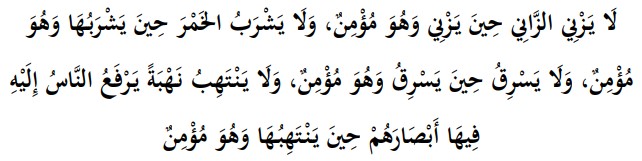
Когда прелюбодей совершает зину, он не верующий; когда пьющий алкоголь пьёт алкоголь, он не верующий; когда вор крадёт, он не верующий; и никакой грабитель, который грабит ценную вещь, привлекающую внимание людей, не является верующим, пока совершает это деяние (аль-Бухари).
When the fornicator is committing Zinaa he is not a believer, when the alcohol drinker is drinking alcohol he is not a believer, when the thief steals he is not a believer and no plunderer who plunders a valuable thing that attracts the attention of people is a believer whilst he commits this act (AlBukhaari).
Поэтому обязательно возвращать истины (Хакаик) в умы, чтобы исправлять поведение и приводить его в порядок. К ним относятся: Хакаик (истины) вещей и шариатские истины в отношении вероубеждений и аххкам. О них необходимо напоминать, чтобы они оживали, прочно укоренялись и были постоянно присутствующими, и тогда они оказывают влияние на поведение.
It is therefore obligatory to restore the truths (Haqaa’iq) to the minds to correct the behaviour and to rectify it. These include: The Haqaa’iq (truths) of things and the Shar’iyah truths in terms of beliefs and Ahkaam. They must be reminded with them so that they become fresh, firmly embodied and present, and as such have an effect upon the behaviour.
Аллах (SWT) сказал:
Allah (swt) said:

И напоминай, ибо напоминание приносит пользу верующим (Аз-Зарийат 55).
And remind for verily the reminder benefits the believers (Adh-Dhaariyaat 55).
С неверующими же дело обстоит наоборот: напоминание им об истинах и шариатских понятиях не приносит им пользы. Они слышат это как мысли, но эти мысли не являются для них истинами и не являются для них понятиями, и потому они не оказывают никакого влияния на их поведение.
The opposite is the case in respect to the disbelievers because reminding them of the truths and Shar’iyah concepts does not benefit them. They hear them as thoughts but they do not represent truths for them nor do they represent concepts for them and as such they have no effect upon their behaviour.
Поэтому представления о жизни определяют то, каким образом человек живёт. Его главная забота заключается не просто в том, чтобы жить, а в том, как ему следует жить, и его главная забота состоит не в удовлетворении своих потребностей, а в том, каким образом он будет их удовлетворять. Поэтому его представления о жизни формируют для него определённый уклад и стиль жизни.
Therefore the concepts about life are what define the manner by which the human lives. His main concern is not just living but rather how he should live and his main concern is not about satisfying his needs but rather it concerns the manner by which he will satisfy them. For this reason his concepts about life fashion for him a specific manner and style of living.
В тех случаях, когда источник понятий о жизни находится вне самих вещей и действий, их невозможно принять, пока не будет установлено убеждение, что этот источник истинен или обладает правом и полномочием выносить суждения о них, и что его предписания (аḥкам) действительны и верны.
In the case where the source of the concepts in life are external to the things and actions themselves, it is not possible to adopt them except after being convinced that the source is true or has the power or authority to make a judgment upon them, and that its Ahkaam are valid and correct.
Ислам установил, что Хаким (Судья) — это Аллах (SWT), а источником аль-Ахкам (предписаний) является аль-Вахы (божественное откровение).
Islaam has established that the Haakim (Judge) is Allah (swt) and that the source of the Ahkaam (rulings) is the Wahi (divine revelation)
ниспосланного Сайидуна Мухаммаду ﷺ.
revealed upon Sayyidunaa Muhammad (saw).
Аллах (SWT) сказал:
Allah (swt) said:

Поистине, решение принадлежит только Аллаху. Он повелел, чтобы вы не поклонялись никому, кроме Него ({Юсуф: 40}).
Verily the Hukm (rule) is not but for Allah. He commanded that you do not worship other than him (Yousuf 40).
И Он (SWT) сказал:
And He (swt) said:

И те, кто не судит по тому, что ниспослал Аллах, — они и есть неверующие (Аль-Ма'ида, 44).
And whosoever does not judge by what Allah has revealed then it those who are the disbelievers (Al-Maa’idah 44).
Любое суждение или постановление, кроме суждения Аллаха, — это Тагут.
Every ruling or judgement other than the Hukm of Allah is Taaghoot:
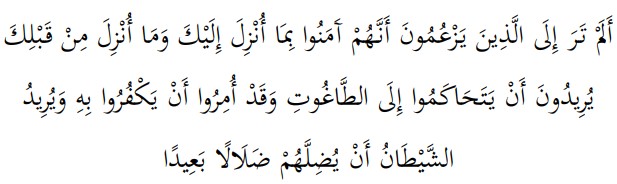
Разве ты не видел тех, кто утверждает, что уверовал в то, что ниспослано тебе, [о Мухаммад]ﷺ, и в то, что ниспослано до тебя? Они желают обращаться за судом к тагуту, тогда как им было велено отвергать его, а шайтан желает увести их far (в глубокое заблуждение). {Разве ты не видел тех, кто утверждает, что уверовал в то, что ниспослано тебе, и в то, что ниспослано до тебя? Они желают обращаться за судом к тагуту, тогда как им было велено отвергать его, а шайтан желает увести их в глубокое заблуждение.} (ан-Ниса, 60)
Have you not seen those who claim to have believed in what was revealed to you, [O Muhammad], and what was revealed before you? They wish to refer legislation to Taghoot, while they were commanded to reject it; and Satan wishes to lead them far astray (An-Nisaa 60).
Таким образом, за разумом и человеком не остается никакого права судить, и это не означает, что роль разума отнята или что его возможностям положен предел. Скорее причина в том, что разум и человек не обладают необходимыми средствами, чтобы выносить суждение или устанавливать решение. Это потому, что источником решения является не сама вещь или предмет, по которому должно быть вынесено решение.
As such there is no judgement left to the mind or the human and this does not mean that the role of the mind has been taken away or that a limitation has been placed upon its capabilities. It is rather because the mind and the human do not possess the necessary tools to make judgement or pass a ruling. This is because the source of the ruling is not the thing itself or the subject that the ruling will be made upon.
Итак, те, кто приписал право устанавливать предписания людям, например, не опираются в этом на доказательство, а блуждали и сбились с пути. Они придерживаются понятия, которое не соответствует истине и не имеет под собой реальности, и в то же время отвергли истину, отделив Дин от жизни, что означает, что не существует никакого хукма, принадлежащего Аллаху.
So those who have allocated the provision of the ruling to the people, for example, have not based this upon evidence and have rather wandered and gone astray. They have carried a concept which is not truthful and has no reality to it, whilst at the same time they have denied the truth by separating the Deen from life which means that there is no Hukm belonging to Allah.
Если бы право выносить суждения и постановления было дано человеку, в то время как у него нет необходимых средств для этого, то ничто не имело бы силы, кроме его желаний, склонностей и интересов, согласно его собственному взгляду. Они были бы изменчивыми и колеблющимися, и он мог бы видеть во вредном пользу, а в болезни — лекарство и исцеление.
If the right and power of issuing judgements and rulings was given to the human whilst he does not possess the necessary tools to do that, then nothing would prevail apart from his desires, inclinations and interests according to his viewpoint. These would be changing and fluctuate and he could see something that is damaging as being beneficial and he could see a disease as a medicine and cure.
В этом контексте на первый план выходит значение имана в Аллаха, пророчества и Корана. Этот иман — это акыда, которая оказывает влияние на поведение, ибо она даёт человеку представления о жизни, определяющие для него то, как ему следует жить, какова его цель в жизни и какова цель его поступков и поведения, а именно — снискать довольство Аллаха Азза ва Джалль.
In this context the importance of Imaan in Allah, the Prophethood and the Qur’aan comes to the fore. This Imaan is the Aqeedah that has an effect upon the behaviour as it provides the human with the concepts about life which define for him how he should live, his purpose in the life and his purpose behind his behaviour and conduct, which is to attain the pleasure of Allah ‘Azza Wa Jalla.

Скажи: «Сообщить ли вам о тех, кто потеряет больше всего в отношении деяний? Это те, чьи усилия пропали даром в земной жизни, тогда как они полагали, что творят добро» (аль-Кахф, 103–104).
Say: Shall We inform you of the greatest losers in respect to (their) deeds? [They are] those whose effort is lost in worldly life, whilst they were thinking that they are doing good (Al-Kahf 103-104).
Да, отдельные люди сбиваются с пути, и целые народы сбиваются с пути, подобно рыбе в океане, которая заглатывает приманку, или мыши, которая устремляется к пище, положенной в мышеловку.
Yes the individuals are led astray and the peoples are led astray just like a fish in the ocean when it takes the bait or the mouse that rushes to the food placed in a mouse trap.
Человек блуждает и не достигает своей цели, когда идёт по пути, который он уверен приведёт его к ней, в то время как на самом деле он движется в прямо противоположном направлении.
The human wanders around and does not arrive at his aim when he proceeds along a path that he is convinced will lead to it whilst in reality he is actually going in the exact opposite direction.
Он также сбивается с пути, когда в силу невежества или искажения придерживается ошибочных представлений о жизни, как тот, кто видит или которому внушают, что риба дозволена, что демократия происходит из ислама и что изучение шариата ради заработка ничем не отличается от любой другой области специализации или профессии. Когда хакаик (истины/факты) ислама исчезают, а умы заполняются ложными мыслями, такими как мысли об общей свободе, или о том, что изменить ныне существующее положение невозможно в нашем поколении или за сто лет, или что эта перемена есть дар Аллаха и что нам ничего не остается, кроме как ждать или ждать Махди, — всё это превращает отдельных людей, народы или умму в скопление ленивых людей, вяло подталкиваемых в том направлении, в котором их желают вести те, кто внушил им эти представления. Это приводит их к тому, что они становятся орудием в руках своих врагов, в то время как сами они полагают, что на самом деле борются против них.
He is also led astray when he carries incorrect concepts about life as a result of ignorance or distortion like the one who sees or is made to see that Ribaa is Halaal, that democracy is from Islaam and that learning the Sharee’ah is for the sake of earning a living just like any other area of specialisation or profession. When the Haqaa’iq (truths/facts) of Islaam become absent and the minds are filled with false thoughts like the thoughts of general freedoms or that changing the declined reality is impossible in our current generation or one hundred years, or that this change is a gift from Allah and that there is nothing for us to do apart from wait or to wait for the Mahdi. All of this transforms the individuals, peoples or the Ummah into a collection of lazy people sluggishly being driven in whatever direction those who have given them these concepts want them to and it leads them into becoming tools for their enemies whilst they believe that they are actually struggling against them.

Подобно тому, кто тянет руки к воде, чтобы она достигла его рта, но она до него не доходит ({Ар-Ра'д 14}).
Like the one who stretches his hands toward water [from afar, calling it] to reach his mouth, but it does not reach it (Ar-Ra’d 14).

Их пример подобен тому, кто разжёг огонь, но когда тот осветил всё вокруг него, Аллах лишил их света и оставил их во мраке, так что они ничего не видят (аль-Бакара, 17).
Their example is that of one who kindled a fire, but when it illuminated what was around him, Allah took away their light and left them in darkness [so] they could not see (Al-Baqarah 17).
Поэтому мы повторяем: чтобы изменить поведение, исправить его и сделать его правильным, возвышенным поведением, которое ведёт к своей цели, необходимо сформировать верные представления о вещах и о жизни. Лишь тогда человек будет в состоянии должным образом подчинять вещи и использовать их свойства и успешно добиваться цели, а также принимать такое поведение, которое приведёт его к своей цели и к величайшей из всех целей — снискать довольство Аллаха Всемогущего и Всеславного.
Therefore, we repeat, that in order to change the conduct, rectify it and make it a correct elevated conduct that arrives at its purpose, it is essential to generate correct concepts about things and life. At that time the person will be in a good position to subjugate and utilise the things and their attributes successfully and will be in a good position to adopt the conduct that arrives to his purpose and the greatest of all objectives which is the attainment of the pleasure of Allah ‘Azza Wa Jall:

Но стремись через то, что даровал тебе Аллах, к обители Последней жизни; и не забывай своей доли в этом мире. И делай добро, как Аллах сделал добро тебе (Аль-Касас, 77).
But seek, through that which Allah has given you, the home of the Hereafter; and [yet], do not forget your share of the world. And do good as Allah has done good to you (Al-Qasas 77).
Первая из Хакаик (истин), и, безусловно, самая важная из них — это акыда, которая определяет представления человека о жизни. Акыда заключается в том, что все сущее сотворено Творцом, которым является Аллах (subhanahu wa ta'ala), что Аллах направил Посланника, которым является Мухаммад ﷺ, с Рисалях (посланием) ислама, которое разъясняет всё, что касается человека, и что Он (subhanahu wa ta'ala) призовёт его к ответу на основании веры или неверия, а также на основании того, придерживался ли он того, с чем пришёл Пророк ﷺ, или не придерживался этого.
The first of the Haqaa’iq (truths) and absolutely its most important is the Aqeedah that defines the human’s concepts about life. The Aqeedah is that all things have been created by a creator who is Allah (swt), that Allah sent a Messenger who is Muhammad (saw) with the Risaalah (message) of Al-Islaam which explains everything that relates to the human being and that He (swt) will account him upon the basis of Imaan or Kufr and upon the basis of his abiding by what the Nabi (saw) came with or by his non-abidance to it.
Цель жизни мусульманина:
The Muslim’s purpose in life:
Среди важнейших истин после веры (имана) является то, что человек понимает цель своего сотворения, то есть то, к чему он должен стремиться.
From amongst the most important Haqaa’iq (truths) after Imaan is that the human understands the purpose of his creation i.e. that which he must strive to accomplish.
Аллах (SWT) сказал:
Allah (swt) said:
Я не создал джиннов и людей иначе, как для того, чтобы они поклонялись Мне (Ад-Зарият 56).
And I have not created the Jinn or humankind except to worship me (AdDhaariyaat 56).
Поклонение (‘Ибадах) Аллаху означает веру в Него и повиновение Ему. Повиновение Ему Та’аля означает приверженность (аль-Иltизам) всем Его предписаниям (Ахкам) и их соблюдение. Это не ограничивается лишь актами поклонения, нравственностью (ахляк) и общественными сделками (му‘амаляты), но охватывает всё, что Аллах (SWT)
The worship (‘Ibaadah) to Allah means having Imaan in Him and obedience to Him. Obedience to Him Ta’Aalaa means commitment and abidance (Al-Iltizaam) to all of His Ahkaam. This is not restricted to the acts of ‘Ibaadah, Akhlaaq (morals) and Mu’aamalaat (societal transactions) but rather includes everything that Allah (swt)
...приказал или запретил. Сюда входит то, что ничто не имеет права на поклонение, кроме Аллаха, и что никакая заповедь или запрет не могут исходить ни от кого, кроме Него (SWT).
has commanded or forbidden. It includes that nothing has a right to be worshipped other than Allah and that no command or forbiddance can come from anyone besides Him (swt).
Ахмад и ат-Тирмизи передали, что ‘Адий ибн Хатим (ра) пришёл к Посланнику Аллаха ﷺ, когда тот читал аят:
Ahmad and At-Tirmidhi related that ‘Adiy Bin Haatim (ra) came to the Messenger of Allah (saw) whilst he was reciting the Aayah:
Они взяли своих раввинов и монахов господами помимо Аллаха, а также Масиха, сына Марьям. Однако им было приказано лишь поклоняться одному Богу; нет божества, кроме Него. Пречист Он от того, что они придают Ему в соотношение (Ат-Тауба, 31).
They have taken their Rabbis and monks as lords besides Allah, and [also] the Maseeh, the son of Mary. And they were not commanded except to worship one God; there is no deity except Him. Exalted is He above whatever they associate with Him (At-Taubah 31).
«Адий сказал: «Они не поклонялись им». Тогда Посланник Аллаха ﷺ сказал:
‘Adiy then said: ‘They did not worship them’. So the Messenger of Allah (saw) said:
Напротив, они запрещали им дозволенное и дозволяли им запретное, и те следовали за ними в этом. Поэтому это и было их поклонение им.
On the contrary, they made the Halaal Haraam upon them and made the Haraam Halaal for them, then they followed them (in this). Therefore this was their worship to them.
Таким образом, предоставление кому-либо права определять халяль и харам, право устанавливать законы и право на послушание такому лицу представляет собой поклонение (ʿибадah) этому человеку.
As such giving the Haqq (right) to anyone to decide the Halaal and decide the Haraam or the right to make legislation and the right of obedience represents ‘Ibaadah to that person.
Аллах (SWT) сказал:
Allah (swt) said:
Вы поклоняетесь не Ему, а лишь именам, которые вы сами нарекли — вы и ваши отцы, — и Аллах не ниспослал на них никакого довода.
You worship nothing besides Him except [mere] names you have named them with, you and your fathers, for which Allah has sent down no authority.
Законодательство принадлежит только Аллаху. Он повелел вам не поклоняться никому, кроме Него. Это правильная религия, но большинство людей не знают (Юсуф, 40).
Legislation is not but for Allah. He has commanded that you worship not except Him. That is the correct Deen, but most of the people do not know (Yusuf 40).
Что касается права на повиновение, которое принадлежит Хакиму (правителю), Амиру или родителям, то оно возникает в силу права (Хакк), которое Аллах (SWT)
As for the right of obedience that belongs to the Hakim (ruler), Ameer or parents then this is due to the Haqq (right) that Allah (swt)
…предоставил им.
has provided to them.
Поклонение Аллаху (subhanahu wa ta'ala) включает в себя повиновение, выраженное в том, чтобы заставить людей поклоняться Ему (subhanahu wa ta'ala), то есть подчинить их Шариату Аллаха и бороться против existence любого хакимиййа (права устанавливать правила) у кого-либо, кроме Аллаха, или у кого-либо, кроме Шариата Ислама, а также бороться против выхода из-под власти (хукм) Аллаха (subhanahu wa ta'ala). Так указывают тексты и таков смысл, с которым они пришли: те, что пришли с повелением «амр бил-ма'руф» (призывать к добру) и «нахй ан иль-мункар» (запрещать зло). Они повелевают вести дискуссии, разъяснять, убеждать людей и призывать их путём даъвы. Кроме того, они повелевают наказания плетьми, отсечением, убийством (как наказание и устрашение), а также сражение и джихад для распространения власти Аллаха на Земле и для возвышения Его слова.
‘Ibaadah to Allah (swt) includes the obedience in respect to making mankind worship Him (swt) i.e. to make them submit to the Shar’a of Allah and to fight against the existence of any Haakimiyah (right to make rules) to other than Allah or to other than the Sharee’ah of Islaam in addition to fighting against the exiting (Khurooj) from the Hukm (rule) of Allah (swt). This is what the texts have indicated and the meaning that they have come with; those which have come commanding the ‘Amr Bil Ma’rouf’ (Commanding the good) and the ‘Nahi ‘An il-Munkar’ (Forbidding the evil). They have commanded the undertaking of discussions, explanations, convincing people and inviting them by way of Da’wah. Additionally they have commanded lashing, cutting, killing (as punishments and deterrents) and fighting and Al-Jihaad to spread the rule of Allah upon the Earth and to raise His word the highest.
Итак, мы видели, что после того как Посланник Аллаха ﷺ установил Исламское государство в Аль-Мадине Аль-Мунаввара и прочно утвердил его основы, он ﷺ направлял посланников к царям и правителям, призывая их к Исламу. Затем мы видели, что халифы (да будет доволен ими Аллах), пришедшие после него ﷺ, посылали носителей Да‘вfor, моджахедов и армии, чтобы призывать людей к вере и выводить их из тьмы к свету. Они сражались с целью подчинить земли и людей власти Ислама.
As such we saw that after the Messenger of Allah (saw) established the Islamic State in Al-Madinah Al-Munawaarah and established its pillars firmly, he (saw) sent the messengers to the Kings and rulers inviting them to Islaam. We then saw the Khulafaa’ (rah) who came after him (saw) sending out carriers of the Da’wah, Mujaahideen and armies to invite the people to Imaan and to take them out of the darkness and bring them into the light. They fought for the purpose of making the lands and servants submit to the authority of Islaam.
Аллах Азза ва Джалль послал нас, чтобы избавить вас от поклонения рабам (людям) и привести вас к поклонению Господу рабов (людей), и чтобы избавить вас от гнёта других религий (дин) и привести вас к справедливости Ислама, и от тесноты этого мира и привести вас к простору этого мира и Ахиры.
Allah Azza wa Jall has sent us to deliver you from the worship of the servants (people) to bring you to the worship of the Lord of the servants (people) and to deliver you from the oppression of other Deens and bring you to the justice of Islaam and from the narrowness of this world and bring you to the vastness of this world and the hereafter.
Эта мысль была ясно изложена в Коране, Сунне и поступках Посланника Аллаха ﷺ в текстах, которые слишком многочисленны, чтобы можно было ограничить их число. Однако мы упомянем некоторые из них:
This thought has been made very clear in the Qur’aan, the Sunnah and the actions of the Messenger (saw) within texts that are too numerous for a limit to be placed upon them. We will however make a mention of some of them:
Аллах (SWT) сказал:
Allah (swt) said:
Скажи: «О люди! Воистину, я — посланник Аллаха к вам всем» (аль-А‘раф, 158).
Say: O people! Verily I am the Messenger of Allah to you all (Al-Aa’raaf 158).
Он (SWT) сказал:
He (swt) said:
Мы направили тебя не иначе как всему человечеству в качестве благовестника и предостерегающего (Саба 28).
And we have not sent you except to the entirety of mankind as a bringer of glad tidings and as a warner (Saba’ 28).
И Он (SWT) сказал:
And He (swt) said:
Он — Тот, Кто послал Своего Посланника с верным руководством и истинной религией, чтобы она возобладала над всеми иными религиями, даже если многобожникам это ненавистно (ат-Тауба 33, ас-Сафф 9).
He its is who has sent His Messenger with the guidance and the Deen of truth so that it prevails over all other Deens and even if the Mushrikeen hate it (AtTaubah 33, As-Saff 9).
И:
And:
О вы, которые уверовали! Сражайтесь с теми из неверующих, которые находятся рядом с вами, пусть они почувствуют в вас суровость. И знайте, что Аллах с праведными {(ат-Тауба 123)}.
O you who have believed, fight those adjacent to you of the disbelievers and let them find in you harshness. And know that Allah is with the righteous (AtTaubah 123).
И: «Сражайтесь с теми, кто не верует в Аллаха и в Последний день, кто не считает запретным то, что запретили Аллах и Его Посланник, и кто не придерживается истинной религии из числа тех, кому была дана Писание, — [сражайтесь] до тех пор, пока они не дадут джизью добровольно, будучи покорёнными» (ат-Тауба, 29).
And: Fight those who do not believe in Allah or in the Last Day and who do not consider unlawful what Allah and His Messenger have made unlawful and who do not adopt the religion of truth from those who were given the Scripture - [fight] until they give the Jizyah willingly while they are subdued (At-Taubah 29).
И Посланник Аллаха ﷺ сказал:
And the Messenger of Allah (sw) said:
Таким образом, цель и предназначение состоят в том, что не может существовать никакого закона, которому подчиняются, и никакого законодательства, которое принимается, кроме того, что установил Аллах (SWT).
So the objective and purpose is that no law that is obeyed or no legislation that is adopted can exist except for that which Allah (swt)
…повелел, и что нет Хаакима (законодателя), кроме Аллаха. Что касается оставления неверующих при их убеждениях и поклонении, то они оставляются в этих вопросах в соответствии и в исполнение повеления Аллаха (SWT).
has commanded and that there is no Haakim (law maker) other than Allah. As far as leaving the disbelievers upon their beliefs and worships then they are left upon these matters in accordance to and in compliance to the command of Allah (swt).
Аллах (subḥānahu wa taʿālā) ясно указал и разъяснил эту цель и предназначение в отношении сотворения Им людей, когда Он (subḥānahu wa taʿālā) сказал:
Allah (swt) has made clear and explained this objective and purpose in respect to His creation of the people when He (swt) said:
Так Мы сделали вас уммой справедливой/лучшей, чтобы вы были свидетелями над людьми, а Посланник был свидетелем над вами (аль-Бакара, 143).
And thus we have made you a just/best Ummah so that you will be witnesses over mankind and the Messenger will be a witness over you (Al-Baqarah 143).
Это обращение к исламской умме, и оно возлагает на неё юридическую ответственность (такляф) за то, чтобы после Посланника Аллаха ﷺ донести послание до всего человечества. И Пророк ﷺ действительно донёс его, исполнив свой аманат и совершив джихад ради Аллаха всеми силами, усилиями и возможностями, которыми располагал. Он ﷺ стоял в последнем прощальном хадже, обратился к своей умме и сказал:
This address is to the Islamic Ummah and it entrusts her with the legal responsibility (Takleef) to carry the Message, after the Messenger of Allah (saw), to the whole of mankind. And indeed the Nabi (saw) carried it and after conveying the message, fulfilling his Amaanah and after having performed Al-Jihaad for Allah’s sake with all that he possessed of strength, effort and capability. He (saw) stood in the final farewell Hajj, addressed his Ummah and said:
Reference: Тагъйир (изменение) - Mahmoud Abdul-Kareem Hasan
«И поистине, Я оставил среди вас то, что, если вы будете крепко держаться за него, никогда не собьётесь с пути: Книгу Аллаха, а вы за меня в ответе (то есть после меня). Что же вы скажете?» Они ответили: «Мы свидетельствуем, что ты передал, исполнил и дал наставление». Затем он поднял указательный палец к небу, а затем опустил его к людям и сказал: «О Аллах, засвидетельствуй, о Аллах, засвидетельствуй, о Аллах, засвидетельствуй» (Абу Дауд).
‘And indeed I have left amongst you that which if you hold on firmly to you will never go astray: The Kitaab (book) of Allah, and you are responsible from me (i.e. after me). So what do you all say?’. They said: ‘We bear witness that you have conveyed, fulfilled and advised’. He then said whist raising his index finger to the sky and then towards the people: ‘O Allah bear witness, O Allah bear witness, O Allah bear witness’ (Abu Daawood).
Так Пророк (сас) засвидетельствовал над нами, возложив на нас ответственность за передачу и хранение Амана́ х (доверия) и призвал Аллаха в свидетели над нами в этом. Следовательно, после этого нам обязательно быть свидетелями над людьми в точности по тому же методу, которым следовал Благородный Посланник (сас). Воистину, Аллах (субханаҳу ва таъаля) разъяснил, что это и есть цель и задача сотворения до того, как Он сотворил Адама (алейхиссалам).
So in this way the Nabi (saw) bore witness over us with the responsibility of conveying and carrying the Amaanah (trust) and sought Allah’s witness upon us in regards to that. Therefore, after that it is obligatory upon us to be witnesses over the people in accordance to exactly the same methodology that the Noble Messenger (saw) undertook. Indeed Allah (swt) made clear that this is the purpose and objective of the creation before His creation of Aadam (as).
Аллах (SWT) сказал:
Allah (swt) said:
И вспомните, когда ваш Господь сказал ангелам: {Я поставлю на земле наместника}. Они сказали: {Неужели Ты поставишь на ней того, кто будет распространять на ней порчу и проливать кровь, тогда как мы славим Тебя и превозносим Тебя?} Он сказал: {Поистине, Я знаю то, чего вы не знаете}. (Аль-Бакара, 30).
And [remember] when your Lord said to the angels, "Verily, I will make upon the earth a successive authority." They said, "Will You place upon it one who causes corruption therein and sheds blood, while we declare Your praise and sanctify You?" Allah said, "Indeed, I know that which you do not know." (AlBaqarah 30).
Малаики (ангелы) — рабы Аллаха (SWT), и они не ослушаются Его:
The Malaa’ikah (Angels) are the servants of Allah (swt) and do not disobey Him:
Над ними приставлены ангелы, суровые и сильные; они не ослушаются Аллаха в том, что Он им повелевает, и делают то, что им приказано (Ат-Тахрим, 6).
Over which are [appointed] angels, harsh and severe; they do not disobey Allah in what He commands them but do what they are commanded (At-Tahreem 6).
Когда Аллах (SWT) сказал им:
When Allah (swt) said to them:
Воистину, Я поставлю на земле преемника (халифа).
Verily, I will make upon the earth a successive authority (Khalifah)
Они поняли и осознали, что Он (swt) поставит на земле тех, кто будет непокорен. Это понимается из слова «халифа», поскольку в данном контексте оно означает того, кому Аллах даст преемство и поручит совершать деяния по исправлению и попечению, наряду с прочими делами, которые надлежит выполнять доверенному лицу. Эта роль исправления и заботы о делах означает, что будут существовать те, кто нуждается в исправлении и в заботе (ри‘аая). Это значит, что найдутся те, кто выйдет за пределы повеления Аллаха, и что это приведёт к бедствиям, мукам и смятению. Поэтому они сказали:
They realised and comprehended that He (swt) will make upon the earth those who will be disobedient. This is understood from the wording ‘Khalifah’ because here in this context it means the one who Allah will give succession and delegate to undertake the acts of correcting and caretaking amongst other matters that the one who is entrusted would undertake. This role or rectifying and taking care of affairs means that their will exist those who need to be rectified and who are need of Ri’aayah (caretaking). This means that there will be those who go outside of the command of Allah and that this will lead to misery, anguish and disorder. This is why they said:
Они сказали: «Неужели Ты поставишь на ней (земле) тех, кто будет творить в ней развращение и проливать кровь?» (Аль-Бакара, 30).
They said: Will you make those who will make corruption in it (the earth) and spill blood (Al-Baqarah 30).
Иными словами, если бы в творении не было чего-то, что было бы непокорностью, то всё происходило бы в соответствии с повелением Аллаха (SWT). Поэтому, когда Аллах (SWT) пожелал создать того, кто будет совершать деяния исправления и наставления, это означает, что будут существовать и те, кто выберет заблуждение и непокорность Аллаху.
In other words, if the creation did not include something that would be disobedient then everything would proceed in accordance to the command of Allah (swt). So when Allah (swt) wanted to create someone who will undertake the actions of rectifying and guidance then this means that there will exist those who will choose misguidance and disobedience to Allah.
Поэтому цель жизни, которую Аллах (swt) ясно изложил и разъяснил ещё до сотворения Адама (as), состоит в том, что будет человек, являющийся рабом (‘Абд) Аллаха, и что он возьмёт на себя труд побуждать других поклоняться Аллаху (swt) из числа тех, кто сбился с пути Его поклонения или отверг его.
Therefore the purpose in life which Allah (swt) has made clear and explained before the creation of Aadam (as) is that there will be a human being who is a slave (‘Abd) to Allah and that he will undertake the work of making others worship Allah (swt) from those who have gone astray from His worship or have rejected it.
Поэтому жизнь представляет собой интеллектуальную, основанную на вере и политическую борьбу между имаlittеном и куфром. Она основана на вере в том смысле, что ведётся ради возвышения слова Аллаха, и для того, чтобы вся религия людей принадлежала только Аллаху. Так, чтобы не существовало никакого предписания, кроме как для Аллаха, чтобы у Него (SWT) не было сотоварища, чтобы не поклонялись никому и ничему, кроме Аллаха, и чтобы подчинение было только Шари'ату Аллаха. Таким образом, это представляет собой политическую борьбу, в которой забота о делах людей обязательно не должна доверяться никакой иной форме законодательства, кроме Шариата Ислама.
The life is therefore an intellectual, belief based and political clash and struggle between Imaan and Kufr. It is belief based in terms of it being for the sake of raising the word of Allah the highest and so that the Deen of the people is all and only for Allah. So that no Hukm exists except that it is for Allah, that He (swt) has no Shareek (partner), that nothing or no one is worshiped aside from Allah and that submission is only to the Shar’a of Allah. In this way it represents a political struggle where the caretaking of the affairs of human beings has been made obligatory to not be entrusted to any form of legislation other than the Sharee’ah of Al-Islaam.