5۔ گوشت کا ایک لوتھڑا
5. A Lump Of Flesh
پھر ہم نے اس صورت کو گوشت کے لوتھڑے میں بدل دیا۔
and then We made that form into a lump of flesh
قرآن میں بیان کردہ انسانی نشوونما کا اگلا مرحلہ 'مضغہ' ہے۔ اس اصطلاح کے معنی چبانے، چبانا، چبایا جانا اور گوشت کا ایک چھوٹا ٹکڑا ہیں۔ یہ اس جنین (embryo) کی بھی وضاحت کرتا ہے جو ایک مرحلے سے گزرنے کے بعد گوشت کا ٹکڑا بن جاتا ہے۔ اس کے دیگر معانی میں وہ چیز شامل ہے جسے دانتوں نے چبایا ہو اور اس پر نشانات باقی رہ گئے ہوں؛ اور وہ نشانات جو بار بار چبانے کے عمل کی وجہ سے تبدیل ہو جاتے ہیں۔ مرحلہ مضغہ کی مزید تفصیل قرآن میں دیگر مقامات پر بیان کی گئی ہے:
The next stage of human development defined in the Qur’an is mudghah. This term means to chew, mastication, chewing, to be chewed, and a small piece of meat.61 62 It also describes the embryo after it passes to another stage and becomes flesh.63 Other meanings include something that teeth have chewed and left visible marks on; and marks that change in the process of chewing due to the repetitive act.64 The mudghah stage is elaborated on further, elsewhere in the Qur'an:
پھر ایک گوشت کے لوتھڑے (مضغہ) سے، جو بن چکا ہو اور جو ابھی نہ بنا ہو، 65
then from a fleshy lump (mudghah), formed and unformed. 65
یہاں 'تیار شدہ' کے لیے جو عربی لفظ استعمال ہوا ہے وہ 'مخلقہ' ہے، جس کا مطلب 'شکل دی ہوئی' یا 'ڈھالی ہوئی' بھی ہو سکتا ہے۔66
The Arabic word used here for ‘formed’ is mukhallqah which can also mean ‘shaped’ or ‘moulded’.66
سائنسی تشریح
SCIENTIFIC INTERPRETATION
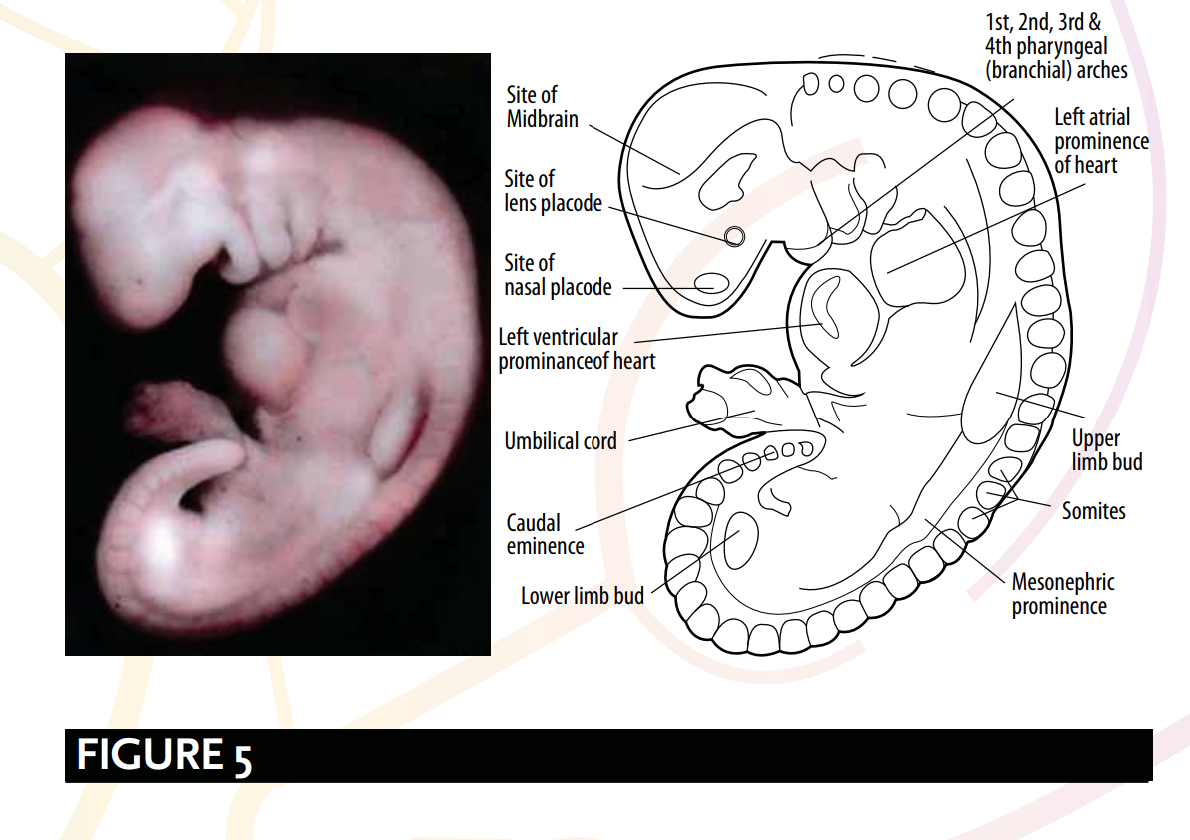
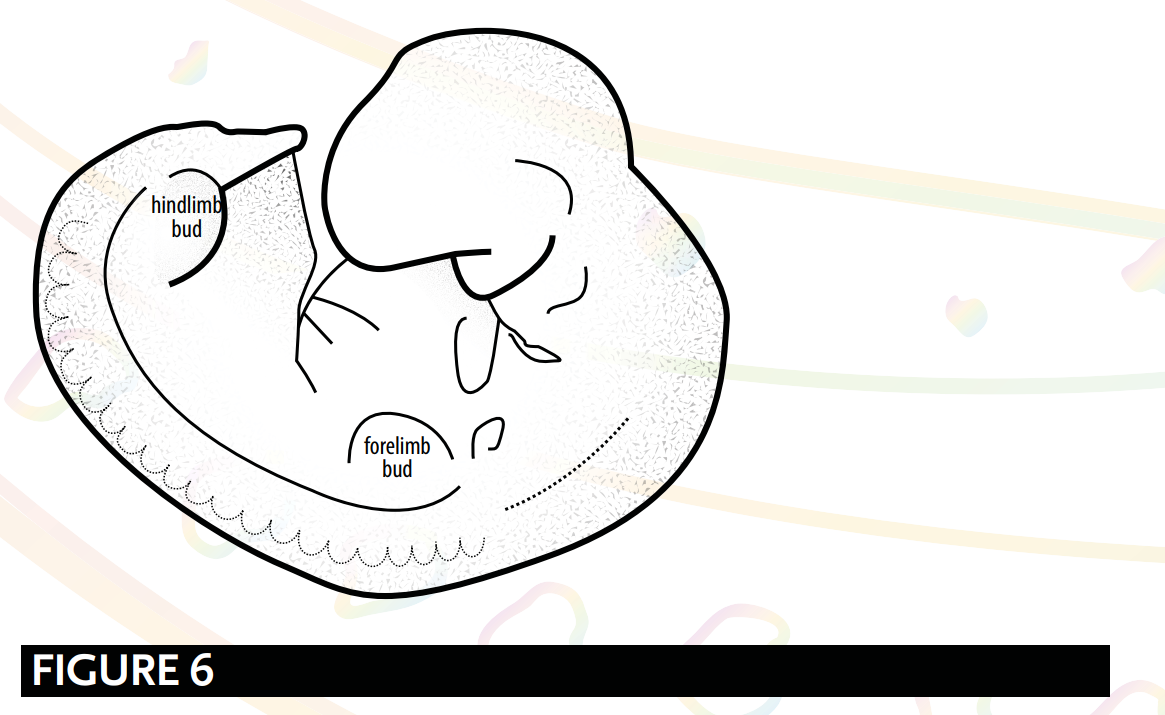
لفظ کی تفسیر کے لیے لغوی نقطہ نظر اختیار کرتے ہوئے، یہ مرحلہ چوتھے ہفتے سے متعلق ہے، جب سومائٹس (somites) بننا شروع ہوتے ہیں، جو دانتوں کے نشانات کی طرح دکھائی دیتے ہیں [شکل 5 اور 6 دیکھیں]۔ اس مرحلے پر جنین کی ظاہری شکل، سومائٹس کی نشوونما کی وجہ سے، ان معانی کے مطابق ہے: 'چبایا جانا' اور 'کوئی ایسی چیز جسے دانتوں نے چبایا ہو اور جس پر نشانات باقی رہ گئے ہوں'۔ سومائٹس کی نشوونما کے بارے میں بیری مچل اور رام شرما لکھتے ہیں:
Taking a lexical approach to the interpretation of the word, this stage deals with the 4th week, when somites, which resemble tooth-marks [see Figures 5 and 6], begin to develop. The appearance of the embryo at this stage, due to somite development, corresponds with the meanings: ‘to be chewed’ and ‘something that teeth have chewed and left visible marks on’. Concerning somite development, Barry Mitchell and Ram Sharma write:
چوتھے ہفتے میں، سومائٹس (somites) کے درمیانی حصے میں واقع میسینکائمل خلیات (mesenchymal cells) نوٹوکورڈ (notochord) کی طرف ہجرت کرتے ہیں تاکہ سکلیروتومز (scelerotomes) تشکیل دے سکیں [میسینکائم (mesenchyme) جنین میں ڈھیلے ڈھالے ترتیب سے موجود جنینی کنیکٹیو ٹشو کو کہتے ہیں]۔67
In the fourth week, the medially placed mesenchymal cells of the somites migrate towards the notochord to form scelerotomes [mesenchyme is the loosely arranged embryonic connective tissue in the embryo].67
لفظ "مضغہ" کے ایک اور معنی میں ایسی چیز شامل ہے جو گوشت کے ایک لقمے کی طرح نظر آتی ہو۔ یہ بھی اس مرحلے پر جنین کی ظاہری شکل کی ایک درست وضاحت ہے۔ دلچسپ بات یہ ہے کہ قرآن میں "مضغہ" کی جو وضاحت "بنا ہوا اور نہ بنا ہوا" کے طور پر کی گئی ہے، وہ اس مرحلۂ عضو سازی (organogenetic period) کی طرف اشارہ کر سکتی ہے جس کے دوران تمام اہم اعضاء بننا شروع ہو چکے ہوتے ہیں، لیکن وہ ابھی مکمل طور پر تشکیل نہیں پائے ہوتے۔ یہ دور تقریباً چوتھے ہفتے کے آس پاس ہوتا ہے۔
Another meaning for the word mudghah includes something looking like a morsel of flesh. This too is an accurate description of the embryo's appearance at this stage. Interestingly, the qur’anic explanation of mudghah as being “formed and unformed”, can refer to the organogenetic period, during which all the main organs have begun to develop, but are not yet fully formed.68 This period also occurs at around the 4th week
چبائی ہوئی چیز
A CHEWED SUBSTANCE
مضغہ کے مرحلے کے بارے میں ناقدین کا ایک اعتراض یہ ہے کہ گوشت کا چبایا ہوا ٹکڑا یا گوشت کا لوتھڑا جدید ایمبریولوجی (علمِ جنین) میں بیان کردہ کسی بھی مرحلے کے جنین سے مشابہت نہیں رکھتا۔ اس کا جواب دیتے ہوئے یہ وضاحت کرنا ضروری ہے کہ 'گوشت کا چبایا ہوا ٹکڑا' سے کیا مراد ہے۔ اس میں نہ صرف بار بار چبانا شامل ہے، بلکہ کسی چیز کا صرف ایک بار چبایا جانا بھی شامل ہے۔ یہ لفظ 'مضغہ' کے معنی کو برقرار رکھتا ہے کیونکہ دانتوں کے نشانات بالکل اس گوشت کے ٹکڑے کی طرح ہوتے ہیں جسے ایک بار چبایا گیا ہو۔ اس کی دوسری معنی سے بھی اس کی وضاحت ہوتی ہے: 'وہ چیز جسے دانتوں نے چبایا ہو اور اس پر نشانات باقی رہ گئے ہوں'۔
An argument raised by critics concerning the mudghah stage is that a chewed piece of meat or a lump of flesh does not resemble the embryo at any stage described by modern embryology. In responding to this, it is necessary to clarify what constitutes a ‘chewed piece of flesh’. It includes, not just mastication, but also something being chewed just the once. This maintains the meaning of the word mudghah as the bite marks do resemble a piece of meat chewed once. This is highlighted by its other meaning: ‘something that teeth have chewed and left visible marks on’.
خلاصہ
SUMMARY
مضغہ کی حالت:
The `mudghah stage:
سومیٹس (somites) کا نشوونما پانا جس سے جنین کی شکل چبائی ہوئی چیز جیسی ہو جاتی ہے۔ جو گوشت کے ایک لقمے کی طرح نظر آتا ہے - یہ اس مرحلے پر جنین کی ظاہری شکل کی ایک درست وضاحت ہے۔
The development of somites giving the embryo the appearance of a chewed substance. What looks like a morsel of flesh - an accurate description of embryo's appearance at this stage.
یہ اعضاء کی تشکیل کے دور (اعضاء کی نشوونما کا وہ مرحلہ جس میں وہ ابھی مکمل طور پر وجود میں نہیں آئے ہوتے) کی بھی وضاحت کرتا ہے۔
It also describes the organogenetic period (the development of organs, not yet fully formed).
ہمیشہ کی طرح، قرآنی اصطلاح 'مضغہ' کا جالینوس کے کام سے موازنہ کرنے کی کوششیں کی گئی ہیں تاکہ اس نظریے کو ثابت کیا جا سکے کہ نبی کریم ﷺ نے انسانی نشوونما کے بارے میں یونانی تحریروں سے اقتباس لیا ہے۔ تاہم، جالینوس کی تحریروں کا تجزیہ کرنے اور لفظ 'مضغہ' کے مختلف اور وسیع معانی کے ساتھ اس کا تقابل کرنے پر ایک واضح فرق سامنے آتا ہے۔ جالینوس بیان کرتا ہے:
As ever, there have been attempts to compare the qur’anic term mudghah with Galen’s work to substantiate the view that the Prophet Muhammad ﷺ plagiarised from Greek writings on human development. However, upon analysing Galen’s writings, bringing it in contrast to the various and extensive meanings of the word mudghah, a pointed difference is made distinct. Galen states:
اس کے بعد تیسرا دور آتا ہے، جس میں جیسا کہ کہا گیا ہے، تین غالب حصوں کو واضح طور پر دیکھنا اور باقی تمام حصوں کا ایک طرح کا خاکہ یا سایہ نما صورت دیکھنا ممکن ہو جاتا ہے۔ آپ تینوں غالب حصوں کی ساخت کو زیادہ واضح طور پر دیکھیں گے، معدے کے حصوں کی ساخت کو کچھ دھندلا کر کے، اور اعضاء کی ساخت کو اس سے بھی کہیں زیادہ دھندلا کر کے دیکھیں گے۔ بعد میں یہ 'ٹہنیاں' بن جاتے ہیں، جیسا کہ بقراط نے اپنے الفاظ میں کہا ہے، جس اصطلاح کے ذریعے انہوں نے ان کی شاخوں سے مشابہت کو ظاہر کیا ہے۔69
The third period follows on this, when, as was said, it is possible to see the three ruling parts clearly and a kind of outline, a silhouette, as it were, of all the other parts. You will see the conformation of the three ruling parts more clearly, that of the parts of the stomach more dimly, and much more still, that of the limbs. Later on they form ‘twigs’, as Hippocrates expressed it, indicating by the term their similarity to branches.69
جیسا کہ تحقیق کی گئی ہے، قرآن میں 'مضغہ' کا ذکر ایک چبائی ہوئی چیز اور گوشت کے ایک چھوٹے ٹکڑے کے طور پر آیا ہے۔ اس کے برعکس، جالینوس "تین حاکم اجزاء" کی "ہیئت"، "خاکوں" اور "ٹہنیوں" پر بحث کرتا ہے، جس کا تعلق غالباً اعضاء کی ہڈیوں کی تشکیل سے ہے۔ وہ ان تین حاکم اجزاء کی تفصیل بیان کرتا ہے کہ وہ معدے اور اعضاء سے زیادہ واضح ہوتے ہیں۔ تاہم، قرآن میں اس کا کوئی ذکر نہیں ہے، اور اعضاء کی ہڈیوں کی تشکیل کا ذکر اگلے مرحلے پر آتا ہے۔ لہٰذا، یہ تجویز دینا کہ نبی کریم ﷺ نے جالینوس کی تصانیف کی نقل کی ہے، غیر معقول اور غیر عملی ہے کیونکہ قرآن میں اس مرحلے پر جالینوس کی فراہم کردہ کوئی بھی تفصیل شامل نہیں ہے۔
As explored, the Qur’an mentions mudghah as a chewed-like substance and a small piece of flesh. In contrast, Galen discusses the “conformation” of “the three ruling parts”, “silhouettes” and “twigs”, which is most likely in reference to limb bone formation. He details these three ruling parts as being more visible than the stomach and the limbs. However, the Qur’an makes no mention of this, and its mention of the limb bone formation comes at the next stage. It is both implausible and impractical, therefore, to suggest the Prophet Muhammad ﷺ copied the works of Galen as the Qur’an does not include any of the descriptions provided by Galen at this stage