6۔ ہڈیاں
6. Bones
اور ہم نے اس لوتھڑے کو ہڈیوں میں بدل دیا
and We made that lump into bones
مضغہ کے مرحلے سے ہڈیاں پیدا ہوتی ہیں۔ یہ اگلا مرحلہ ہے۔ عربی زبان میں لفظ 'عظام' کے معنی ہڈی کے ہیں، اور یہ خاص طور پر کسی جانور کے ہاتھ اور پاؤں، یا بازو اور ٹانگوں کی ان ہڈیوں کے لیے استعمال ہوتا ہے جن پر گوشت ہو۔70
From the mudghah stage, `idhaam are created. This is the next stage. The word `idhaam in the Arabic language means bone, and is specifically applied to the bones of the hands and feet, or of the arms and legs of an animal, upon which is the flesh.70
سائنسی تشریح
SCIENTIFIC INTERPRETATION
`idhaam` (ہڈیوں کے بننے کا مرحلہ) کا تعلق محور اور اعضاء کے ڈھانچے کی نشوونما سے ہے، جو تقریباً پانچویں ہفتے میں ہوتا ہے۔ بیری مچل اور رام شرما وضاحت کرتے ہیں:
The `idhaam stage pertains to the development of the axial and limb skeleton, occuring at around the 5th week. Barry Mitchell and Ram Sharma explain:
ہڈیوں کے بافتوں (tissues) کو بنانے والے میسینکائمل خلیات (mesenchymal cells) کا آغاز جسم کے مختلف حصوں میں مختلف ہوتا ہے۔ محور کے ڈھانچے (axial skeleton) کو بنانے والے میسینکائمل خلیات میسودرمز کے سومائٹس (somites) سے پیدا ہوتے ہیں، جبکہ لمبائی والے اعضاء کے ڈھانچے (appendicular skeleton) کی ہڈیاں لیٹرل پلیٹ میسودرم کے سوماٹوفلورک میسینکائم (somatopleuric mesenchyme) سے اخذ کی جاتی ہیں۔ اپنی منزل تک پہنچنے کے بعد، میسینکائمل خلیات کثافت اختیار کر لیتے ہیں اور ہڈیوں کے ماڈل بناتے ہیں۔ میسینکائمل خلیات کا بعد میں کنڈرو بلاسٹس (chondroblasts) یا آسٹیو بلاسٹس (osteoblasts) میں تبدیل ہونا جینیاتی طور پر کنٹرول ہوتا ہے۔71
The origin of mesenchymal cells forming the skeletal tissues varies in different regions of the body. Mesenchymal cells forming the axial skeleton arise from the mesodermal somites, whereas the bones of the appendicular skeleton are derived from the somatopleuric mesenchyme of the lateral plate mesoderm. After reaching their destination the mesenchymal cells condense and form models of bones. The subsequent differentiation of mesenchymal cells into chondroblasts or osteoblasts is genetically controlled.71.
لفظ 'عظام' کا مخصوص معنی 'اعضاء کی ہڈیاں' ہے، اور اس لیے یہ ان لِمب بڈز (limb buds) کے نشوونما کی طرف اشارہ کر سکتا ہے جن سے اعضاء اور اپینڈیکولر ڈھانچے (appendicular skeleton) کی نشوونما ہوتی ہے۔ بیری مچل اور رام شرما اعضاء اور اپینڈیکولر ڈھانچے کی تشکیل کی تفصیل بیان کرتے ہیں:
‘Limb bones’ is the specified meaning of the word `idhaam, and therefore can refer to the development of the limb buds which give rise to the development of the limbs and the appendicular skeleton. Barry Mitchell and Ram Sharma elaborate on the formation of the limb and appendicular skeleton:
ضمیمہ ڈھانچہ (appendicular skeleton) مشتمل ہے عضوانی پٹٹوں (limb girdles) اور اعضاء کی ہڈیوں پر۔ ضمیمہ ڈھانچے کی ہڈیاں میسینکائمل کثافتوں (mesenchymal condensations) سے پروان چڑھتی ہیں جو بعد میں غضروف نما ماڈلز (cartilaginous models) بن جاتی ہیں۔72 [See Figure 7]
The appendicular skeleton consists of limb girdles and the bones of the limbs. The bones of the appendicular skeleton develop from mesenchymal condensations which become cartilaginous models.72 [See Figure 7]
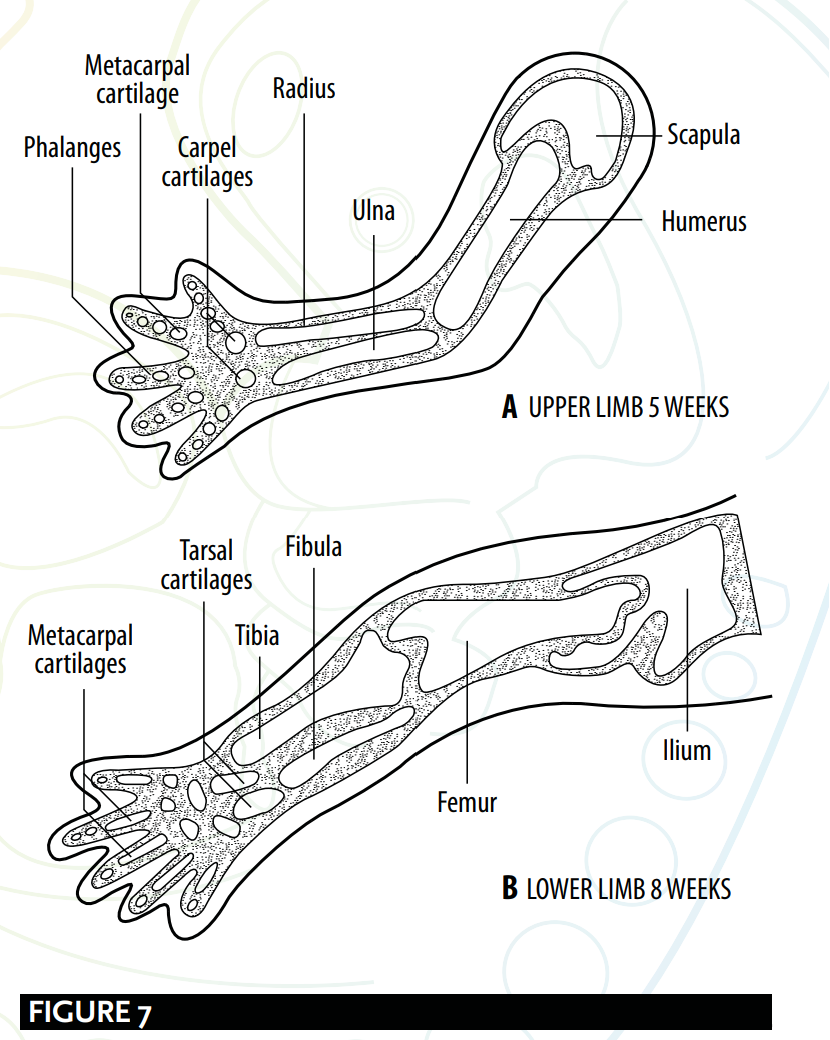
جان ایلن اور بیورلی کریمر بھی اعضاء کی ہڈیوں کی تشکیل پر تبصرہ کرتے ہیں۔
John Allen and Beverley Kramer also comment on limb bone formation.
اعضاء کا میسینکائیم (mesenchyme) شروع میں ایک ہم جنس مادہ ہوتا ہے لیکن جلد ہی اس میں کثافتیں پیدا ہونے لگتی ہیں اور یہ کارٹلیج (cartilage) میں تبدیل ہو کر مختلف ہڈیوں کے کارتلیج نما ماڈلز بنا دیتے ہیں۔ ہر کارتلیج ماڈل پیریکونڈرئیم (perichondrium) کے حصار میں ہوتا ہے جو کہ میسینکائیم کی ہی ایک کثافت ہوتی ہے۔ ہر کارتلیج ماڈل پر ایک آسٹیفک سینٹر (ابتدائی آسٹیفیکیشن سینٹر) گردونواح کے میسینکائیم سے آسٹیوبلاسٹس (ہڈی بنانے والے خلیات) کے اندرونی داخلے کے ذریعے بن جاتا ہے۔ اب گردونواح کے میسینکائیم کو پیریوسٹئیم (ہڈی کے گرد موجود تہہ) کہا جاتا ہے۔ اب آسٹیوبلاسٹس ہڈی پیدا کرتے ہیں جس سے اعضاء کے ڈھانچے کے اجزاء وجود میں آتے ہیں۔ 73.
The limb mesenchyme is at first a homogenous mass but soon condensations occur in it and these chondrify to form cartilaginous models of the various bones. Each cartilage model is surrounded by perichondrium which is a condensation of mesenchyme. An ossific centre (primary ossification centre) is formed upon each cartilage model by the ingrowth of osteobalsts (bone-forming cells) from the surrounding mesenchyme. The surrounding mesenchyme is now termed periosteum (surrounding the bone). Osteoblasts now produce bone which give rise to the skeletal elements of the limbs. 73.
قرآن کے 'ایضام' کے مرحلے اور جدید ایمبریولوجی (علمِ جنین) کے نظریات کے درمیان واضح مماثلتیں پائی جاتی ہیں، یعنی محور (axial)، اعضاء (limb) اور ملحقہ ڈھانچے (appendicular skeleton) کا ارتقاء۔
There are clear parallels between the qur'anic `idhaam stage and the view modern embryology takes i.e. the development of the axial, limb and appendicular skeleton.
خلاصہ
SUMMARY
ادغام کا مرحلہ: محور، اعضاء اور ملحقہ ڈھانچے کی تشکیل۔
The `idhaam stage: The formation of the axial, limb and appendicular skeleton.
گوشت کے لوتھڑے سے ہڈیوں تک
FROM A LUMP TO BONES
ایک عام غلط فہمی، جو عام طور پر غیر عربی زبان کے ماہرین سے سرزد ہوتی ہے، یہ ہے کہ اس آیت کا لفظی ترجمہ "اور ہم نے اس لوتھڑے کو ہڈیوں میں بدل دیا" کیا جا سکتا ہے۔ اس بنیاد پر وہ یہ نتیجہ اخذ کرتے ہیں کہ یہ آیت غیر سائنسی ہے کیونکہ گوشت کا ایک لوتھڑا ہڈیوں کے مجموعے میں تبدیل نہیں ہو سکتا۔ تاہم، یہ عربی قواعد اور قرآن کے بلاغت کے ناقص فہم پر مبنی ہے۔ قواعد کے نقطہ نظر سے اس آیت کے معنی یہ ہیں: "اور ہم نے اس لوتھڑے سے ہڈیاں بنائیں"۔
A common misconception, usually made by non-Arabists, is that this verse can be literally translated as “and We made that lump into bones”. From this, they conclude that this verse is unscientific because a lump of flesh cannot turn into a mass of bones. However, this is based upon a crude understanding of Arabic grammar and the Qur’an's eloquence. This verse, from a grammatical perspective, has the meanings of: “and We made of/from/out of the lump bones”.
یہی وجہ ہے کہ یوسف علی اس آیت کا ترجمہ یوں کرتے ہیں کہ "پھر ہم نے اس گارے سے ہڈیاں بنائیں"؛ شاکر اس کا ترجمہ یوں کرتے ہیں کہ "پھر ہم نے گوشت کے لوتھڑے میں ہڈیاں بنائیں"؛ اور اے جے آربری، قرآن کے اپنے ترجمے میں جسے آج بھی ماہرینِ تعلیم استعمال کرتے ہیں، اس آیت کا ترجمہ یوں کرتے ہیں کہ "پھر ہم نے بافت (ٹشو) سے ہڈیاں پیدا کیں"۔75
This is why Yusuf Ali translates this verse as “then we made out of that lump bones”74; Shakir translates it as “then We made (in) the lump of flesh bones”; and A J Arberry, in his translation of the Qur’an which is still used by academics today, translates this verse as “then We created of the tissue bones”.75
حقیقی ہڈیاں نہیں
NOT REAL BONES
مفسرین کی ایک اور رائے یہ ہے کہ اس مرحلے پر کوئی حقیقی ہڈیاں موجود نہیں ہوتیں۔ یہ دلیل دی جاتی ہے کہ ظاہری ہڈیاں محض غضروف (cartilage) ہیں کیونکہ ہڈیوں کا بننا (ossification) ابھی مکمل نہیں ہوا، اور اس طرح قرآن غلط ہے۔ اگرچہ یہ ایک معقول بحث ہے، لیکن یہ غلط جگہ پر استعمال کی گئی ہے۔ 'عظام' میں ہڈیوں کی غضروف والی شکل بھی شامل ہے کیونکہ اس وقت ڈھانچے کا ڈھانچہ تشکیل پا رہا ہوتا ہے۔ مزید برآں، ہڈیوں کے بننے کا عمل آٹھویں ہفتے سے شروع ہو جاتا ہے، جو پیدائش کے بعد بھی جاری رہتا ہے، اور یہ عمل بلوغت کے آس پاس مکمل ہوتا ہے۔ بیری مچل اور رام شرما وضاحت کرتے ہیں:
Another proposition from commentators is that at this stage there are no real bones. It is argued that the apparent bones are mere cartilage as ossification is incomplete and, as such, the Qur’an must therefore be inaccurate. Although a valid contention, it is misplaced. `idhaam encompasses the cartilaginous form of the bones as the skeletal framework is put in place. Additionally, the process of ossification begins by the 8th week,76 continuing on after birth, with the eventual completion of the ossification process at around puberty. Barry Mitchell and Ram Sharma explain:
ہڈیوں کے بننے کے مراکز (ossification centres) آٹھویں ہفتے کے دوران اعضاء کی ہڈیوں میں پہلی بار ظاہر ہوتے ہیں۔ بارہویں ہفتے تک، اعضاء کی ہڈیوں کے شافٹس (shafts) ہڈی میں تبدیل ہو جاتے ہیں، اگرچہ کلائی کی کارپل ہڈیاں (carpal bones) پیدائش کے بعد تک غضروف (cartilaginous) ہی رہتی ہیں۔ ٹخنے کی تین بڑی ٹرسل ہڈیوں (tarsal bones) کا ہڈی میں تبدیل ہونا تقریباً 16 ہفتوں میں شروع ہو جاتا ہے، لیکن کچھ چھوٹی ٹرسل ہڈیاں پیدائش کے 3 سال بعد تک ہڈی میں تبدیل نہیں ہوتیں۔77
The centres of ossification first appear in the limb bones during the eighth week. By the twelfth week, the shafts of the limb bones are ossified, though the carpal bones of the wrist remain cartilaginous until after birth. The ossification of the three largest tarsal bones of the ankle begins about 16 weeks, but some of the smaller tarsal bones do not ossify until 3 years after birth.77.
اس تناظر میں، یہ فرض کرنا طبی لحاظ سے ایک لغو بات ہوگی کہ نومولود یا کم عمر نوعمر بچوں میں ہڈیاں نہیں ہوتیں محض اس لیے کہ انہیں ہڈی بننے کے عمل (ossification) کی ضرورت ہوتی ہے، خاص طور پر اس لیے کہ ہڈی بننے کا عمل بلوغت کے دوران ہونے والی نشوونما کی تیزی کے اختتام پر مکمل ہوتا ہے۔ بہرحال، اگر معاملہ ایسا ہی ہوتا، اور ہم اس مرحلے کو گویا 'بغیر ہڈیوں والا' تسلیم کرتے، تو لفظ 'اضعام' کے معنی ایک ہمہ گیر تشریح کی اجازت دیتے ہیں کیونکہ اس کے مفہوم میں "مختلف ہڈیوں کے غضروف نما ماڈلز" شامل ہیں۔
From this perspective, it would be a medical absurdity to assume newborns or young teenagers do not have bones simply because they require ossification, especially since ossification completes at the end of the growth-spurt of puberty. Nevertheless if this were the case, and we are to take this stage as being ‘boneless’, as it were, the derisions of the word `idhaam allow for an all encompassing interpretation because the “cartilaginous models of the various bones”78 is included in its meaning.