٦٫٢ مراحل التعليم المدرسي
6.2 School education stages
عند تقسيم التعليم إلى مراحل، يجب مراعاة واقع الطالب في كل مرحلة، من حيث كونه طفلاً أو بالغاً (بالغاً)، وأن نرجع في ذلك إلى الأدلة الشرعية والأحكام التي تدل عليها فيما يتعلق بالطفل أو البالغ، من حيث تعامل وليّ الأمر معه، وبالتالي تعامل المعلم والمربي معه؛ لأن الله تعالى، المدبِّر، ربّ العالمين، قد وضع في الإسلام نظاماً ملزماً لتنظيم طريقة تعامل الناس بعضهم مع بعض.
While dividing teaching into stages, we must pay attention to the student’s reality as a child or mature (baaligh) person at each stage. And we must refer to the Shari’ah evidences and rules they denote as related to the child or mature person with respect to how his guardian (waliyy al-amr), and consequently the teacher and educator deals with him, since in Islam, the Creator the Director (Al-Mudabir), the Lord of the World, has brought a binding system to regulate how humans deal with each other.
من الأدلة المتعلقة بهذا الموضوع قولُ الله تعالى (سورة النور، الآية 58):
Among the evidences related to this subject is Allah Ta’ala’s saying (Surah An-Nur Ayah 58):
﴿يَا أَيُّهَا الَّذِينَ آمَنُوا لِيَسْتَأْذِنكُمُ الَّذِينَ مَلَكَتْ أَيْمَانُكُمْ وَالَّذِينَ لَمْ يَبْلُغُوا الْحُلُمَ مِنكُمْ ثَلَاثَ مَرَّاتٍ مِّن قَبْلِ صَلَاةِ الْفَجْرِ وَحِينَ تَضَعُونَ ثِيَابَكُم مِّنَ الظَّهِيرَةِ وَمِن بَعْدِ صَلَاةِ الْعِشَاءِ ثَلَاثُ عَوْرَاتٍ لَّكُمْ لَيْسَ عَلَيْكُمْ وَلَا عَلَيْهِمْ جُنَاحٌ بَعْدَهُنَّ طَوَّافُونَ عَلَيْكُم بَعْضُكُمْ عَلَىٰ بَعْضٍ كَذَٰلِكَ يُبَيِّنُ اللَّهُ لَكُمُ الْآيَاتِ وَاللَّهُ عَلِيمٌ حَكِيمٌ﴾ "يَا أَيُّهَا الَّذِينَ آمَنُوا" يعني: أيها المؤمنون، "لِيَسْتَأْذِنكُمُ الَّذِينَ مَلَكَتْ أَيْمَانُكُمْ وَالَّذِينَ لَمْ يَبْلُغُوا الْحُلُمَ مِنكُمْ ثَلَاثَ مَرَّاتٍ..." الآية. وقال تعالى في الآية التالية:
﴿يََ أَيُّ هَا الَّ ي ذينَ آمَنُوا لييَسْتَأْيذنكُمُ الَّ ي ذينَ مَلَكَتْ أَيَْْانُكُمْ وَالَّ ي ذينَ لََْ يَ بْ لُغُوا الُْْلُمَ يمنكُ مْ ثَلََثَ مَرَّا ت يمِّن قَ بْيل صَلََية الْفَجْير وَي حينَ تَضَعُونَ ثييَابَكُم يمِّنَ الظَّيهيرَية وَيمن بَ عْ ي د صَلََية الْيعشَايء ثَلََثُ عَوْرَا ت لَّكُمْ لَيْسَ عَلَيْكُمْ وَلَا عَلَيْيهمْ جُنَاحٌ بَ عْدَهُنَّ طَوَّافُونَ عَلَيْكُم بَ عْضُكُمْ عَلَىٰ بَ عْ ض كَذَٰليكَ ي بَُييِّنُ اللَّ هُ لَكُمُ الْآيََ ي ت وَاللَّ هُ عَلييمٌ حَ ي كيمٌ ﴾ “O you who have believed, let those whom your right hands possess and those who have not [yet] reached puberty among you ask permission of you [before entering] at three times: before the dawn prayer and when you put aside your clothing [for rest] at noon and after the night prayer. [These are] three times of privacy for you. There is no blame upon you nor upon them beyond these [periods], for they continually circulate among you - some of you, among others. Thus does Allah make clear to you the verses; and Allah is Knowing and Wise.” And He Ta’ala said in the following Ayah:
﴿وَإِذَا بَلَغَ الْأَطْفَالُ مِنكُمُ الْحُلُمَ فَلْيَسْتَأْذِنُوا كَمَا اسْتَأْذَنَ الَّذِينَ مِن قَبْلِهِمْ كَذَٰلِكَ يُبَيِّنُ اللَّهُ لَكُمْ آيَاتِهِ وَاللَّهُ عَلِيمٌ حَكِيمٌ﴾ "وَإِذَا بَلَغَ الْأَطْفَالُ مِنكُمُ الْحُلُمَ فَلْيَسْتَأْذِنُوا كَمَا اسْتَأْذَنَ الَّذِينَ مِن قَبْلِهِمْ كَذَٰلِكَ يُبَيِّنُ اللَّهُ لَكُمْ آيَاتِهِ وَاللَّهُ عَلِيمٌ حَكِيمٌ." [النور: 59] وقال النبي ﷺ:
﴿وَإيذَا بَ لَغَ الْأَطْفَالُ يمنكُمُ الُْْلُمَ فَ لْيَسْتَأْيذنُوا كَمَا اسْتَأْذَنَ الَّ ي ذينَ يمن قَ بْيليهمْ كَذَٰليكَ ي بَُييِّنُ اللَّ هُ لَكُمْ آيََتييه وَاللَّ هُ عَلييمٌ حَ ي كيمٌ ﴾ “And when the children among you reach puberty, let them ask permission [at all times] as those before them have done. Thus does Allah make clear to you His verses; and Allah is Knowing and Wise.” [An-Nur: 59] And the Prophet (SAW) said:
رفع القلم عن ثلاثة: عن المجنون المغلوب على عقله حتى يفيق، وعن النائم حتى يستيقظ، وعن الصبي حتى يحتلم. [رواه أبو داود في سننه]. وقال ﷺ: «يا أسماء إن المرأة إذا بلغت المحيض لم تصلح أن يُرى منها إلا هذا وهذا»، وأشار إلى وجهه وكفّيه. [رواه أبو داود في سننه]. وعن عطية القرظي قال:
رفع القلم عن ثلَثة، عن المجنون المغلوب على عقله حتى يفيق، وعن النائم حتى « » يستيقظ، وعن الصبي حتى يحتلم “The pen (i.e. accountability) is lifted from three persons: The insane whose mind is overcome until he recovers, the sleeper until he awakes and the child until he attains puberty.” (Narrated by Abu Dawud in his Sunan). And he (SAW) said: » يَ أسماء إن المرأة إذا بلغت المحيض لَ تصلح أن يرى منها إلا هذا وهذا « “‘O Asma, when the female reaches the age of menstruation, nothing should be seen of her except this and this’ and he indicated his face and palms.” (Narrated by Abu Dawud in his Sunan). And from ‘Atiya Al-Quradhi who said:
عُرضنا على النبي ﷺ يوم قريظة، فكان من أنبت قُتل، ومن لم ينبت خُلّي سبيله، فكنت ممن لم ينبت فخُلّي سبيلي. (رواه الترمذي في سننه). وروى أيضًا،
)عُيرضنا على النبي يوم قريظة فكان من أنبت قُتيل، ومن لَ ينبت خُلِّى سبيله، فكنت ممن لَ ينبت فخُلِّى سبيلي( “We (i.e. Bani Quraydha) were shown to the Prophet on the Day of Quradhya. Whoever had grown pubic hairs was killed while the one without growth was released. I was among those without growth so I was released.” (Narrated by Tirmidhi narrated in his Sunan). He also narrated,
أنَّ النبيَّ ﷺ لما حكَّم سعدًا في بني قريظة كان يكشف عن مؤتزرهم (أي عن عوراتهم). وقال عثمانُ لما أُتي بغلامٍ: «انظروا إلى مؤتزره، فوجدوه لم ينبت، فلم يقطعه». ولم يُنكر ذلك أحدٌ من الصحابة. وقال ﷺ: «مُروا صبيانكم بالصلاة إذا بلغوا سبعًا، واضربوهم عليها إذا بلغوا عشرًا، وفرِّقوا بينهم في المضاجع». (رواه الإمام أحمد في مسنده). تدل هذه الأدلة على أن الصبا ينتهي ببلوغ الأطفال، أي بلوغهم سنَّ الرشد. وقد جعل الإسلام علاماتٍ حسيةً واضحةً تفصل بين الصبا والبلوغ: الاحتلام أو نبات الشعر الخاص عند الذكور، والحيض أو الحمل عند الإناث. كما دلَّ على أن الأحكام التي تُطبَّق على البالغين لا تُطبَّق على الصغار قبل ذلك. وقال ﷺ: «مُروا أبناءكم بالصلاة لسبع سنين، واضربوهم عليها لعشر سنين». (رواه الإمام أحمد في مسنده). يدل الحديث على أن تأديب الأطفال ينقسم إلى مرحلتين: المرحلة قبل بلوغ الطفل عشر سنين، فلا يُستعمل فيها الضربُ في تأديبه، لأن الحديث قصر الأمر على أمره بالصلاة دون ضربه؛ فمن باب أولى ألا يُضرب على تعليمه غير الصلاة، ويقتصر تأديبه على أساليب الوعظ والتهديد دون ضرب. والمرحلة بعد بلوغه عشر سنين حتى البلوغ، ويدخل في تأديبه الضربُ عند الحاجة. غير أن الحدود والعقوبات الشرعية (العقوبات) لا تُطبَّق عليه إلا بعد بلوغه، أي المرحلة التي تأتي بعد النضج، وذلك لقوله ﷺ:
» أنَّ النبي لما حكَّم سعد اً فِ بني قريظة كان يكشف عن مؤتزرهم « “That after S’ad adjudicated regarding Quraydha, the Prophet commanded with exposing their wrappings (covering their private parts).” And Uthman said when a young boy was brought to him: » انظروا إلى مؤتزره، فوجدوه لَ ينبت فلم يقطع « “Look at his wrapper. They found him without pubic hair so they did not cut (his hand)” and no Sahabah denied this. And he (SAW) said: مروا صبيانكم بالصلَة إذا بلغوا سبعاً، واضربوهم عليها إذا بلغوا عش راً، وفرقوا بينهم « » فِ المضاجع “Command your children to pray when they attain seven years, and beat them over it (not praying) when they attain ten years. And separate between them in the beds.” (Narrated by Imam Ahmed in his Musnad). These evidences indicate that childhood ends when children attain puberty i.e. the age of maturity. Islam assigned distinctive tangible milestones separating childhood from maturity: when wet dreams occur or pubic hairs appear in males, and menstruation or pregnancy for females. It also indicated that the rules that are applied upon those attaining puberty do not apply upon them beforehand. And he (SAW) said: » مُ ر وا أبناءكم بالصلَة لسبع سنين واضربوهم عليها لعشر سنين « “Command your children to pray when they attain seven years, and beat them over it (for not praying) when they attain ten years” (Narrated by Imam Ahmed in his Musnad). The hadith shows that disciplining children is divided into two stages: The stage before the child attains ten years where beating is not used to discipline him because the hadith restricts one to command him with prayer without beating him. Thus, by greater reason, he is not beaten for being taught other than the prayer. His discipline is restricted to styles of exhortation and threats without beating. And the stage after he attains ten years until puberty his discipline includes beating him if necessary. However the hudood and Shari’ah punishments (‘uqoobaat) do not apply upon him until after attaining puberty i.e. the stage after maturity due to his (SAW) saying:
رُفِعَ القلمُ عن ثلاثةٍ: عن الصبيِّ حتى يبلغَ، وعن النائمِ حتى يستيقظَ، وعن المعتوهِ حتى يبرأَ. «The pen (i.e. accountability) is lifted from three persons: The child until he matures, the sleeper until he awakes and the imbecile until he recovers» [رواه أبو داود في سننه]. ومعنى «رُفِعَ القلمُ عن ثلاثةٍ» هنا هو عدمُ المؤاخذة. فإذا بلغ الصبيانُ، عدَّهم الشرعُ مكلَّفين، فيُعاقَبون بقرارٍ قضائي إذا ارتكبوا مخالفةً (لأحكام الشريعة) أو محرَّماً. وهذا يستلزم وجودَ قضاةٍ في المدارس التي تضمُّ طلاباً بالغين ومراحلَ التعليم العليا.
رُفع القلم عن ثلَثة، عن الصبيِّ حتى يبلغ، وعن النائم حتى يستيقظ، وعن المعتوه « » حتى يبرأ “The pen (i.e. accountability) is lifted from three persons: The child until he matures, the sleeper until he awakes and the imbecile until he recovers” (Narrated by Abu Dawud in his Sunan). The meaning of » رُفع القلم عن ثلَثة « “lifting the pen” here is non-accountability. When children attain puberty, the Shar’a deems them accountable so they are punished by judicial decree if they commit a violation (of the Shari’ah rules) or a haram. This requires the presence of judges in schools of mature students and higher level education.
هذه القواعد المتعلقة بالطفل والشخص البالغ يجب مراعاتها عند وضع مراحل التعليم، لأن التربية والتأديب شرطان أساسيان للتعليم. تمتد المرحلة الأولى من دخول الطفل المدرسة حتى يبلغ العاشرة من عمره. وتمتد المرحلة الثانية من بلوغه العاشرة حتى البلوغ، الذي يحدث عادةً عند الخامسة عشرة في البلاد ذات المناخ المعتدل. وتمتد المرحلة الثالثة من الخامسة عشرة حتى يتم تعليمه المدرسي.
These rules with respect to the child and mature person must be observed when devising teaching stages since tarbiyyah (raising of children) and discipline are prerequisites of education. The primary stage extends from the child’s entry into school until he reaches ten years. The second stage extends from his attaining ten years until puberty which normally occurs at fifteen years of age in countries of moderate climate. And the third stage extends from fifteen years until he completes school education.
بناءً على هذه الأدلة والقواعد، تنقسم مراحل التعليم المدرسي في دولة الخلافة على أساس أعمار الطلاب لا على أساس المواد التي تُدرّسها المدرسة. وتنقسم المدارس إلى ثلاثة أنواع على النحو الآتي:
Based upon these evidences and rules, school teaching stages in the Khilafah State are divided upon the basis of student ages and not subjects offered by the school. Schools are divided into three types in the following manner:
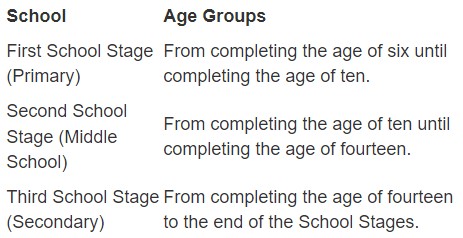
إذا أتمَّ الطالبُ عشرَ سنوات من عمره، يُحرَصُ على نقله إلى المرحلة الدراسية الثانية بغضِّ النظر عن تحصيله الدراسي. وإذا بلغَ الحُلُم، يُنقَل إلى المرحلة الدراسية الثالثة (مدارس الطلاب الذين بلغوا الحُلُم)، سواء أكان قد بلغ تلك المرحلة تحصيلاً دراسياً أم لم يبلغها. وسنُبيِّن قريباً كيف يضمن نظامُ الفصول الدراسية الذي ستطبِّقه وزارةُ التربية والتعليم في المدارس الحكومية إسنادَ الطلاب إلى المدارس وفق فئاتهم العمرية.
Once the student completes ten years of age, care is taken to transfer him to the second stage of schooling irrespective of his academic achievement. And once he attains puberty, he is transferred to the third school stage (schools of students who reached puberty) whether or not he has attained that stage academically. We shall soon demonstrate how the system of school terms that will be implemented by the Education Department in State schools, guarantees the assigning of students to schools according to their age groups.
أما التعليم قبل سن السادسة (رياض الأطفال والحضانات)، فهو متروك لتقدير الناس. فإن أراد أحدٌ أن يُنشئ مدرسةً خاصةً لهذا الغرض، فله ذلك، بشرط أن تُشرف الدولة على هذا التعليم من حيث المواد الدراسية ومدى توافقها مع سياسة التعليم التي تتبناها الخليفة.
As for education before six years, (Nurseries and Kindergarten), this is at the people’s discretion. If one wishes to establish a private school for this purpose, one is allowed to do so provided the State supervises this teaching with respect to study subjects and their conformity to the education policy adopted by the Khalifah.