6.7 مواضيع الدراسة ومراحلها
6.7 Study subjects and stages
كما قلنا من قبل، فإن التعليم المدرسي مقسّم إلى ستة وثلاثين فصلاً دراسياً موزعة على ثلاث مراحل بحسب أعمار الطلاب، بحيث تخضع كل مرحلة للأحكام الشرعية المتعلقة بها. وفيما يتعلق بالمواد الدراسية، فإن لكل مرحلة مواد محددة مع قواعد خاصة بالرسوب والنجاح (الانتقال من صف دراسي إلى الذي يليه). وتنقسم المواد الدراسية في كل مرحلة إلى قسمين: المواد الأساسية، ومواد المهارات والأنشطة.
As we have said before, the school education is divided into 36 school terms distributed between 3 stages according to student ages such that each stage is regulated by the relevant Shari’ah rules. With respect to study subjects, each stage has specific subjects together with specific rules related to failure and progress (transferring from one course to the next). Study subjects in each stage are divided into two: Basic subjects and Skills and Activities Subjects.

في المرحلة الدراسية الأولى، يبدأ معلمان بتدريس الطلاب منذ الفصل الدراسي الأول. يُعلِّم الأول الطلابَ الثقافةَ الإسلامية واللغةَ العربية، ويُعلِّم الثاني العلومَ والرياضيات. ويشترك المعلمان في تدريس المهارات والأنشطة. وينبغي أن يبقى المعلم مع طلابه في هذه المرحلة ثلاثةَ فصولٍ دراسيةٍ متتالية على الأقل.
In the 1st school stage, two teachers begin teaching students from the first term. The first teaches them Islamic culture and Arabic language, the second teaches them sciences and mathematics. Both share in teaching skills and activities. The teacher should remain with his students in this stage for at least three consecutive school terms.
في مادة المهارات، يقدّم المعلّم للطفل أنشطةً لتنمية قدرته على الربط والتفكير، مثل تركيب الأشياء وتفكيكها. ويجب الحرص على ربط هذه الأنشطة والمهارات بالمواد الأساسية المعتمدة في الفصل الدراسي.
In the skills subject, the teacher gives the child activities to develop his ability to link and think e.g. building and dismantling of things. Care must be taken to relate these activities and skills to the term’s basic adopted subjects.
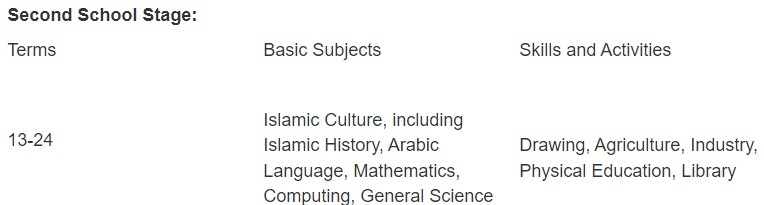
تشمل مادة «العلوم العامة» في هذه المرحلة مبادئ الكيمياء والأحياء والفيزياء والجغرافيا.
The “General Sciences” subject in this stage includes principles of chemistry, biology, physics and geography.
المرحلة الدراسية الثالثة:
Third School Stage:
تغطي هذه المرحلة الفصول من ٢٥ إلى ٣٦. وفي هذه المرحلة، يشارك جميع الطلاب في المواد الدراسية نفسها في الفصول من ٢٥ إلى ٣٠ فقط. وبعد ذلك، في الفصول من ٣١ إلى ٣٦، ينضم الطلاب إلى الفروع الاختيارية (الفروع) التي يفضلونها. وهذه الخيارات هي:
This stage covers the terms 25 to 36. In this stage, all students participate in the same study subjects in terms 25 to 30 only. Thereafter, in terms 31 to 36 students join the optional branches (furoo’) they prefer. These options are:
- الخيار الثقافي - الخيار العلمي - الخيار الصناعي أو التقني (الحوسبة، الميكانيكا، الكهرباء، الاتصالات، رسم الخرائط وغيرها)
- Cultural Option - Scientific Option - Industrial or Technical Option (computing, mechanics, electrical, communications, cartography etc.)
- الخيار الزراعي - الخيار التجاري - الخيار المنزلي (للإناث)
- Agricultural Option - Commerce Option - Domestic Option (for females)
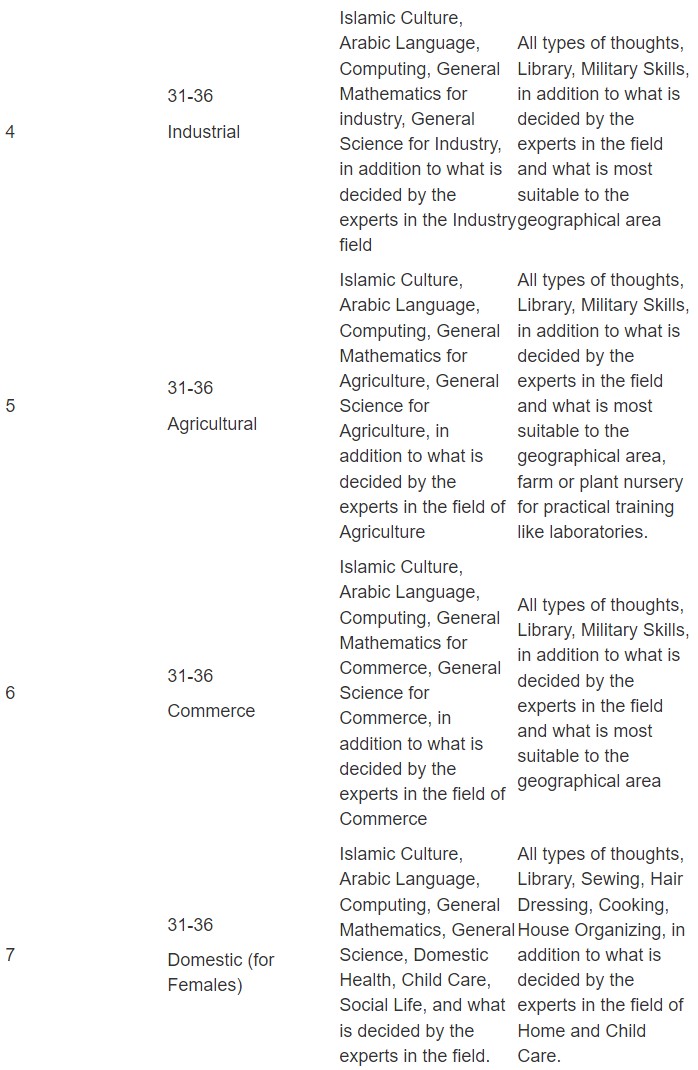
يوضح الجدول التالي المواد التي تُدرَس في كل خيار من هذه الخيارات.
The following chart shows the subjects studied in each of these options:
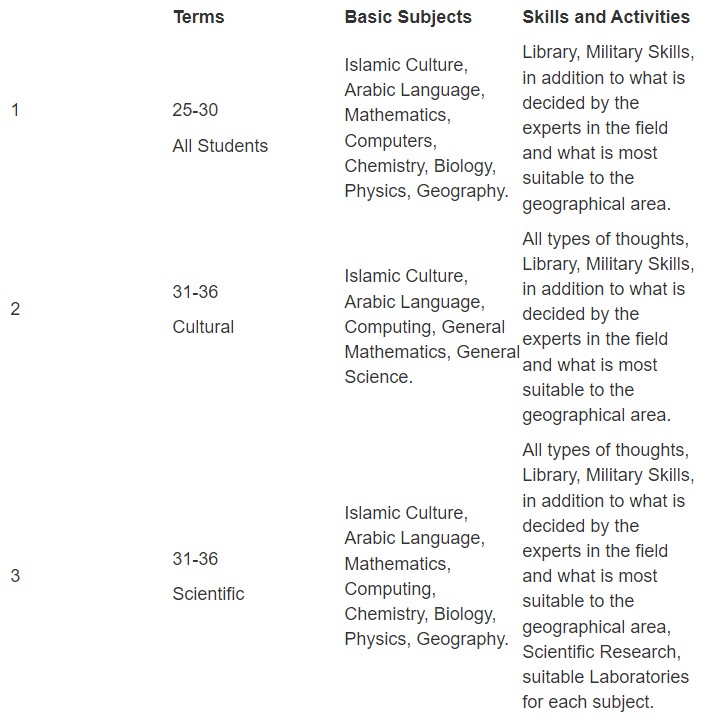
في الخيار الثقافي من المرحلة الثانوية الثالثة، يدرس الطالب موضوعات موسّعة في الثقافة الإسلامية واللغة العربية. ويحدد الخبراء المتطلبات في مواد الفقه، والأصول، والتفسير، وعلوم الحديث، والتاريخ، وغيرها من خيارات الثقافة الإسلامية. وكذلك يعتمدون مناهج خاصة في خيارات اللغة العربية المطلوبة لهذه المرحلة، مثل البلاغة، والنصوص الأدبية وغيرها.
In the cultural option of the third school stage, the student takes extended topics in both Islamic Culture and Arabic Language. Experts determine the requirements in the subjects of Fiqh, Usul, Tafseer, '‘Ulum Al-Hadith, History and other Islamic culture options. Likewise, they adopt specific courses (manaahij) in the Arabic language options required for this stage such as Eloquence (Balagha), Literature texts etc.
في الخيارات غير العلمية، يدرس الطالب الرياضيات والعلوم بصورة مختصرة، مع التركيز فقط على الموضوعات المطلوبة لخياره. فطالب خيار التجارة يدرس موضوعات الرياضيات المتعلقة بالتجارة، مثل المحاسبة، وحسابات الزكاة والميراث، وحسابات الأرباح والخسائر، إلى جانب مسك الدفاتر وحسابات دفتر النقدية؛ وكذلك يدرس موضوعات الإحصاء. أما طالب الخيار الصناعي فيدرس موضوعات خاصة بالصناعة، مثل الرسم الهندسي، والأشكال، وحساب المساحات والأحجام، وغير ذلك.
In non-scientific options, the student takes Mathematics and Sciences in a concise form with focus paid only to the topics required for their option. Thus the Commerce option student takes Mathematics topics related to Commerce e.g. Accounting, Zakat and Inheritance Accounts, Profits and Loss Accounts together with Bookkeeping and Cashbook Accounts; likewise he/she takes topics in Statistics. Whereas the Industrial option student takes topics specific to Industry such as Geometrical Drawing, Shapes, Area and Volume Calculation etc.
ﻃﺎﻟﺐ ﺍﻟﻌﻠﻮﻡ ﺍﻟﻌﺎﻣﺔ ﻓﻲ ﺍﻟﺨﻴﺎﺭ ﻏﻴﺮ ﺍﻟﻌﻠﻤﻲ ﻳﺪﺭﺱ ﻣﻮﺿﻮﻋﺎﺕ ﺗﺮﻛﺰ ﻋﻠﻰ ﺩﺭﺍﺳﺔ ﺟﺴﻢ ﺍﻹﻧﺴﺎﻥ ﻭﺍﻷﻣﺮﺍﺽ ﻭﺍﻟﺴﻼﻣﺔ ﺍﻟﻌﺎﻣﺔ، ﻭﻛﺬﻟﻚ ﻣﻮﺿﻮﻋﺎﺕ ﻋﻠﻤﻴﺔ ﻣﺘﻌﻠﻘﺔ ﺑﺎﻹﻧﺴﺎﻥ ﻭﺑﻴﺌﺘﻪ. ﺃﻣﺎ ﻓﻲ ﺍﻟﺨﻴﺎﺭ ﺍﻟﺰﺭﺍﻋﻲ، ﻓﺘُﻀﺎﻑ ﻣﻮﺿﻮﻋﺎﺕ ﻣﺘﻌﻠﻘﺔ ﺑﺎﻟﺰﺭﺍﻋﺔ ﻭﺍﻟﺘﻐﺬﻳﺔ، ﻣﺜﻞ ﻃﺮﻕ ﺯﺭﺍﻋﺔ ﺍﻟﻨﺒﺎﺕ ﻭﺃﻣﺮﺍﺿﻪ ﻭﻋﻼﺟﻪ، ﻭﺃﻧﻮﺍﻉ ﺍﻟﺘﺮﺑﺔ، ﻭﺍﻷﺳﻤﺪﺓ، ﻭﻣﺒﻴﺪﺍﺕ ﺍﻟﺤﺸﺮﺍﺕ، ﻭﻏﻴﺮ ﺫﻟﻚ.
The General Sciences student of the non-scientific option takes topics focusing upon studies of the Human Body, Diseases, Public Safety as well as scientific topics related to man and his environment. In the agricultural option, topics related to agriculture and nutrition are added such as methods of Plant Agriculture, their diseases and treatment, types of soil, fertilisers, insecticides etc.
يدرس طالب الخيار الصناعي المواد المتعلقة بعلم المواد وخصائصها، مثل الكثافة والكتلة، إلى جانب مبادئ الديناميكا الميكانيكية والسلامة العامة.
The Industrial option student takes subjects related to the science of materials and their attributes such as Density and Mass, together with the principles of Mechanical Dynamics and Public Safety.