3. مَن ونَرى ماذا؟
3. Who And What Do We See?
قوة الصورة
The Power Of An Image
كيف نرى أنفسنا وكيف نتخيل أننا نُرى من قِبَل الآخرين له تأثير على هويتنا الذاتية وعلى العلاقة بين «الذات» و«الآخر». وينعكس ذلك بصريًا هنا في صورة مؤثرة بعنوان «الخوف ما زال أنا» (انظر أدناه). تُوحي الصورة بشخصية وحشية لأسير معذَّب يرتدي قناعًا يُخفي هويته الشبيهة بالدب.18
How we see ourselves and how we imagine ourselves being seen has a bearing on our self-identity and on the relationship between ‘self’ and ‘other’. This is reflected visually here in an evocative image entitled ‘The Fear Is Still Me’ (see below). The image suggests a bestial persona of a tortured prisoner donning a hood that conceals his bear-like identity.18
وعلى الرغم من أنه "لا يستطيع أن يرى"، فإنه يُنظر إليه بقوة بوصفه محور المشهد، كما لو أن حراس السجن يُعلنون قدومه. في الصورة يظهر هالة. نتساءل عما إذا كانت الهالة المرسومة حول رأسه هي شعاع مصباح يدوي من خلفه، أو ضوء كشاف يسقط عليه، أو ما إذا كان الفنان يتحدى المشاهد لكي يتأمل في الثنائيات المتضادة التي تتجاور فيها رموز الحياة الإنسانية وغير الإنسانية. إن تكاتف الحراس الذين خلفه يقابله انعزال السجين، ويبلغ التناقض الساخر ذروته في تشكيل الحراس الذي يشبه القطيع مقابل السجين الوحيد الذي يشبه الدب. إنه السجين الجريح الشبيه بالدب، الذي طُورد وصيد، والحراس هم من يُعلنون قدومه.
Though “he cannot see” he is very much to be seen as a centre-piece as if heralded by the prison guards. In the image, there appears a halo. We wonder whether the halo etched around him is the beam of a torch from behind him, a floodlight shining onto him or whether the artist challenges us to consider binary oppositions wherein symbols of humanised and dehumanised life become juxtaposed. The togetherness of the guards behind him is set against the isolation of the prisoner though the pack-like formation of the guards and the lone bear-like prisoner is strikingly ironic. It is the wounded bear-like prisoner who has been hunted and the prison guards herald him.
هناك الكثير مما يُرى. يوحي الرسم الكاريكاتيري بشخص أكبر من الحجم الطبيعي، وإن كانت قدماه البارزتين ربما تعكس أطرافاً منتفخة من الضرب، وبذلك يبدو السجين غير متوازن. ولكن بما أن قدميه لا تحملان أي إصابات، فهل قد تشيران بدلاً من ذلك، أو في آنٍ معاً، إلى حضوره الراسخ الذي يطبع أثره؟ لا نستطيع أن نرى يديه، فنتخيل ما قد تحملانه من إصابات.
There is much to be seen. The cartoon suggests a larger-than-life individual though his protruding feet perhaps reflect limbs swollen by beating, and in this the prisoner appears imbalanced. Since however his feet bear no injuries might they instead or simultaneously suggest his stamped presence? We cannot see his hands however and imagine what injuries they might bear.
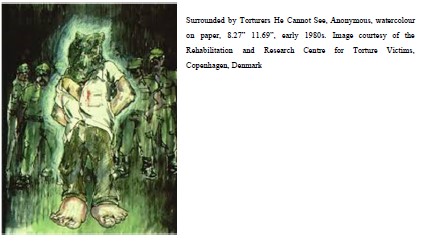
ان ملابس السجين الرثّة، مع أزرار قميصه وسحّاب بنطاله المفتوحة، تُشكّل تباينًا آخر مع الملابس «المتحضّرة» والأنيقة لحراس السجن. وكون السجين مُقنَّعًا بغطاء الرأس يكشف عن غياب الهوية الذاتية. ومع ذلك، فإن هذا الغطاء الشبيه بالدبّ، بدلًا من الخوف والقلق والألم المفترضة لديه، يُجسّد التحدّي والقوّة.
The scruffy clothes of the prisoner with shirt buttons and trouser zip undone are a further contrast to the ‘civilised’ and neat attire of the prison guards. The fact that the prisoner is hooded reveals a lack of self-identity. Though, in place of his assumed fear, worry and pain, the bear-like hood projects defiance and strength.
بلا شك، يواجه المسلمون وابلًا مستمرًا من التقارير الصحفية التي تشوّه دينهم أو تشوّه غيرهم من المسلمين. وهذا التصنيف المستمر للمسلمين كـ"آخر" يزيد من القلق، ويُسهم في تشكيل الطريقة التي ننظر بها إلى أنفسنا بوصفنا شعبًا يُعرَّف إلى حد كبير بالعنف. وتكثر الصور النمطية عن الوحشية والتخلف، وصور النساء المحجبات أو المنتقبات المؤطرة في سرديات الخوف والمجهول. وتلاحظ بتلر أنّ "الأطر التي من خلالها ندرك، أو نخفق في إدراك، حياة الآخرين بوصفها ضائعة أو متضررة (قابلة للفقد أو للأذى) مشبعة سياسيًّا. وهي بذاتها عمليات للسلطة. فهي لا تحدد أحاديًّا شروط الظهور، لكن غايتها مع ذلك هي تحديد مجال الظهور ذاته."19
Undoubtedly, Muslims face a constant barrage of press reports that vilify their faith or other Muslims. This constant othering heightens anxieties and comes to shape the way we see ourselves as a people largely defined through violence. Motifs of barbarity, backwardness, images of women in hijab or burqa framed around narratives of fear and the unknown are commonplace. Butler notes that ‘the frames through which we apprehend or, indeed, fail to apprehend the lives of others as lost or injured (lose-able or injurable) are politically saturated. They are themselves operations of power. They do not unilaterally decide the conditions of appearance, but their aim is nevertheless to delimit the sphere of appearance itself.’19
يورد تيودور (2011) المثال التالي ليبيّن أن المواقف والتصورات تجاه الآخرين لها تأثير قوي في النظرة التعاطفية أو الوجدانية. ومع تحذيره من التعميمات، يكتب:
Tudor (2011) strikes the following example to reflect how attitudes and perceptions of others have a strong bearing on sympathetic or empathic outlooks. Though cautioning against generalisations, he writes:
عندما ينظر المُعذِّب إلى ضحيته، فإنه بالتأكيد يرى الألم مباشرةً في وجهها والذل في هيئتها. غير أن المشكلة تكمن في النور الذي يرى فيه ذلك. فالأمر ليس أن على المُعذِّب أن يستنتج أكثر، ليصل إلى عالَمٍ آخر "أعمق" تنكشف فيه الصفات الأخلاقية لحال الآخر. الأمر يتعلق بالكيفية التي يرى بها حال الآخر. إن المُعذِّب يرى حقيقة معاناة الآخر أمامه بوضوح تام تحت نورٍ جلي، لكن ذلك النور خاطئ بطريقة ما. إنه نورٌ بارد وقاسٍ على نحوٍ مميز، يسطّح الآخر ويكشفه، ويقطعه ويفتحه على مصراعيه، ليكون أسهل في فحصه والعبث به. ما يلزم هو نورٌ مختلف.
الأفلام التي تُسيء إلى العرب
Reel Bad Arabs
أظهر بحث لِيندنمان (1983) تصويرًا سلبيًا متتابعًا للعرب في الرسوم السياسية الكاريكاتيرية في صحف أمريكية مثل «واشنطن بوست» و«واشنطن ستار» و«ميامي نيوز» و«بالتيمور صن» وغيرها. وحلّل بالمر (1995) الرسوم السياسية الكاريكاتيرية في صحيفة «واشنطن بوست» عقب حروب إسرائيل في عامي 1956 و1957 و1973، وكذلك الانتفاضة الفلسطينية. وحتى قبل حرب الخليج الأولى، كان هناك الميل نفسه إلى تصوير العرب تصويرًا سلبيًا وغير إنساني، وكثيرًا ما كان يُخصّ به العرب الفلسطينيون على وجه التحديد. وغالبًا ما تُستخدم هذه الصور السلبية للترويج للحروب الأمريكية، أو في حالة تحليل بالمر (1995)، للترويج لحملات إسرائيل ضد الفلسطينيين.26 ودراسة ناصر (1979) حول تصوير العرب في الأفلام الأمريكية بين عامي 1894 و1960
Lendenman’s (1983) research has revealed successive negative portrayals of Arabs in political cartoons in American newspapers such as The Washington Post, The Washington Star, The Miami News, The Baltimore Sun and others. Palmer’s (1995) analysis of political cartoons in The Washington Post following Israel’s wars of 1956, 1957 and 1973, the Palestinian Intifida. Even prior to the first Gulf War, there was reflected the same tendency of negative and dehumanising portrayals of Arabs, and oftentimes specifically Palestinian Arabs. Such negative images are often used to promote American wars, or in the case of Palmer’s (1995) analysis, to promote Israel’s campaigns against Palestinians.26 Nasir’s (1979) study of the portrayal of Arabs in American movies between 1894 and 1960
كشفت دراسة لشاهين، شملت أكثر من 900 فيلم من أفلام هوليوود صدرت بين عامي 1896 و2001، عن صورة سائدة للعرب بوصفهم متخلفين وأشراراً وغير إنسانيين. [27] ويظهر في هذه الأفلام اتجاه واضح لتقديم العربي في صورة الشرير المجرّد من إنسانيته.28
revealed a predominant image of Arabs as backwards, evil and inhumane.27 In Shaheen’s comprehensive study of over 900 Hollywood movies released between 1896 and 2001, a dominant trend of media presentations of Arabs as the dehumanised villain is evident.28
وبالمثل، قام كمالي بور (2000) بتقييم التصوير السلبي للعرب في الإذاعة والتلفزيون والأفلام، موضحًا كيف يُصوَّر العرب بأنهم مَيّالون إلى ارتكاب أعمال إرهابية ضد الأمريكيين.29 وأظهرت أعمال أخرى للعيش (1994) وقزاز (1975) كيف أن هذه الصور الأسطورية للعرب بوصفهم أشرارًا بطبعهم، وعنيفين، وغير متحضرين، ومُهدِّدين، بارزةٌ في كتب العلوم الاجتماعية في المرحلة الابتدائية والمتوسطة والثانوية، مما أدى إلى ترسيخ الصور النمطية السلبية عن العرب.30
Similarly, Kamalipour (2000) assessed the negative portrayal of Arabs in radio, television, and movies, revealing how Arabs are prone to committing acts of terrorism against Americans.29 Further works by Ayish (1994) and Qazzaz (1975) showed how such mythical images of Arabs as inherently evil, violent, uncultured and threatening are prominent in social science textbooks in elementary school, junior high and high school, which perpetuated negative stereotypes about Arabs.30
18 كاهلين ماكولو-زاندر وشارين لارسون، «الخوف هو أنا ما زلت» - http://www.nursingcenter.com/upload/static/230543/fear.pdf.
18 Kahleen McCullough-Zander and Sharyn Larson, ‘The Fear Is Still Me’ - http://www.nursingcenter.com/upload/static/230543/fear.pdf.
19 Judith Butler (2010) ‘Performative Agency’ in Journal of Cultural Economy, 3:2, p. 1. Note on the reference: The rules ask that Latin letters be kept only inside square brackets, but this line is a bibliographic reference with no brackets, so the citation is reproduced as given.
19 Judith Butler (2010) ‘Performative Agency’ in Journal of Cultural Economy, 3:2, p. 1.
20 K. Tudor (2011). Understanding Empathy. Transactional Analysis Journal, 41(1), 39–57. Garber: 2004, p. 83. Note: the references are kept in Latin script inside square brackets per the rules, but since none are present here, the citation is rendered in full below as plain text in Arabic script where names are concerned. ٢٠ ك. توادور (٢٠١١). Understanding Empathy. Transactional Analysis Journal, 41(1), 39–57. غاربر: ٢٠٠٤، ص ٨٣.
20 K. Tudor (2011). Understanding Empathy. Transactional Analysis Journal, 41(1), 39–57. Garber: 2004, p. 83.
٢١ ر. سريكانث، بناء العدو: التعاطف/النفور في الأدب والقانون الأمريكيين (فيلادلفيا، مطبعة جامعة تمبل: ٢٠١٢)، ص ١٥٨.
21 R. Srikanth, Constructing the Enemy: Empathy/Antipathy in U.S. Literature and Law (Philadelphia, Temple University Press: 2012), p. 158.
[Kayla Williams, Love My Rifle More Than You (W.W. Norton, 2006), p. 249.]
22 Kayla Williams, Love My Rifle More Than You (W.W. Norton, 2006), p. 249.
23 Herbert Kelman، "Violence Without Moral Restraint: Reflections on the Dehumanization of Victims and Victimizers"، Journal of Social Issues، المجلد 29، العدد 4، (1973)، ص 48.
23 Herbert Kelman, “Violence Without Moral Restraint: Reflections on the Dehumanization of Victims and Victimizers”, Journal of Social Issues, Vol. 29, No.4, (1973), p. 48.
24 Jodi Halpern and Harvey M. Weinstein, Rehumanizing the Other: Empathy and Reconciliation, Human Rights Quarterly, Vol. 26, No. 3 (Aug., 2004), pp. 568-9.