4. 執着する形
4. A Clinging Form
それから私たちはその一滴の液を、付着する形へと変えました。
Then We made that drop of fluid into a clinging form
コーランは、発生中のヒトの胚の次の段階を、「アラカ」という語で表現している。この語は、掛かる、吊り下がる、ぶら下がる、くっつく、しがみつく、付着する、固着する、といった様々な意味を持つ。また、捕らえる、捕らえられる、取り付けられる、付加される、という意味もある。48
The Qur’an describes the next stage of the developing human embryo with the word `alaqah. This word carries various meanings including: to hang, to be suspended, to be dangled, to stick, to cling, to cleave and to adhere. It can also mean to catch, to get caught, to be affixed or subjoined.48
「アラカ」という語の他の含意には、ヒルのような物質、虫に似た姿、あるいは血を吸う傾向を持つ「這うような」性質があります。最後に、その意味には、手にまとわりつく粘土や、互いにくっついて固まった濃い血も含まれます。それは互いに凝結(くっつき合う)するためです。 49
Other connotations of the word `alaqah include a leech-like substance, having the resemblance of a worm; or being of a ‘creeping’ disposition inclined to the sucking of blood. Finally, its meaning includes clay that clings to the hand and thick, clotted blood - because of its clinging together. 49
科学的解釈
SCIENTIFIC INTERPRETATION
現代の胚発生学によって定義される「アラカ」(`alaqah)という語の多様な意味は、胚の発達のさまざまな段階に対応している。クルアーンの記述と科学的記述における胚の外観や子宮との関係には、比較を行うことができる。現代の胚発生学によれば、受精後15日目から胚は「連結茎」(図1参照)によって懸垂され、母体の血管との接触を通じて栄養を得る。この記述は、「アラカ」という語が描く姿、すなわち「懸垂された」あるいは「吊り下がった」物質が宿主の血液から栄養を得る姿と、驚くほどよく一致している。
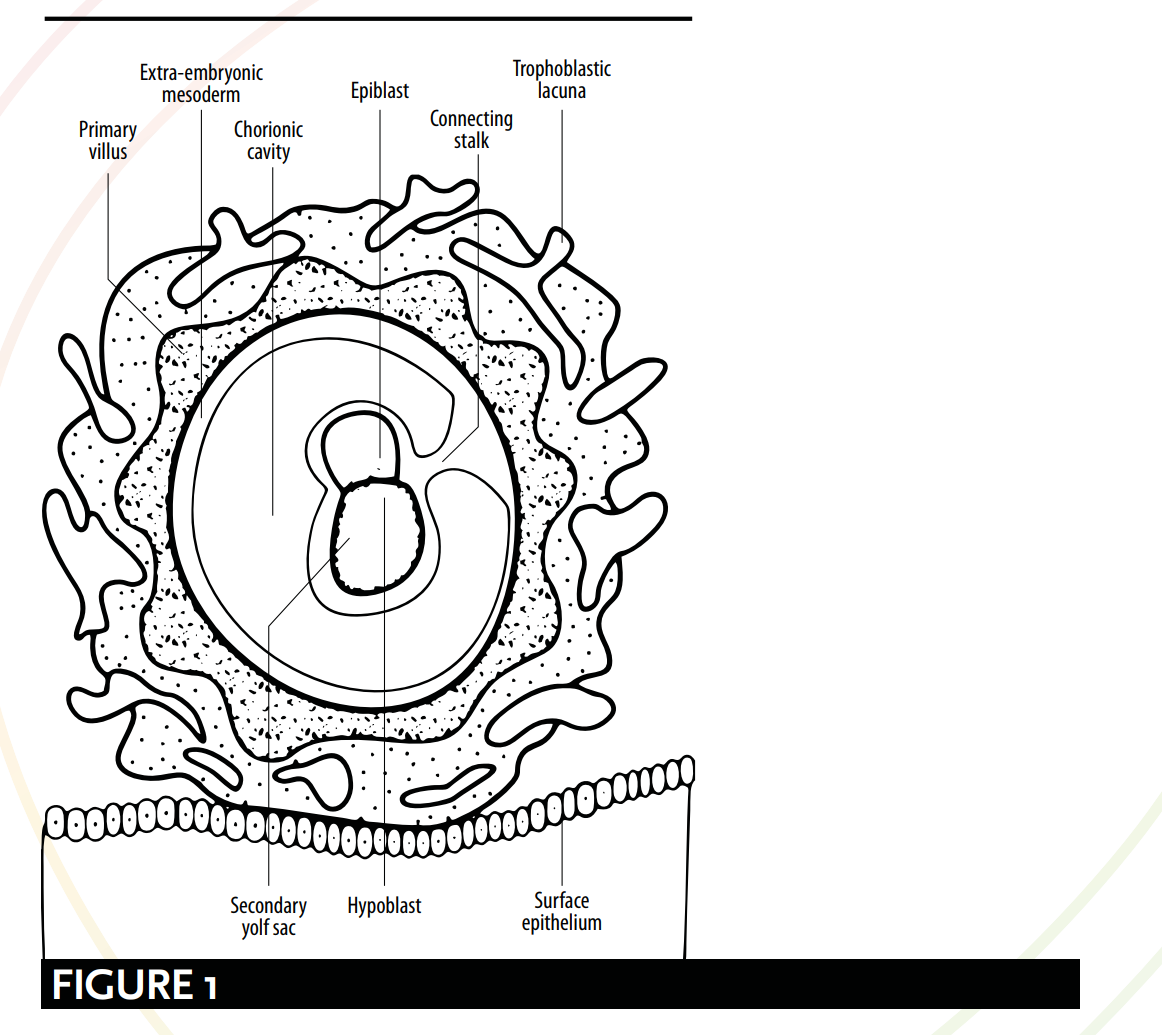
As defined by modern embryology, the myriad of meanings for the word `alaqah correspond to various stages of the embryo’s development. Comparisons can be drawn between qu’ranic and scientific depictions of the embryo's appearance and its relationship with the womb. According to modern embryology, from day 15 the embryo is hanging or suspended via the ‘connecting stalk’ [see Figure 1] and it obtains nutrients through contact with the maternal blood vessels. This description bears a striking resemblance to the picture painted by the word `alaqah – a ‘hanging’ or ‘suspended’ substance, obtaining nutrients from its host’s blood.
それに続いて、妊娠4週目には2つの過程が進行します。脳と脊髄が形成される過程である神経胚形成(neurulation)と、胚の折りたたみの初期段階です。これら2つの過程が完了すると、胚はアラカ(`alaqah)という語が示唆する、ヒルのような形状になります。これは、はうような、ヒルまたは虫のような物体を指します[図2、3、4を参照]。
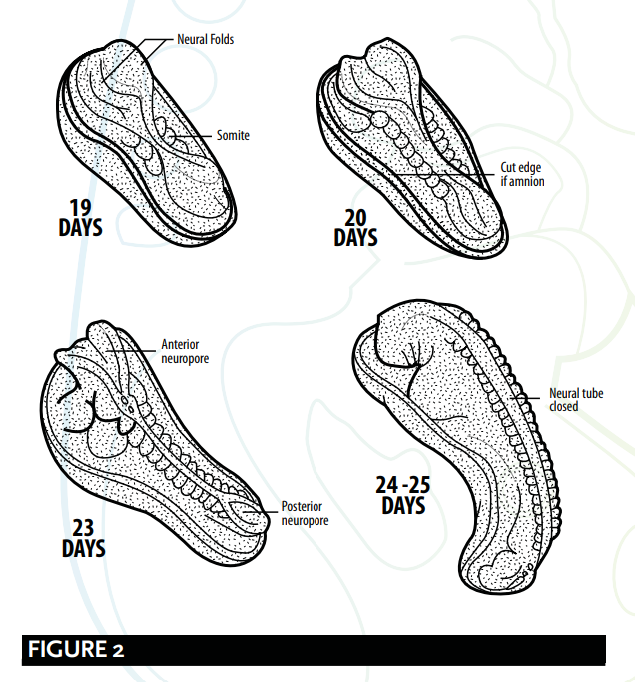
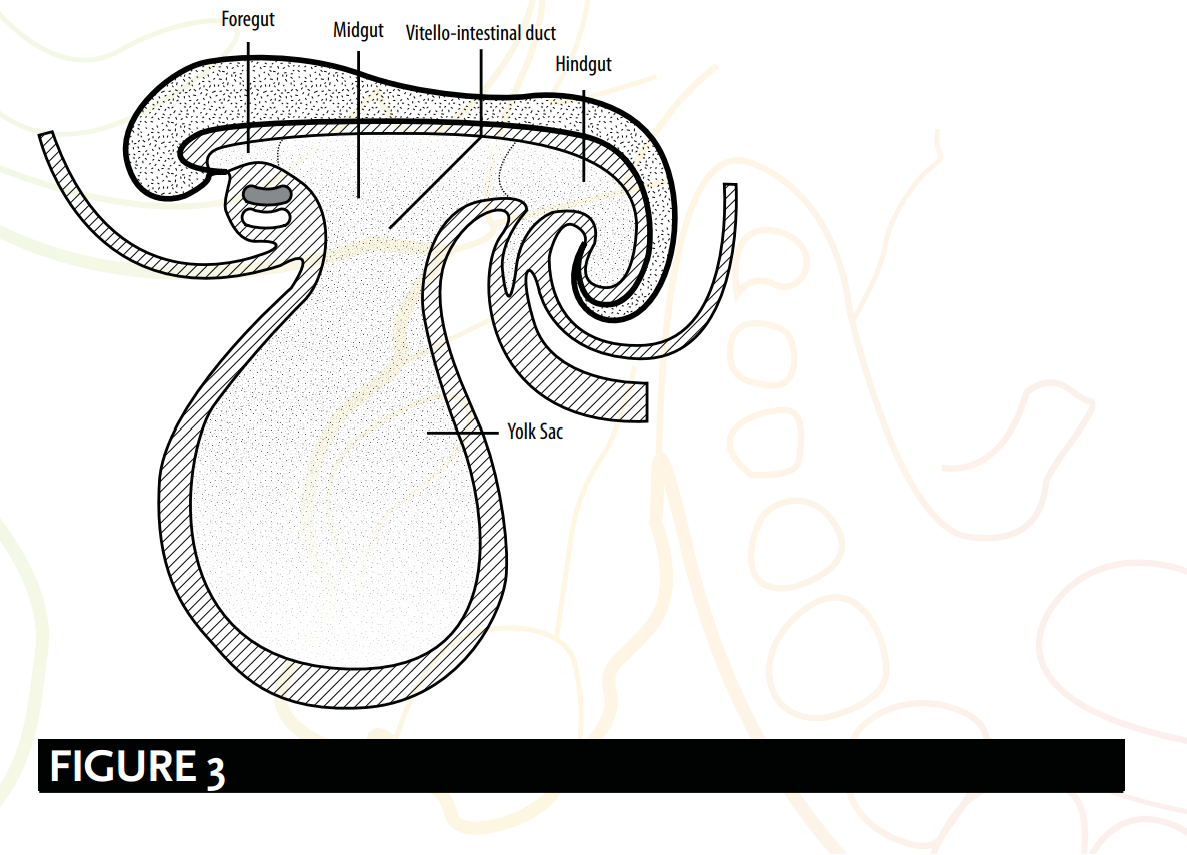
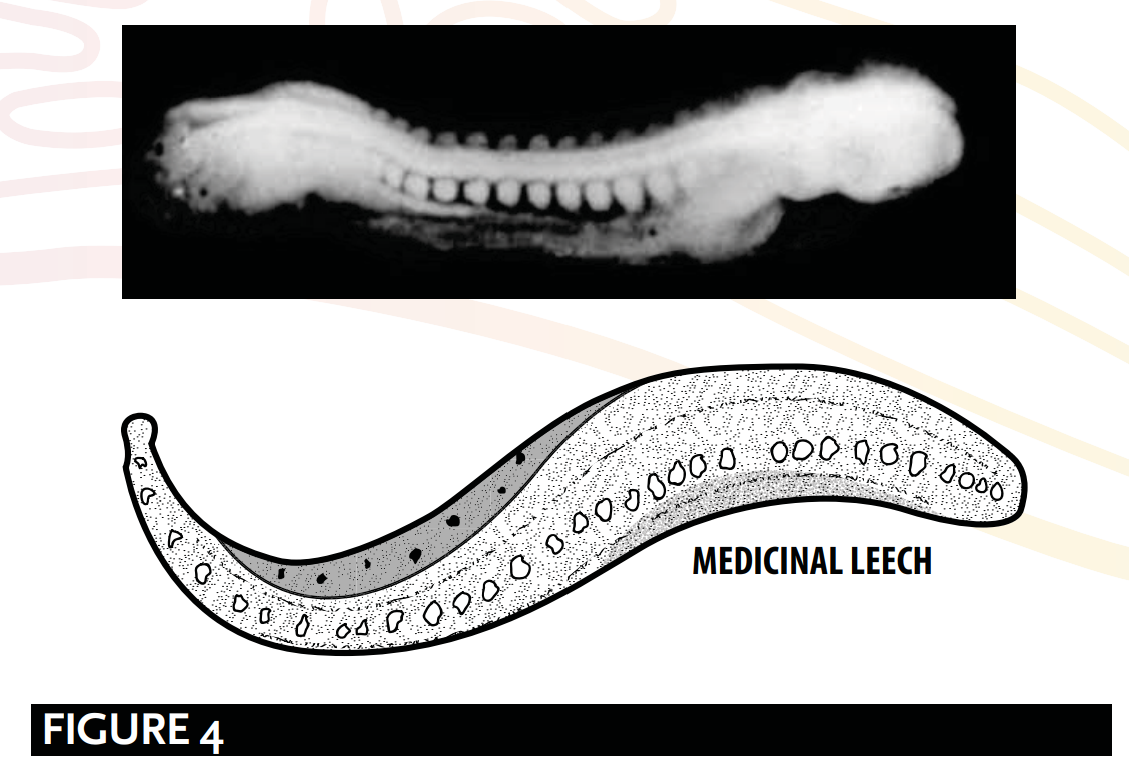
Following this, during the 4th week, two processes occur: the formation of the brain and the spinal cord, known as neurulation; and the initial stages of the folding of the embryo. It is upon the culmination of these two processes that the embryo resembles a leech-like form suggested by the word `alaqah – a creeping, leech or worm-like substance [see Figure 2, 3 and 4].
絞首刑/吊り下げ
HANGING/SUSPENDED
胚発生学者のバリー・ミッチェルとラム・シャルマは、「アラカ」段階の「ぶら下がった」あるいは「懸垂された」側面について説明している。彼らはこの胚を、「細胞栄養膜に、胚外中胚葉(原始結合組織)からなる連結柄によって結びつけられている。この柄は臍帯の前身である」と記述している。50 図1は、胚がまるでぶら下がっているか懸垂されているかのように、連結柄を介して細胞栄養膜に結びつけられている様子を示している。
Embryologists Barry Mitchell and Ram Sharma explain the ‘hanging’ or ‘suspended’ aspects of the `alaqah stage. They describe the embryo as being, “connected to the cytotrophoblast by a connecting stalk of extra-embryonic mesoderm (primitive connective tissue). The stalk is the forerunner of the umbilical cord.” 50 Figure 1 shows the embryo connected to the cytotrophoblast via a connecting stalk, as if it were hanging or suspended.
血管を通じて栄養を得ること
OBTAINING NUTRIENTS VIA BLOOD VESSELS
ボリー・ミッチェルとラム・シャルマは、胚の栄養摂取が母体の血管との接触を通じて行われる仕組みについて、次のように述べている。第二週の間に胚が急速に成長するため、栄養とガスの交換のより効率的な手段が必要となる。これは、絨毛膜の胚性血管が脱落膜の母体血管と接触することによって達成される。51.
With regard to the way the embryo obtains its nutrients through contact with the maternal blood vessels, Barry Mitchell and Ram Sharma write: Due to the rapid growth of the embryo during the second week, there is a need for a more efficient means of nutritional and gaseous exchange. This is achieved when the embryonic blood vessels of the chorion come into contact with the maternal blood vessels of the decidua.51.
...[第3週までに]...母体の血液と胎児の血液との間での栄養素、呼吸ガス、老廃物の交換は、絨毛間腔内の胎盤膜を介して行われます。母体の血液は、子宮動脈の枝である螺旋動脈からこれらの腔内に入り、胚と胎児のための栄養素と酸素を運びます。52
... [by the third week]... The exchange of nutrients, respiratory gases and waste products between the maternal and fetal blood takes place across the placental membrane within intervillous spaces. Maternal blood enters these spaces from the spiral arteries, branches of the uterine artery, bringing nutrients and oxygen for the embryo and fetus.52
これは、「alaqah」の意味の妥当性を裏付けるものであり、血液を通じて栄養を得る存在のイメージを喚起するものです。
This reinforces the validity of the meanings of `alaqah, and its evoking images of an entity obtaining its nutrients via blood.
神経胚形成と胚の折りたたみ
NEURULATION & THE FOLDING OF THE EMBRYO
「アラカ」の段階は、神経管形成と胚の初期の折りたたみ過程を示唆しています。神経管形成とは、おおよそ受精後19日から25日にかけて脳と脊髄が形成される過程をいいます。また胚の折りたたみでは、頭部と尾部が互いに近づくように折り曲げられます。この二つの生理的変化が組み合わさることで、胚はヒルのような物質に似た姿になります。
The `alaqah stage suggests the process of neurulation and the initial stages of the folding of the embryo. Neurulation comprises of the formation of the brain and the spinal cord from days 19 to 25 (approx.); and the folding of the embryo involves the head and the tail being brought closer together. The combination of these two physiological changes causes the embryo to resemble a leech-like substance.
神経管形成
NEURULATION
神経胚形成の終わりに、神経管の頭側端と尾側端が閉じる。この時点で胚は、ヒルのような外見になる53 [図2を参照]。
At the end of neurulation the cranial and caudal ends of the neural tube close. The embryo, at this point, becomes leech-like in appearance 53 [see Figure 2].
バリー・ミッチェルとラム・シャルマが神経胚形成の過程を説明している。
Barry Micthell and Ram Sharma explain the process of neurulation.
約19日目、原始線条の頭側端では、下層の中胚葉と脊索が外胚葉を誘導して神経板を形成させ、神経板は丸まって神経褶を形成する。神経板は最初に頭側端で拡大する。20日目には、胚の中央部の神経板は狭いままだが、尾側端で拡大する。神経板は深くなって神経溝を形成し、そこから神経管が形成される。管の頭側端と尾側端は開いており、それぞれ前神経孔と後神経孔として知られている。これらは最終的に閉じる。54
At about 19 days, at the cranial end of the primitive streak, the underlying mesoderm and notochord induce the ectoderm to form the neural plate, which rounds up to form the neural folds. The neural plate enlarges initially at the cranial end. At 20 days, the neural plate in the mid-region of the embryo remains narrowed, but it expands at the caudal end. The plate deepens to form the neural groove from which the neural tube forms. The cranial and caudal ends of the tube are open and are known as the anterior and posterior neuropores; these eventually close. 54
胎児の折りたたみ
FOLDING OF THE EMBRYO
胚の折り畳みは、また、ヒルに似た形状(図3参照)、あるいは胚学者が記述しているように、円筒状または管状の構造を形成する役割も担っています。胚学者のキース・ムーアとT. V. N. パーサウドは次のように示唆しています。
The folding of the embryo is also responsible for forming a leech-like shape [see Figure 3], or as embryologists have described; a cylindric or tube-like structure. Embryologists Keith Moore and T. V. N. Persaud suggest that:
身体の形成における重要な出来事は、平らな三層性胚盤が、やや円柱状の胚へと折りたたまれることである。この折りたたみは、胚、特に脳と脊髄の急速な成長によって生じる。55
A significant event in the establishment of body form is the folding of the flat trilaminar embryonic disc into a somewhat cylindric embryo. Folding results from the rapid growth of the embryo, particularly the brain and the spinal cord. 55
管状または蛭のような構造[図4参照]は、Barry MitchellとRam Sharmaが説明するところによれば、次のことに起因する。
The tube-like or leech-like structure [see Figure 4], as explained by Barry Mitchell and Ram Sharma, is due to:
縦方向の折り畳みは、妊娠21日から24日の間に起こり、その結果、胚は曲がって頭部と尾部が互いに近づき、管状の構造を形成します。56
longitudinal folding, which occurs between days 21 and 24, result[ing] in … the embryo [bending] so that the head and tail are brought closer together...[to] form a tube-like structure. 56
概要
SUMMARY
ʿalaqah(アラカ)の段階
The `alaqah stage:
胚は連結茎を介して細胞栄養膜に接続しており、まるで吊り下げられているか、宙づりになっているかのように見えます。
The embryo is connected to the cytotrophoblast via a connecting stalk, as if it were hanging or suspended.
脳と脊髄の形成、すなわち神経管形成(ニューラルレーション)と、胚が折り畳まれる初期段階。これらの過程が完了すると、胚はヒルのような姿に見える。
The formation of the brain and the spinal cord, known as neurulation; and during the initial stages of the folding of the embryo. It is upon the culmination of these processes that the embryo appears leech-like.
胎児は母親の血管との接触を通じて栄養を得ます。これは、血液から栄養を得るヒルのような物質の働きに似ています。
The embryo obtains its nutrients via contact with the maternal blood vessels. This mirrors the action of a leech-like substance obtaining its nutrients via blood.
ガレノスとアラカ
GALEN & `ALAQAH
批評者たちは、「アラカ(`alaqah)」という語の使用はガレノスが述べた人間の胚の第二段階の記述にあたると主張している。彼らが「`alaqah」を「血の塊」と訳すことで、この段階に関するガレノスの記述であるかのような印象が生まれている。
Critics declare that the use of the word `alaqah is a description of Galen’s second stage of the human embryo. Their translation of the word `alaqah to ‘blood clot’ creates an impression of Galen's description of this stage:
しかし、凝血に血が満たされ、心臓、脳、肝臓がまだ分節化されず形も成していないものの、この時点ですでに一定の堅固さといくらかの大きさを備えたとき、これが第二段階である。胎児の実体は、もはや精液の形ではなく肉の形をとる。57
But when it [the clot] has been filled with blood, and heart, brain and liver are still unarticulated and unshaped yet have by now certain solidarity and considerable size, this is the second period; the substance of the foetus has the form of flesh and no longer the form of semen. 57
これらの批判者たちの主張には、いくつかの弱点があります。
There are a number of weaknesses with the implications of these critics:
It seems the text was cut off after "the Qur’an does not make a mention of the “heart, brain and liver..." Could you send the rest of the passage? Once I have it, I'll translate it into Japanese.
1. Firstly, the Qur’an does not make a mention of the “heart, brain and liver...
「まだ明確な輪郭も形もなく、しかし一定の連帯性を備え、かなりの規模を持つもの」
[being] unarticulated and unshaped yet [with] a certain solidarity and [of a] considerable size”.
2. 第二に、「アラカ」(`alaqah)という語は「血」を意味するのではなく、その主な意味は「すがりつくもの」と「ヒルのような物質」です。一部のアラビア語学者は、「アラカ」に「血塊」という意味を当てはめていますが、それは血で満たされているからではなく、その性質上「すがりつく」からだとしています。この解釈は、この語の主要な意味と一致しています。
2. Secondly, the word `alaqah does not mean blood; rather, its primary meanings are ‘a clinging form’ and ‘a leech-like substance’. Some Arab linguists would attribute the meaning of a ‘blood clot’ to the word `alaqah, not because of it being filled with blood, but instead due to it ‘clinging’ by nature. This interpretation matches the primary meaning of the word.
3. 第三に、ガレノスは第二段階において「胎児は肉の形をしている」と主張している。一方、クルアーンは、ムドガ(噛まれた肉片、すなわち肉塊)の段階がアラカ(凝血)の段階の後に来ると明言している。
3. Thirdly, Galen insists “the foetus has the form of flesh” during the second stage, whereas the Qur’an affirms the mudghah (a chewed piece of meat or lump of flesh) stage comes after the `alaqah stage.
4. 第四に、ガレノスは『自然的機能について』の中でこう書いている。「精液についてもまた同様であり、その機能は初めから備わっていた」58。ガレノスが精液だけに遺伝物質の全責任があるかのように示唆している点は誤りであり、クルアーンと預言者の伝承に反し、真っ向から矛盾する。先に検討したとおり(アリストテレス、ガレノス、ヌトファを参照)、イスラームの典拠となる文献はヌトファを男性と女性の双方から混ざり合った一滴または液体とみなし、子の遺伝について男性と女性の双方が責任を負うと確認している59。したがって、もし預言者ﷺがガレノスの人間の発生に関する見解を写していたのであれば、7世紀のアラビアには何が正しい見解かを知る手段がなかったにもかかわらず、彼はなぜ誤った科学を退け、正しいものだけを用いたのだろうか。
4. Fourthly, in his book On the Natural Faculties, Galen writes: so it is with the semen: its faculties it possessed from the beginning.58 Galen’s incorrect implication of the semen’s sole responsibility for the genetic material is incompatible, and in direct opposition, to the Qur’an and Prophetic traditions. As previously explored (see Aristotle, Galen & Nutfah) the Islamic source texts considers the nutfah as a mingled drop or fluid from both the male and the female, and confirm both the male and female as responsible for the genetics of the child.59 Therefore, if the Prophet ﷺ copied Galen’s views on human development, how is it that he rejected the incorrect science and only used what was correct, even though there was no way in 7th century Arabia of knowing which views were accurate?
胎児の外見の誤った描写
MISREPRESENTING THE EMBRYO’S APPEARANCE
現代の注釈者たちは、胚が蛭のように見えるのは卵黄嚢を取り除いたときに限られると主張し、そのため「アラカ」の記述は、この段階における胚の外見を誤って伝えていると論じている。しかし胚学者たちは、卵黄嚢は胚外体腔と呼ばれる胚外の構造によって胚から隔てられていると説明している。この事実は、卵黄嚢が胚の構造の一部ではないため、誤って伝えているという主張を反証するものである。60
Contemporary commentators argue the embryo only looks leech-like when the yolk sac is removed, and that the `alaqah's description is therefore a misrepresentation of the embryo’s appearance at this stage. However, embryologists explain that the yolk sac is separated from the embryo by an extra-embryonic feature, called the extra-embryonic coelom. This fact disproves claims of misrepresentation as the yolk sac is not part of the structure of the embryo.60