A Aqeedah e aquilo que dela emana em termos de Ahkaam (regras) e aquilo que sobre ela se constrói em termos de pensamentos é a base de At-Taghyeer (a mudança).
The Aqeedah and what emanates from it in terms of Ahkaam and what is built upon it in terms of thoughts, is the basis of At-Taghyeer (change).
A conduta do ser humano está ligada àquilo que ele carrega em termos de conceitos. Os conceitos (Mafaaheem) são convicções (Qanaa'aat) resultantes de uma compreensão das coisas e de seus atributos, somadas àquilo que se constrói sobre esta compreensão ou dela emana em termos de outras convicções.
The conduct of the human is tied to what he carries in terms of concepts. The concepts (Mafaaheem) are convictions (Qanaa’aat) resulting from a comprehension of things and their attributes in addition to what is built upon this comprehension or emanates from it in terms of other convictions.
Conceitos são de dois tipos:
Concepts are of two types:
The first
The first:
Conceitos sobre as coisas. São convicções ou Ahkaam (juízos) cuja fonte são as próprias coisas. Isso incluiria afirmações como: "O fogo queima", "O veneno mata", "O álcool intoxica", "A carne é comida, enquanto a terra não é comida", "O acúmulo crescente de pressão gera uma explosão (de certo tipo)", "A sociedade é composta por um conjunto de indivíduos ligados por relações permanentes" e "O renascimento não ocorreria senão por meio do pensamento esclarecido".
: Concepts about things. These are convictions or Ahkaam (rulings) whose source is the things themselves. This would include statements like: ‘Fire burns’, ‘Poison kills’, ‘Alcohol intoxicates’, ‘Meat is eaten whilst soil is not eaten’, ‘The increased build-up of pressure generates an explosion (of sorts)’, ‘The society is composed of a collection of individuals bound by permanent relationships’ and ‘Revival would not occur except by way of the enlightened thought’.
Todos esses pensamentos são descrições ou Ahkaam cuja fonte é o seu objeto. Eles podem estar corretos ou incorretos, dependendo de sua conformidade com a realidade ou de sua contradição a ela. Em todos esses casos, são considerados conceitos em relação àquele que neles acreditou. O comportamento e a conduta humana estão ligados aos seus conceitos sobre as coisas, de modo que quem está convencido de que sua comida foi envenenada nunca comeria dela, mesmo que estivesse com fome. Da mesma forma, quem estivesse com sede buscaria água e não outra coisa, enquanto quem quisesse se embriagar buscaria álcool e nada mais.
All of these thoughts are descriptions or Ahkaam whose source is its subject. They could be correct or incorrect depending on their conformity to the reality or their contradiction to it. In all of these cases they are considered to be concepts in respect to the one who has believed in them. The human behaviour and conduct is tied to his concepts about things and so whoever is convinced that his food has been poisoned would never eat from it and even if he was hungry. Similarly the one who was thirsty would seek water and not something else whilst the one who wanted to be intoxicated would seek alcohol and nothing else.
O segundo tipo:
The second type:
Conceitos (Mafaaheem) sobre a vida. São convicções ou ahkaam cuja fonte é externa ao seu objeto. Exemplos disso são afirmações como: "A Salaah é Fard", "A fraude é Haram" e "Matar alguém é Haram", entre outras. A fonte deste hukm não é a própria coisa ou ação; estas representam apenas a área do assunto ou a realidade sobre a qual se julga, enquanto a fonte do julgamento é outra e se encontra em outro lugar.
Concepts (Mafaaheem) about life. These are convictions or Ahkaam whose source is external to its subject. This is like the statements: ‘The Salaah is Fard’, ‘Fraud is Haraam’ and ‘Killing someone is Haraam’ etc... The source of this Hukm is not the thing itself or the action and these only represent the subject area or the reality that is being judged upon whilst the source of the judgement is something else and lies elsewhere.
Nossa afirmação: "O álcool intoxica" reflete uma descrição ou um atributo interno associado ao álcool. É um juízo feito sobre uma coisa devido ao que ela contém ou ao que resulta dela. Já a afirmação "O álcool é haram", no entanto, não é um juízo emitido sobre uma coisa com base no que há nela, mas representa um Hukm de Allah (SWT).
So our statement: ‘Alcohol intoxicates’ reflects a description or an internal attribute associated to alcohol. It is a judgement made upon a thing due to what it contains or results in. The statement however ‘Alcohol is Haraam’ is not a judgement passed upon a thing on the basis of what is in it but rather it represents a Hukm from Allah (swt)
Quem decide o que é haram e o que é mubah (permitido)?
who decides what to make Haraam and what to make Mubaah (permissible).
O comportamento da pessoa também está ligado aos seus conceitos sobre a vida. Se ele tivesse o conceito ou entendimento de que a carne de porco era comestível e satisfaria a fome, então isso representaria um conceito sobre uma coisa. Já o conceito sobre a vida, contudo, é que o porco é Haram, o que significa que é obrigatório para ele evitá-lo e manter-se afastado dele. Isso se tornaria um conceito para aquele que compreendeu este Hukm, nele acreditou, e teria efeito sobre o seu comportamento, impedindo-o de saciar a sua fome com carne de porco.
The behaviour of the person is also tied to his concepts about life. If he held the concept or understanding about the flesh of pig that it was edible and would satisfy hunger, then this would represent a concept about a thing. The concept about life however is that the pig is Haraam meaning that is obligatory for him to avoid and keep away from it. It would become a concept for the one who has comprehended this Hukm and believed in it and it would have an effect upon his behaviour and prevent him from satisfying his hunger from pig.
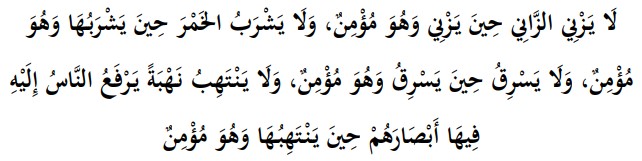
Quando o fornicador comete zinaa, ele não é um crente; quando quem bebe álcool está bebendo álcool, ele não é um crente; quando o ladrão rouba, ele não é um crente; e nenhum saqueador que saqueia uma coisa valiosa que atrai a atenção das pessoas é um crente enquanto comete esse ato (Al-Bukhari).
When the fornicator is committing Zinaa he is not a believer, when the alcohol drinker is drinking alcohol he is not a believer, when the thief steals he is not a believer and no plunderer who plunders a valuable thing that attracts the attention of people is a believer whilst he commits this act (AlBukhaari).
Portanto, é obrigatório restaurar as verdades (Haqaa’iq) nas mentes para corrigir o comportamento e retificá-lo. Estas incluem: as Haqaa’iq (verdades) das coisas e as verdades da Shar’iyah quanto às crenças e aos Ahkaam. Elas devem ser relembradas, para que se tornem vivas, firmemente enraizadas e presentes, e, assim, tenham efeito sobre o comportamento.
It is therefore obligatory to restore the truths (Haqaa’iq) to the minds to correct the behaviour and to rectify it. These include: The Haqaa’iq (truths) of things and the Shar’iyah truths in terms of beliefs and Ahkaam. They must be reminded with them so that they become fresh, firmly embodied and present, and as such have an effect upon the behaviour.
Allah (SWT) disse:
Allah (swt) said:

E lembra, pois de fato a lembrança beneficia os crentes (Adh-Dhaariyaat 55).
And remind for verily the reminder benefits the believers (Adh-Dhaariyaat 55).
É o contrário no caso dos descrentes, pois lembrá-los das verdades e dos conceitos da Shari'ah não lhes traz benefício. Eles ouvem essas coisas como pensamentos, mas elas não representam verdades para eles, nem representam conceitos para eles, e por isso não têm efeito algum sobre o seu comportamento.
The opposite is the case in respect to the disbelievers because reminding them of the truths and Shar’iyah concepts does not benefit them. They hear them as thoughts but they do not represent truths for them nor do they represent concepts for them and as such they have no effect upon their behaviour.
Portanto, os conceitos sobre a vida são aquilo que define o modo pelo qual o ser humano vive. Sua principal preocupação não é apenas viver, mas sim como deve viver, e sua principal preocupação não é satisfazer suas necessidades, mas sim o modo pelo qual irá satisfazê-las. Por essa razão, seus conceitos sobre a vida moldam para ele uma maneira e um estilo específicos de viver.
Therefore the concepts about life are what define the manner by which the human lives. His main concern is not just living but rather how he should live and his main concern is not about satisfying his needs but rather it concerns the manner by which he will satisfy them. For this reason his concepts about life fashion for him a specific manner and style of living.
No caso em que a fonte dos conceitos sobre a vida é externa às coisas e às ações em si, não é possível adotá-los senão depois de estar convencido de que a fonte é verdadeira ou possui o poder ou a autoridade para julgar sobre elas, e de que os seus Ahkaam são válidos e corretos.
In the case where the source of the concepts in life are external to the things and actions themselves, it is not possible to adopt them except after being convinced that the source is true or has the power or authority to make a judgment upon them, and that its Ahkaam are valid and correct.
O Islã estabeleceu que o Hākim (Juiz) é Allah (SWT) e que a fonte dos Aḥkām (sentenças/regras) é a Waḥy (revelação divina).
Islaam has established that the Haakim (Judge) is Allah (swt) and that the source of the Ahkaam (rulings) is the Wahi (divine revelation)
revelado ao nosso Senhor Muhammad ﷺ.
revealed upon Sayyidunaa Muhammad (saw).
Allah (SWT) disse:
Allah (swt) said:

Certamente, o julgamento (hukm) pertence somente a Allah. Ele ordenou que não adorásseis outro que não Ele (Yusuf 40).
Verily the Hukm (rule) is not but for Allah. He commanded that you do not worship other than him (Yousuf 40).
E Ele (SWT) disse:
And He (swt) said:

E quem não julgar pelo que Allah revelou, então esses são os descrentes (Al-Maa'idah 44).
And whosoever does not judge by what Allah has revealed then it those who are the disbelievers (Al-Maa’idah 44).
Toda regra ou julgamento que não seja o Hukm de Allah é Taaghoot:
Every ruling or judgement other than the Hukm of Allah is Taaghoot:
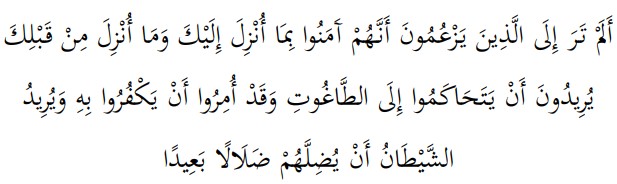
Você não viu aqueles que afirmam ter crido no que foi revelado a você, [ó Muhammad]ﷺ, e no que foi revelado antes de você? Eles desejam submeter a legislação ao Taghoot, quando lhes foi ordenado rejeitá-lo; e Satanás deseja desviá-los para longe.
Have you not seen those who claim to have believed in what was revealed to you, [O Muhammad], and what was revealed before you? They wish to refer legislation to Taghoot, while they were commanded to reject it; and Satan wishes to lead them far astray (An-Nisaa 60).
Assim, não resta nenhum julgamento a ser feito pela mente ou pelo ser humano, e isso não significa que o papel da mente tenha sido retirado ou que se tenha imposto uma limitação às suas capacidades. Trata-se, antes, de que a mente e o ser humano não possuem as ferramentas necessárias para emitir um julgamento ou proferir uma sentença. Isso se deve ao fato de que a fonte do julgamento não é a coisa em si nem o objeto sobre o qual o julgamento recairá.
As such there is no judgement left to the mind or the human and this does not mean that the role of the mind has been taken away or that a limitation has been placed upon its capabilities. It is rather because the mind and the human do not possess the necessary tools to make judgement or pass a ruling. This is because the source of the ruling is not the thing itself or the subject that the ruling will be made upon.
Assim, aqueles que atribuíram ao povo a prerrogativa de estabelecer o ruling, por exemplo, não se basearam em nenhuma evidência, mas se desviaram e se extraviaram. Carregaram um conceito que não é verdadeiro e que não possui realidade alguma, ao mesmo tempo em que negaram a verdade ao separar a Deen da vida, o que significa que não há Hukm pertencente a Allah.
So those who have allocated the provision of the ruling to the people, for example, have not based this upon evidence and have rather wandered and gone astray. They have carried a concept which is not truthful and has no reality to it, whilst at the same time they have denied the truth by separating the Deen from life which means that there is no Hukm belonging to Allah.
Se o direito e o poder de emitir juízos e decisões fosse concedido ao ser humano, sem que ele possuísse as ferramentas necessárias para isso, então nada prevaleceria senão os seus desejos, inclinações e interesses segundo o seu ponto de vista. Estes seriam mutáveis e flutuantes, e ele poderia ver algo prejudicial como benéfico e ver uma doença como remédio e cura.
If the right and power of issuing judgements and rulings was given to the human whilst he does not possess the necessary tools to do that, then nothing would prevail apart from his desires, inclinations and interests according to his viewpoint. These would be changing and fluctuate and he could see something that is damaging as being beneficial and he could see a disease as a medicine and cure.
Nesse contexto, sobressai a importância da Imã em Allah, na Profecia e no Alcorão. Essa Imã é a Aqidah que exerce efeito sobre o comportamento, pois fornece ao ser humano os conceitos sobre a vida que lhe definem como deve viver, qual é o seu propósito na vida e qual é o propósito por trás do seu comportamento e da sua conduta, que é alcançar o agrado de Allah ʿAzza Wa Jalla.

Diga: Devemos informá-los sobre os maiores perdedores em relação às suas obras? São aqueles cujo esforço se perde na vida mundana, enquanto pensam que estão fazendo o bem (Al-Kahf 103-104).
Say: Shall We inform you of the greatest losers in respect to (their) deeds? [They are] those whose effort is lost in worldly life, whilst they were thinking that they are doing good (Al-Kahf 103-104).
Sim, os indivíduos se desviam e os povos se desviam, assim como o peixe no oceano que morde a isca, ou o rato que corre em direção à comida colocada numa ratoeira.
Yes the individuals are led astray and the peoples are led astray just like a fish in the ocean when it takes the bait or the mouse that rushes to the food placed in a mouse trap.
O ser humano vagueia sem chegar ao seu objetivo quando segue por um caminho em que está convicto de que o levará até ele, enquanto, na realidade, está a caminhar exatamente na direção oposta.
The human wanders around and does not arrive at his aim when he proceeds along a path that he is convinced will lead to it whilst in reality he is actually going in the exact opposite direction.
Ele também se desvia quando carrega conceitos equivocados sobre a vida, por ignorância ou distorção, como aquele que vê, ou é levado a ver, que o Ribaa é Halaal, que a democracia faz parte do Islaam e que aprender a Sharee'ah é para ganhar a vida, da mesma forma que qualquer outra área de especialização ou profissão. Quando os Haqaa'iq (verdades/fatos) do Islaam se tornam ausentes e as mentes se enchem de pensamentos falsos, como os pensamentos de liberdades gerais, ou que a mudança da realidade em declínio é impossível em nossa geração atual ou em cem anos, ou que essa mudança é uma dádiva de Allah e que não há nada que nós possamos fazer além de esperar ou aguardar o Mahdi, tudo isso transforma os indivíduos, os povos ou a Ummah em um conjunto de preguiçosos sendo conduzidos de forma lenta para qualquer direção que aqueles que lhes deram esses conceitos desejem, e isso os leva a se tornarem ferramentas de seus inimigos, enquanto acreditam que estão, na verdade, lutando contra eles.
He is also led astray when he carries incorrect concepts about life as a result of ignorance or distortion like the one who sees or is made to see that Ribaa is Halaal, that democracy is from Islaam and that learning the Sharee’ah is for the sake of earning a living just like any other area of specialisation or profession. When the Haqaa’iq (truths/facts) of Islaam become absent and the minds are filled with false thoughts like the thoughts of general freedoms or that changing the declined reality is impossible in our current generation or one hundred years, or that this change is a gift from Allah and that there is nothing for us to do apart from wait or to wait for the Mahdi. All of this transforms the individuals, peoples or the Ummah into a collection of lazy people sluggishly being driven in whatever direction those who have given them these concepts want them to and it leads them into becoming tools for their enemies whilst they believe that they are actually struggling against them.

Como aquele que estende as mãos em direção à água [de longe, chamando-a] para alcançar sua boca, mas ela não a alcança (Ar-Ra’d 14).
Like the one who stretches his hands toward water [from afar, calling it] to reach his mouth, but it does not reach it (Ar-Ra’d 14).

O exemplo deles é o de alguém que acendeu um fogo, mas quando este iluminou o que estava à sua volta, Allah tirou-lhes a luz e deixou-os nas trevas, [de modo que] não podiam ver. (Al-Baqarah 17)
Their example is that of one who kindled a fire, but when it illuminated what was around him, Allah took away their light and left them in darkness [so] they could not see (Al-Baqarah 17).
Portanto, repetimos que, para mudar a conduta, retificá-la e torná-la uma conduta correta e elevada que alcance o seu propósito, é essencial gerar conceitos corretos sobre as coisas e a vida. Nesse momento, a pessoa estará em boa posição para subjugar e utilizar as coisas e os seus atributos com sucesso, e estará em boa posição para adotar a conduta que conduz ao seu propósito e ao maior de todos os objetivos, que é a obtenção do agrado de Allah ‘Azza Wa Jall:
Therefore, we repeat, that in order to change the conduct, rectify it and make it a correct elevated conduct that arrives at its purpose, it is essential to generate correct concepts about things and life. At that time the person will be in a good position to subjugate and utilise the things and their attributes successfully and will be in a good position to adopt the conduct that arrives to his purpose and the greatest of all objectives which is the attainment of the pleasure of Allah ‘Azza Wa Jall:

Mas busque, por meio daquilo que Allah lhe concedeu, a Morada do Além; e, ainda assim, não esqueça a sua parte do mundo. E faça o bem assim como Allah lhe fez o bem (Al-Qasas 77).
But seek, through that which Allah has given you, the home of the Hereafter; and [yet], do not forget your share of the world. And do good as Allah has done good to you (Al-Qasas 77).
A primeira das Haqaa'iq (verdades) e, absolutamente, a mais importante é a 'Aqeedah, que define os conceitos do ser humano sobre a vida. A 'Aqeedah é que todas as coisas foram criadas por um Criador, que é Allah (swt), que Allah enviou um Mensageiro, que é Muhammad ﷺ, com a Risaalah (mensagem) do Al-Islaam, que explica tudo o que se relaciona ao ser humano, e que Ele (swt) lhe pedirá contas com base no Imaan ou no Kufr, e com base em sua observância do que o Nabi ﷺ trouxe ou em sua não observância.
The first of the Haqaa’iq (truths) and absolutely its most important is the Aqeedah that defines the human’s concepts about life. The Aqeedah is that all things have been created by a creator who is Allah (swt), that Allah sent a Messenger who is Muhammad (saw) with the Risaalah (message) of Al-Islaam which explains everything that relates to the human being and that He (swt) will account him upon the basis of Imaan or Kufr and upon the basis of his abiding by what the Nabi (saw) came with or by his non-abidance to it.
O propósito do muçulmano na vida:
The Muslim’s purpose in life:
Entre as verdades mais importantes depois da Imã é que o ser humano compreenda o propósito de sua criação, isto é, aquilo que ele deve se esforçar para cumprir.
From amongst the most important Haqaa’iq (truths) after Imaan is that the human understands the purpose of his creation i.e. that which he must strive to accomplish.
Allah (SWT) disse:
Allah (swt) said:
"E Não criei os jinn nem os seres humanos senão para que Me adorassem" (Adh-Dhariyat 56).
And I have not created the Jinn or humankind except to worship me (AdDhaariyaat 56).
A ‘Ibaadah a Allah significa ter Imaan N’Ele e obediência a Ele. A obediência a Ele Ta'Aalaa significa compromisso e observância (Al-Iltizaam) de todos os Seus Ahkaam. Isso não se restringe aos atos de ‘Ibaadah, Akhlaaq (moral) e Mu'aamalaat (transações sociais), mas inclui tudo o que Allah (swt)
The worship (‘Ibaadah) to Allah means having Imaan in Him and obedience to Him. Obedience to Him Ta’Aalaa means commitment and abidance (Al-Iltizaam) to all of His Ahkaam. This is not restricted to the acts of ‘Ibaadah, Akhlaaq (morals) and Mu’aamalaat (societal transactions) but rather includes everything that Allah (swt)
Ele ordenou ou proibiu. Isso inclui que nada tem direito de ser adorado senão Allah, e que nenhum comando ou proibição pode vir de ninguém além d'Ele (SWT).
has commanded or forbidden. It includes that nothing has a right to be worshipped other than Allah and that no command or forbiddance can come from anyone besides Him (swt).
Ahmad e At-Tirmidhi relataram que ‘Adiy Bin Haatim (ra) foi ao Mensageiro de Allah ﷺ enquanto ele recitava o Versículo:
Ahmad and At-Tirmidhi related that ‘Adiy Bin Haatim (ra) came to the Messenger of Allah (saw) whilst he was reciting the Aayah:
Tomaram seus rabinos e monges como senhores, em vez de Allah, e também o Messias, filho de Maria. E não lhes foi ordenado senão que adorassem um só Deus; não há divindade senão Ele. Glorificado seja Ele acima do que Lhe associam (At-Taubah 31).
They have taken their Rabbis and monks as lords besides Allah, and [also] the Maseeh, the son of Mary. And they were not commanded except to worship one God; there is no deity except Him. Exalted is He above whatever they associate with Him (At-Taubah 31).
‘Adiy disse: “Eles não os adoravam”. Então o Mensageiro de Allah ﷺ disse:
‘Adiy then said: ‘They did not worship them’. So the Messenger of Allah (saw) said:
Pelo contrário, eles tornaram lícito o que era ilícito para eles e tornaram ilícito o que era lícito para eles, e então os seguiram (nisso). Portanto, isso foi a adoração deles a eles.
On the contrary, they made the Halaal Haraam upon them and made the Haraam Halaal for them, then they followed them (in this). Therefore this was their worship to them.
Assim, conceder a alguém o direito (haqq) de decidir o halal e decidir o haram, ou o direito de legislar, e o direito de obediência, representa uma forma de 'ibaadah dirigida a essa pessoa.
As such giving the Haqq (right) to anyone to decide the Halaal and decide the Haraam or the right to make legislation and the right of obedience represents ‘Ibaadah to that person.
Allah (SWT) disse:
Allah (swt) said:
Vocês não adoram nada além d'Ele, senão meros nomes que vocês mesmos inventaram, vocês e os seus pais, sobre os quais Allah não fez descer autoridade alguma.
You worship nothing besides Him except [mere] names you have named them with, you and your fathers, for which Allah has sent down no authority.
A legislação pertence somente a Allah. Ele ordenou que não adorásseis senão a Ele. Essa é a religião correta, mas a maioria das pessoas não sabe (Yusuf 40).
Legislation is not but for Allah. He has commanded that you worship not except Him. That is the correct Deen, but most of the people do not know (Yusuf 40).
Quanto ao direito de obediência que pertence ao Hakim (governante), ao Ameer ou aos pais, isso se deve ao Haqq (direito) que Allah (SWT)
As for the right of obedience that belongs to the Hakim (ruler), Ameer or parents then this is due to the Haqq (right) that Allah (swt)
fornecido a eles.
has provided to them.
A ‘ibaadah a Allah (SWT) inclui a obediência no que diz respeito a levar a humanidade a adorá-Lo (SWT), ou seja, a fazê-la submeter-se à Shari‘ah de Allah, e a lutar contra a existência de qualquer Haakimiyah (direito de legislar) para outro que não Allah, ou para outra coisa que não a Shari‘ah do Islam, além de lutar contra a saída (Khurooj) da Hukm (governança) de Allah (SWT). Isto é o que os textos indicaram e o sentido com que vieram; aqueles que vieram ordenando o ‘Amr Bil Ma‘rouf (ordenar o bem) e o Nahi ‘An il-Munkar (proibir o mal). Eles ordenaram a realização de discussões, explicações, convencimento das pessoas e o convite a elas por meio da Da‘wah. Além disso, ordenaram o açoitamento, a amputação, a execução (como punições e dissuasão), e a luta e o Jihaad para espalhar a regra de Allah sobre a Terra e elevar Sua palavra acima de tudo.
‘Ibaadah to Allah (swt) includes the obedience in respect to making mankind worship Him (swt) i.e. to make them submit to the Shar’a of Allah and to fight against the existence of any Haakimiyah (right to make rules) to other than Allah or to other than the Sharee’ah of Islaam in addition to fighting against the exiting (Khurooj) from the Hukm (rule) of Allah (swt). This is what the texts have indicated and the meaning that they have come with; those which have come commanding the ‘Amr Bil Ma’rouf’ (Commanding the good) and the ‘Nahi ‘An il-Munkar’ (Forbidding the evil). They have commanded the undertaking of discussions, explanations, convincing people and inviting them by way of Da’wah. Additionally they have commanded lashing, cutting, killing (as punishments and deterrents) and fighting and Al-Jihaad to spread the rule of Allah upon the Earth and to raise His word the highest.
Assim, vimos que, depois que o Mensageiro de Allah ﷺ estabeleceu o Estado Islâmico em Al-Madinah Al-Munawwarah e firmou solidamente os seus pilares, ele ﷺ enviou mensageiros aos reis e governantes convidando-os ao Islam. Vimos então os Khulafaa' (que Allah esteja satisfeito com eles) que vieram depois dele ﷺ enviando portadores da Da'wah, Mujahideen e exércitos para convidar as pessoas à Imaan e para tirá-las das trevas e conduzi-las à luz. Lutaram com o propósito de fazer com que as terras e os servos se submetessem à autoridade do Islam.
As such we saw that after the Messenger of Allah (saw) established the Islamic State in Al-Madinah Al-Munawaarah and established its pillars firmly, he (saw) sent the messengers to the Kings and rulers inviting them to Islaam. We then saw the Khulafaa’ (rah) who came after him (saw) sending out carriers of the Da’wah, Mujaahideen and armies to invite the people to Imaan and to take them out of the darkness and bring them into the light. They fought for the purpose of making the lands and servants submit to the authority of Islaam.
Allah Azza wa Jall nos enviou para libertar vocês da adoração dos servos (pessoas) e para conduzi-los à adoração do Senhor dos servos (pessoas), e para libertá-los da opressão de outras religiões e conduzi-los à justiça do Islã, e da estreiteza deste mundo e conduzi-los à amplidão deste mundo e da Vida Futura.
Allah Azza wa Jall has sent us to deliver you from the worship of the servants (people) to bring you to the worship of the Lord of the servants (people) and to deliver you from the oppression of other Deens and bring you to the justice of Islaam and from the narrowness of this world and bring you to the vastness of this world and the hereafter.
Este pensamento foi tornado muito claro no Alcorão, na Sunnah e nas ações do Mensageiro (saw), em textos tão numerosos que não é possível limitá-los. Contudo, faremos menção a alguns deles:
This thought has been made very clear in the Qur’aan, the Sunnah and the actions of the Messenger (saw) within texts that are too numerous for a limit to be placed upon them. We will however make a mention of some of them:
Allah (SWT) disse:
Allah (swt) said:
Diga: Ó pessoas! Eu sou, de fato, o Mensageiro de Allah para todos vocês (Al-A'raaf 158).
Say: O people! Verily I am the Messenger of Allah to you all (Al-Aa’raaf 158).
Ele (swt) disse:
He (swt) said:
E não Te enviamos senão como um anunciador de boas novas e como um admoestador para toda a humanidade (Sabá, 28). Note: the rule requires ﷺ after mentions of the Prophet, but this text addresses him as "You" inside a Qur'an verse (between { and }), so no ﷺ is added here.
And we have not sent you except to the entirety of mankind as a bringer of glad tidings and as a warner (Saba’ 28).
E Ele (SWT) disse:
And He (swt) said:
Ele é Quem enviou o Seu Mensageiro com a orientação e a religião da verdade, para que ela prevaleça sobre todas as outras religiões, mesmo que os Mushrikeen a odeiem (At-Tawbah 33, As-Saff 9).
He its is who has sent His Messenger with the guidance and the Deen of truth so that it prevails over all other Deens and even if the Mushrikeen hate it (AtTaubah 33, As-Saff 9).
E:
And:
{Ó vós que credes, combatei os descrentes que estão próximos de vós, e que encontrem em vós severidade. E saibam que Allah está com os piedosos} (At-Tawbah 123).
O you who have believed, fight those adjacent to you of the disbelievers and let them find in you harshness. And know that Allah is with the righteous (AtTaubah 123).
E combatam aqueles que não creem em Allah nem no Último Dia, e que não consideram proibido o que Allah e Seu Mensageiro proibiram, e que não adotam a religião da verdade dentre aqueles que receberam o Livro, [combatam-nos] até que paguem a Jizyah de bom grado, enquanto estiverem submissos ().
Portanto, o objetivo e a finalidade são que nenhuma lei seja obedecida e nenhuma legislação seja adotada, exceto aquela que provém de Allah (SWT).
So the objective and purpose is that no law that is obeyed or no legislation that is adopted can exist except for that which Allah (swt)
…ordenou e que não há Haakim (legislador) além de Allah. Quanto a deixar os descrentes em suas crenças e cultos, eles são deixados nesses assuntos em conformidade e em obediência ao mandamento de Allah (SWT).
has commanded and that there is no Haakim (law maker) other than Allah. As far as leaving the disbelievers upon their beliefs and worships then they are left upon these matters in accordance to and in compliance to the command of Allah (swt).
Allah (SWT) deixou claro e explicou este objetivo e propósito em relação à criação das pessoas quando Ele (SWT) disse:
Allah (swt) has made clear and explained this objective and purpose in respect to His creation of the people when He (swt) said:
Assim, fizemos de vós uma Ummah justa/melhor para que sejais testemunhas sobre a humanidade e o Mensageiro seja uma testemunha sobre vós ({Al-Baqarah 143}).
And thus we have made you a just/best Ummah so that you will be witnesses over mankind and the Messenger will be a witness over you (Al-Baqarah 143).
Este discurso é dirigido à Ummah islâmica e lhe confia a responsabilidade legal (Takleef) de levar a Mensagem, depois do Mensageiro de Allah ﷺ, a toda a humanidade. E, de fato, o Nabi ﷺ a transmitiu, cumpriu a sua Amanah e, após ter realizado o Jihad por amor a Allah com tudo o que possuía de força, esforço e capacidade. Ele ﷺ esteve na peregrinação de despedida final, dirigiu-se à sua Ummah e disse:
This address is to the Islamic Ummah and it entrusts her with the legal responsibility (Takleef) to carry the Message, after the Messenger of Allah (saw), to the whole of mankind. And indeed the Nabi (saw) carried it and after conveying the message, fulfilling his Amaanah and after having performed Al-Jihaad for Allah’s sake with all that he possessed of strength, effort and capability. He (saw) stood in the final farewell Hajj, addressed his Ummah and said:
Reference: Taghyeer (mudança) - Mahmoud Abdul-Kareem Hasan
“E, de fato, deixei entre vós aquilo que, se vos apegardes firmemente a ele, jamais vos desviareis: o Livro (Kitaab) de Allah, e vós sereis responsabilizados por mim (ou seja, depois de mim). Então, o que dizeis?” Eles disseram: “Testemunhamos que transmitiste, cumpriste e aconselhaste.” Ele então, levantando o dedo indicador para o céu e depois em direção às pessoas, disse: “Ó Allah, sê testemunha! Ó Allah, sê testemunha! Ó Allah, sê testemunha!” (Abu Daawood).
‘And indeed I have left amongst you that which if you hold on firmly to you will never go astray: The Kitaab (book) of Allah, and you are responsible from me (i.e. after me). So what do you all say?’. They said: ‘We bear witness that you have conveyed, fulfilled and advised’. He then said whist raising his index finger to the sky and then towards the people: ‘O Allah bear witness, O Allah bear witness, O Allah bear witness’ (Abu Daawood).
Desta forma, o Nabi ﷺ testemunhou sobre nós, com a responsabilidade de transmitir e carregar a Amanah (confiança), e pediu o testemunho de Allah sobre nós a respeito disso. Portanto, depois disso, é obrigatório para nós sermos testemunhas sobre as pessoas, segundo exatamente a mesma metodologia que o Nobre Mensageiro ﷺ seguiu. Na verdade, Allah (SWT) deixou claro que este é o propósito e o objetivo da criação, antes da criação de Adão (AS).
So in this way the Nabi (saw) bore witness over us with the responsibility of conveying and carrying the Amaanah (trust) and sought Allah’s witness upon us in regards to that. Therefore, after that it is obligatory upon us to be witnesses over the people in accordance to exactly the same methodology that the Noble Messenger (saw) undertook. Indeed Allah (swt) made clear that this is the purpose and objective of the creation before His creation of Aadam (as).
Allah (SWT) disse:
Allah (swt) said:
E lembra-te quando o teu Senhor disse aos anjos: "Vou estabelecer na terra um sucessor." Eles disseram: "Vais colocar nela quem causa corrupção e derrama sangue, enquanto nós celebramos o Teu louvor e Te santificamos?" Allah disse: "Eu sei o que vós não sabeis."
And [remember] when your Lord said to the angels, "Verily, I will make upon the earth a successive authority." They said, "Will You place upon it one who causes corruption therein and sheds blood, while we declare Your praise and sanctify You?" Allah said, "Indeed, I know that which you do not know." (AlBaqarah 30).
Os Malā'ikah (Anjos) são servos de Allah (SWT) e não Lhe desobedecem:
The Malaa’ikah (Angels) are the servants of Allah (swt) and do not disobey Him:
Sobre os quais estão designados anjos severos e rigorosos, que não desobedecem a Allah naquilo que Ele lhes ordena, mas fazem o que lhes é ordenado (At-Tahreem 6).
Over which are [appointed] angels, harsh and severe; they do not disobey Allah in what He commands them but do what they are commanded (At-Tahreem 6).
Quando Allah (SWT) lhes disse:
When Allah (swt) said to them:
Verdadeiramente, colocarei na terra um sucessor (Khalifah)
Verily, I will make upon the earth a successive authority (Khalifah)
Eles perceberam e compreenderam que Ele (swt) fará surgir na terra aqueles que serão desobedientes. Isso se depreende da palavra “Khalifah”, pois aqui, neste contexto, significa aquele a quem Allah concederá a sucessão e delegará a tarefa de corrigir e cuidar, entre outros assuntos que o encarregado deveria realizar. Esse papel de retificar e de cuidar dos assuntos significa que existirão aqueles que precisam ser retificados e que necessitam de Ri’aayah (cuidado). Isso quer dizer que haverá quem saia da ordem de Allah, e que isso levará à miséria, à angústia e à desordem. Por isso disseram:
They realised and comprehended that He (swt) will make upon the earth those who will be disobedient. This is understood from the wording ‘Khalifah’ because here in this context it means the one who Allah will give succession and delegate to undertake the acts of correcting and caretaking amongst other matters that the one who is entrusted would undertake. This role or rectifying and taking care of affairs means that their will exist those who need to be rectified and who are need of Ri’aayah (caretaking). This means that there will be those who go outside of the command of Allah and that this will lead to misery, anguish and disorder. This is why they said:
Eles disseram: "Vais colocar nela alguém que nela causará corrupção e derramará sangue?" (Al-Baqarah 30).
They said: Will you make those who will make corruption in it (the earth) and spill blood (Al-Baqarah 30).
Em outras palavras, se a criação não incluísse algo que seria desobediente, então tudo procederia de acordo com o comando de Allah (SWT). Assim, quando Allah (SWT) quis criar alguém que realizaria as ações de correção e orientação, isso significa que haveria aqueles que escolheriam o desvio e a desobediência a Allah.
In other words, if the creation did not include something that would be disobedient then everything would proceed in accordance to the command of Allah (swt). So when Allah (swt) wanted to create someone who will undertake the actions of rectifying and guidance then this means that there will exist those who will choose misguidance and disobedience to Allah.
Portanto, o propósito da vida que Allah (SWT) esclareceu e explicou antes da criação de Ādam (ʿalayhi as-salām) é que haverá um ser humano que seja um servo (ʿAbd) de Allah e que ele assumirá a tarefa de levar outros a adorar Allah (SWT) dentre aqueles que se desviaram de Sua adoração ou a rejeitaram.
Therefore the purpose in life which Allah (swt) has made clear and explained before the creation of Aadam (as) is that there will be a human being who is a slave (‘Abd) to Allah and that he will undertake the work of making others worship Allah (swt) from those who have gone astray from His worship or have rejected it.
Portanto, a vida é um embate e uma luta intelectual, de crença e política entre a Imaan e a Kufr. É de crença no sentido de que se trata de elevar a palavra de Allah acima de tudo, e para que a religião (Deen) das pessoas seja inteiramente e somente para Allah. Assim, não existe Hukm senão o de Allah, Ele (SWT) não tem Shareek (parceiro), nada nem ninguém é adorado além de Allah, e a submissão é devida apenas à Shar'a de Allah. Desta forma, trata-se de uma luta política, na qual o cuidado com os assuntos dos seres humanos foi tornado obrigatório, de modo que não pode ser confiado a nenhuma forma de legislação que não seja a Sharee'ah do Al-Islaam.
The life is therefore an intellectual, belief based and political clash and struggle between Imaan and Kufr. It is belief based in terms of it being for the sake of raising the word of Allah the highest and so that the Deen of the people is all and only for Allah. So that no Hukm exists except that it is for Allah, that He (swt) has no Shareek (partner), that nothing or no one is worshiped aside from Allah and that submission is only to the Shar’a of Allah. In this way it represents a political struggle where the caretaking of the affairs of human beings has been made obligatory to not be entrusted to any form of legislation other than the Sharee’ah of Al-Islaam.