4. Yapışık Biçim
4. A Clinging Form
Sonra o nutfeyi bir alaka (asılan şey) haline getirdik.
Then We made that drop of fluid into a clinging form
Kur'an, gelişmekte olan insan embriyosunun bir sonraki evresini "alaka" kelimesiyle tanımlar. Bu kelime; asılmak, askıda olmak, sarkmak, yapışmak, tutunmak, bağlanmak ve bitişmek anlamlarını da içerir. Ayrıca yakalamak, yakalanmak, iliştirilmek veya eklenmek anlamlarına da gelebilir.48
The Qur’an describes the next stage of the developing human embryo with the word `alaqah. This word carries various meanings including: to hang, to be suspended, to be dangled, to stick, to cling, to cleave and to adhere. It can also mean to catch, to get caught, to be affixed or subjoined.48
Arapça "alaqah" kelimesinin diğer anlamları arasında, bir solucana benzeyen, kurt görünümünde bir madde; ya da kan emmeye yatkın, sürünen bir yapıda olma anlamı vardır. Son olarak, kelimenin anlamı arasında elin üzerine yapışan çamur ve birbirine yapıştığı için koyulaşmış, pıhtılaşmış kan da bulunur. 49
Other connotations of the word `alaqah include a leech-like substance, having the resemblance of a worm; or being of a ‘creeping’ disposition inclined to the sucking of blood. Finally, its meaning includes clay that clings to the hand and thick, clotted blood - because of its clinging together. 49
BİLİMSEL TEFSİR
SCIENTIFIC INTERPRETATION
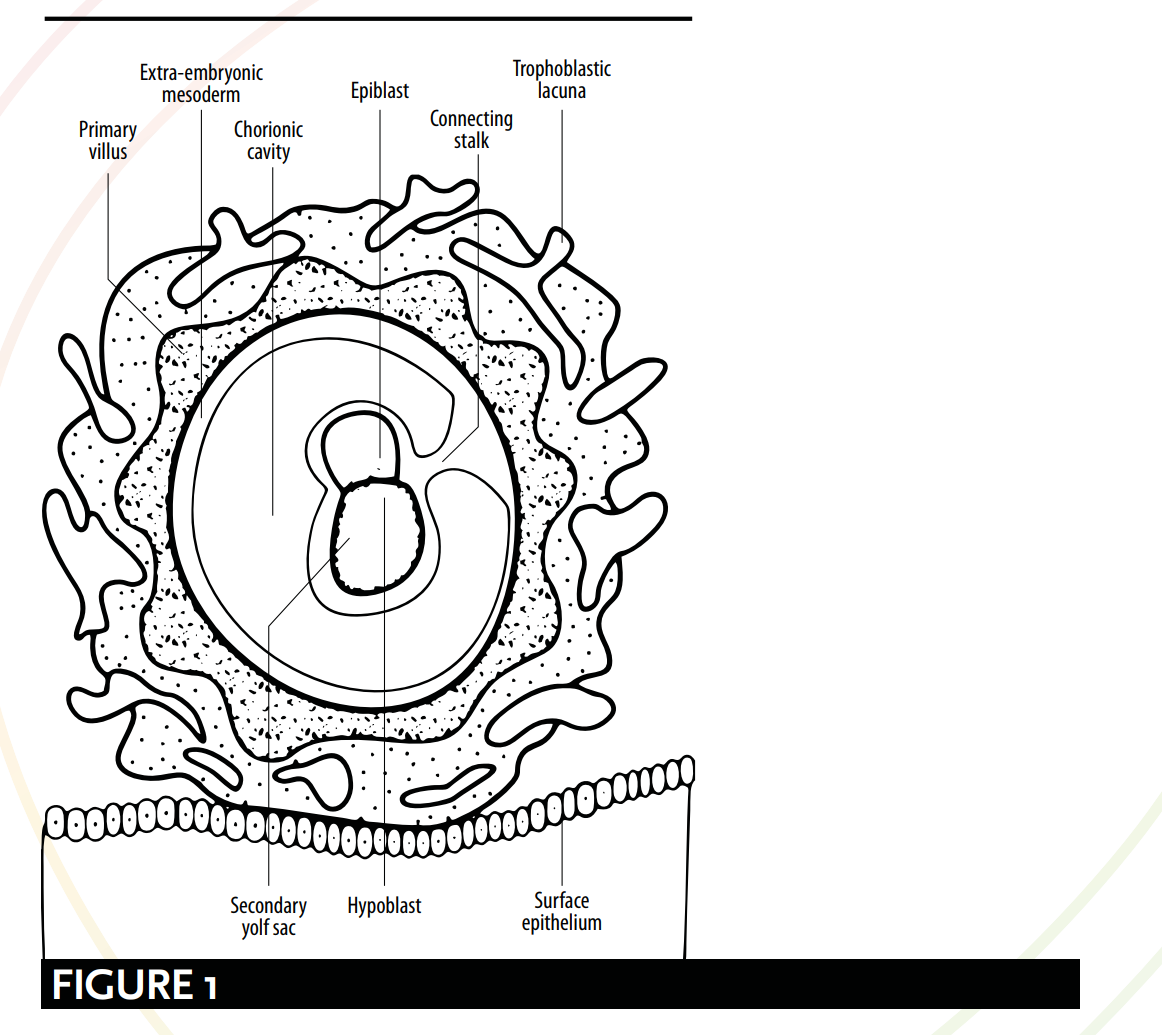
Modern embryology defines the myriad meanings of the word ʿalaqah as corresponding to the various stages of the embryo's development. Comparisons can be drawn between the Qur'anic and scientific depictions of the embryo's appearance and its relationship with the womb. According to modern embryology, from day 15 the embryo hangs or is suspended by means of the "connecting stalk" [see Figure 1], and it obtains nutrients through contact with the mother's blood vessels. This description bears a striking resemblance to the picture painted by the word ʿalaqah: a "hanging" or "suspended" substance that obtains nutrients from its host's blood.
As defined by modern embryology, the myriad of meanings for the word `alaqah correspond to various stages of the embryo’s development. Comparisons can be drawn between qu’ranic and scientific depictions of the embryo's appearance and its relationship with the womb. According to modern embryology, from day 15 the embryo is hanging or suspended via the ‘connecting stalk’ [see Figure 1] and it obtains nutrients through contact with the maternal blood vessels. This description bears a striking resemblance to the picture painted by the word `alaqah – a ‘hanging’ or ‘suspended’ substance, obtaining nutrients from its host’s blood.
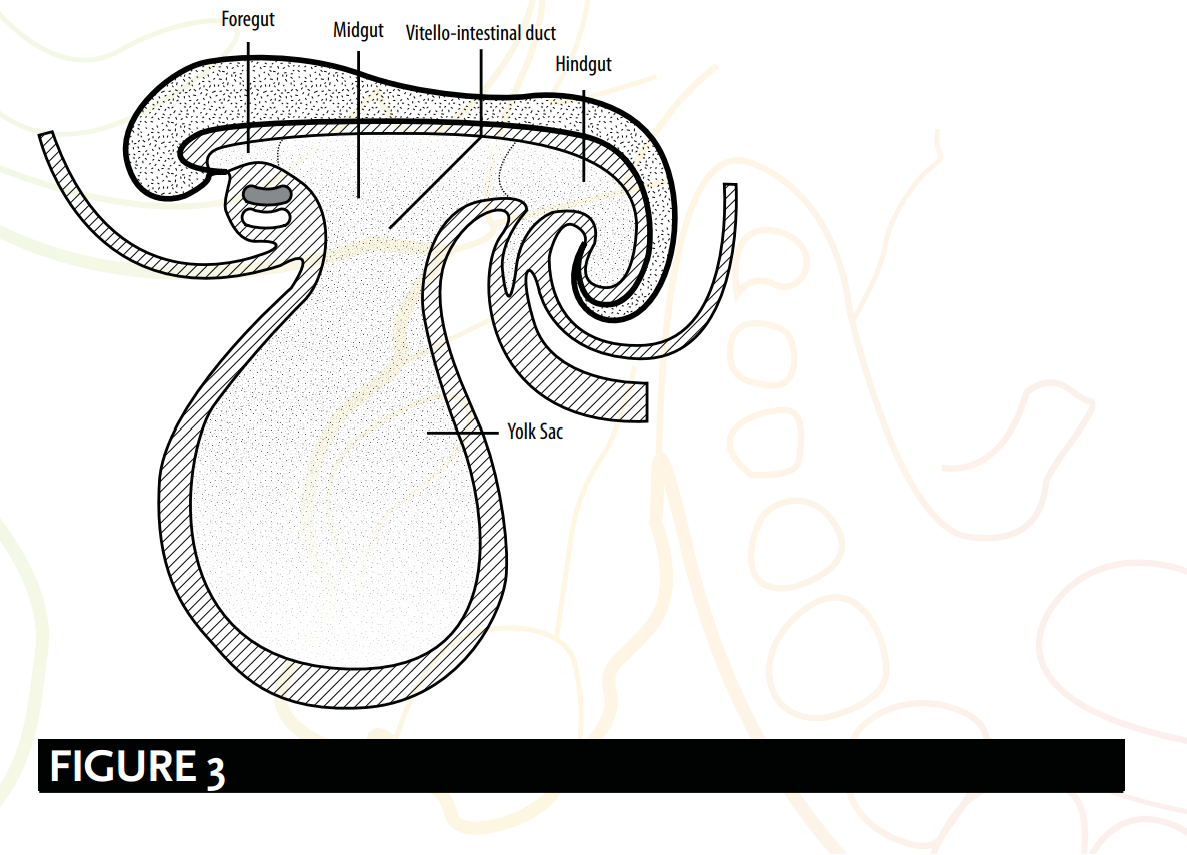
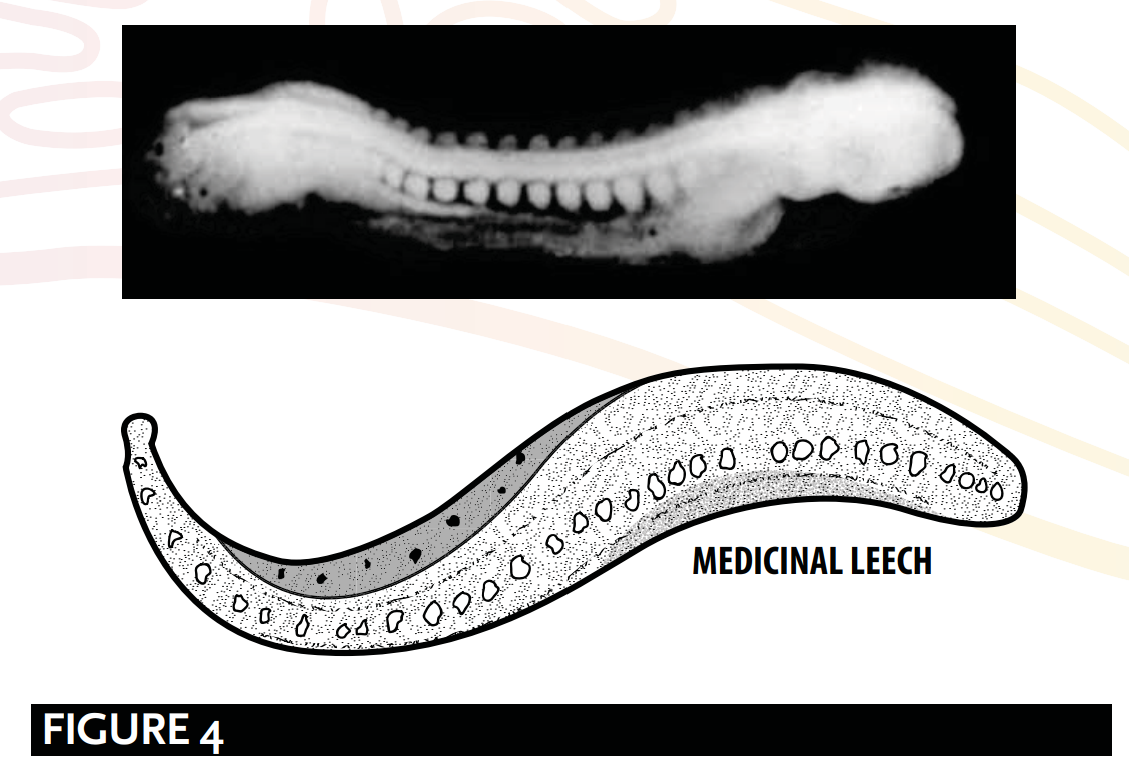
Bunu takip eden dördüncü haftada iki süreç gerçekleşir: beyin ve omurilik oluşumu, yani nörülasyon; ve embriyonun katlanmasının ilk aşamaları. Bu iki sürecin tamamlanmasıyla embriyo, `alaqah kelimesinin işaret ettiği, sülük benzeri bir forma bürünür; yani sürünen, sülük ya da solucan benzeri bir maddeye (bkz. Şekil 2, 3 ve 4).
Following this, during the 4th week, two processes occur: the formation of the brain and the spinal cord, known as neurulation; and the initial stages of the folding of the embryo. It is upon the culmination of these two processes that the embryo resembles a leech-like form suggested by the word `alaqah – a creeping, leech or worm-like substance [see Figure 2, 3 and 4].
ASILMA/ASKIYA ALMA
HANGING/SUSPENDED
Embriyologlar Barry Mitchell ve Ram Sharma, 'alaqah evresinin "asılı" ya da "askıda" olan yönlerini açıklamaktadırlar. Embriyoyu, "sitotrofoblasta, embriyo dışı mezodermden (ilkel bağ dokusu) oluşan bir bağlantı sapıyla bağlı" olarak tanımlarlar. "Bu sap, göbek kordonunun öncülüdür." 50 Şekil 1, embriyonun sitotrofoblasta bir bağlantı sapıyla bağlı olduğunu, sanki asılı ya da askıdaymış gibi gösterir.
Embryologists Barry Mitchell and Ram Sharma explain the ‘hanging’ or ‘suspended’ aspects of the `alaqah stage. They describe the embryo as being, “connected to the cytotrophoblast by a connecting stalk of extra-embryonic mesoderm (primitive connective tissue). The stalk is the forerunner of the umbilical cord.” 50 Figure 1 shows the embryo connected to the cytotrophoblast via a connecting stalk, as if it were hanging or suspended.
DAMARLAR ARACILIĞIYLA BESİN ALIMI
OBTAINING NUTRIENTS VIA BLOOD VESSELS
Barry Mitchell ve Ram Sharma'nın, embriyonun anne kanına ait damarlarla temas yoluyla besin almasına ilişkin şu sözleri vardır: Embriyonun ikinci haftadaki hızlı büyümesi nedeniyle, besin ve gaz alışverişi için daha etkili bir yönteme ihtiyaç duyulur. Bu ihtiyaç, koryonun embriyonik kan damarları ile desidua'nın anne kan damarlarının temas etmesiyle karşılanır.51.
With regard to the way the embryo obtains its nutrients through contact with the maternal blood vessels, Barry Mitchell and Ram Sharma write: Due to the rapid growth of the embryo during the second week, there is a need for a more efficient means of nutritional and gaseous exchange. This is achieved when the embryonic blood vessels of the chorion come into contact with the maternal blood vessels of the decidua.51.
... [üçüncü haftaya kadar]... Anne ve fetüs kanı arasındaki besin maddeleri, solunum gazları ve atık ürünlerin değişimi, plasental membran boyunca villöz arası boşluklarda gerçekleşir. Anne kanı, uterin arterin dalları olan spiral arterlerden bu boşluklara girer ve embriyo ile fetüs için besin maddelerini ve oksijeni getirir.52
... [by the third week]... The exchange of nutrients, respiratory gases and waste products between the maternal and fetal blood takes place across the placental membrane within intervillous spaces. Maternal blood enters these spaces from the spiral arteries, branches of the uterine artery, bringing nutrients and oxygen for the embryo and fetus.52
Bu durum, ʿalaqah kelimesinin anlamlarının geçerliliğini ve bir varlığın besinini kan aracılığıyla aldığı imgesini çağrıştırdığını pekiştirmektedir.
This reinforces the validity of the meanings of `alaqah, and its evoking images of an entity obtaining its nutrients via blood.
NÖRÜLASYON VE EMBRİYONUN KATLANMASI
NEURULATION & THE FOLDING OF THE EMBRYO
"Alaqah aşamasında, nörulasyon sürecinin ve embriyonun katlanmasının ilk aşamalarının başladığı görülür. Nörulasyon, yaklaşık 19. ile 25. günler arasında beyin ve omuriliğin oluşumunu kapsar; embriyonun katlanması ise baş ve kuyruk kısmının birbirine yaklaştırılmasını içerir. Bu iki fizyolojik değişimin birleşimi, embriyonun sülük benzeri bir maddeye benzemesine neden olur."
The `alaqah stage suggests the process of neurulation and the initial stages of the folding of the embryo. Neurulation comprises of the formation of the brain and the spinal cord from days 19 to 25 (approx.); and the folding of the embryo involves the head and the tail being brought closer together. The combination of these two physiological changes causes the embryo to resemble a leech-like substance.
NEURULATION
NEURULATION
Nörulasyonun sonunda nöral tüpün kraniyal ve kaudal uçları kapanır. Bu noktada embriyo, sülük benzeri bir görünüm kazanır 53 [Şekil 2'ye bakınız].
At the end of neurulation the cranial and caudal ends of the neural tube close. The embryo, at this point, becomes leech-like in appearance 53 [see Figure 2].
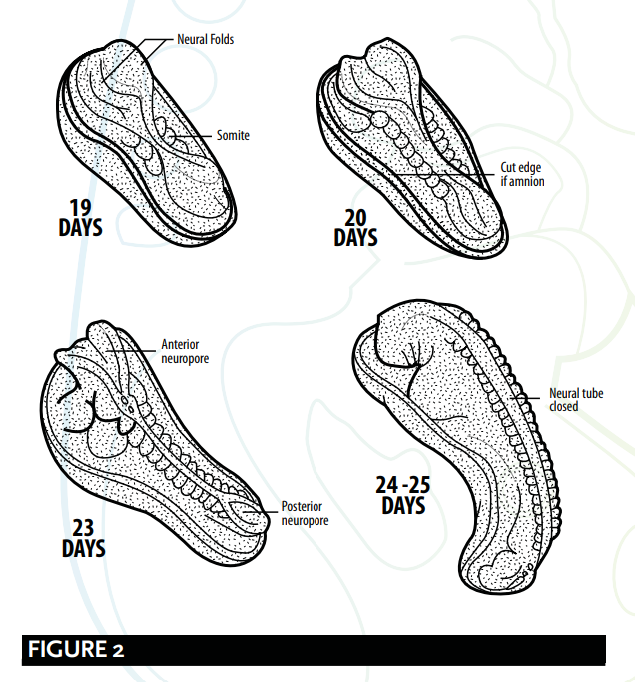
Barry Micthell ve Ram Sharma, nöralasyon sürecini açıklamaktadır.
Barry Micthell and Ram Sharma explain the process of neurulation.
Yaklaşık 19. günde, ilkel çizgiden (primitive streak) kranial uçta, altta yatan mezoderm ve notokord, ektodermi sinir plağını (neural plate) oluşturmaya yönlendirir; bu plak kıvrılarak sinir kıvrımlarını (neural folds) meydana getirir. Sinir plağı başlangıçta öncelikle kranial uçta genişler. 20. günde, embriyonun orta bölgesindeki sinir plağı dar kalmaya devam ederken, kaudal uçta genişler. Plak derinleşerek sinir oluğunu (neural groove) oluşturur ve bu oluktan sinir tüpü (neural tube) meydana gelir. Tüpün kranial ve kaudal uçları açıktır ve bunlar anterior ve posterior nöropor (neuropores) olarak bilinir; bunlar sonunda kapanır. 54
At about 19 days, at the cranial end of the primitive streak, the underlying mesoderm and notochord induce the ectoderm to form the neural plate, which rounds up to form the neural folds. The neural plate enlarges initially at the cranial end. At 20 days, the neural plate in the mid-region of the embryo remains narrowed, but it expands at the caudal end. The plate deepens to form the neural groove from which the neural tube forms. The cranial and caudal ends of the tube are open and are known as the anterior and posterior neuropores; these eventually close. 54
EMBRİYONUN KATLANMASI
FOLDING OF THE EMBRYO
Embriyonun katlanması, aynı zamanda sülük benzeri bir şekil [Şekil 3'e bakınız] oluşmasından da sorumludur; ya da embriyologların tarif ettiği gibi, silindirik veya boru benzeri bir yapı. Embriyologlar Keith Moore ve T. V. N. Persaud şunu öne sürmektedir:
The folding of the embryo is also responsible for forming a leech-like shape [see Figure 3], or as embryologists have described; a cylindric or tube-like structure. Embryologists Keith Moore and T. V. N. Persaud suggest that:
Vücut şeklinin oluşumunda önemli bir olay, yassı üç katmanlı embriyonik diskin bir ölçüde silindirik bir embriyo halinde kıvrılmasıdır. Bu kıvrılma, embriyonun, özellikle beyin ve omurilik olmak üzere hızlı büyümesinden kaynaklanır. 55
A significant event in the establishment of body form is the folding of the flat trilaminar embryonic disc into a somewhat cylindric embryo. Folding results from the rapid growth of the embryo, particularly the brain and the spinal cord. 55
Barry Mitchell ve Ram Sharma'nın açıkladığı gibi, boru benzeri veya sülük benzeri yapı [bkz. Şekil 4], şunlardan kaynaklanmaktadır:
The tube-like or leech-like structure [see Figure 4], as explained by Barry Mitchell and Ram Sharma, is due to:
Boyuna katlanma, 21. ile 24. günler arasında gerçekleşir ve embriyonun bükülmesine yol açar; böylece baş ve kuyruk birbirine yaklaştırılır ve boru benzeri bir yapı oluşturulur. 56
longitudinal folding, which occurs between days 21 and 24, result[ing] in … the embryo [bending] so that the head and tail are brought closer together...[to] form a tube-like structure. 56
ÖZET
SUMMARY
ʿAlaqah aşaması
The `alaqah stage:
Embriyo, bir bağlantı sapı aracılığıyla sitotrofoblasta bağlıdır; sanki asılı duruyormuş gibi.
The embryo is connected to the cytotrophoblast via a connecting stalk, as if it were hanging or suspended.
Beynin ve omuriliğin oluşumu, yani nörülasyon ve embriyonun katlanmasının ilk aşamaları sırasında. Bu süreçlerin tamamlanmasıyla embriyo sülük benzeri bir görünüm alır.
The formation of the brain and the spinal cord, known as neurulation; and during the initial stages of the folding of the embryo. It is upon the culmination of these processes that the embryo appears leech-like.
Embriyo, besinlerini anne kanına ait damarlarla temas yoluyla elde eder. Bu, besinlerini kandan alan bir sülük benzeri maddenin davranışına benzemektedir.
The embryo obtains its nutrients via contact with the maternal blood vessels. This mirrors the action of a leech-like substance obtaining its nutrients via blood.
GALEN & `ALAQAH
GALEN & `ALAQAH
Eleştirmenler, "`alaqah" kelimesinin kullanımının Galen'in insan embriyosunun ikinci evresine ilişkin tanımı olduğunu ileri sürmektedir. Onların "`alaqah" kelimesini "kan pıhtısı" olarak çevirmeleri, bu evreye dair Galen'in tanımını çağrıştıran bir izlenim yaratmaktadır.
Critics declare that the use of the word `alaqah is a description of Galen’s second stage of the human embryo. Their translation of the word `alaqah to ‘blood clot’ creates an impression of Galen's description of this stage:
Ama [pıhtı] kanla dolduğunda ve kalp, beyin ve karaciğer hâlâ belirginleşmemiş ve şekillenmemiş olmakla birlikte artık belirli bir sağlamlığa ve kayda değer bir büyüklüğe ulaştığında, bu ikinci dönemdir; cenin maddesi artık meni şeklinde değil, et şeklindedir. 57
But when it [the clot] has been filled with blood, and heart, brain and liver are still unarticulated and unshaped yet have by now certain solidarity and considerable size, this is the second period; the substance of the foetus has the form of flesh and no longer the form of semen. 57
Bu eleştirmenlerin çıkarımlarında bir dizi zayıflık vardır:
There are a number of weaknesses with the implications of these critics:
Öncelikle, Kur'an'da "kalp, beyin ve karaciğer..." şeklinde bir ifadeye yer verilmemektedir.
1. Firstly, the Qur’an does not make a mention of the “heart, brain and liver...
"henüz ifade edilmemiş ve şekillenmemiş, ancak belirli bir dayanışmaya sahip ve önemli bir boyutta olan”.
[being] unarticulated and unshaped yet [with] a certain solidarity and [of a] considerable size”.
2. İkinci olarak, "alaka" kelimesi kan anlamına gelmez; asıl anlamları "yapışan bir şekil" ve "sülük benzeri bir madde"dir. Bazı Arap dilbilimcileri, "alaka" kelimesine "kan pıhtısı" anlamını, içinde kan bulunduğu için değil, doğası gereği "yapıştığı" için verir. Bu yorum, kelimenin asıl anlamıyla örtüşmektedir.
2. Secondly, the word `alaqah does not mean blood; rather, its primary meanings are ‘a clinging form’ and ‘a leech-like substance’. Some Arab linguists would attribute the meaning of a ‘blood clot’ to the word `alaqah, not because of it being filled with blood, but instead due to it ‘clinging’ by nature. This interpretation matches the primary meaning of the word.
3. Üçüncüsü, Galen, ikinci aşamada "embriyonun et şeklinde olduğunu" ısrarla savunur; oysa Kur'an, mudğa (çiğnenmiş bir parça et ya da et yumrusu) aşamasının alaka aşamasından sonra geldiğini teyit eder.
3. Thirdly, Galen insists “the foetus has the form of flesh” during the second stage, whereas the Qur’an affirms the mudghah (a chewed piece of meat or lump of flesh) stage comes after the `alaqah stage.
4. Dördüncü olarak, Galen, Doğal Güçler Üzerine adlı kitabında şunu yazar: Tohum da böyledir: güçlerini başlangıçtan beri taşır.58 Galen'in, genetik materyalin sorumluluğunun yalnızca tohuma ait olduğu yönündeki yanlış çıkarımı, Kur'an ve Peygamberî rivayetlerle bağdaşmaz, bunlarla doğrudan çelişir. Daha önce incelendiği üzere (bkz. Aristoteles, Galen ve Nutfah), İslami kaynak metinler nutfeyi hem erkekten hem kadından gelen karışık bir damla ya da sıvı olarak ele alır ve hem erkeğin hem kadının çocuğun genetiğinden sorumlu olduğunu teyit eder.59 Buna göre, eğer Peygamber ﷺ insanın gelişimine dair Galen'in görüşlerini kopyalamış olsaydı, yanlış bilimi nasıl reddedip yalnızca doğru olanı kullanabilmiştir; oysa 7. yüzyıl Arabistan'ında hangi görüşlerin doğru olduğunu bilmenin hiçbir yolu yoktu?
4. Fourthly, in his book On the Natural Faculties, Galen writes: so it is with the semen: its faculties it possessed from the beginning.58 Galen’s incorrect implication of the semen’s sole responsibility for the genetic material is incompatible, and in direct opposition, to the Qur’an and Prophetic traditions. As previously explored (see Aristotle, Galen & Nutfah) the Islamic source texts considers the nutfah as a mingled drop or fluid from both the male and the female, and confirm both the male and female as responsible for the genetics of the child.59 Therefore, if the Prophet ﷺ copied Galen’s views on human development, how is it that he rejected the incorrect science and only used what was correct, even though there was no way in 7th century Arabia of knowing which views were accurate?
EMBRİYONUN GÖRÜNÜMÜNÜ YANLIŞ GÖSTERMEK
MISREPRESENTING THE EMBRYO’S APPEARANCE
Çağdaş yorumcular, embriyonun yalnızca yumurta kesesi çıkarıldığında alak (sülük) benzeri göründüğünü ileri sürmekte ve bu nedenle 'alaqah tarifinin bu aşamadaki embriyonun görünüşünü yanlış aktardığını savunmaktadır. Ancak embriyologlar, yumurta kesesinin embriyodan embriyo dışı bir yapı olan embriyo dışı çölom (extra-embriyonik selom) ile ayrıldığını açıklamaktadır. Bu gerçek, yanlış aktarım iddialarını çürütmektedir; zira yumurta kesesi embriyonun yapısının bir parçası değildir.60
Contemporary commentators argue the embryo only looks leech-like when the yolk sac is removed, and that the `alaqah's description is therefore a misrepresentation of the embryo’s appearance at this stage. However, embryologists explain that the yolk sac is separated from the embryo by an extra-embryonic feature, called the extra-embryonic coelom. This fact disproves claims of misrepresentation as the yolk sac is not part of the structure of the embryo.60