5. Bir Et Parçası
5. A Lump Of Flesh
Ardından o nutfeyi bir et parçası haline getirdik
and then We made that form into a lump of flesh
İnsan gelişiminin Kur'an'da tanımlanan bir sonraki aşaması "mudğa"dır. Bu terim çiğneme, çiğneyerek yeme, çiğnenme ve küçük bir et parçası anlamına gelir.61 62 Ayrıca embriyonun başka bir aşamaya geçip et hâline geldikten sonraki durumunu da tarif eder.63 Diğer anlamlar arasında dişlerin çiğneyip üzerinde görünür izler bıraktığı şey ve çiğneme sürecinde tekrarlı eylem nedeniyle değişen izler yer alır.64 Mudğa aşaması, Kur'an'ın başka bir yerinde daha ayrıntılı olarak açıklanmaktadır:
The next stage of human development defined in the Qur’an is mudghah. This term means to chew, mastication, chewing, to be chewed, and a small piece of meat.61 62 It also describes the embryo after it passes to another stage and becomes flesh.63 Other meanings include something that teeth have chewed and left visible marks on; and marks that change in the process of chewing due to the repetitive act.64 The mudghah stage is elaborated on further, elsewhere in the Qur'an:
sonra et parçasından (mudğa), şekillenmiş ve şekillenmemiş olarak. 65
then from a fleshy lump (mudghah), formed and unformed. 65
Burada kullanılan Arapça "formed" anlamındaki kelime "mukhallqah" olup, "şekillendirilmiş" veya "biçimlendirilmiş" anlamlarına da gelebilir.66
The Arabic word used here for ‘formed’ is mukhallqah which can also mean ‘shaped’ or ‘moulded’.66
BİLİMSEL YORUM
SCIENTIFIC INTERPRETATION
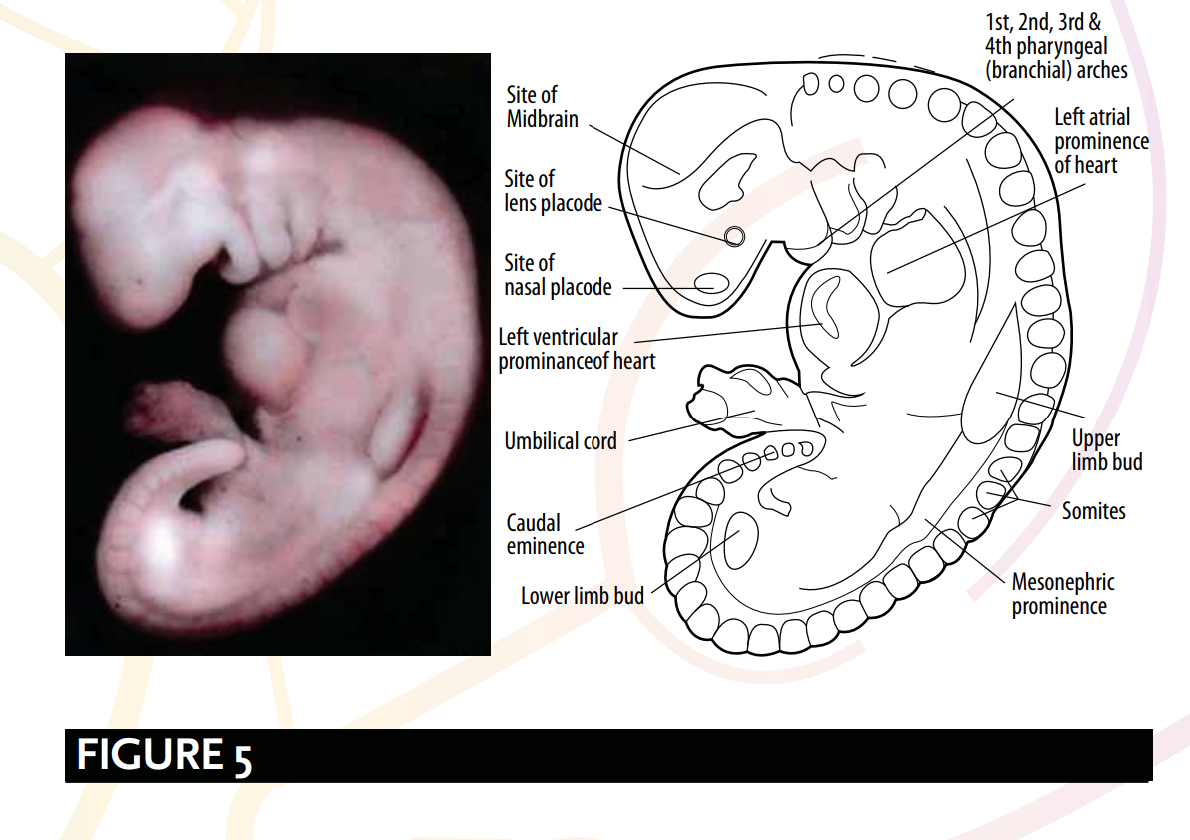
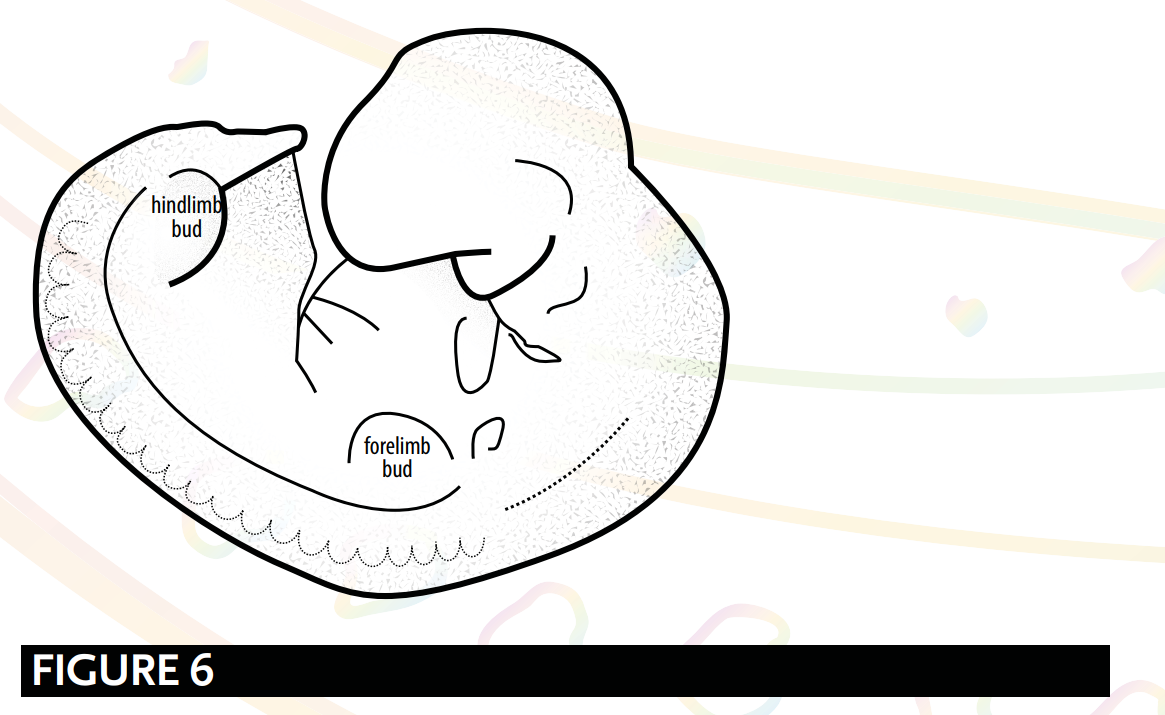
Kelime yorumuna sözlük açısından yaklaşan bu aşamada, 4. haftada, dişlerin bıraktığı izlere benzeyen somitlerin (somites) gelişmeye başladığı ele alınmaktadır [Şekil 5 ve 6'ya bakınız]. Somit gelişimi nedeniyle embriyonun bu aşamadaki görünümü, "çiğnenmek" ve "dişlerin çiğneyip üzerinde görünür izler bıraktığı şey" anlamlarıyla örtüşmektedir. Somit gelişimi hakkında Barry Mitchell ve Ram Sharma şunları yazmaktadır:
Taking a lexical approach to the interpretation of the word, this stage deals with the 4th week, when somites, which resemble tooth-marks [see Figures 5 and 6], begin to develop. The appearance of the embryo at this stage, due to somite development, corresponds with the meanings: ‘to be chewed’ and ‘something that teeth have chewed and left visible marks on’. Concerning somite development, Barry Mitchell and Ram Sharma write:
Dördüncü haftada, somitlerin medial yerleşimli mezenkimal hücreleri notokorda doğru göç ederek sklerotomları oluşturur [mezenkim, embriyoda gevşek düzenlenmiş embriyonik bağ dokusudur].67
In the fourth week, the medially placed mesenchymal cells of the somites migrate towards the notochord to form scelerotomes [mesenchyme is the loosely arranged embryonic connective tissue in the embryo].67
Mudğa kelimesinin bir başka anlamı da bir et parçasına benzeyen şeyi içerir. Bu da embriyonun bu aşamadaki görünümünün doğru bir betimlemesidir. İlginç olan şu ki, mudğa'nın Kur'an'daki "şekillendirilmiş ve şekillendirilmemiş" olarak açıklanması, tüm ana organların gelişmeye başladığı, ancak henüz tam olarak şekillenmediği organogenez dönemine işaret edebilir.68 Bu dönem de yaklaşık dördüncü haftada gerçekleşir.
Another meaning for the word mudghah includes something looking like a morsel of flesh. This too is an accurate description of the embryo's appearance at this stage. Interestingly, the qur’anic explanation of mudghah as being “formed and unformed”, can refer to the organogenetic period, during which all the main organs have begun to develop, but are not yet fully formed.68 This period also occurs at around the 4th week
ÇİĞNENMİŞ BİR MADDE
A CHEWED SUBSTANCE
Eleştirmenlerin mudğa aşamasıyla ilgili ileri sürdüğü bir argüman, çiğnenmiş bir et parçasının veya bir et parçasının, modern embriyolojinin tarif ettiği hiçbir aşamadaki embriyoya benzemediği yönündedir. Buna cevap verirken, "çiğnenmiş et parçası"nın neyi ifade ettiğini açıklamak gerekir. Bu ifade yalnızca defalarca çiğneme değil, bir kez çiğnenmiş olan şeyi de kapsar. Bu da mudğa kelimesinin anlamını korur, çünkü ısırık izleri bir kez çiğnenmiş bir et parçasına gerçekten benzer. Bunu kelimenin diğer anlamı netleştirir: "dişlerin çiğneyip üzerinde görünür izler bıraktığı şey".
An argument raised by critics concerning the mudghah stage is that a chewed piece of meat or a lump of flesh does not resemble the embryo at any stage described by modern embryology. In responding to this, it is necessary to clarify what constitutes a ‘chewed piece of flesh’. It includes, not just mastication, but also something being chewed just the once. This maintains the meaning of the word mudghah as the bite marks do resemble a piece of meat chewed once. This is highlighted by its other meaning: ‘something that teeth have chewed and left visible marks on’.
ÖZET
SUMMARY
Mudğa safhası:
The `mudghah stage:
Somitlerin gelişimi, embriyoya çiğnenmiş bir maddeyi andıran bir görünüm kazandırır. Bu aşamada embriyonun görünümünün doğru bir tanımı, bir et parçasına benzeyen şeydir.
The development of somites giving the embryo the appearance of a chewed substance. What looks like a morsel of flesh - an accurate description of embryo's appearance at this stage.
Ayrıca organogenez dönemini (organların gelişimi, henüz tam olarak şekillenmemiş hâlleriyle) da anlatır.
It also describes the organogenetic period (the development of organs, not yet fully formed).
Her zamanki gibi, Kur'an'daki "mudğa" terimini Galen'in eserleriyle karşılaştırarak, Hz. Muhammed ﷺ'in insan gelişimi üzerine Yunan yazılarından intihal yaptığı görüşünü desteklemeye yönelik girişimler olmuştur. Ancak Galen'in yazılarını incelediğimizde ve bunları "mudğa" kelimesinin çok çeşitli ve geniş anlamlarıyla karşılaştırdığımızda, belirgin bir fark ortaya çıkmaktadır. Galen şöyle der:
As ever, there have been attempts to compare the qur’anic term mudghah with Galen’s work to substantiate the view that the Prophet Muhammad ﷺ plagiarised from Greek writings on human development. However, upon analysing Galen’s writings, bringing it in contrast to the various and extensive meanings of the word mudghah, a pointed difference is made distinct. Galen states:
Bu dönemi izleyen üçüncü dönemde, daha önce söylendiği gibi, üç hâkim kısmı açıkça görmek ve diğer bütün kısımların bir tür ana hatlarını, adeta bir siluetini seçmek mümkün olur. Üç hâkim kısmın şeklini daha net, midenin kısımlarının şeklini ise daha bulanık göreceksiniz; uzuvların şekli ise çok daha da belirsizdir. Daha sonra bunlar, Hippokrates'in ifadesiyle, 'dallar' hâline gelirler; bu terimle onların dallara benzerliğini belirtmiş olur.69
The third period follows on this, when, as was said, it is possible to see the three ruling parts clearly and a kind of outline, a silhouette, as it were, of all the other parts. You will see the conformation of the three ruling parts more clearly, that of the parts of the stomach more dimly, and much more still, that of the limbs. Later on they form ‘twigs’, as Hippocrates expressed it, indicating by the term their similarity to branches.69
Yukarıda incelendiği gibi, Kur'an mudğah'ı çiğnenmiş bir madde ve küçük bir et parçası olarak anmaktadır. Buna karşılık Galen, "üç hâkim parçanın" "oluşumundan", "silüetlerden" ve "dallardan" bahseder; bu da büyük olasılıkla uzuv kemiğinin oluşumuna işaret eder. Bu üç hâkim parçayı, mideden ve uzuvlardan daha belirgin olarak tanımlar. Ancak Kur'an bunlara hiç değinmez; uzuv kemiğinin oluşumundan ise bir sonraki aşamada söz eder. Bu nedenle, Peygamber Muhammed ﷺ'in Galen'in eserlerini kopyaladığını öne sürmek hem inandırıcı değildir hem de pratik değildir; çünkü Kur'an bu aşamada Galen'in verdiği betimlemelerin hiçbirini içermemektedir.
As explored, the Qur’an mentions mudghah as a chewed-like substance and a small piece of flesh. In contrast, Galen discusses the “conformation” of “the three ruling parts”, “silhouettes” and “twigs”, which is most likely in reference to limb bone formation. He details these three ruling parts as being more visible than the stomach and the limbs. However, the Qur’an makes no mention of this, and its mention of the limb bone formation comes at the next stage. It is both implausible and impractical, therefore, to suggest the Prophet Muhammad ﷺ copied the works of Galen as the Qur’an does not include any of the descriptions provided by Galen at this stage