৩. আমরা কাকে এবং কী দেখি?
3. Who And What Do We See?
ছবির শক্তি
The Power Of An Image
আমরা নিজেদের কীভাবে দেখি এবং অন্যরা আমাদের কীভাবে দেখছে বলে আমরা কল্পনা করি, তা আমাদের আত্মপরিচয় এবং 'নিজে' ও 'অপর'-এর মধ্যকার সম্পর্কের সঙ্গে সম্পর্কিত। এটি এখানে একটি মর্মস্পর্শী চিত্রে দৃশ্যমানভাবে প্রতিফলিত হয়েছে, যার শিরোনাম 'The Fear Is Still Me' (নিচে দেখুন)। ছবিটি এক নির্যাতিত বন্দীর একটি পশুসুলভ রূপের ইঙ্গিত দেয়, যে এমন একটি হুড পরে আছে যা তার ভালুকের মতো পরিচয়কে আড়াল করে রাখে।18
How we see ourselves and how we imagine ourselves being seen has a bearing on our self-identity and on the relationship between ‘self’ and ‘other’. This is reflected visually here in an evocative image entitled ‘The Fear Is Still Me’ (see below). The image suggests a bestial persona of a tortured prisoner donning a hood that conceals his bear-like identity.18
তাঁর "দেখতে পাচ্ছেন না" বলা সত্ত্বেও তিনি এখানে একটি কেন্দ্রীয় চরিত্র হিসেবে অত্যন্ত স্পষ্টভাবে দৃশ্যমান, যেন কারাগারের প্রহরীরা তাঁকে ঘোষণা করে নিয়ে আসছে। ছবিতে তাঁর চারপাশে একটি প্রভামণ্ডল বা হ্যালো দেখা যায়। আমরা ভাবি, এই প্রভামণ্ডলটি কি তাঁর পেছন থেকে আসা টর্চের আলোর রেখা, নাকি তাঁর উপর পড়া একটি ফ্লাডলাইটের আলো? অথবা শিল্পী কি আমাদের দ্বিমেরু বিপরীতার্থক ধারণাগুলো ভাবতে বাধ্য করছেন, যেখানে মানবিক ও অমানবিক জীবনের প্রতীকগুলো পাশাপাশি স্থাপিত হয়? তাঁর পেছনের প্রহরীদের একতা প্রিজনারের একাকিত্বের সঙ্গে বৈপরীত্যে দাঁড়িয়ে আছে; প্রহরীদের দলবদ্ধ, পালের মতো বিন্যাস এবং একাকী, ভল্লুকের মতো প্রিজনারের চিত্র অত্যন্ত আশ্চর্যজনক বিদ্রূপ সৃষ্টি করে। শিকার হয়েছে যে আহত, ভল্লুকসদৃশ প্রিজনার, প্রহরীরা তাকেই ঘোষণা করে নিয়ে আসছে।
Though “he cannot see” he is very much to be seen as a centre-piece as if heralded by the prison guards. In the image, there appears a halo. We wonder whether the halo etched around him is the beam of a torch from behind him, a floodlight shining onto him or whether the artist challenges us to consider binary oppositions wherein symbols of humanised and dehumanised life become juxtaposed. The togetherness of the guards behind him is set against the isolation of the prisoner though the pack-like formation of the guards and the lone bear-like prisoner is strikingly ironic. It is the wounded bear-like prisoner who has been hunted and the prison guards herald him.
এখানে অনেক কিছুই দেখার আছে। কার্টুনটি একজন অতিকায় ব্যক্তির ইঙ্গিত দেয়, যদিও তাঁর বাইরে বেরিয়ে থাকা পা হয়তো প্রহারে ফুলে যাওয়া অঙ্গের প্রতিফলন, আর এতে বন্দীকে ভারসাম্যহীন বলে মনে হয়। তবে তাঁর পায়ে কোনো আঘাতের চিহ্ন নেই, তাই হয়তো এগুলো তাঁর দৃঢ় উপস্থিতির প্রতীক, অথবা দুটোই একসঙ্গে বোঝাতে পারে। আমরা তাঁর হাত দেখতে পাচ্ছি না, তবে সেগুলোতে কী ধরনের আঘাত থাকতে পারে তা কল্পনা করতে হয়।
There is much to be seen. The cartoon suggests a larger-than-life individual though his protruding feet perhaps reflect limbs swollen by beating, and in this the prisoner appears imbalanced. Since however his feet bear no injuries might they instead or simultaneously suggest his stamped presence? We cannot see his hands however and imagine what injuries they might bear.
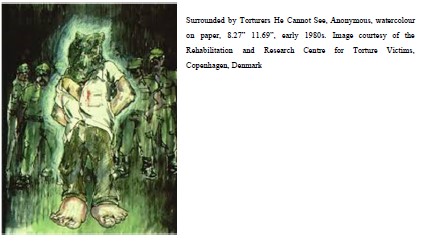
কারাবন্দির জীর্ণ পোশাক, যার শার্টের বোতাম ও ট্রাউজারের জিপ খোলা, সেটি কারারক্ষীদের 'সভ্য' ও পরিপাটি পোশাকের সঙ্গে আরও একটি বৈপরীত্য তৈরি করে। বন্দির মাথায় হুড থাকা আত্মপরিচয়ের অভাবকে প্রকাশ করে। তবে তার অনুমিত ভয়, উদ্বেগ ও যন্ত্রণার পরিবর্তে ভালুকের মতো দেখতে হুডটি অদম্যতা ও শক্তির প্রকাশ ঘটায়।
The scruffy clothes of the prisoner with shirt buttons and trouser zip undone are a further contrast to the ‘civilised’ and neat attire of the prison guards. The fact that the prisoner is hooded reveals a lack of self-identity. Though, in place of his assumed fear, worry and pain, the bear-like hood projects defiance and strength.
নিঃসন্দেহে, মুসলমানরা তাদের ধর্ম বা অন্য মুসলমানদের হেয় করে এমন সংবাদ প্রতিবেদনের অবিরাম আক্রমণের মুখোমুখি হয়। এই নিরন্তর "অপর" হিসেবে চিহ্নিত করা উদ্বেগ বাড়িয়ে তোলে এবং আমরা নিজেদের যেভাবে দেখি তা গড়ে তোলে, যাদের একটি জাতি হিসেবে মূলত সহিংসতার সঙ্গে সংজ্ঞায়িত করা হয়। বর্বরতা, পশ্চাৎপদতার উপাদান এবং ভয় ও অজানার বয়ানে ঘেরা হিজাব বা বোরকা পরিহিত নারীদের চিত্র সাধারণ হয়ে উঠেছে। বাটলার উল্লেখ করেন, ‘যে কাঠামোর মাধ্যমে আমরা অন্যদের জীবনকে ক্ষতিগ্রস্ত বা হারিয়ে যাওয়া (হারানোযোগ্য বা আঘাতযোগ্য) হিসেবে উপলব্ধি করি, অথবা আদৌ উপলব্ধি করতে ব্যর্থ হই, সেগুলো রাজনৈতিকভাবে সম্পৃক্ত। সেগুলো নিজেরাই ক্ষমতার কার্যক্রম। তারা একতরফাভাবে দৃশ্যমানতার শর্ত নির্ধারণ করে না, তবু তাদের লক্ষ্য হলো দৃশ্যমানতার পরিসরটিকেই সীমাবদ্ধ করা।’19
Undoubtedly, Muslims face a constant barrage of press reports that vilify their faith or other Muslims. This constant othering heightens anxieties and comes to shape the way we see ourselves as a people largely defined through violence. Motifs of barbarity, backwardness, images of women in hijab or burqa framed around narratives of fear and the unknown are commonplace. Butler notes that ‘the frames through which we apprehend or, indeed, fail to apprehend the lives of others as lost or injured (lose-able or injurable) are politically saturated. They are themselves operations of power. They do not unilaterally decide the conditions of appearance, but their aim is nevertheless to delimit the sphere of appearance itself.’19
টিউডর (২০১১) একটি উদাহরণ উপস্থাপন করেন, যা দেখায় যে অন্যদের প্রতি মনোভাব ও ধারণা কীভাবে সহানুভূতিশীল বা সমব্যথী দৃষ্টিভঙ্গির উপর গভীর প্রভাব ফেলে। সাধারণীকরণ থেকে সতর্ক থাকার কথা বললেও তিনি লিখেছেন:
Tudor (2011) strikes the following example to reflect how attitudes and perceptions of others have a strong bearing on sympathetic or empathic outlooks. Though cautioning against generalisations, he writes:
“যখন একজন নির্যাতনকারী তার শিকারের দিকে তাকায়, তখন সে নিশ্চয়ই তার মুখে যন্ত্রণা এবং তার ভঙ্গিতে অপমান সরাসরি দেখতে পায়। তবে সমস্যাটি হলো, সে যে আলোতে তা দেখে। ব্যাপারটি এমন নয় যে নির্যাতনকারীকে আরও একটু অনুমান করে অন্য এক, ‘আরও অভ্যন্তরীণ’ জগতে যেতে হবে, যেখানে অপরের অবস্থার ‘নৈতিক বৈশিষ্ট্য’ প্রকাশিত হবে। বিষয়টি হলো, সে অপরের অবস্থাকে কীভাবে দেখে। নির্যাতনকারীর সামনে অপরের দুঃখের বাস্তবতা স্পষ্ট আলোয় সরাসরি উপস্থিত থাকে, কিন্তু সেই আলোটি কোনোভাবে ভুল। এটি একটি বিশেষ শীতল ও কঠোর আলো, যা অপরকে সমতল করে ও উন্মুক্ত করে দেয়, তাকে কেটে খুলে ধরে রাখে, যাতে তাকে আরও ভালোভাবে খুঁচিয়ে দেখা ও নিয়ে খেলা যায়। প্রয়োজন একটি ভিন্ন আলোর।”20
রিল ব্যাড আরবস
Reel Bad Arabs
লেন্ডেনম্যানের (১৯৮৩) গবেষণায় দেখা গেছে, আমেরিকার সংবাদপত্র যেমন দ্য ওয়াশিংটন পোস্ট, দ্য ওয়াশিংটন স্টার, দ্য মায়ামি নিউজ, দ্য বাল্টিমোর সান এবং অন্যান্য পত্রিকায় প্রকাশিত রাজনৈতিক ব্যঙ্গচিত্রে আরবদের ক্রমাগত নেতিবাচক চিত্রায়ন করা হয়েছে। পামারের (১৯৯৫) বিশ্লেষণে দেখা যায়, ১৯৫৬, ১৯৫৭ ও ১৯৭৩ সালের ইসরাইলি যুদ্ধ এবং ফিলিস্তিনি ইন্তিফাদার পর দ্য ওয়াশিংটন পোস্টের রাজনৈতিক ব্যঙ্গচিত্রগুলোতেও একই প্রবণতা ছিল। প্রথম উপসাগরীয় যুদ্ধেরও আগে থেকে আরবদের, এবং প্রায়ই বিশেষভাবে ফিলিস্তিনি আরবদের, নেতিবাচক ও অমানবিক রূপে উপস্থাপনের একই প্রবণতা লক্ষ করা যায়। এ ধরনের নেতিবাচক ভাবমূর্তি প্রায়ই আমেরিকার যুদ্ধকে সমর্থন জোগাতে ব্যবহার করা হয়, অথবা পামারের (১৯৯৫) বিশ্লেষণের ক্ষেত্রে, ফিলিস্তিনিদের বিরুদ্ধে ইসরাইলের অভিযানকে সমর্থন জোগাতে ব্যবহার করা হয়।২৬ নাসিরের (১৯৭৯) গবেষণা, যেখানে ১৮৯৪ থেকে ১৯৬০ সালের মধ্যে আমেরিকান চলচ্চিত্রে আরবদের চিত্রায়ন নিয়ে আলোচনা করা হয়েছে,
Lendenman’s (1983) research has revealed successive negative portrayals of Arabs in political cartoons in American newspapers such as The Washington Post, The Washington Star, The Miami News, The Baltimore Sun and others. Palmer’s (1995) analysis of political cartoons in The Washington Post following Israel’s wars of 1956, 1957 and 1973, the Palestinian Intifida. Even prior to the first Gulf War, there was reflected the same tendency of negative and dehumanising portrayals of Arabs, and oftentimes specifically Palestinian Arabs. Such negative images are often used to promote American wars, or in the case of Palmer’s (1995) analysis, to promote Israel’s campaigns against Palestinians.26 Nasir’s (1979) study of the portrayal of Arabs in American movies between 1894 and 1960
"আরবদের একটি প্রধান ভাবমূর্তি উঠে এসেছে, যেখানে তাদের পশ্চাৎপদ, দুষ্ট ও অমানবিক হিসেবে দেখানো হয়েছে।27 শাহীনের ১৮৯৬ থেকে ২০০১ সালের মধ্যে মুক্তিপ্রাপ্ত ৯০০-র বেশি হলিউড চলচ্চিত্রের একটি বিস্তৃত গবেষণায় দেখা যায়, গণমাধ্যমে আরবদের মানবতাহীন খলনায়ক হিসেবে উপস্থাপনের একটি প্রবল প্রবণতা স্পষ্ট।"28
revealed a predominant image of Arabs as backwards, evil and inhumane.27 In Shaheen’s comprehensive study of over 900 Hollywood movies released between 1896 and 2001, a dominant trend of media presentations of Arabs as the dehumanised villain is evident.28
একইভাবে, কামালিপুর (২০০০) রেডিও, টেলিভিশন ও চলচ্চিত্রে আরবদের নেতিবাচক উপস্থাপনা মূল্যায়ন করেন এবং দেখান যে আরবদেরকে আমেরিকানদের বিরুদ্ধে সন্ত্রাসী কর্মকাণ্ডে লিপ্ত হওয়ার প্রবণতাসম্পন্ন হিসেবে চিত্রিত করা হয়।২৯ আয়িশ (১৯৯৪) ও কাজ্জায (১৯৭৫)-এর আরও গবেষণায় দেখা যায় যে আরবদেরকে স্বভাবতই মন্দ, সহিংস, অসংস্কৃত ও ভীতিকর হিসেবে উপস্থাপনকারী এমন কাল্পনিক চিত্র প্রাথমিক বিদ্যালয়, নিম্ন মাধ্যমিক ও উচ্চ মাধ্যমিক পর্যায়ের সমাজবিজ্ঞানের পাঠ্যবইয়ে প্রধান হয়ে ওঠে, যা আরবদের সম্পর্কে নেতিবাচক রূঢ়ি ধারণাকে স্থায়ী করে।30
Similarly, Kamalipour (2000) assessed the negative portrayal of Arabs in radio, television, and movies, revealing how Arabs are prone to committing acts of terrorism against Americans.29 Further works by Ayish (1994) and Qazzaz (1975) showed how such mythical images of Arabs as inherently evil, violent, uncultured and threatening are prominent in social science textbooks in elementary school, junior high and high school, which perpetuated negative stereotypes about Arabs.30
18 Kahleen McCullough-Zander and Sharyn Larson, ‘The Fear Is Still Me’ - http://www.nursingcenter.com/upload/static/230543/fear.pdf.
18 Kahleen McCullough-Zander and Sharyn Larson, ‘The Fear Is Still Me’ - http://www.nursingcenter.com/upload/static/230543/fear.pdf.
১৯ Judith Butler (2010) ‘Performative Agency’ in Journal of Cultural Economy, 3:2, p. 1.
19 Judith Butler (2010) ‘Performative Agency’ in Journal of Cultural Economy, 3:2, p. 1.
২০ K. Tudor (2011). Understanding Empathy. Transactional Analysis Journal, 41(1), 39–57. Garber: 2004, p. 83.
20 K. Tudor (2011). Understanding Empathy. Transactional Analysis Journal, 41(1), 39–57. Garber: 2004, p. 83.
21 আর. শ্রীকান্ত, *Constructing the Enemy: Empathy/Antipathy in U.S. Literature and Law* (ফিলাডেলফিয়া, টেম্পল ইউনিভার্সিটি প্রেস: ২০১২), পৃ. ১৫৮।
21 R. Srikanth, Constructing the Enemy: Empathy/Antipathy in U.S. Literature and Law (Philadelphia, Temple University Press: 2012), p. 158.
২২ Kayla Williams, Love My Rifle More Than You (W.W. Norton, 2006), p. 249.
22 Kayla Williams, Love My Rifle More Than You (W.W. Norton, 2006), p. 249.
২৩ Herbert Kelman, “Violence Without Moral Restraint: Reflections on the Dehumanization of Victims and Victimizers”, Journal of Social Issues, Vol. 29, No.4, (1973), p. 48.
23 Herbert Kelman, “Violence Without Moral Restraint: Reflections on the Dehumanization of Victims and Victimizers”, Journal of Social Issues, Vol. 29, No.4, (1973), p. 48.
২৪ Jodi Halpern এবং Harvey M. Weinstein, Rehumanizing the Other: Empathy and Reconciliation, Human Rights Quarterly, Vol. 26, No. 3 (Aug., 2004), pp. 568-9.
24 Jodi Halpern and Harvey M. Weinstein, Rehumanizing the Other: Empathy and Reconciliation, Human Rights Quarterly, Vol. 26, No. 3 (Aug., 2004), pp. 568-9.
২৫ Jodi Halpern, From Detached Concern to Empathy: Humanizing Medical Practice 1 7-18 (2001), পৃ. 130-133; 143।
25 Jodi Halpern, From Detached Concern to Empathy: Humanizing Medical Practice 1 7-18 (2001 ), pp. 130-133;143.
২৬ এ. পামার, (১৯৯৫)। The Arab image in newspaper cartoon. ওয়াই. আর. কমালিপুর (সম্পা.), The U.S. media and the Middle East: Image and perception (পৃ. ১৩৯-১৫০)। ওয়েস্টপোর্ট, সিটি: গ্রিনউড প্রেস। ২৭ এস. নাসির, (১৯৭৯)। The Arabs and the English। নিউ ইয়র্ক: লংম্যান।