3. हम किसे और क्या देखते हैं?
3. Who And What Do We See?
छवि की शक्ति
The Power Of An Image
हम स्वयं को कैसे देखते हैं और दूसरे हमें कैसे देखते होंगे, इसकी कल्पना हम किस प्रकार करते हैं, इसका हमारी आत्म-पहचान पर और "स्व" तथा "अन्य" के बीच के संबंध पर प्रभाव पड़ता है। यह बात यहाँ एक मार्मिक चित्र में दृश्यमान रूप से प्रतिबिंबित होती है, जिसका शीर्षक है 'The Fear Is Still Me' (नीचे देखें)। यह चित्र एक यातना झेल रहे कैदी के एक पशुवत व्यक्तित्व का संकेत देता है, जो एक नकाब पहने हुए है जो उसकी भालू-समान पहचान को छिपाता है।18
How we see ourselves and how we imagine ourselves being seen has a bearing on our self-identity and on the relationship between ‘self’ and ‘other’. This is reflected visually here in an evocative image entitled ‘The Fear Is Still Me’ (see below). The image suggests a bestial persona of a tortured prisoner donning a hood that conceals his bear-like identity.18
हालाँकि "वह देख नहीं सकता" फिर भी वह एक केंद्रीय आकृति के रूप में बहुत अधिक दिखाई देता है, मानो जेल के पहरेदारों द्वारा उसकी घोषणा की गई हो। तस्वीर में उसके चारों ओर एक प्रभामंडल दिखाई देता है। हम सोचते हैं कि उसके चारों ओर उभरा यह प्रभामंडल उसके पीछे से आती टॉर्च की किरण है, या उस पर पड़ती फ्लडलाइट की रोशनी है, या फिर कलाकार हमें उन द्वि-विपरीत युग्मों (binary oppositions) पर विचार करने की चुनौती देता है, जहाँ मानवीय और अमानवीय जीवन के प्रतीक एक-दूसरे के बरक्स रखे गए हैं। उसके पीछे खड़े पहरेदारों की एकजुटता उस कैदी के अकेलेपन के सामने रखी गई है, और पहरेदारों की झुंड जैसी बनावट तथा भालू जैसे इस अकेले कैदी का मेल अत्यंत विडंबनापूर्ण लगता है। घायल, भालू जैसा यह कैदी वही है जिसका शिकार किया गया है, और पहरेदार उसी की घोषणा करते प्रतीत होते हैं।
Though “he cannot see” he is very much to be seen as a centre-piece as if heralded by the prison guards. In the image, there appears a halo. We wonder whether the halo etched around him is the beam of a torch from behind him, a floodlight shining onto him or whether the artist challenges us to consider binary oppositions wherein symbols of humanised and dehumanised life become juxtaposed. The togetherness of the guards behind him is set against the isolation of the prisoner though the pack-like formation of the guards and the lone bear-like prisoner is strikingly ironic. It is the wounded bear-like prisoner who has been hunted and the prison guards herald him.
यहाँ बहुत कुछ देखने को है। यह कार्टून एक ऐसे व्यक्ति की ओर संकेत करता है जो अपने आकार से बड़ा दिखता है, हालाँकि उसके बाहर निकले हुए पैर शायद पिटाई से सूजे हुए अंगों को दर्शाते हैं, और इस कारण कैदी असंतुलित दिखाई देता है। फिर भी, चूँकि उसके पैरों पर कोई चोट नहीं है, तो क्या वे इसके बजाय, या इसके साथ-साथ, उसकी दबंग उपस्थिति का संकेत हो सकते हैं? उसके हाथ हमें दिखाई नहीं देते, इसलिए हम कल्पना ही कर सकते हैं कि उन पर कौन-सी चोटें होंगी।
There is much to be seen. The cartoon suggests a larger-than-life individual though his protruding feet perhaps reflect limbs swollen by beating, and in this the prisoner appears imbalanced. Since however his feet bear no injuries might they instead or simultaneously suggest his stamped presence? We cannot see his hands however and imagine what injuries they might bear.
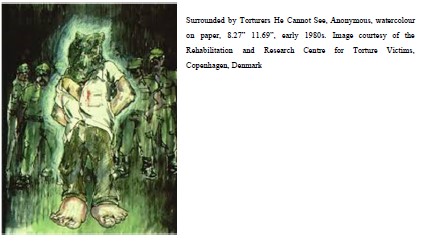
कैदी के मैले-कुचैले कपड़े, जिसकी कमीज़ के बटन खुले हैं और पतलून की ज़िप खुली है, कैद के रक्षकों के 'सभ्य' और साफ़-सुथरे पहनावे से एक और विरोधाभास पैदा करते हैं। कैदी का नकाब से ढका होना उसकी आत्म-पहचान के अभाव को दर्शाता है। हालाँकि, उसके कथित भय, चिंता और पीड़ा के बजाय, भालू जैसी दिखने वाली यह नकाब अवज्ञा और शक्ति का भाव व्यक्त करती है।
The scruffy clothes of the prisoner with shirt buttons and trouser zip undone are a further contrast to the ‘civilised’ and neat attire of the prison guards. The fact that the prisoner is hooded reveals a lack of self-identity. Though, in place of his assumed fear, worry and pain, the bear-like hood projects defiance and strength.
निस्संदेह, मुसलमान प्रेस की उन रिपोर्टों की लगातार बौछार का सामना करते हैं जो उनके धर्म या अन्य मुसलमानों को बदनाम करती हैं। यह निरंतर "दूसरा" बनाए जाने की प्रक्रिया चिंताओं को बढ़ाती है और इस तरह हमें अपने आप को उस कौम के रूप में देखने पर मजबूर करती है जिसकी पहचान मुख्य रूप से हिंसा से गढ़ी गई है। बर्बरता और पिछड़ेपन के प्रतीक, और डर और अज्ञात के इर्द-गिर्द बुने गए आख्यानों में हिजाब या बुर्का पहनी महिलाओं की छवियाँ आम हैं। बटलर लिखती हैं कि ‘वे चौखटे जिनके ज़रिये हम दूसरों के जीवन को खोए हुए या घायल (खोने योग्य या चोट योग्य) के रूप में समझते हैं, या वास्तव में समझने में विफल रहते हैं, राजनीतिक रूप से संतृप्त होते हैं। वे स्वयं सत्ता के संचालन हैं। वे दिखावट की शर्तों को एकतरफ़ा तय नहीं करते, फिर भी उनका उद्देश्य दिखावट के क्षेत्र को ही सीमित करना होता है।’19
Undoubtedly, Muslims face a constant barrage of press reports that vilify their faith or other Muslims. This constant othering heightens anxieties and comes to shape the way we see ourselves as a people largely defined through violence. Motifs of barbarity, backwardness, images of women in hijab or burqa framed around narratives of fear and the unknown are commonplace. Butler notes that ‘the frames through which we apprehend or, indeed, fail to apprehend the lives of others as lost or injured (lose-able or injurable) are politically saturated. They are themselves operations of power. They do not unilaterally decide the conditions of appearance, but their aim is nevertheless to delimit the sphere of appearance itself.’19
टूडर (2011) एक उदाहरण देते हैं जो दिखाता है कि दूसरों के प्रति दृष्टिकोण और धारणाएँ सहानुभूतिपूर्ण या समानुभूतिपूर्ण नज़रिए पर कितना गहरा प्रभाव डालती हैं। सामान्यीकरण से सावधान करते हुए वे लिखते हैं:
Tudor (2011) strikes the following example to reflect how attitudes and perceptions of others have a strong bearing on sympathetic or empathic outlooks. Though cautioning against generalisations, he writes:
जब एक यातना देने वाला अपने शिकार को देखता है, तो वह निश्चित रूप से उसके चेहरे पर पीड़ा और उसकी मुद्रा में अपमान सीधे देख सकता है। समस्या, हालाँकि, उस रोशनी में है जिसमें वह उसे देखता है। यह ज़रूरी नहीं कि यातना देने वाले को किसी और, ‘अधिक आंतरिक’ क्षेत्र में थोड़ा और अनुमान लगाना पड़े, जहाँ दूसरे की स्थिति के ‘नैतिक गुण’ प्रकट होंगे। मामला यह है कि वह दूसरे की दशा को कैसे देखता है। यातना देने वाले के सामने दूसरे की पीड़ा की वास्तविकता साफ़ रोशनी में सीधे मौजूद है – लेकिन वह रोशनी किसी तरह ग़लत है। यह एक विशेष रूप से ठंडी और कठोर रोशनी है, जो दूसरे को सपाट और उजागर कर देती है, उसे काटकर खोल देती है, ताकि उसे और अच्छी तरह टटोला और खिलवाड़ किया जा सके। ज़रूरत एक अलग रोशनी की है।20
रील बैड अरब्स
Reel Bad Arabs
लेंडेनमैन (1983) के शोध ने अमेरिकी समाचार-पत्रों, जैसे द वॉशिंगटन पोस्ट, द वॉशिंगटन स्टार, द मियामी न्यूज़, द बाल्टीमोर सन और अन्य में राजनीतिक कार्टूनों में अरबों के लगातार नकारात्मक चित्रण को उजागर किया है। पामर (1995) ने 1956, 1957 और 1973 के इज़राइली युद्धों तथा फ़िलिस्तीनी इंतिफ़ादा के बाद द वॉशिंगटन पोस्ट के राजनीतिक कार्टूनों का विश्लेषण किया। पहले खाड़ी युद्ध से पहले भी अरबों, और अक्सर विशेष रूप से फ़िलिस्तीनी अरबों, के नकारात्मक और अमानवीय चित्रण की वही प्रवृत्ति देखी गई। ऐसी नकारात्मक छवियाँ अक्सर अमेरिकी युद्धों को बढ़ावा देने के लिए इस्तेमाल की जाती हैं, या पामर (1995) के विश्लेषण के मामले में, फ़िलिस्तीनियों के विरुद्ध इज़राइल के अभियानों को बढ़ावा देने के लिए। नासिर (1979) का अध्ययन, 1894 से 1960 के बीच अमेरिकी फ़िल्मों में अरबों के चित्रण पर आधारित है।
Lendenman’s (1983) research has revealed successive negative portrayals of Arabs in political cartoons in American newspapers such as The Washington Post, The Washington Star, The Miami News, The Baltimore Sun and others. Palmer’s (1995) analysis of political cartoons in The Washington Post following Israel’s wars of 1956, 1957 and 1973, the Palestinian Intifida. Even prior to the first Gulf War, there was reflected the same tendency of negative and dehumanising portrayals of Arabs, and oftentimes specifically Palestinian Arabs. Such negative images are often used to promote American wars, or in the case of Palmer’s (1995) analysis, to promote Israel’s campaigns against Palestinians.26 Nasir’s (1979) study of the portrayal of Arabs in American movies between 1894 and 1960
यह एक व्यापक प्रवृत्ति को दर्शाता है: 1896 से 2001 के बीच जारी हुई 900 से अधिक हॉलीवुड फ़िल्मों के शेहीन के विस्तृत अध्ययन में, अरबों को अमानवीय खलनायक के रूप में प्रस्तुत करने की एक प्रमुख प्रवृत्ति स्पष्ट दिखाई देती है।28
revealed a predominant image of Arabs as backwards, evil and inhumane.27 In Shaheen’s comprehensive study of over 900 Hollywood movies released between 1896 and 2001, a dominant trend of media presentations of Arabs as the dehumanised villain is evident.28
इसी तरह, Kamalipour (2000) ने रेडियो, टेलीविज़न और फ़िल्मों में अरबों के नकारात्मक चित्रण का आकलन किया, और यह दिखाया कि किस तरह अरब अमेरिकियों के विरुद्ध आतंकवादी कृत्य करने वाले के रूप में प्रस्तुत किए जाते हैं। इसके अलावा Ayish (1994) और Qazzaz (1975) के आगे के कार्यों ने दिखाया कि अरबों को स्वभाव से दुष्ट, हिंसक, असभ्य और ख़तरनाक बताने वाली ऐसी मिथकीय छवियाँ प्राथमिक विद्यालय, मिडिल और हाई स्कूल की सामाजिक विज्ञान की पाठ्यपुस्तकों में प्रमुख रूप से मौजूद हैं, जिससे अरबों के बारे में नकारात्मक रूढ़ियाँ बनी रहती हैं।30
Similarly, Kamalipour (2000) assessed the negative portrayal of Arabs in radio, television, and movies, revealing how Arabs are prone to committing acts of terrorism against Americans.29 Further works by Ayish (1994) and Qazzaz (1975) showed how such mythical images of Arabs as inherently evil, violent, uncultured and threatening are prominent in social science textbooks in elementary school, junior high and high school, which perpetuated negative stereotypes about Arabs.30
18 Kahleen McCullough-Zander और Sharyn Larson, ‘The Fear Is Still Me’ - http://www.nursingcenter.com/upload/static/230543/fear.pdf.
18 Kahleen McCullough-Zander and Sharyn Larson, ‘The Fear Is Still Me’ - http://www.nursingcenter.com/upload/static/230543/fear.pdf.
19 Judith Butler (2010) ‘Performative Agency’ in Journal of Cultural Economy, 3:2, p. 1.
19 Judith Butler (2010) ‘Performative Agency’ in Journal of Cultural Economy, 3:2, p. 1.
20 K. Tudor (2011). Understanding Empathy. Transactional Analysis Journal, 41(1), 39–57. Garber: 2004, p. 83.
20 K. Tudor (2011). Understanding Empathy. Transactional Analysis Journal, 41(1), 39–57. Garber: 2004, p. 83.
21 आर. श्रीकांत, *Constructing the Enemy: Empathy/Antipathy in U.S. Literature and Law* (फिलाडेल्फिया, टेम्पल यूनिवर्सिटी प्रेस: 2012), पृ. 158.
21 R. Srikanth, Constructing the Enemy: Empathy/Antipathy in U.S. Literature and Law (Philadelphia, Temple University Press: 2012), p. 158.
22 Kayla Williams, Love My Rifle More Than You (W.W. Norton, 2006), p. 249.
22 Kayla Williams, Love My Rifle More Than You (W.W. Norton, 2006), p. 249.
23 Herbert Kelman, "Violence Without Moral Restraint: Reflections on the Dehumanization of Victims and Victimizers", Journal of Social Issues, Vol. 29, No.4, (1973), p. 48.
23 Herbert Kelman, “Violence Without Moral Restraint: Reflections on the Dehumanization of Victims and Victimizers”, Journal of Social Issues, Vol. 29, No.4, (1973), p. 48.
24 Jodi Halpern और Harvey M. Weinstein, Rehumanizing the Other: Empathy and Reconciliation, Human Rights Quarterly, Vol. 26, No. 3 (Aug., 2004), pp. 568-9.
24 Jodi Halpern and Harvey M. Weinstein, Rehumanizing the Other: Empathy and Reconciliation, Human Rights Quarterly, Vol. 26, No. 3 (Aug., 2004), pp. 568-9.
25 Jodi Halpern, From Detached Concern to Empathy: Humanizing Medical Practice 1 7-18 (2001 ), pp. 130-133;143.
25 Jodi Halpern, From Detached Concern to Empathy: Humanizing Medical Practice 1 7-18 (2001 ), pp. 130-133;143.