アキーダ(信条)と、そこから生じるアフカーム(規定)、およびその上に築かれる思想は、タグイール(変革)の基礎である。
The Aqeedah and what emanates from it in terms of Ahkaam and what is built upon it in terms of thoughts, is the basis of At-Taghyeer (change).
人間の行動は、彼が抱く概念(マファーヒーム)と結びついている。概念とは、事物とその属性についての理解から生じる確信(カナーアート)であり、加えてその理解の上に築かれ、あるいはそこから派生する他の確信も含む。
The conduct of the human is tied to what he carries in terms of concepts. The concepts (Mafaaheem) are convictions (Qanaa’aat) resulting from a comprehension of things and their attributes in addition to what is built upon this comprehension or emanates from it in terms of other convictions.
概念には二つの種類があります。
Concepts are of two types:
The first
The first:
物事に関する概念。これらは信念、あるいはその源が物事そのものであるアフカーム(判断)である。例えば、「火は燃える」「毒は人を殺す」「アルコールは酔わせる」「肉は食べられるが土は食べられない」「圧力の増大は(ある種の)爆発を生む」「社会は永続的な関係で結ばれた個人の集合体で構成される」「思想の覚醒によらなければ復興は起こらない」といった文がこれに含まれる。
: Concepts about things. These are convictions or Ahkaam (rulings) whose source is the things themselves. This would include statements like: ‘Fire burns’, ‘Poison kills’, ‘Alcohol intoxicates’, ‘Meat is eaten whilst soil is not eaten’, ‘The increased build-up of pressure generates an explosion (of sorts)’, ‘The society is composed of a collection of individuals bound by permanent relationships’ and ‘Revival would not occur except by way of the enlightened thought’.
これらすべての考えは、その根拠が対象そのものにある描写やアハカーム(判断)である。それらは現実に合致するか、現実と矛盾するかによって正しくも誤りともなり得る。いずれの場合も、それを信じる者にとっては概念(ムファーヒーム)とみなされる。人間の行動と振る舞いは、物事についての彼の概念に結びついている。それゆえ、自分の食べ物に毒が盛られていると確信した者は、空腹であってもそれを決して口にしない。同様に、喉が渇いた者は水を求め、それ以外のものは求めない。また、酔いたいと望む者は酒を求め、ほかのものは求めない。
All of these thoughts are descriptions or Ahkaam whose source is its subject. They could be correct or incorrect depending on their conformity to the reality or their contradiction to it. In all of these cases they are considered to be concepts in respect to the one who has believed in them. The human behaviour and conduct is tied to his concepts about things and so whoever is convinced that his food has been poisoned would never eat from it and even if he was hungry. Similarly the one who was thirsty would seek water and not something else whilst the one who wanted to be intoxicated would seek alcohol and nothing else.
二つ目の種類:
The second type:
生活に関する概念(マファーヒーム)とは、その主題の外部に源を持つ確信またはアハカームのことである。例えば「サラートは義務である」「詐欺は禁止である」「人を殺すことは禁止である」といった文がそれにあたる。このハクムの源は、その事柄や行為そのものではない。それらは判断の対象となる領域または現実を示しているにすぎず、判断の根拠は別のものであり、それは他の場所に存在する。
Concepts (Mafaaheem) about life. These are convictions or Ahkaam whose source is external to its subject. This is like the statements: ‘The Salaah is Fard’, ‘Fraud is Haraam’ and ‘Killing someone is Haraam’ etc... The source of this Hukm is not the thing itself or the action and these only represent the subject area or the reality that is being judged upon whilst the source of the judgement is something else and lies elsewhere.
「アルコールは酔わせる」という表現は、アルコールに付随する性質、すなわちその中に含まれるものや、その結果として生じることを根拠に下される判断、つまりアルコールの内在的な属性を表しています。しかし、「アルコールはハラーム(禁止)である」という表現は、その中に何が含まれているかに基づいて物事に下される判断ではなく、アッラー(SWT)からのフクム(裁定)を表しています。
So our statement: ‘Alcohol intoxicates’ reflects a description or an internal attribute associated to alcohol. It is a judgement made upon a thing due to what it contains or results in. The statement however ‘Alcohol is Haraam’ is not a judgement passed upon a thing on the basis of what is in it but rather it represents a Hukm from Allah (swt)
誰がハラームとし、誰がムバーフ(許容されること)とするのか。
who decides what to make Haraam and what to make Mubaah (permissible).
人の行動は、その人の人生についての考え方とも結びついています。もし彼が豚肉は食べられるものであり、空腹を満たしてくれるという概念や理解を持っていたとすれば、それは一つの物事についての概念にあたります。一方、人生についての概念とは、豚は haram であり、それを避け、遠ざけることが彼にとって義務であるということです。この Hukm を理解し、それを信じた者にとって、これは一つの概念となり、その行動に影響を与え、豚肉で空腹を満たすことを妨げるのです。
The behaviour of the person is also tied to his concepts about life. If he held the concept or understanding about the flesh of pig that it was edible and would satisfy hunger, then this would represent a concept about a thing. The concept about life however is that the pig is Haraam meaning that is obligatory for him to avoid and keep away from it. It would become a concept for the one who has comprehended this Hukm and believed in it and it would have an effect upon his behaviour and prevent him from satisfying his hunger from pig.
偶像が自分の幸福、安全、生計(リズク)に影響を及ぼす、あるいは自分のために物事を実現させる力を持つと考える者、また亡くなった人の中にもそうした力を持つ者がいると考える者は、そうした偶像の前で畏敬の念に捉えられ、あるいは死者に助けと支援を求めることになる。
The one who holds the concept that the idol has an effect upon his well-being, safety, rizq or to help things come to pass for him, or that some of those who have passed away also possess this capability, he would then be gripped by the feelings of veneration in the presence of such idols or he would seek help and assistance from the dead.
これは、こうした事柄を一切信じず、それらの偶像を蔑み、死者に助けを求める者たちの誤りを示すことをためらわない者と正反対である。
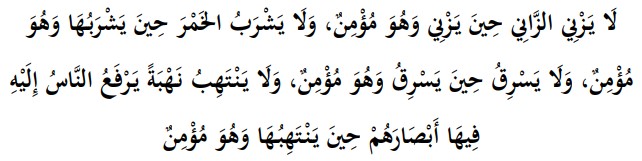
姦淫を行っている者は、姦淫を行っている間は信者ではない。酒を飲んでいる者は、飲酒している間は信者ではない。盗みを働く者は、盗んでいる間は信者ではない。人々の注目を集める価値あるものを略奪する略奪者は、その行為を行っている間は信者ではない(アル=ブハーリー)。
When the fornicator is committing Zinaa he is not a believer, when the alcohol drinker is drinking alcohol he is not a believer, when the thief steals he is not a believer and no plunderer who plunders a valuable thing that attracts the attention of people is a believer whilst he commits this act (AlBukhaari).
それゆえ、行動を正し、矯正するためには、心にハキーカ(真理)を取り戻させることが義務である。それには次のものが含まれる。事物のハキーカ(真理)と、信条およびアフカームに関するシャルイー的なハキーカ(真理)である。それらは思い起こさせられなければならず、そうして新鮮になり、しっかりと身につき、現前するものとなり、その結果として行動に影響を及ぼすようになるのである。
It is therefore obligatory to restore the truths (Haqaa’iq) to the minds to correct the behaviour and to rectify it. These include: The Haqaa’iq (truths) of things and the Shar’iyah truths in terms of beliefs and Ahkaam. They must be reminded with them so that they become fresh, firmly embodied and present, and as such have an effect upon the behaviour.
アッラーはこう仰せられた(SWT):
Allah (swt) said:

そして、教訓を与え続けなさい。まことに、教訓は信者たちに益をもたらすのですから。(アッ=ザariyat 55)
And remind for verily the reminder benefits the believers (Adh-Dhaariyaat 55).
逆の場合が不信者に当てはまります。真理やシャリーア(法)の概念を思い出させても、彼らには益がないからです。彼らはそれを思想として聞くだけで、それらは彼らにとって真理を表すものでも、概念を表すものでもありません。したがって、それらが彼らの行動に影響を与えることはないのです。
The opposite is the case in respect to the disbelievers because reminding them of the truths and Shar’iyah concepts does not benefit them. They hear them as thoughts but they do not represent truths for them nor do they represent concepts for them and as such they have no effect upon their behaviour.
したがって、人生についての考え方こそが、人間の生き方を形づくるものである。人間の主な関心事は単に生きることではなく、どのように生きるべきかであり、その主な関心事は欲求を満たすことそのものではなく、それをどのような方法で満たすかにかかわる。このゆえに、人生についての考え方が、彼にとって特定の生き方と生活様式を形づくるのである。
Therefore the concepts about life are what define the manner by which the human lives. His main concern is not just living but rather how he should live and his main concern is not about satisfying his needs but rather it concerns the manner by which he will satisfy them. For this reason his concepts about life fashion for him a specific manner and style of living.
外部から生じた概念に基づく物事や行為の場合、その源泉が真実であるか、それらについて判断を下す力や権威を持つこと、そしてその規定が有効かつ正しいことを確信するまでは、それを受け入れることはできない。
In the case where the source of the concepts in life are external to the things and actions themselves, it is not possible to adopt them except after being convinced that the source is true or has the power or authority to make a judgment upon them, and that its Ahkaam are valid and correct.
イスラームは、ハーキム(裁定者)がアッラーであり、アフカーム(法規定)の源泉がワフィー(神の啓示)であることを確立している。
Islaam has established that the Haakim (Judge) is Allah (swt) and that the source of the Ahkaam (rulings) is the Wahi (divine revelation)
サイイドゥナー・ムハンマド(saw)に啓示された。
revealed upon Sayyidunaa Muhammad (saw).
アッラーはこう仰せられた(SWT):
Allah (swt) said:

まことに、ハクム(裁定・統治)は、アッラーのほかにはない。アッラーは、ご自身以外を崇拝してはならないと命じられた(ユースフ章40節)。
Verily the Hukm (rule) is not but for Allah. He commanded that you do not worship other than him (Yousuf 40).
そして彼(SWT)はこう仰った:
And He (swt) said:

「アッラーが下されたものによって裁定しない者、その者たちこそ不信仰者である」(アル=マーイダ章44節)
And whosoever does not judge by what Allah has revealed then it those who are the disbelievers (Al-Maa’idah 44).
あらゆる判断や裁定のうち、アッラーの裁定(ハクム)以外のものはすべてターグートである。
Every ruling or judgement other than the Hukm of Allah is Taaghoot:
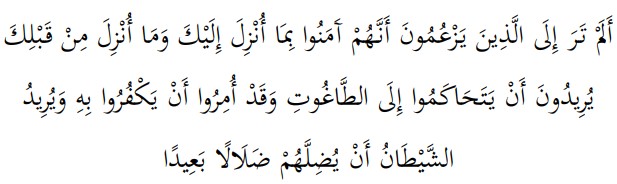
あなたは、あなたに下されたものと、あなたの前に下されたものを信じたと主張する者たちを見なかったのか。彼らはタグート(偶像や不正な権威)に裁きを求めようとするが、それを拒むよう命じられていた。そしてシャイターン(悪魔)は、彼らを遠く迷わせようとしているのだ。(アン=ニサー 60)
Have you not seen those who claim to have believed in what was revealed to you, [O Muhammad], and what was revealed before you? They wish to refer legislation to Taghoot, while they were commanded to reject it; and Satan wishes to lead them far astray (An-Nisaa 60).
したがって、判断は理性や人間に委ねられているわけではない。これは理性の役割が奪われたことや、その能力に制限が課されたことを意味するのではない。むしろ、理性にも人間にも判断を下したり裁定を出したりするために必要な道具がないからである。なぜなら、裁定の源泉は、その対象となる事柄そのものや、裁定が下される主題ではないからである。
As such there is no judgement left to the mind or the human and this does not mean that the role of the mind has been taken away or that a limitation has been placed upon its capabilities. It is rather because the mind and the human do not possess the necessary tools to make judgement or pass a ruling. This is because the source of the ruling is not the thing itself or the subject that the ruling will be made upon.
だから、判断の権限を人々に割り当てた者たちは、例えばそうですが、証拠に基づいてそうしたのではなく、むしろ迷い、道を踏み外したのです。彼らは真実ではなく、現実性も持たない概念を抱えてきました。同時に、宗教(ディーン)を人生から切り離すことによって真理を否定しました。その結果、アッラーに属するフクム(裁定)は存在しないことになってしまうのです。
So those who have allocated the provision of the ruling to the people, for example, have not based this upon evidence and have rather wandered and gone astray. They have carried a concept which is not truthful and has no reality to it, whilst at the same time they have denied the truth by separating the Deen from life which means that there is no Hukm belonging to Allah.
もし人間に判断を下し裁定を出す権利と権限が与えられていながら、そのために必要な道具を備えていないとすれば、その者の見解に従う限り、彼の欲望、傾向、利益以外に何も通用しなくなるでしょう。それらは移ろい揺れ動くものであり、人間は有害なものを有益だと見なし、病を薬や治療法だと見なしてしまうかもしれません。
If the right and power of issuing judgements and rulings was given to the human whilst he does not possess the necessary tools to do that, then nothing would prevail apart from his desires, inclinations and interests according to his viewpoint. These would be changing and fluctuate and he could see something that is damaging as being beneficial and he could see a disease as a medicine and cure.
この文脈において、アッラーへの信仰(イーマーン)、預言者であることへの信仰、そしてクルアーンへの信仰の重要性が前面に現れます。このイーマーンはアキーダであり、人の行動に影響を及ぼします。なぜなら、それは人に人生についての概念を与え、どのように生きるべきか、人生における目的、そして行動と振る舞いの背後にある目的、すなわちアッラー・アッザ・ワ・ジャッラーの御満足を得ることを定めるからです。
In this context the importance of Imaan in Allah, the Prophethood and the Qur’aan comes to the fore. This Imaan is the Aqeedah that has an effect upon the behaviour as it provides the human with the concepts about life which define for him how he should live, his purpose in the life and his purpose behind his behaviour and conduct, which is to attain the pleasure of Allah ‘Azza Wa Jalla.
同様に、この文脈において、物事と人生についての概念が正しく真実であることの重要性もまた明らかになります。すなわち、それらがハカーイク(真理・事実)を表すものであるということです。無知を広め、欺瞞を行い、誤った概念を人々の間に生じさせるために虚偽を広めるという運動の危険性も明らかです。その結果、人々は無知と迷妄の犠牲者となるのです。
Similarly in this context the importance of the concepts about things and about the life being correct and truthful also becomes apparent i.e. that they are representative of Haqaa’iq (truths/facts). The danger of the campaign of spreading ignorance, deception and propagating fallacies in order to generate amongst the people incorrect concepts is also evident. As a result of which they become victims of ignorance and misguidance:

言いなさい。「行いにおいて最も損をする者たちについて、あなたがたに知らせようか。」「それは、現世の生活において努力が無駄になりながら、自分たちは善いことをしていると思い込んでいた者たちである」(アル・カフ 103-104)。
Say: Shall We inform you of the greatest losers in respect to (their) deeds? [They are] those whose effort is lost in worldly life, whilst they were thinking that they are doing good (Al-Kahf 103-104).
はい、個々の人々も集団も迷わされるのです。ちょうど海にいる魚が餌に食いつくように、あるいは罠に仕掛けられた食べ物へと駆け寄るネズミのように。
Yes the individuals are led astray and the peoples are led astray just like a fish in the ocean when it takes the bait or the mouse that rushes to the food placed in a mouse trap.
人は、自分の目指す場所に通じていると確信している道を進みながら、実際にはその正反対の方向へ向かっているとき、さまよい続けて目的地に辿り着けないのである。
The human wanders around and does not arrive at his aim when he proceeds along a path that he is convinced will lead to it whilst in reality he is actually going in the exact opposite direction.
彼はまた、無知や歪曲の結果として人生について誤った概念を抱くときにも迷わされます。たとえば、リバー(利息)が合法であると見たり、見せられたり、民主主義がイスラームに由来すると見たり、見せられたり、シャリーアの学びが他のあらゆる専門分野や職業と同じく生計を立てるためのものだと考えたりする場合です。イスラームのハカーイク(真理・事実)が失われ、一般的な自由の思想や、現在の世代や百年の間には衰退した現状を変えることは不可能だという誤った考え、あるいはこの変化はアッラーからの賜物であり、待つことや、マフディーを待つこと以外に我々にできることはない、といった誤った思想で心が満たされるとき、そうしたことすべてによって、個人、民族、あるいはウンマは、それらの概念を与えた者たちが望む方向へ怠惰にのろのろと追い立てられる怠け者の集まりへと変えられてしまいます。そしてそれは、彼らが実際には敵と闘っていると信じている一方で、敵の道具となることへとつながるのです。
He is also led astray when he carries incorrect concepts about life as a result of ignorance or distortion like the one who sees or is made to see that Ribaa is Halaal, that democracy is from Islaam and that learning the Sharee’ah is for the sake of earning a living just like any other area of specialisation or profession. When the Haqaa’iq (truths/facts) of Islaam become absent and the minds are filled with false thoughts like the thoughts of general freedoms or that changing the declined reality is impossible in our current generation or one hundred years, or that this change is a gift from Allah and that there is nothing for us to do apart from wait or to wait for the Mahdi. All of this transforms the individuals, peoples or the Ummah into a collection of lazy people sluggishly being driven in whatever direction those who have given them these concepts want them to and it leads them into becoming tools for their enemies whilst they believe that they are actually struggling against them.

まるで水に向かって両手を伸ばし、口に届かせようとする者のようです。しかし水は決して彼の口には届きません(ラアド 14)。
Like the one who stretches his hands toward water [from afar, calling it] to reach his mouth, but it does not reach it (Ar-Ra’d 14).

彼らの譬えは、火を灯した者のようなものである。その火が周囲を照らしたとき、アッラーは彼らの光を奪い去り、彼らを闇の中に残されたので、彼らは見ることができない。(アル=バカラ 17)
Their example is that of one who kindled a fire, but when it illuminated what was around him, Allah took away their light and left them in darkness [so] they could not see (Al-Baqarah 17).
したがって、繰り返しになりますが、行動を変え、正し、目的に到達する正しく高潔な行動とするためには、物事と人生について正しい概念を生み出すことが不可欠です。その時、人は物事とその属性をうまく従わせ、活用できる良い立場に立ち、そして目的に至る行動、すべての目標の中で最も偉大な目標であるアッラーの御満足を得ることに至る行動をとれる良い立場に立つことになるのです。
Therefore, we repeat, that in order to change the conduct, rectify it and make it a correct elevated conduct that arrives at its purpose, it is essential to generate correct concepts about things and life. At that time the person will be in a good position to subjugate and utilise the things and their attributes successfully and will be in a good position to adopt the conduct that arrives to his purpose and the greatest of all objectives which is the attainment of the pleasure of Allah ‘Azza Wa Jall:

「あなたにアッラーが授けてくださったもので、来世の住まいを求めなさい。そして、この世における自分の分を忘れてはならない。アッラーがあなたに善くしてくださったように、あなたも善を行いなさい」(アル=カサス章77節)
But seek, through that which Allah has given you, the home of the Hereafter; and [yet], do not forget your share of the world. And do good as Allah has done good to you (Al-Qasas 77).
最初の真理(ハカーイク)であり、そして間違いなく最も重要なものは、人間の人生観を定めるアキーダ(信条)である。アキーダとは、すべてのものは創造主であるアッラーによって創造されたこと、アッラーはムハンマド(ﷺ)という使徒を、人間に関わるすべてのことを説明するアル・イスラーム(イスラーム)の使命(リサーラ)とともに遣わされたこと、そして神(SWT)は、信仰(イーマーン)か不信仰(クフル)かを基準に人間を裁き、また預言者(ﷺ)がもたらしたものに従ったかどうか、あるいは従わなかったかどうかを基準に裁かれることである。
The first of the Haqaa’iq (truths) and absolutely its most important is the Aqeedah that defines the human’s concepts about life. The Aqeedah is that all things have been created by a creator who is Allah (swt), that Allah sent a Messenger who is Muhammad (saw) with the Risaalah (message) of Al-Islaam which explains everything that relates to the human being and that He (swt) will account him upon the basis of Imaan or Kufr and upon the basis of his abiding by what the Nabi (saw) came with or by his non-abidance to it.
ムスリムの人生の目的:
The Muslim’s purpose in life:
信仰の後に続く最も重要な真理の一つは、人間が自らの創造の目的、すなわち自分が成し遂げるために努力しなければならないことを理解することである。
From amongst the most important Haqaa’iq (truths) after Imaan is that the human understands the purpose of his creation i.e. that which he must strive to accomplish.
アッラーはこう仰せられた(SWT):
Allah (swt) said:
{وَمَا خَلَقْتُ الْجِنَّ وَالْإِنسَ إِلَّا لِيَعْبُدُونِ} (アッ=ザーリヤート 56)
And I have not created the Jinn or humankind except to worship me (AdDhaariyaat 56).
アッラーへの崇拝('イバーダ)とは、アッラーを信仰し、アッラーに服従することを意味します。アッラー・タアーラーへの服従とは、アッラーのすべてのアハカーム(命令・規定)に対する献身と遵守(アル=イルティザーム)を意味します。これは礼拝などの儀礼的な行為('イバーダート)、アフラーク(道徳)、ムアーマラート(社会的な取引・関係)に限られるものではなく、アッラー(SWT)が定めたすべてのものを含みます。
The worship (‘Ibaadah) to Allah means having Imaan in Him and obedience to Him. Obedience to Him Ta’Aalaa means commitment and abidance (Al-Iltizaam) to all of His Ahkaam. This is not restricted to the acts of ‘Ibaadah, Akhlaaq (morals) and Mu’aamalaat (societal transactions) but rather includes everything that Allah (swt)
ご指示ではなく、命じたり禁じたりすること。それは、アッラーの他には崇拝される権利を持つものは何もないこと、そして、彼(SWT)以外の誰からも命令や禁止が発せられることはないことを含んでいる。
has commanded or forbidden. It includes that nothing has a right to be worshipped other than Allah and that no command or forbiddance can come from anyone besides Him (swt).
アフマドとアット・ティルミディーは、アディイ・ビン・ハーティム(ra)がメッセンジャー・オブ・アッラー(saw)のもとに来たとき、預言者がアーヤの次の部分を朗誦していたと伝えています。
Ahmad and At-Tirmidhi related that ‘Adiy Bin Haatim (ra) came to the Messenger of Allah (saw) whilst he was reciting the Aayah:
彼らは、アッラーの他に、自分たちの律法学者と修道士を主とし、またマルヤムの子マスィーフをも(主とした)。しかし彼らは、ただ唯一の神に仕えるよう命じられていたにすぎない。アッラーの他に神はなく、彼は、彼らが配する者たちより超越されている。(悔悟章 31)
They have taken their Rabbis and monks as lords besides Allah, and [also] the Maseeh, the son of Mary. And they were not commanded except to worship one God; there is no deity except Him. Exalted is He above whatever they associate with Him (At-Taubah 31).
アディーは言った。「彼らはそれらを崇拝していたわけではありません」。すると、アッラーの使徒ﷺはこう言われた。
‘Adiy then said: ‘They did not worship them’. So the Messenger of Allah (saw) said:
むしろ、彼らは人々のために、ハラームを許されたものとし、ハラールを禁じられたものとしました。そして人々は彼らに従いました。したがって、これこそが彼らに対する人々の崇拝だったのです。
On the contrary, they made the Halaal Haraam upon them and made the Haraam Halaal for them, then they followed them (in this). Therefore this was their worship to them.
このように、誰かに halāl(許されたもの)と harām(禁じられたもの)を定め、立法する権利、そして服従の権利を与えることは、その人物に対する「イバーダ(崇拝)」に当たる。
As such giving the Haqq (right) to anyone to decide the Halaal and decide the Haraam or the right to make legislation and the right of obedience represents ‘Ibaadah to that person.
アッラーはこう仰せられた(SWT):
Allah (swt) said:
あなたがたとその先祖たちが名付けただけの、アッラーが何の権威も下されなかった名前以外に、あなたがたはアッラーの他には何も崇拝していない。
You worship nothing besides Him except [mere] names you have named them with, you and your fathers, for which Allah has sent down no authority.
立法の権限は、ただアッラーにのみ属する。アッラーは、ご自身以外の者に仕えてはならないと命じられた。それが正しい宗教である。しかし、多くの人々はそれを知らない。(ユースフ 40)
Legislation is not but for Allah. He has commanded that you worship not except Him. That is the correct Deen, but most of the people do not know (Yusuf 40).
服従の権利について、統治者(ハキム)、アミール、両親に対するものは、アッラーが定めた権利(ハック)に基づくものである。
As for the right of obedience that belongs to the Hakim (ruler), Ameer or parents then this is due to the Haqq (right) that Allah (swt)
…それらに与えたものを。
has provided to them.
アッラー(スブハーナhu wa Ta'ala)への'イバーダ(崇拝)には、人々に彼(スブハーナhu wa Ta'ala)を崇拝させること、すなわち彼らをアッラーのシャリーア(法)に服従させること、そしてアッラー以外の者、あるいはイスラームのシャリーア以外の者に対するハーキミーヤ(立法権)の存在に対して戦うこと、さらにアッラーのハクム(統治)からの離脱(ホルージュ)に対して戦うことが含まれる。これは諸テキストが示してきたことであり、それらが伝えてきた意味である。すなわち、善を命じ(アル・アムル・ビル・マアルーフ)、悪を禁じる(アン・ヌフィ・アン・ル・ムンカル)ことを命じた諸テキストである。それらは、議論を交わし、説明し、人々を説得し、ダアワによって招くことを命じている。さらに、鞭打ち、切断、殺害(刑罰および抑止として)、そして戦いとジハードによって、アッラーの統治を地上に広め、彼の御言葉を最も高く掲げることを命じている。
‘Ibaadah to Allah (swt) includes the obedience in respect to making mankind worship Him (swt) i.e. to make them submit to the Shar’a of Allah and to fight against the existence of any Haakimiyah (right to make rules) to other than Allah or to other than the Sharee’ah of Islaam in addition to fighting against the exiting (Khurooj) from the Hukm (rule) of Allah (swt). This is what the texts have indicated and the meaning that they have come with; those which have come commanding the ‘Amr Bil Ma’rouf’ (Commanding the good) and the ‘Nahi ‘An il-Munkar’ (Forbidding the evil). They have commanded the undertaking of discussions, explanations, convincing people and inviting them by way of Da’wah. Additionally they have commanded lashing, cutting, killing (as punishments and deterrents) and fighting and Al-Jihaad to spread the rule of Allah upon the Earth and to raise His word the highest.
このように、アッラーの使徒(saw)がマディーナ・アル=ムナッワラでイスラーム国家を樹立し、その柱を確固たるものとされた後、彼(saw)は王や支配者たちのもとへ使者を送り、イスラームへの招きを行ったのを私たちは見てきました。その後、彼(saw)の後に続いたハリーファ(rah)たちが、人々をイーマーンへ招き、暗闇から光の中へと導くために、ダアワの担い手、ムジャーヒディーン、そして軍隊を送り出したのを私たちは見ました。彼らは土地と人々をイスラームの権威に服従させることを目的として戦ったのです。
As such we saw that after the Messenger of Allah (saw) established the Islamic State in Al-Madinah Al-Munawaarah and established its pillars firmly, he (saw) sent the messengers to the Kings and rulers inviting them to Islaam. We then saw the Khulafaa’ (rah) who came after him (saw) sending out carriers of the Da’wah, Mujaahideen and armies to invite the people to Imaan and to take them out of the darkness and bring them into the light. They fought for the purpose of making the lands and servants submit to the authority of Islaam.
これは、アッラーのほかに崇拝されるものは何もなく、アッラー・タアーラーのほかに統治の権利(ハーキミーヤ)を持つ者は誰もいないということを伝える呼びかけ(ダアワ)である。この目的は、ムスリムが生きるうえでの思想を表しており、それはペルシャ軍の司令官ルスタムが、ラビーイ・ブン・アーミルの呼びかけに驚き、「何を持ってきたのか」と尋ねた際に、高貴なサハーバーであるラビーイ(ラ)が見事に表現したものである。ラビーイ(ラ)は次のように答えた。
It represents a Da’wah for there to be nothing worshiped other than Allah and for there to be no Haakimiyah (right to rule) to other than Allah Ta’Alaa. This objective represents the thought that the Muslim lives for and this was expressed exquisitely by the Noble Sahaabi Rab’iy Bin ‘Aamir when Rustam the head of the Persian army was astonished by what Rab’iy invited to and asked him: What have you brought with you? And Rab’iy (ra) replied:
アッラーあるいは偉大にして至高なる御方は、私たちを人々への崇拝から解放し、人々の主への崇拝へと導くため、また他の宗教の圧制から解放し、イスラームの公正へと導くため、さらにこの世の狭苦しさから解放し、この世と来世の広大さへと導くために、私たちを遣わされました。
Allah Azza wa Jall has sent us to deliver you from the worship of the servants (people) to bring you to the worship of the Lord of the servants (people) and to deliver you from the oppression of other Deens and bring you to the justice of Islaam and from the narrowness of this world and bring you to the vastness of this world and the hereafter.
この考えは、クルアーンとスンナ、そして使徒(ﷺ)の行いの中で、非常に明確に示されている。その数は多すぎて、限定することができないほどである。ここではそのうちのいくつかに言及しておこう。
This thought has been made very clear in the Qur’aan, the Sunnah and the actions of the Messenger (saw) within texts that are too numerous for a limit to be placed upon them. We will however make a mention of some of them:
アッラーはこう仰せられた(SWT):
Allah (swt) said:
言え:「人びとよ、まことに私は、あなたがた全員に対するアッラーの使徒である」(アル=アーラーフ 158)
Say: O people! Verily I am the Messenger of Allah to you all (Al-Aa’raaf 158).
彼(swt)はこう仰った:
He (swt) said:
そして私たちは、あなた(ムハンマド)を全人類への吉報をもたらす者であり警告する者として遣わした以外には遣わしていない(サバア章28節)。
And we have not sent you except to the entirety of mankind as a bringer of glad tidings and as a warner (Saba’ 28).
そして彼(SWT)はこう仰った:
And He (swt) said:
彼は、その使徒を導きと真の宗教とともに遣わし、それをあらゆる他の宗教の上に勝たせるために遣わされた方である。たとえ多神教徒がそれを嫌っても。(アッ=タウバ 33、アッ=サフ 9) Note: The honorific ﷺ is not inserted here because "His Messenger" refers to the Prophet Muhammad but appears inside a Qur'an verse reference, and the rule is to write ﷺ after the Prophet's mention only outside Qur'an verse text; since this is a paraphrase of the verse rather than the verse text in braces, I have left it out as the original does not name him explicitly with an honorific context. Translation is below without the note: 彼は、その使徒を導きと真の宗教とともに遣わし、それをあらゆる他の宗教の上に勝たせるために遣わされた方である。たとえ多神教徒がそれを嫌っても。(アッ=タウバ 33、アッ=サフ 9)
He its is who has sent His Messenger with the guidance and the Deen of truth so that it prevails over all other Deens and even if the Mushrikeen hate it (AtTaubah 33, As-Saff 9).
And:
And:
信仰する者たちよ。あなたがたの近くにいる不信仰者たちと戦いなさい。そして彼らがあなたがたの中に厳しさを見出すようにしなさい。そして知りなさい、アッラーは敬虔な者たちとともにおられるのだと(アッ=タウバ 123)。
O you who have believed, fight those adjacent to you of the disbelievers and let them find in you harshness. And know that Allah is with the righteous (AtTaubah 123).
そして、アッラーとラストデイを信じず、アッラーとその使徒が禁じられたものを禁じられたものとせず、真理の宗教を受け入れない者たち、啓典を与えられた者のうち、屈服して自らジズヤを納めるまで戦え(アッ=タウバ 29)。
And: Fight those who do not believe in Allah or in the Last Day and who do not consider unlawful what Allah and His Messenger have made unlawful and who do not adopt the religion of truth from those who were given the Scripture - [fight] until they give the Jizyah willingly while they are subdued (At-Taubah 29).
アッラーの使徒(ﷺ)はこう仰いました。
And the Messenger of Allah (sw) said:
つまり、目的と趣旨は、アッラー(SWT)が定められたもの以外に、従われる法も採用される立法も存在し得ない、ということである。
So the objective and purpose is that no law that is obeyed or no legislation that is adopted can exist except for that which Allah (swt)
…アッラーが命じられたこと、そして立法者(ハーキム)はアッラー以外にいないということ。不信仰者をその信仰と崇拝のまま放置することについては、アッラー(SWT)の命令に従い、それに服して、彼らはそれらの事柄において放置されている。
has commanded and that there is no Haakim (law maker) other than Allah. As far as leaving the disbelievers upon their beliefs and worships then they are left upon these matters in accordance to and in compliance to the command of Allah (swt).
アッラーは(swt)、人類の創造に関するこの目的と意図を明確にし、説明してくださいました。そのことは、アッラーが次のように仰せられたときに示されています。
Allah (swt) has made clear and explained this objective and purpose in respect to His creation of the people when He (swt) said:
このように、わたしたちはあなたがたを公正で最善の共同体(ウンマ)とした。それは、あなたがたが人類に対する証人となり、使徒がまたあなたがたに対する証人となるためである(アル=バカラ 143)。
And thus we have made you a just/best Ummah so that you will be witnesses over mankind and the Messenger will be a witness over you (Al-Baqarah 143).
この呼びかけはイスラーム共同体(ウンマ)に向けられたものであり、預言者ムハンマド ﷺ の後、メッセージを全人類に伝えるという法的責任(タクリーフ)をウンマに託しています。実に預言者 ﷺ はそれを担い、メッセージを伝え、アマーナ(信託)を果たし、持てる力、努力、能力のすべてをもってアッラーのためにジハードを行いました。預言者 ﷺ は最後の告別の巡礼(ハッジ)に立ち、ウンマに向けて語りかけ、こう仰いました。
This address is to the Islamic Ummah and it entrusts her with the legal responsibility (Takleef) to carry the Message, after the Messenger of Allah (saw), to the whole of mankind. And indeed the Nabi (saw) carried it and after conveying the message, fulfilling his Amaanah and after having performed Al-Jihaad for Allah’s sake with all that he possessed of strength, effort and capability. He (saw) stood in the final farewell Hajj, addressed his Ummah and said:
Reference: 変化(タグィール) - Mahmoud Abdul-Kareem Hasan
「私はあなたがたの間に、それをしっかり守る限り決して道を踏み外すことのない二つのものを残していく。すなわちアッラーの書である。そしてあなたがたは私の後について責任を負う者である。では、あなたがたは何と言うか」。人々は言った。「私たちは、あなたが(使命を)伝え、(責務を)果たし、(人々に)忠告してくださったことを証言します」。すると彼は、人差し指を天に向け、それから人々に向けて上げながら言った。「おおアッラーよ、証人となりたまえ。おおアッラーよ、証人となりたまえ。おおアッラーよ、証人となりたまえ」(アブー・ダーウード)。
‘And indeed I have left amongst you that which if you hold on firmly to you will never go astray: The Kitaab (book) of Allah, and you are responsible from me (i.e. after me). So what do you all say?’. They said: ‘We bear witness that you have conveyed, fulfilled and advised’. He then said whist raising his index finger to the sky and then towards the people: ‘O Allah bear witness, O Allah bear witness, O Allah bear witness’ (Abu Daawood).
こうして預言者ﷺは、伝達と信託(アマーナ)を担う責任をもって私たちに対する証人となられ、そのことについてアッラーの証人を私たちに求められた。したがって、その後は、預言者ﷺが歩まれたのとまったく同じ方法に従って、人々に対する証人となることが私たちの義務である。アッラー(SWT)は、アーダム(アダム)(as)をお創りになる以前から、これこそが被造物の目的であり目標であることを明らかにされたのである。
So in this way the Nabi (saw) bore witness over us with the responsibility of conveying and carrying the Amaanah (trust) and sought Allah’s witness upon us in regards to that. Therefore, after that it is obligatory upon us to be witnesses over the people in accordance to exactly the same methodology that the Noble Messenger (saw) undertook. Indeed Allah (swt) made clear that this is the purpose and objective of the creation before His creation of Aadam (as).
アッラーはこう仰せられた(SWT):
Allah (swt) said:
そして、あなたの主が天使たちに仰せられた時を思い起こしなさい。「まことに私は地上に後継者を置こうとしている」と。天使たちは言った。「あなたはそこに、そこで腐敗をもたらし血を流す者を置かれるのですか。私たちはあなたを讃え、あなたを聖なる御方として崇めておりますのに」。アッラーは仰せられた。「まことに私は、あなたがたの知らないことを知っている」。(アル・バカラ 30)
And [remember] when your Lord said to the angels, "Verily, I will make upon the earth a successive authority." They said, "Will You place upon it one who causes corruption therein and sheds blood, while we declare Your praise and sanctify You?" Allah said, "Indeed, I know that which you do not know." (AlBaqarah 30).
マラーイカ(天使)はアッラー(SWT)のしもべであり、アッラーに背くことはありません。
The Malaa’ikah (Angels) are the servants of Allah (swt) and do not disobey Him:
{علَيْهَا مَلَائِكَةٌ غِلَاظٌ شِدَادٌ لَّا يَعْصُونَ اللَّهَ مَا أَمَرَهُمْ وَيَفْعَلُونَ مَا يُؤْمَرُونَ} (التحريم: 6) Note: the Qur'an verse is bracketed by { and }, so I have kept it inside that bracket with its original Arabic form, as is the convention. The translation of this verse, in Japanese, is as follows: その上には、峻厳で屈強な御使いたちが配されている。彼らは、アッラーが命じられたことに背くことなく、命じられたとおりに行う(at-Tahrīm 66:6)。
Over which are [appointed] angels, harsh and severe; they do not disobey Allah in what He commands them but do what they are commanded (At-Tahreem 6).
アッラーは彼らに仰せになった時、(SWT)
When Allah (swt) said to them:
まことに、私は地上に後継者(ハリーファ)を置くであろう。
Verily, I will make upon the earth a successive authority (Khalifah)
彼らは、アッラーが地上に不従順な者たちをお造りになることを理解し、把握していた。これは「ハリーファ」という語の表現から理解される。ここでの文脈において、この語は、アッラーが後を継がせ、正しく導き面倒を見る業、およびその任を託された者が担うべきその他の事柄を行う権限を委任される者を意味する。この正しく導き、事柄を世話する役割は、正される必要のある者、そしてリアーヤ(世話・配慮)を必要とする者が存在することを意味する。つまり、アッラーの命令の外へ出る者が存在し、そのことが悲惨、苦悩、混乱を招くということである。だからこそ彼らはこう言ったのである。
They realised and comprehended that He (swt) will make upon the earth those who will be disobedient. This is understood from the wording ‘Khalifah’ because here in this context it means the one who Allah will give succession and delegate to undertake the acts of correcting and caretaking amongst other matters that the one who is entrusted would undertake. This role or rectifying and taking care of affairs means that their will exist those who need to be rectified and who are need of Ri’aayah (caretaking). This means that there will be those who go outside of the command of Allah and that this will lead to misery, anguish and disorder. This is why they said:
彼らは言った。「あなたは、そこ(地上)で悪を行い、血を流す者を創られるのですか。」(アル=バカラ 30)
They said: Will you make those who will make corruption in it (the earth) and spill blood (Al-Baqarah 30).
言い換えるなら、もし被造物の中に不従順となるものが含まれていなかったなら、すべては アッラーの命令に従って進んでいたことになる。したがって、アッラーが正しく導き改める行いをする者を創造しようとされたとき、それは同時に、誤った道と不従順を選ぶ者も存在することを意味する。
In other words, if the creation did not include something that would be disobedient then everything would proceed in accordance to the command of Allah (swt). So when Allah (swt) wanted to create someone who will undertake the actions of rectifying and guidance then this means that there will exist those who will choose misguidance and disobedience to Allah.
したがって、アッラー(SWT)がアーダム(AS)の創造以前に明らかにされ、説明された人生の目的は、アッラーの奴隷(ʿAbd)である人間が存在し、アッラーへの崇拝から迷い去った者、あるいはそれを拒んだ者の中から、他の者にアッラー(SWT)を崇拝させる務めを担う、ということである。
Therefore the purpose in life which Allah (swt) has made clear and explained before the creation of Aadam (as) is that there will be a human being who is a slave (‘Abd) to Allah and that he will undertake the work of making others worship Allah (swt) from those who have gone astray from His worship or have rejected it.
それゆえ、人生とは、イーマーンとクフルの間の知的、信仰的、そして政治的な衝突と闘争なのです。それが信仰に基づくものであるのは、アッラーのお言葉を最も高く掲げるため、そして人々の宗教がすべてアッラーのためのものであり、アッラーのみのものとなるためだからです。アッラーの他に裁定の権限は存在せず、(SWT)には並ぶ者がおらず、アッラーの他には何も、誰も崇拝されず、服従はアッラーのシャリーアのみに対して行われるべきだからです。このようにして、それは政治的な闘争を表しています。人間の諸問題を管理することは、アル・イスラームのシャリーア以外のいかなる立法にも委ねてはならないと義務づけられているのです。
The life is therefore an intellectual, belief based and political clash and struggle between Imaan and Kufr. It is belief based in terms of it being for the sake of raising the word of Allah the highest and so that the Deen of the people is all and only for Allah. So that no Hukm exists except that it is for Allah, that He (swt) has no Shareek (partner), that nothing or no one is worshiped aside from Allah and that submission is only to the Shar’a of Allah. In this way it represents a political struggle where the caretaking of the affairs of human beings has been made obligatory to not be entrusted to any form of legislation other than the Sharee’ah of Al-Islaam.